Culinary Explorer

A cooking platform built around craft, culture, and the stories behind what we eat.
Discover Culinary Explorer
Pork Backbone Stew

Pork Backbone Stew

Created by Chef Remy

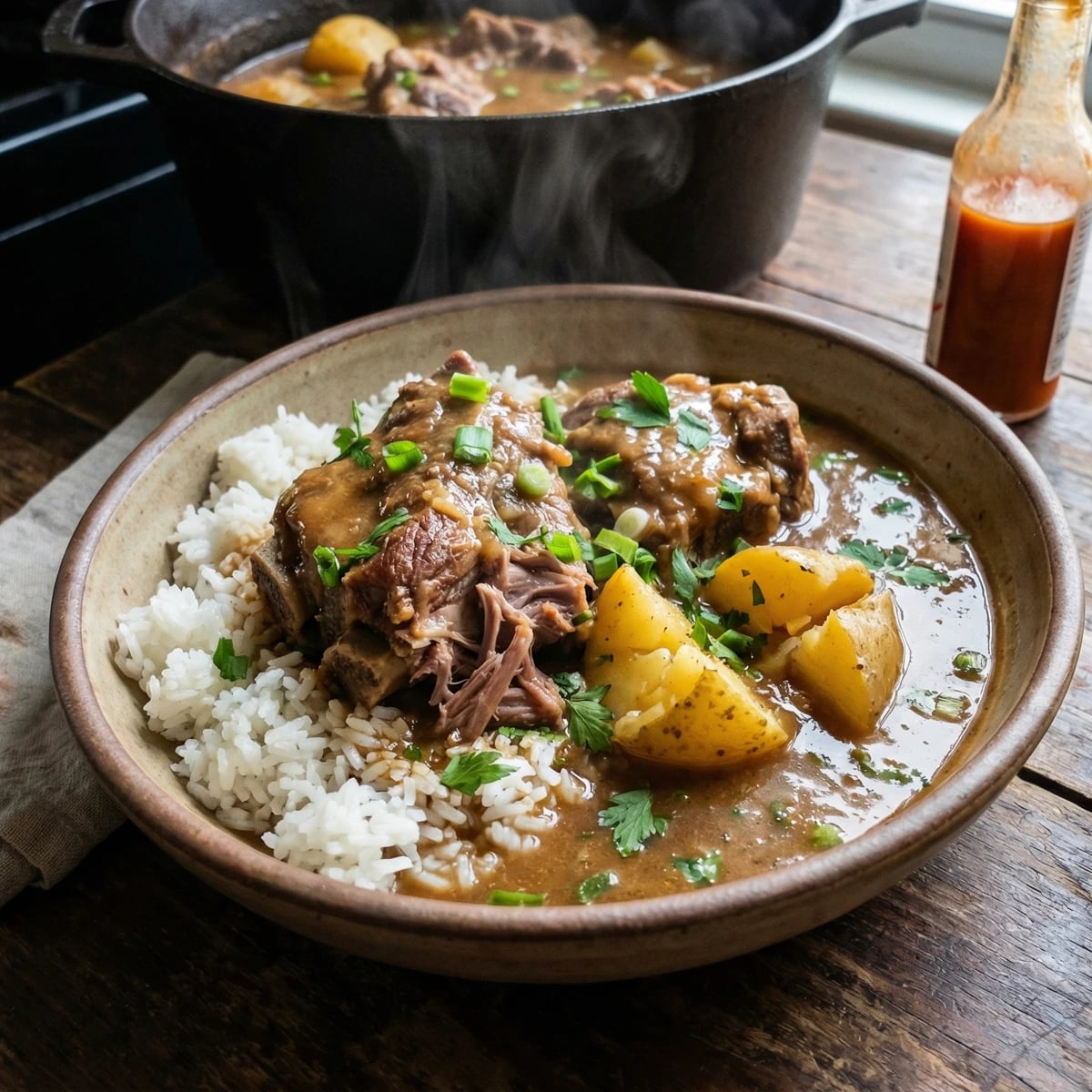
Humble pork neck bones transformed through hours of slow simmering into fork-tender, falling-off-the-bone perfection, swimming in a rich Cajun gravy with potatoes that melt on your tongue and warm you from the inside out.

Main Dishes
Cajun
Comfort Food
Budget Friendly
Slow Cooker
30 min
Active Time
3 hr cook3 hr 30 min total
Yield6 servings

This is poor folks' food that eats like a feast. My grandmother Evangeline made backbone stew every winter when money was tight and bellies needed filling. Those neck bones cost pennies at the butcher, but cooked low and slow, they give you meat so tender it surrenders at the touch of a fork, plus all that collagen that turns simple stock into silky gravy.

The magic happens in three hours of patient simmering. You cannot rush this dish. The connective tissue needs time to break down, the flavors need time to marry, and the potatoes need time to soak up that seasoned braising liquid until they taste like they were born in it. This is the bayou way: transform humble ingredients through time and technique into something that makes people close their eyes when they take the first bite.

At Lagniappe, we put this on the menu every Monday, and it sells out by seven o'clock. Folks who grew up eating this at their grandmother's table come in looking for that taste of home. Folks who never had it before leave wondering why they waited so long to discover what Cajun country cooking is really about.

The technique, the tradition, and the story behind every dish.

Discover Culinary Explorer

Ingredients

pork neck bones or backbone pieces

Quantity

3 pounds

Cajun seasoning

Quantity

2 tablespoons

divided

kosher salt

Quantity

1 teaspoon

black pepper

Quantity

1/2 teaspoon

freshly ground

vegetable oil

Quantity

3 tablespoons

yellow onion

Quantity

1 large

diced

celery stalks

Quantity

2

diced

green bell pepper

Quantity

1 medium

diced

garlic

Quantity

6 cloves

minced

tomato paste

Quantity

2 tablespoons

chicken stock or water

Quantity

6 cups

bay leaves

Quantity

2

dried thyme

Quantity

1 teaspoon

cayenne pepper

Quantity

1/2 teaspoon

or to taste

Yukon Gold potatoes

Quantity

2 pounds

cut into 1-inch chunks

green onions

Quantity

4

sliced, white and green parts separated

fresh parsley

Quantity

2 tablespoons

chopped

hot sauce (optional)

Quantity

for serving

cooked white rice

Quantity

for serving

Equipment Needed

  • Large Dutch oven or heavy-bottomed pot (6-quart minimum)
  • Sturdy tongs for turning meat
  • Wooden spoon for scraping fond

Instructions

  1. 1

    Season the backbone

    Pat the pork neck bones dry with paper towels. Season generously on all sides with one tablespoon of Cajun seasoning, the salt, and black pepper. Rub it in with your hands, getting into all the crevices between the bones. This first layer of seasoning is your foundation. Let the meat sit at room temperature for twenty minutes while you prep your vegetables.

    Drying the meat matters. Wet pork steams instead of browns, and you need that caramelization for depth of flavor.
  2. 2

    Brown the meat

    Heat the vegetable oil in a large Dutch oven or heavy-bottomed pot over medium-high heat until it shimmers. Working in batches so you do not crowd the pot, brown the neck bones on all sides, about four minutes per side. You want deep golden color, almost dark in spots. The fond (those brown bits stuck to the bottom) is pure flavor. Transfer browned pieces to a plate and repeat with remaining meat.

    If the fond starts to burn between batches, add a splash of water and scrape it up, then pour over the browned meat. Do not lose that flavor.
  3. 3

    Build the holy trinity

    Reduce heat to medium. Add the onion, celery, and bell pepper to the pot. This is the holy trinity, the backbone of Louisiana cooking. Cook, stirring often and scraping up those brown bits from the bottom, until the onions turn translucent and start to sweeten, about eight minutes. The vegetables should soften but not brown. You will smell that sweet, vegetal perfume that tells you good things are happening.

  4. 4

    Add garlic and tomato paste

    Push the vegetables to the sides and add the garlic to the center of the pot. Let it sizzle for thirty seconds until fragrant. Stir in the tomato paste and cook for two minutes, letting it darken slightly and lose its raw edge. The tomato paste adds body and a subtle sweetness that rounds out the dish.

  5. 5

    Build the braising liquid

    Pour in the chicken stock, scraping up any remaining fond from the bottom. Add the bay leaves, thyme, cayenne, the remaining tablespoon of Cajun seasoning, and the white parts of the green onions. Stir to combine. Return the browned pork to the pot, nestling the pieces into the liquid. The bones should be mostly submerged.

    Taste your braising liquid now. It should be well-seasoned but not overly salty, since the liquid will reduce and concentrate as it cooks.
  6. 6

    Simmer low and slow

    Bring the liquid to a gentle simmer, then reduce the heat to low. Cover and cook for two hours, stirring occasionally. The stew should barely bubble, just a lazy plop every few seconds. Low and slow is the bayou way. After two hours, the meat should be tender but not yet falling off the bone.

  7. 7

    Add potatoes

    Add the potato chunks to the pot, pushing them down into the liquid. If the liquid level has dropped significantly, add a cup of water. Cover and continue simmering for another forty-five minutes to one hour, until the potatoes are tender and the meat pulls away from the bone with no resistance.

  8. 8

    Adjust and finish

    Remove the bay leaves. Taste the stew and adjust seasoning. This is where you make it yours. More salt? More cayenne? Trust your palate. The gravy should be rich and slightly thickened from the potatoes breaking down. Some folks mash a few potato pieces against the side of the pot to thicken it further. Stir in the green onion tops and parsley.

    If your gravy is too thin, remove the lid and simmer for ten minutes to concentrate. If too thick, add a splash of stock.
  9. 9

    Serve generous portions

    Ladle the stew over mounds of hot white rice in deep bowls, making sure everyone gets plenty of meat and potatoes. Pass the hot sauce at the table. This is country food meant for hungry people. At Lagniappe, we always send seconds around before anyone has to ask.

Chef Tips

  • Ask your butcher for meaty neck bones with plenty of flesh attached. Some packages are mostly bone. You want to see good meat coverage.
  • This stew is even better the next day after the flavors have had time to get acquainted overnight in the refrigerator. Reheat gently over low heat.
  • If you cannot find neck bones, pork shoulder cut into chunks works beautifully, though you will miss the collagen that makes the gravy so silky.
  • The cayenne level I have given is mild by Louisiana standards. If you like heat the way we do, double it. But start where I suggest and build up. You can always add more, but you cannot take it back.
  • Save any leftover gravy. It makes an incredible base for dirty rice or smothered greens.

Advance Preparation

  • The stew can be made up to three days ahead and refrigerated. The fat will solidify on top. Skim some off if you prefer a leaner result, then reheat gently.
  • This freezes beautifully for up to three months. Thaw overnight in the refrigerator and reheat slowly on the stovetop.

Frequently Asked Questions

Nutrition Information

1 serving (about 480g)

Calories
485 calories
Total Fat
30 g
Saturated Fat
9 g
Trans Fat
0 g
Unsaturated Fat
20 g
Cholesterol
80 mg
Sodium
1500 mg
Total Carbohydrates
33 g
Dietary Fiber
4 g
Sugars
3 g
Protein
27 g

Note: Chef personas and recipes are created with AI assistance. Cook with care: follow safe food-handling practices, check doneness with a thermometer when needed, and adapt for allergies and your kitchen.

Where cooking meets culture.

Culinary guides, cultural storytelling, and the editorial depth that makes cooking meaningful.

Discover Culinary Explorer

More from Chef Remy's Main Dishes

Browse the full collection