Chef Graziella
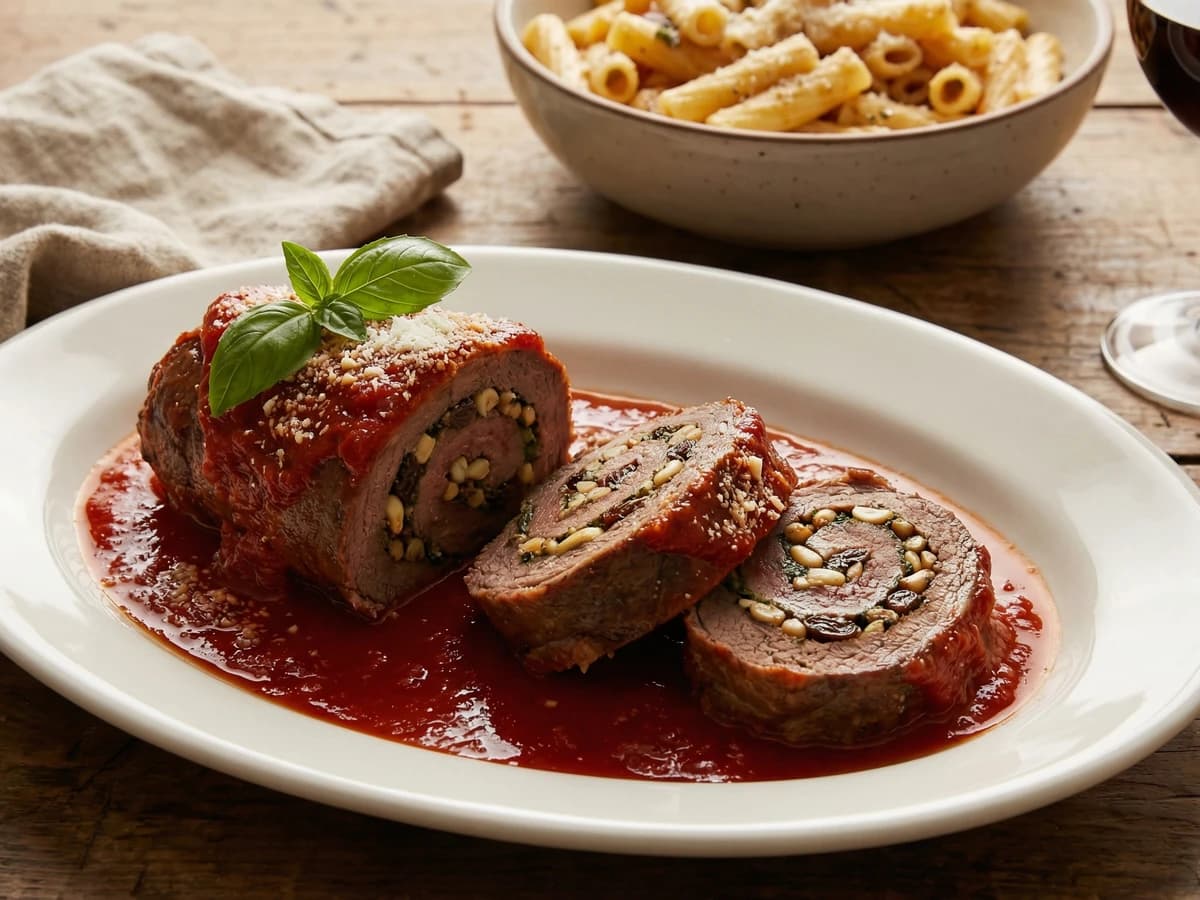
Braciole alla Napoletana
The Sunday ritual of Naples: beef rolls stuffed with pine nuts, raisins, and garlic, braised in tomato sauce until surrendering to tenderness. The sauce goes to the pasta. The meat comes second.
A cooking platform built around craft, culture, and the stories behind what we eat.
Created by
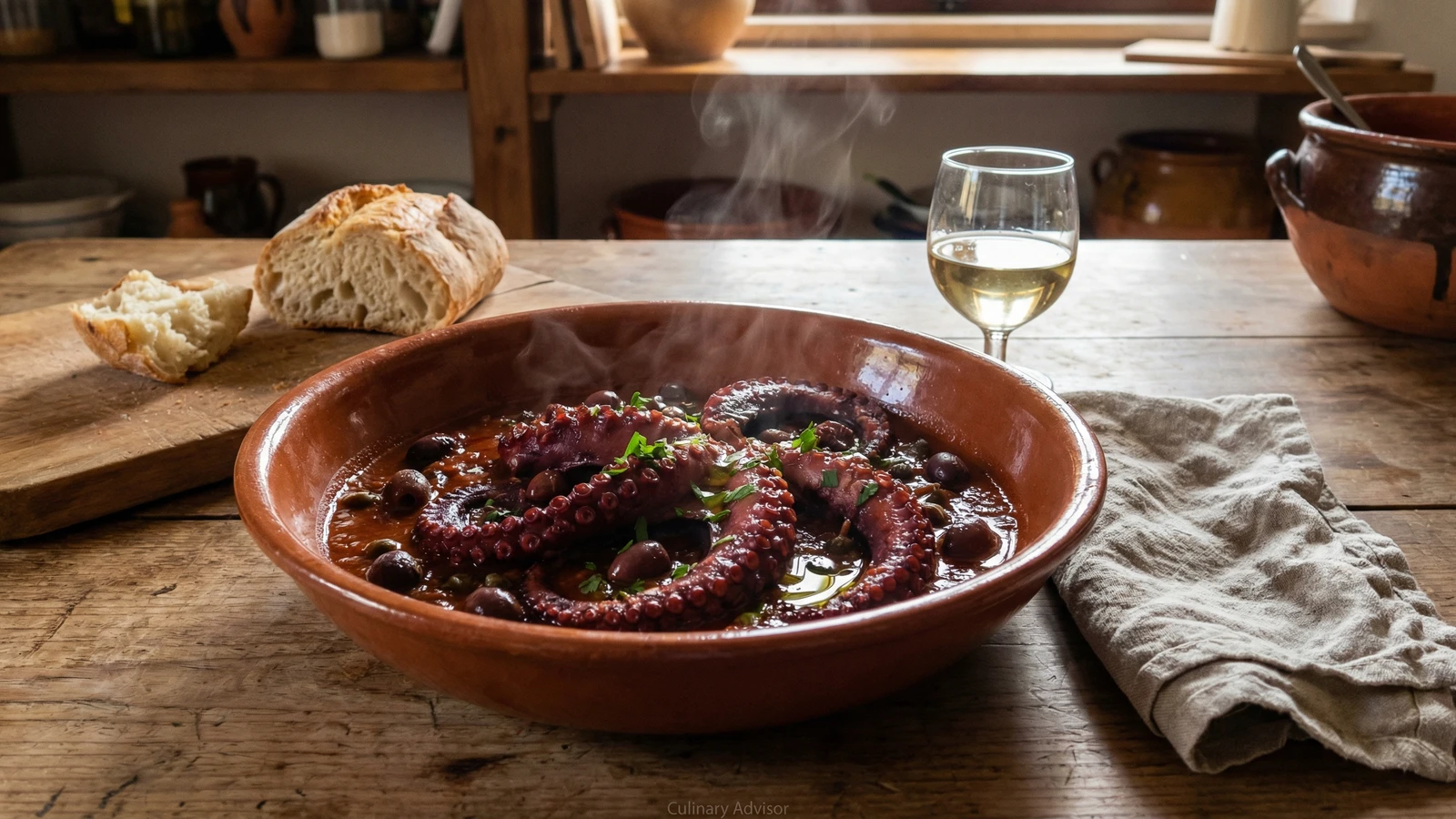
Octopus braised in the manner of Naples' Santa Lucia waterfront, where fishermen's wives proved that the sea provides everything a dish needs, including its own cooking liquid.
The first useful thing to know about this dish is that you add no water. The octopus cooks in its own liquid, releasing moisture as it braises, creating a sauce that tastes intensely of the sea. Neapolitan fishermen's wives understood this. They had octopus, tomatoes, a few olives, some capers. They had patience. That was enough.
Polpo alla Luciana comes from Santa Lucia, the waterfront neighborhood of Naples where fishing boats once lined the shore. The women who waited for their husbands to return knew how to transform the catch into something worth coming home to. They used terra cotta pots called pignatielli, sealed tight to trap every drop of liquid the octopus surrendered.
Americans think octopus is restaurant food, something complicated and impressive. In Naples, it is Tuesday dinner. The technique requires nothing but time and a heavy pot with a lid that seals properly. Simple does not mean easy, but this comes close.
Santa Lucia was Naples' ancient fishing quarter, its boats beached on the shoreline below Castel dell'Ovo until the waterfront was reclaimed in the late 19th century. The neighborhood gave its name to the famous Neapolitan song and to this dish, which fishermen's families prepared in sealed terra cotta vessels that trapped the octopus's own moisture. The method predates refrigeration, when the day's catch had to become dinner before the sun set.
Quantity
2 1/2 to 3 pounds
cleaned
Quantity
1/3 cup
Quantity
4
peeled and lightly crushed
Quantity
1/4 teaspoon
Quantity
1 can (14 ounces)
crushed by hand
Quantity
1/2 cup
Quantity
1/3 cup
pitted
Quantity
2 tablespoons
rinsed and soaked
Quantity
2 tablespoons
chopped
Quantity
to taste
Quantity
for serving
| Ingredient | Quantity |
|---|---|
| whole octopuscleaned | 2 1/2 to 3 pounds |
| extra virgin olive oil | 1/3 cup |
| garlic clovespeeled and lightly crushed | 4 |
| red pepper flakes | 1/4 teaspoon |
| San Marzano tomatoescrushed by hand | 1 can (14 ounces) |
| dry white wine | 1/2 cup |
| Gaeta olivespitted | 1/3 cup |
| salt-packed capersrinsed and soaked | 2 tablespoons |
| fresh Italian parsleychopped | 2 tablespoons |
| kosher salt | to taste |
| crusty bread | for serving |
If your fishmonger has not cleaned the octopus, you must remove the beak, eyes, and ink sac. Rinse thoroughly under cold water. Do not beat the octopus against rocks or tenderize it with a mallet. This is folklore. The octopus will become tender through proper cooking, nothing else.
In a heavy pot with a tight-fitting lid, warm the olive oil over medium heat. Add the crushed garlic cloves and the red pepper flakes. Cook gently until the garlic is fragrant and barely golden, about two minutes. The garlic must not brown. Remove the garlic and set it aside.
Place the whole octopus into the pot. It will curl as it hits the heat. This is normal. Let it sear briefly, turning once, until the skin tightens and changes color slightly, about three minutes total. Do not worry about browning. The octopus is not a steak.
Pour in the white wine and let it bubble for one minute. Add the crushed tomatoes, the reserved garlic cloves, the olives, and the capers. Stir gently to combine. The liquid will seem insufficient. Do not add water. The octopus releases its own liquid as it cooks. This is the secret of the dish.
Cover the pot tightly and reduce heat to the lowest possible setting. The liquid should barely simmer, with only occasional bubbles breaking the surface. Cook for one hour to one hour and thirty minutes. The octopus is done when a fork slides easily into the thickest part of a tentacle. There is no other test.
When the octopus is tender, taste the braising liquid and adjust salt. The olives and capers contribute salinity, so be cautious. Transfer the octopus to a cutting board and slice it into generous pieces, keeping some tentacles whole for presentation. Return the pieces to the pot and coat them with the sauce. Scatter the parsley over all.
Serve in warm shallow bowls with plenty of the braising liquid. The sauce is as important as the octopus. Crusty bread is mandatory. You will want to soak up every drop of that liquid, and no one who has tasted it will judge you for doing so.
1 serving (about 300g)
Culinary guides, cultural storytelling, and the editorial depth that makes cooking meaningful.
Discover Culinary ExplorerChef Graziella
The Sunday ritual of Naples: beef rolls stuffed with pine nuts, raisins, and garlic, braised in tomato sauce until surrendering to tenderness. The sauce goes to the pasta. The meat comes second.

Chef Graziella
Pork rolls stuffed with pine nuts, raisins, and prosciutto, then braised slowly in tomato sauce until fork-tender. In Naples, the sauce dresses pasta for the first course, and the meat follows as the second.
Chef Graziella
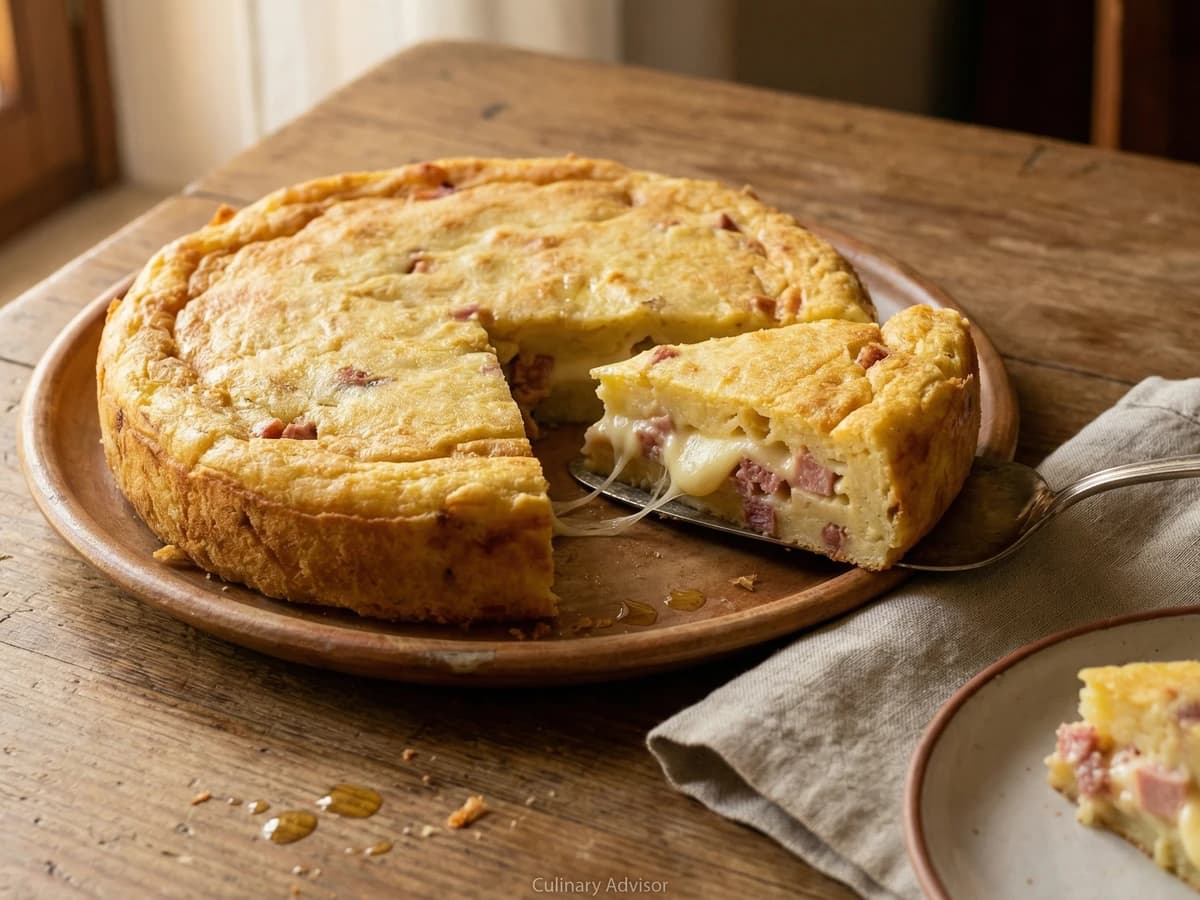
The baroque potato cake of Naples, where silky mashed potatoes enfold a hidden treasure of cheeses and cured meats, then bake until a golden crust gives way to molten richness within.
Chef Graziella
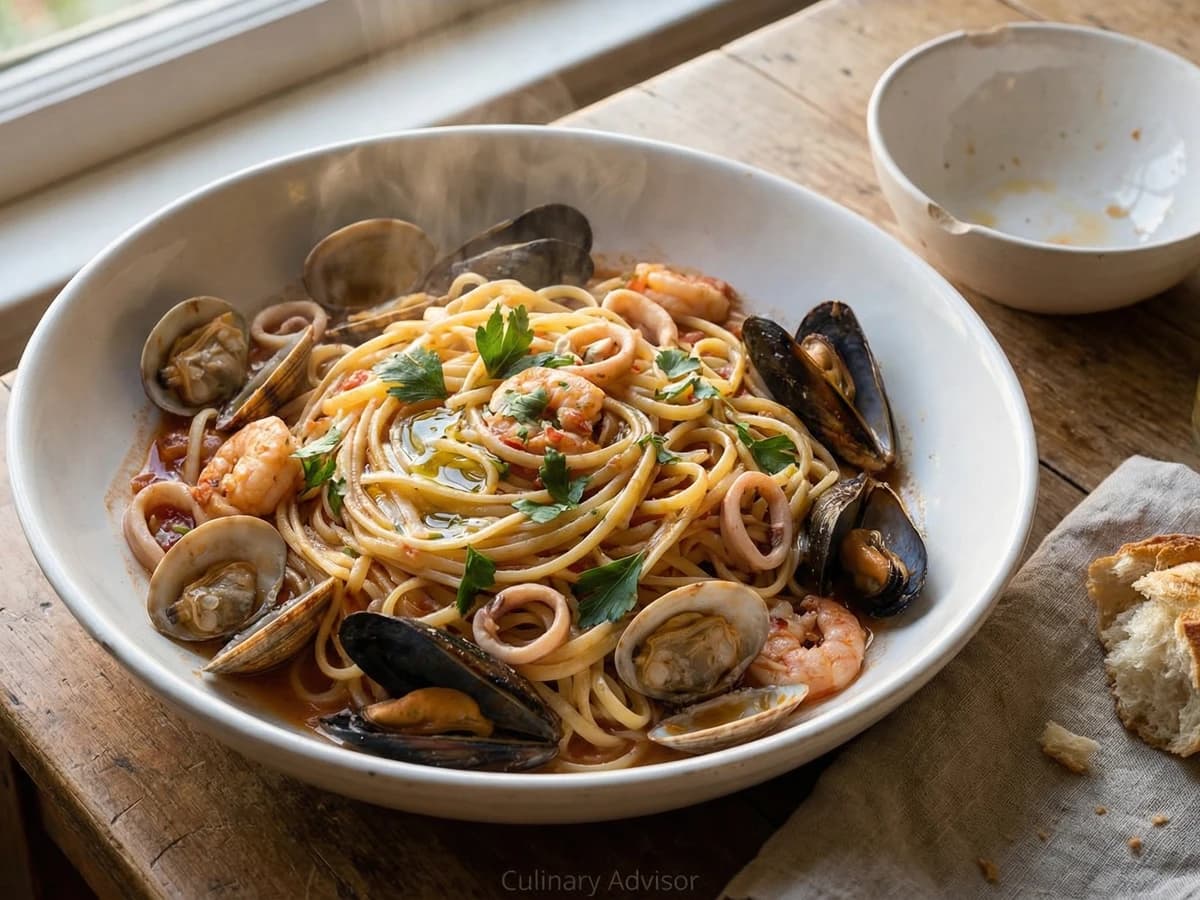
A tumble of clams, mussels, shrimp, and squid over linguine, bright with tomato and white wine. The fishermen's pasta of the Amalfi coast, where the rocks meet the sea.