
Chef Lupita
Acambaritas de Acámbaro
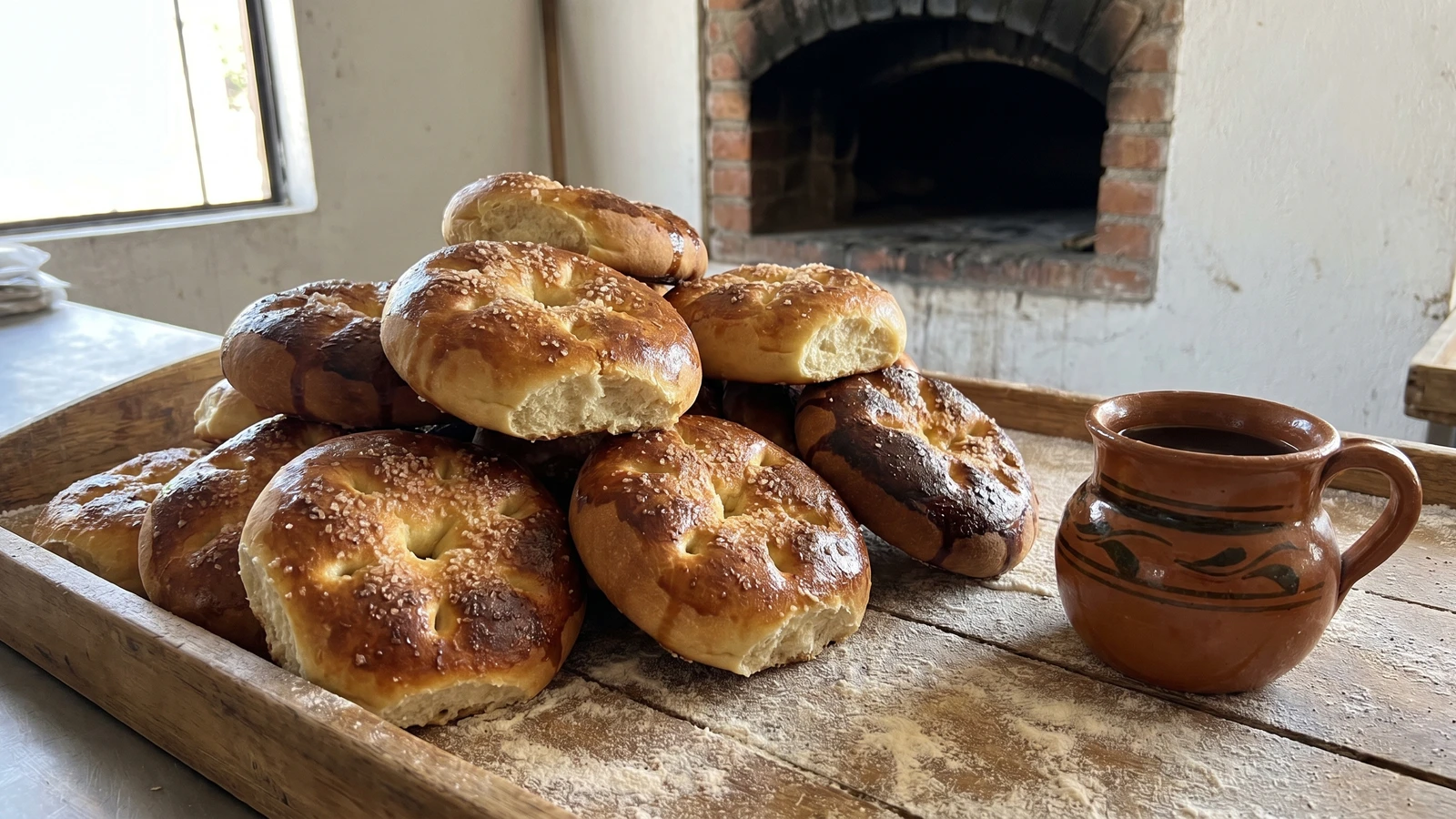
Guanajuato's daily bread from Acámbaro, a small glazed roll built on pata, enriched with manteca de cerdo, and baked until the top shines lightly for merienda.
A cooking platform built around craft, culture, and the stories behind what we eat.
Created by
Acambaro's small sugar-topped polkas, built from pata de panaderia, manteca de cerdo, and the patient hand of the Bajio oven.
Guanajuato, the Bajio, Acambaro. Put the town on the map first, because this bread is not floating around in some vague Mexican bakery case. Acambaro sits along old trade roads, a bread town with hornos de boveda, wooden trays, and panaderos who know that flour, fat, sugar, and time can feed a whole neighborhood by merienda.
The polka is a small enriched bread, tender inside, lightly crisp at the sugar top, with that sandy bite from coarse granulated sugar pressed into the surface before baking. The dough gets its character from pata de panaderia, a piece of fermented dough held from the last batch. Pata is masa madre. It is not baking powder. No me vengas con atajos.
Manteca de cerdo belongs here. In the secular Bajio bakery register, lard gives the crumb its tenderness and that clean, full flavor you don't get from pale supermarket shortening. I learned to respect these breads from panaderas who shaped by feel, not by measuring spoons, and who could read an oven by the color of the brick. La cocina no es decoracion, es trabajo.
Serve them with cafe de olla in a jarrito, or pack them for the next day. They keep well because the fat protects the crumb. Cada estado, su propia cocina, and this one belongs to Guanajuato.
Acambaro became one of Guanajuato's important bread towns because it sat on routes tied to the Camino Real de Tierra Adentro, where wheat, mining wealth, and European baking habits moved through the Bajio during the colonial and 19th-century periods. The name polka reflects the Central European dance that became fashionable in Mexico in the 19th century, carried through mining towns and urban salons before local bakers gave the name to a small, rhythmic, sugar-topped piece of pan dulce. Acambaro's panaderia tradition is also known for using pata, fermented dough saved from previous batches, which separates these breads from chemically leavened biscuits.
Quantity
1 cup
at peak activity
Quantity
1/2 cup, plus 1 tablespoon if needed
Quantity
2 teaspoons
Quantity
4 cups, plus more for dusting
Quantity
3/4 cup
Quantity
1 teaspoon
Quantity
2
at room temperature
Quantity
3/4 cup
soft but not melted
Quantity
1 teaspoon
Quantity
1/2 teaspoon
Quantity
1/2 cup
for topping
Quantity
2 tablespoons
for brushing
| Ingredient | Quantity |
|---|---|
| pata de panaderia or mature wheat sourdough starterat peak activity | 1 cup |
| warm whole milk | 1/2 cup, plus 1 tablespoon if needed |
| active dry yeast | 2 teaspoons |
| all-purpose flour | 4 cups, plus more for dusting |
| granulated sugar | 3/4 cup |
| fine sea salt | 1 teaspoon |
| large eggsat room temperature | 2 |
| pork lard (manteca de cerdo)soft but not melted | 3/4 cup |
| Mexican vanilla extract | 1 teaspoon |
| ground canela | 1/2 teaspoon |
| coarse granulated sugarfor topping | 1/2 cup |
| whole milkfor brushing | 2 tablespoons |
In a large bowl, mix the pata de panaderia with the warm milk and active dry yeast. Let it stand 10 minutes, until the surface looks creamy and alive. The yeast helps a home kitchen move, but the flavor comes from the pata. Pata is masa madre, not chemical leavener.
Add the flour, sugar, salt, eggs, Mexican vanilla, and canela. Mix with your hand or a stand mixer on low until a rough dough forms. It should feel firm and slightly tacky, not wet like cake batter. Bajio pan dulce has body. It is bread, not pastry pretending to be bread.
Add the soft manteca de cerdo in small pieces and knead until the dough turns smooth, elastic, and satin-looking, about 8 minutes by mixer or 12 minutes by hand. At first it will look greasy and broken. Keep working. The lard will disappear into the dough and make the crumb tender. La manteca es el sabor.
Cover the bowl with a clean cloth and let the dough rise in a warm place until puffy and about doubled, 2 to 3 hours depending on your kitchen. Do not stare at the clock. Watch the dough. A good pata moves at its own pace, like every serious panaderia dough.
Turn the dough onto a lightly floured table. Divide into 24 pieces, about 45 grams each if you are weighing. Roll each piece into a small ball, then press gently into a thick disk. Arrange them on parchment-lined baking sheets with space between them. They should look handmade, not stamped by a machine.
Brush the tops lightly with milk. Press each disk, milk side down, into the coarse sugar, then return it sugar side up to the tray. Press lightly so the crystals hold. That top is the polka's signature: pale gold bread underneath, rough sugar catching at the edges.
Cover loosely and let the polkas rise until swollen and soft to the touch, 60 to 90 minutes. When you press one gently with a floured fingertip, the dent should fill back slowly. If it springs back fast, it needs more time. If it collapses, you waited too long.
Heat the oven to 375F. Bake the polkas for 15 to 18 minutes, rotating the trays halfway through, until the bottoms are golden and the sugar tops are set with light caramelized edges. In Acambaro, a horno de boveda gives darker spots and a deeper crust. Your home oven will behave, but it will not lie for you.
Move the polkas to a rack and cool at least 20 minutes before eating. The crumb finishes setting as it cools. Store in a cloth-lined basket or covered tin for up to three days. They are best with cafe de olla, at the table, no decoration needed. Asi se hace y punto.
1 serving (about 50g)
Culinary guides, cultural storytelling, and the editorial depth that makes cooking meaningful.
Discover Culinary ExplorerChef Lupita
Guanajuato's daily bread from Acámbaro, a small glazed roll built on pata, enriched with manteca de cerdo, and baked until the top shines lightly for merienda.

Chef Lupita
Michoacan's Tinguindin aguacatas are flat, leaf-scored sweet breads made with harina de trigo, piloncillo, anise, and manteca de cerdo, shaped by hand for the wood oven.

Chef Lupita
From Ajijic on Lake Chapala, Pan Tachihual is a lightly sweet wedding loaf built with harina de trigo, harina de maiz, piloncillo, manteca, anise, and the old Guadalajara pata.

Chef Lupita
Comitán's pan de yema shaped into little pigs, birds, and rabbits, a Chiapas bakery bread rich with egg yolks, manteca de cerdo, and anís, baked golden on hoja de plátano.