
Chef Lupita
Acambaritas de Acámbaro
Guanajuato's daily bread from Acámbaro, a small glazed roll built on pata, enriched with manteca de cerdo, and baked until the top shines lightly for merienda.
A cooking platform built around craft, culture, and the stories behind what we eat.
Created by
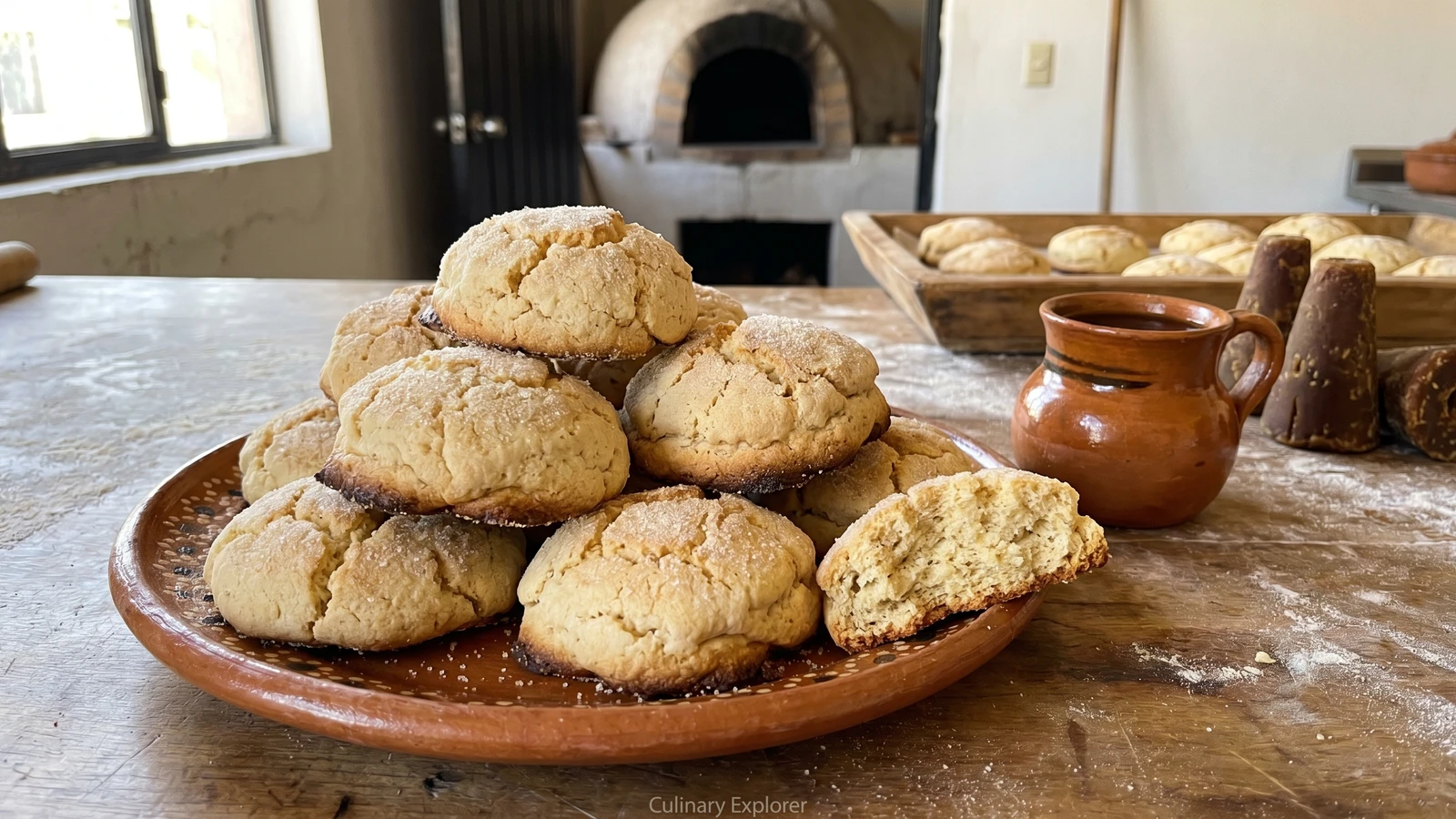
Aguascalientes' dry panaderia bizcochos, shaped by hand and baked until pale gold at the center with darker wood-oven edges, made for cafe de olla and the daily Hidrocalido table.
Aguascalientes, in the Bajio, has a bread table that does not shout. It sits there with cafe de olla, piloncillo nearby, and a charola of dry, sweet bizcochos made for dipping. This is comida hidrocalida, from a small state with a practical panaderia tradition, not a convent sweet trying to impress anybody.
The defining ingredient here is the fat. Some panaderos in Aguascalientes use vegetable shortening now, especially for consistency and cost. I use manteca de cerdo because that is the older secular register and because the crumb tells the truth. La manteca es el sabor. It makes the bizcocho sandy, firm, and short under the teeth, not fluffy like cake and not tender like a wedding cookie.
Do not confuse this with the soft Spanish-style bizcocho, and do not try to make it airy. This bread should be dry enough to need coffee. The women who perfected this kind of pan dulce knew household economy: flour, sugar, fat, vanilla, a little milk, many pieces, and bread that keeps for days. Saber cocinar es saber vivir.
Aguascalientes' panaderia tradition grew from the wheat belt of the Bajio, where colonial milling and ranch economies made flour breads more common than in corn-dominant regions of the south. The term hidrocalido comes from the state's hot springs and became a demonym for people from Aguascalientes, so bizcochos hidrocalidos name both place and table. Unlike conventual sweets associated with enclosed religious kitchens, these dry bizcochos belong to the secular bakery counter, built for daily merienda and batch production.
Quantity
4 cups
plus more for dusting
Quantity
1 cup
Quantity
2 teaspoons
Quantity
1/2 teaspoon
Quantity
1 cup
chilled and cut into small pieces
Quantity
2
at room temperature
Quantity
1/2 cup, plus 2 tablespoons if needed
Quantity
2 teaspoons
Quantity
1/2 teaspoon
Quantity
1/4 cup
| Ingredient | Quantity |
|---|---|
| all-purpose flourplus more for dusting | 4 cups |
| granulated sugar | 1 cup |
| baking powder | 2 teaspoons |
| fine sea salt | 1/2 teaspoon |
| pork lard (manteca de cerdo)chilled and cut into small pieces | 1 cup |
| large eggsat room temperature | 2 |
| whole milk | 1/2 cup, plus 2 tablespoons if needed |
| Mexican vanilla extract | 2 teaspoons |
| ground canela | 1/2 teaspoon |
| granulated sugar for finishing | 1/4 cup |
In a wide bowl, whisk the flour, sugar, baking powder, salt, and canela. Break up any lumps with your fingers. Aguascalientes bizcochos are not perfumed breads. The canela is there to warm the vanilla, not take over the tray.
Add the chilled manteca de cerdo and rub it into the flour with your fingertips until the mixture looks like damp sand with a few pea-size pieces left. Do not melt the lard. Cold fat makes the crumb short and dry. Warm fat makes the dough greasy, and then you will blame the recipe instead of your hands.
Beat the eggs, milk, and Mexican vanilla in a small bowl. Pour into the flour mixture and fold with your hand until a rough dough forms. If dry flour remains at the bottom, add milk one tablespoon at a time. The dough should hold together when pressed, but it should not feel sticky. This is bread for the panaderia counter, not cake batter.
Turn the dough onto a lightly floured table and press it into a thick disk. Cover with a clean cloth and rest for 30 minutes. The flour hydrates and the lard firms again. Skip the rest and the edges crack too much when you shape them.
Heat the oven to 375F. Line two baking sheets with parchment, or dust a heavy metal charola lightly with flour. Roll the dough to 1/2 inch thick and cut into rounds, ovals, or short rectangles. Panaderia pieces should look touched by a hand. If every one is machine-perfect, you have missed the point.
Set the bizcochos on the prepared charolas with a little space between them. Sprinkle the tops with the finishing sugar and press it lightly so it clings. Do not glaze them. Do not frost them. The finish is sugar, flour dust, and the color from the oven. Asi se hace y punto.
Bake for 16 to 18 minutes, rotating the charolas halfway through, until the bottoms are light golden and the edges are a shade darker. The tops should stay pale, with small surface cracks and a dry touch. In a horno de boveda the edges darken faster from the stored heat of the brick. In a home oven, the bottom tells you when they are done.
Move the bizcochos to a rack and let them cool completely before storing. Warm, they will seem softer than they should. Once cooled, they firm into the dry, sandy crumb you want for dipping into cafe de olla. Recetas probadas y garantizadas.
1 serving (about 35g)
Culinary guides, cultural storytelling, and the editorial depth that makes cooking meaningful.
Discover Culinary ExplorerChef Lupita
Guanajuato's daily bread from Acámbaro, a small glazed roll built on pata, enriched with manteca de cerdo, and baked until the top shines lightly for merienda.

Chef Lupita
Michoacan's Tinguindin aguacatas are flat, leaf-scored sweet breads made with harina de trigo, piloncillo, anise, and manteca de cerdo, shaped by hand for the wood oven.

Chef Lupita
From Ajijic on Lake Chapala, Pan Tachihual is a lightly sweet wedding loaf built with harina de trigo, harina de maiz, piloncillo, manteca, anise, and the old Guadalajara pata.

Chef Lupita
Comitán's pan de yema shaped into little pigs, birds, and rabbits, a Chiapas bakery bread rich with egg yolks, manteca de cerdo, and anís, baked golden on hoja de plátano.