
Chef Dimitra
Chios Nerantzi Glyko Koutaliou (Νεράντζι Γλυκό Κουταλιού)
Chios bitter orange peel rolled into tight coils, blanched through clean waters, then preserved in a clear fragrant syrup for the spoon-sweet tray.
A cooking platform built around craft, culture, and the stories behind what we eat.

Created by
Politiki kaimaki is the chewy mastic ice cream of the City, scented with Chios mastiha, held smooth by salep, and best served with sour cherry spoon sweet.
Politiko pagoto kaimaki belongs to the sweet shops of Constantinople, the Politiki kitchen where milk, mastic, and salep became something cool, white, and gently chewy. It isn't vanilla ice cream with perfume added. The pull is the dish. The scent of Chios mastiha is the dish's signature.
The one method that saves it is simple: grind the mastic with sugar before it touches the milk. Mastic is stubborn. Drop the tears straight into the pot and they seize into little amber knots, and then no amount of stirring will make the ice cream smooth. Pound them with sugar first and they disappear into the base, leaving only their clean pine-resin fragrance.
Salep gives the old texture, that slow stretch on the spoon. Use the real powder if you can buy it legally and well sourced; many wild orchids are protected now, and a careless packet is not a bargain. Λίγα και καλά. A few things, and good ones. This is a freezer dish, yes, but it still asks for patience: heat gently, chill fully, churn cold.
Pagoto kaimaki grew from the Politiki sweet-shop world of Constantinople, where Ottoman kaymak, salep drinks, and dondurma met the Greek confectioners' habit of scenting milk sweets with Chios mastic. The name comes through Turkish kaymak, meaning clotted cream, though the Greek frozen version is known for salep's elastic texture more than for cream alone. In twentieth-century Greece, refugee and Constantinopolitan families carried the flavor to Thessaloniki and Athens, where kaimaki with sour cherry spoon sweet became a classic zacharoplasteio order.
Quantity
1 liter
Quantity
250ml
Quantity
180g
divided
Quantity
8g
Quantity
1.5g
Quantity
1/4 teaspoon
| Ingredient | Quantity |
|---|---|
| whole milk | 1 liter |
| heavy cream | 250ml |
| granulated sugardivided | 180g |
| salep powder (salepi) | 8g |
| Chios mastic tears (mastiha) | 1.5g |
| fine sea salt | 1/4 teaspoon |
Put the mastic tears in the freezer for 10 minutes, then pound them with 30g of the sugar until you have a fine, snowy powder. This is the step that decides the perfume and texture. Whole mastic hits warm milk and turns into sticky little pebbles; sugar keeps it separate so it dissolves cleanly.
In a small bowl, whisk the salep with 50g of the sugar. Keep it dry for now. Salep clumps when it meets liquid too quickly, so it needs the sugar as a little buffer.
Pour the milk, cream, remaining 100g sugar, and salt into a heavy saucepan. Warm over medium heat, stirring often, until the sugar dissolves and the milk is hot but not boiling.
Whisk in the salep mixture in a thin shower. Lower the heat and cook for 8 to 10 minutes, stirring almost constantly, until the mixture lightly coats the spoon and feels a little elastic when it falls back into the pot. Do not boil it hard. Milk catches fast, and burnt milk has nowhere to hide in kaimaki.
Take the pan off the heat and whisk in the powdered mastic sugar. Stir for 1 minute, until the scent rises and the base looks smooth.
Strain the base into a clean jug or bowl, press a piece of parchment or reusable wrap against the surface, and chill until very cold, at least 4 hours. Overnight is better. A cold base churns finer and gives you that smooth pull instead of icy grains.
Churn in an ice cream machine according to its directions, usually 25 to 35 minutes, until thick, pale, and stretching slightly from the paddle. Pack into a chilled container, cover the surface, and freeze for at least 2 hours before serving.
Let the kaimaki stand at room temperature for 5 to 8 minutes before scooping. Serve it plain, with sour cherry spoon sweet, or beside warm ravani or baklava. It should taste clean, milky, resinous, and quietly sweet.
1 serving (about 175g)
Culinary guides, cultural storytelling, and the editorial depth that makes cooking meaningful.
Discover Culinary ExplorerChef Dimitra
Chios bitter orange peel rolled into tight coils, blanched through clean waters, then preserved in a clear fragrant syrup for the spoon-sweet tray.

Chef Dimitra
Chios gives vanilla submarine its mastic breath: a pearly spoon sweet stirred stiff, served cold in water, and offered as the simplest kerasma.
Chef Dimitra
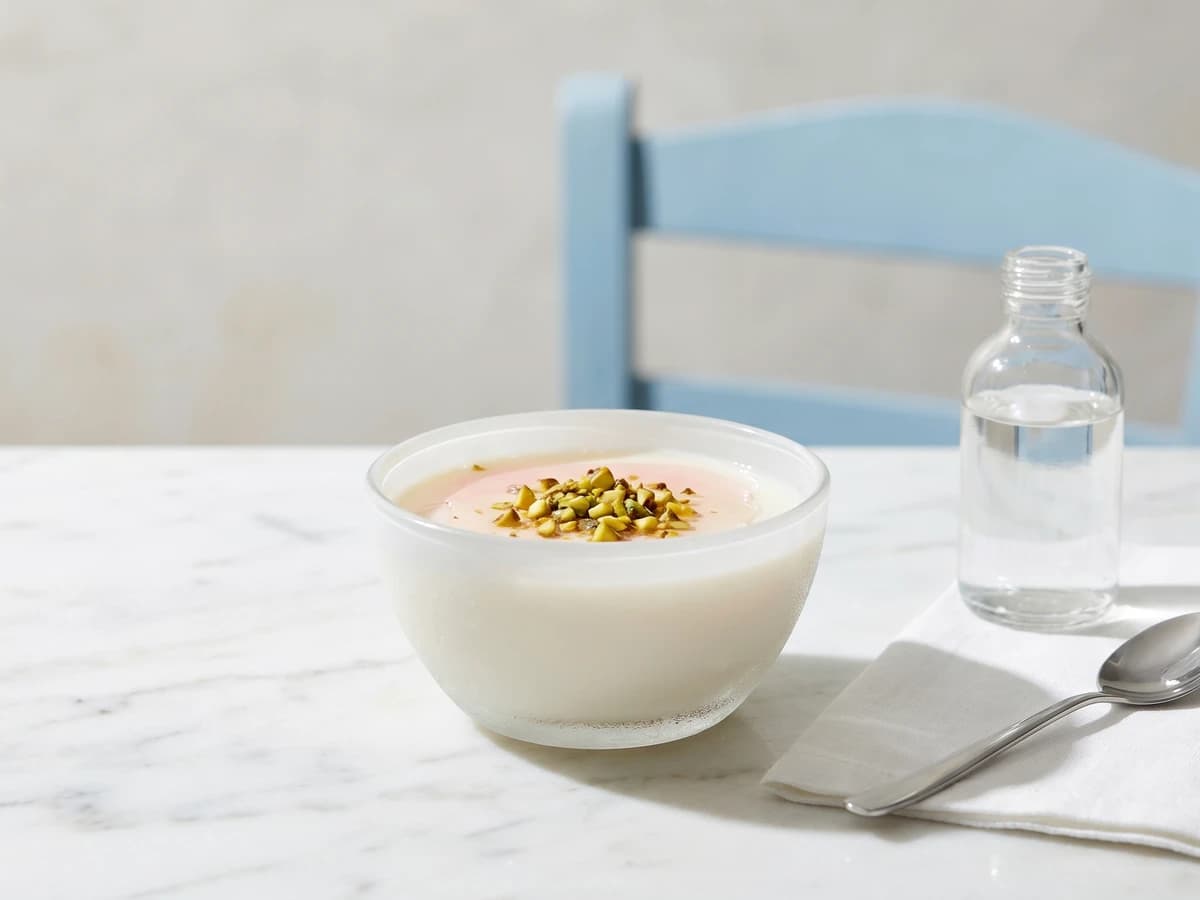
Mahalepi is the cooling milk pudding of Cyprus and the Politiki table: pale, trembling, and loosened at the spoon with cold rosewater syrup.
Chef Dimitra
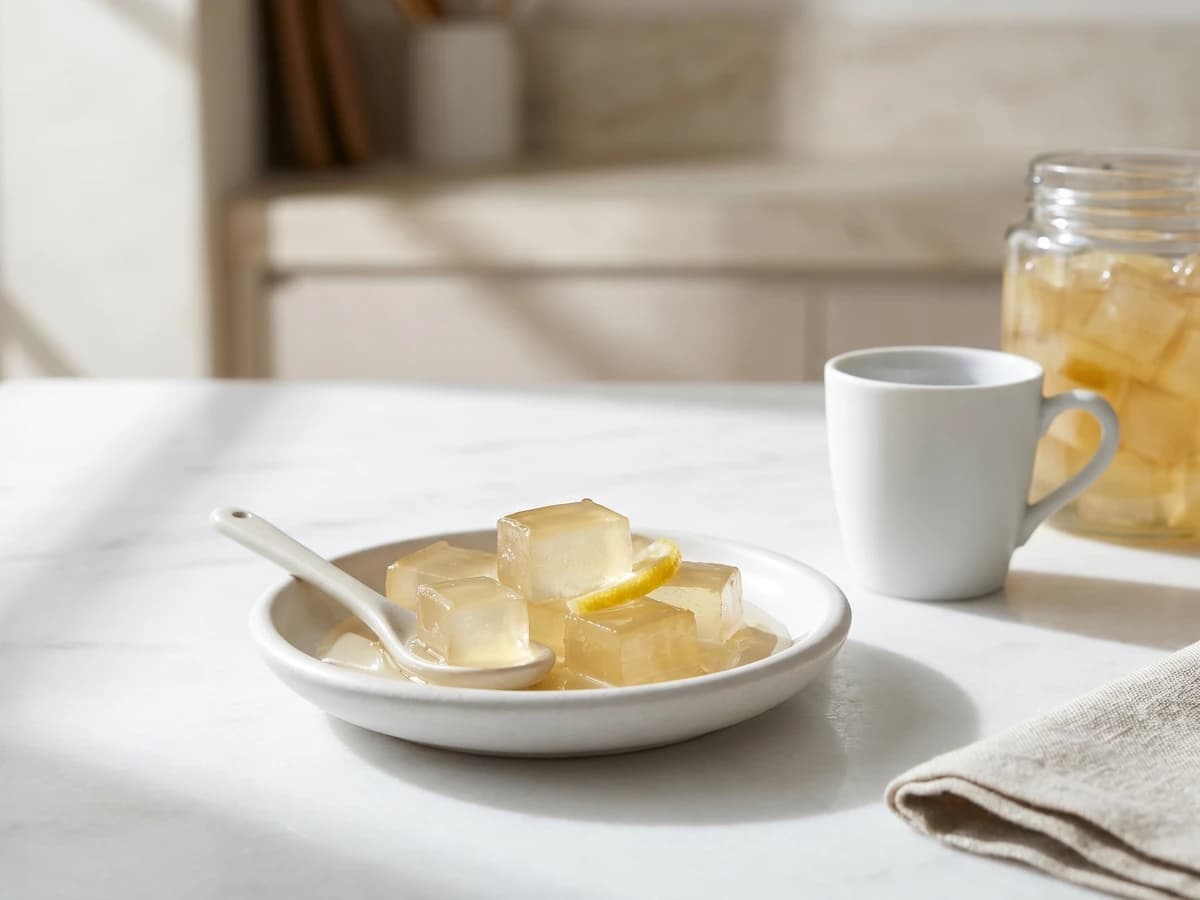
Cyprus keeps the watermelon after the red flesh is gone: firm white rind, lime-soaked for snap, simmered slowly in lemon syrup until each piece shines on the spoon.