Chef Makoa
Lomi Lomi Salmon (Hawaiian Salted Salmon Salad)
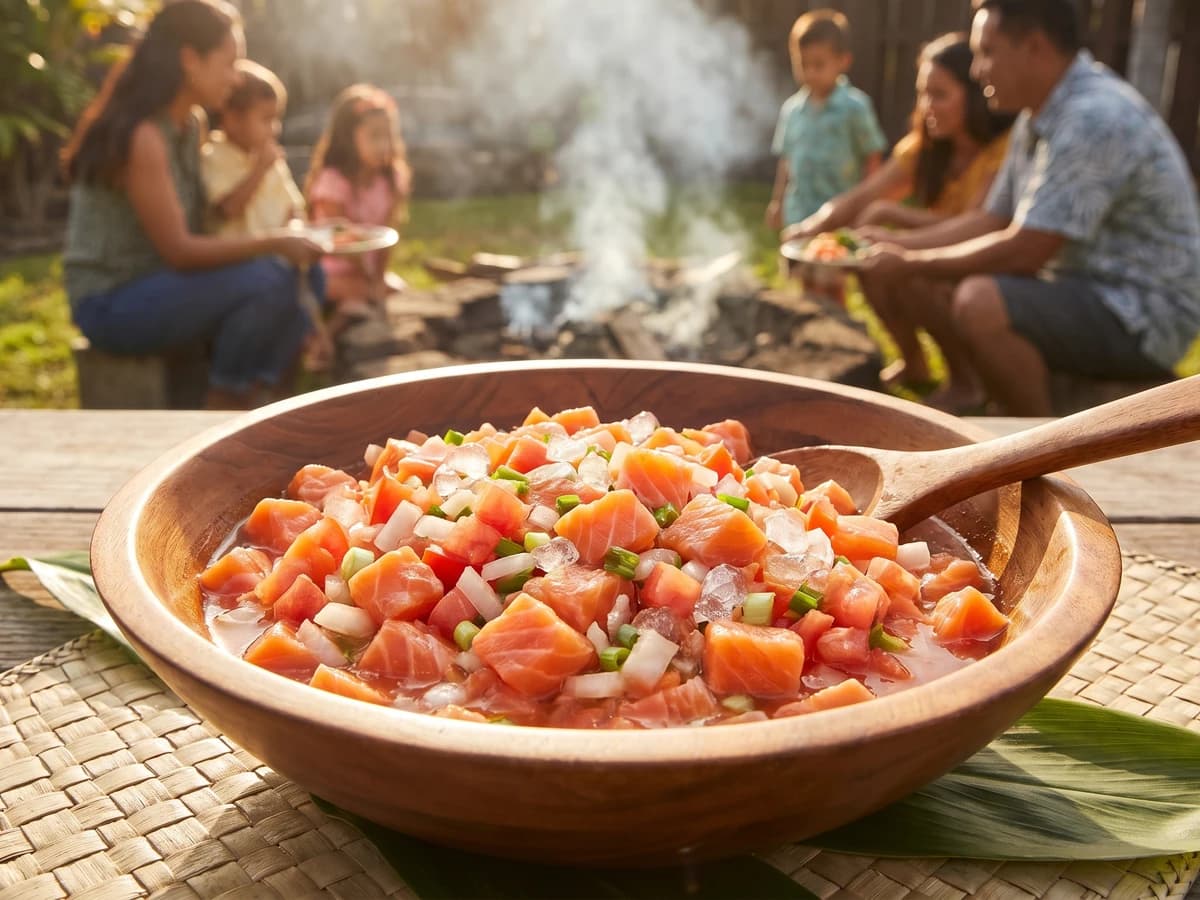
Salted salmon massaged by hand with tomato, sweet onion, green onion, and crushed ice, the cool Hawaiian lūʻau bowl that brightens the table beside poi, laulau, poke, and kālua puaʻa.
A cooking platform built around craft, culture, and the stories behind what we eat.

Created by
Crisp Hawaiian hōʻiʻo fiddleheads, blanched quick and tossed with tomato, sweet onion, dried shrimp, shoyu, sesame, and rice vinegar, the upland picking brought to the lūʻau table.
The wet upland valleys teach you before the cutting board does. Back home in Hawaiʻi, especially on Maui where many folks call these young fern shoots pohole, the forest gives food in a quieter voice than the loʻi, the reef, or the imu. Hōʻiʻo, the edible fiddlehead fern, comes from those damp places where your feet sink a little and the green closes in around you.
This is a Hawaiian salad, not some nameless island bowl. The hand here is local and contemporary: pohole blanched just enough to keep its snap, tomato and sweet onion folded through, dried shrimp giving that salty old-school punch, and a shoyu-sesame dressing from the pantry most Hawaiʻi kitchens know well. Deep food and everyday food can sit on the same mat. No need make one shame of the other.
Across the Triangle, the lesson has cousins, not copies. Māori cooks in Aotearoa know pikopiko, young fern fronds gathered with care; Hawaiian families know hōʻiʻo from our own wet valleys. Same respect for the plant, different island, different forest, different hand. Eat what you have, but know where it came from.
The trick is simple: don't cook the life out of it. Blanch, cool, drain well, then dress close enough to the table that the fern stays crisp and glossy. The salad should taste like rain country, salt, and a lūʻau plate with room for one more.
Hōʻiʻo is an edible Hawaiian fern gathered from wet upland forests and stream valleys, with pohole especially tied in common speech to Maui cooking and lūʻau tables. Unlike kalo or ʻulu, it is not a canoe crop carried root to root across the ocean; it is a local forest food, which is why naming Hawaiʻi and the island hand matters. The modern salad form, with shoyu, sesame oil, and dried shrimp, shows how Hawaiian food kept living through plantation-era pantry changes without losing the older habit of reading ʻāina, kānaka, meaʻai, land, people, food.
Quantity
1 pound
tender tips and stems only
Quantity
1 cup cherry tomatoes or 2 ripe tomatoes
halved, or seeded and diced
Quantity
1/2 cup
thinly sliced
Quantity
1/3 cup
rinsed and roughly chopped
Quantity
2
thinly sliced
Quantity
3 tablespoons
Quantity
2 tablespoons
Quantity
1 tablespoon
Quantity
1 teaspoon
or to taste
Quantity
1 teaspoon
grated
Quantity
1 small clove
finely grated
Quantity
1 tablespoon
Quantity
as needed
for cooling the fern
| Ingredient | Quantity |
|---|---|
| fresh pohole or hōʻiʻo fiddlehead fern shootstender tips and stems only | 1 pound |
| cherry tomatoes or ripe tomatoeshalved, or seeded and diced | 1 cup cherry tomatoes or 2 ripe tomatoes |
| Maui onion or other sweet onionthinly sliced | 1/2 cup |
| dried shrimprinsed and roughly chopped | 1/3 cup |
| green onionsthinly sliced | 2 |
| shoyu | 3 tablespoons |
| rice vinegar | 2 tablespoons |
| toasted sesame oil | 1 tablespoon |
| sugaror to taste | 1 teaspoon |
| fresh gingergrated | 1 teaspoon |
| garlicfinely grated | 1 small clove |
| toasted sesame seeds | 1 tablespoon |
| ice waterfor cooling the fern | as needed |
Trim away any tough or browned ends from the pohole, then rinse the curled tips and stems in several changes of cool water. Sand likes to hide in the curl. Treat it gentle, like any green gathered from a wet valley, and drain it well.
Bring a wide pot of salted water to a boil. Drop in the hōʻiʻo and blanch for 1 to 2 minutes, just until the green brightens and the stem bends without tasting raw. It should still have snap under your teeth.
Lift the fern straight into ice water and cool it fully, then drain and pat dry. Water hiding in the curls will thin the dressing and make the salad tired, so give it a minute. No rush the draining.
Whisk the shoyu, rice vinegar, sesame oil, sugar, ginger, and garlic until the sugar dissolves. Taste it. You want salty, tangy, lightly sweet, and nutty, strong enough to season the fern but not so strong it covers the rain-green taste.
In a wide bowl, combine the drained pohole, tomato, sweet onion, dried shrimp, and green onion. Pour over the dressing and toss with your hands or two spoons until everything is glossy. The shrimp should tuck through the curls, not sit in one salty pile.
Let the salad sit 10 to 15 minutes so the onion softens and the dressing finds every fold, then scatter with toasted sesame seeds. Serve cool or room temperature, family-style, beside the kālua puaʻa, the poke, the laulau, and the poi. The small bowl matters too.
1 serving (about 140g)
Culinary guides, cultural storytelling, and the editorial depth that makes cooking meaningful.
Discover Culinary ExplorerChef Makoa
Salted salmon massaged by hand with tomato, sweet onion, green onion, and crushed ice, the cool Hawaiian lūʻau bowl that brightens the table beside poi, laulau, poke, and kālua puaʻa.

Chef Makoa
The Hawaiʻi Local plate-lunch scoop, soft elbow macaroni folded creamy with mayo, carrot, and grated onion, sitting beside two scoops rice like it belongs there, because it does.
Chef Makoa
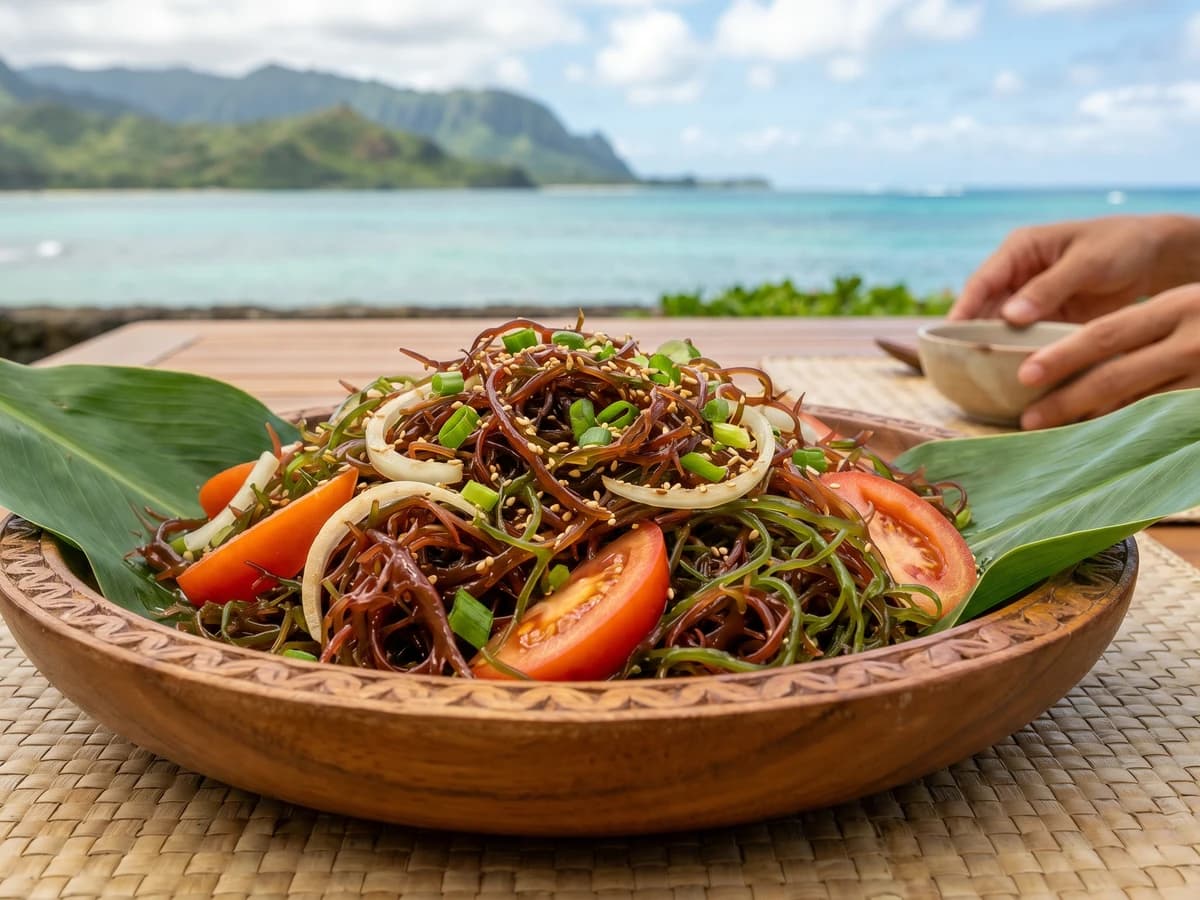
Hawaiʻi's reef bowl, ogo limu blanched crisp, dressed with tomato, sweet onion, shoyu, vinegar, and sesame, then brought to the lūʻau table beside fish, poi, and every cousin who came hungry.
Chef Juliette
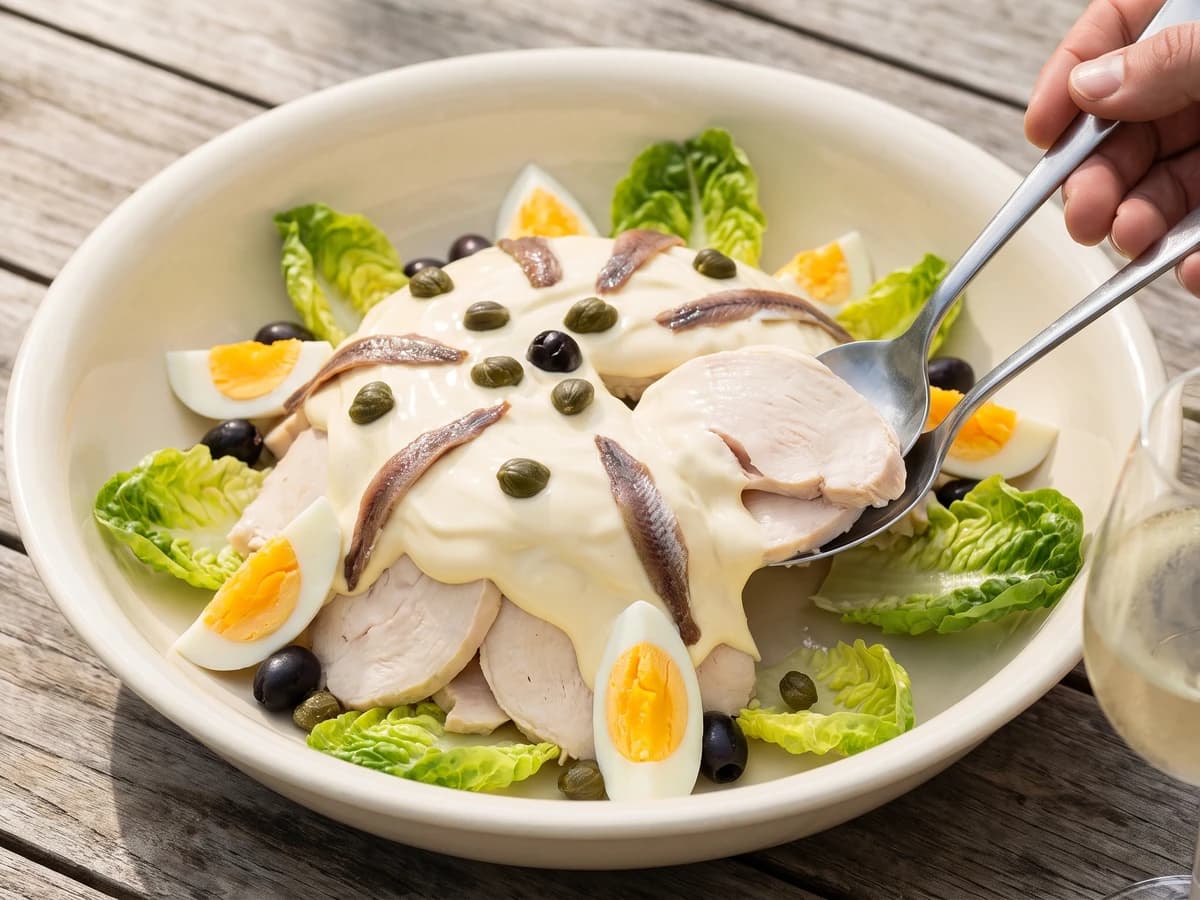
Cold roast chicken, ciseled lettuce, and a shining coat of homemade mayonnaise, arranged with capers, olives, anchovies, eggs, and lettuce hearts, then tossed at the table as the canon intends.