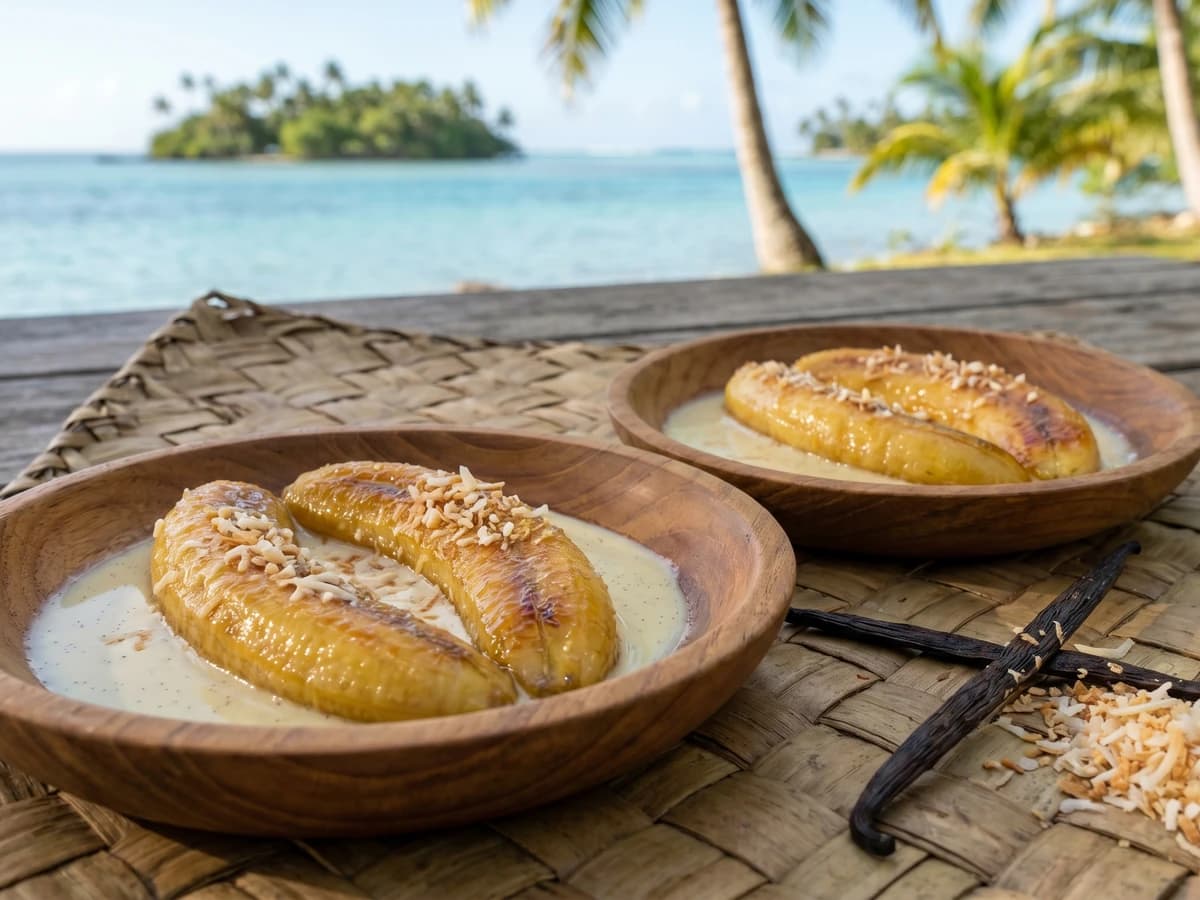
Poʻe ʻUmara (Tahitian Sweet Potato Pudding with Coconut Milk)
Created by
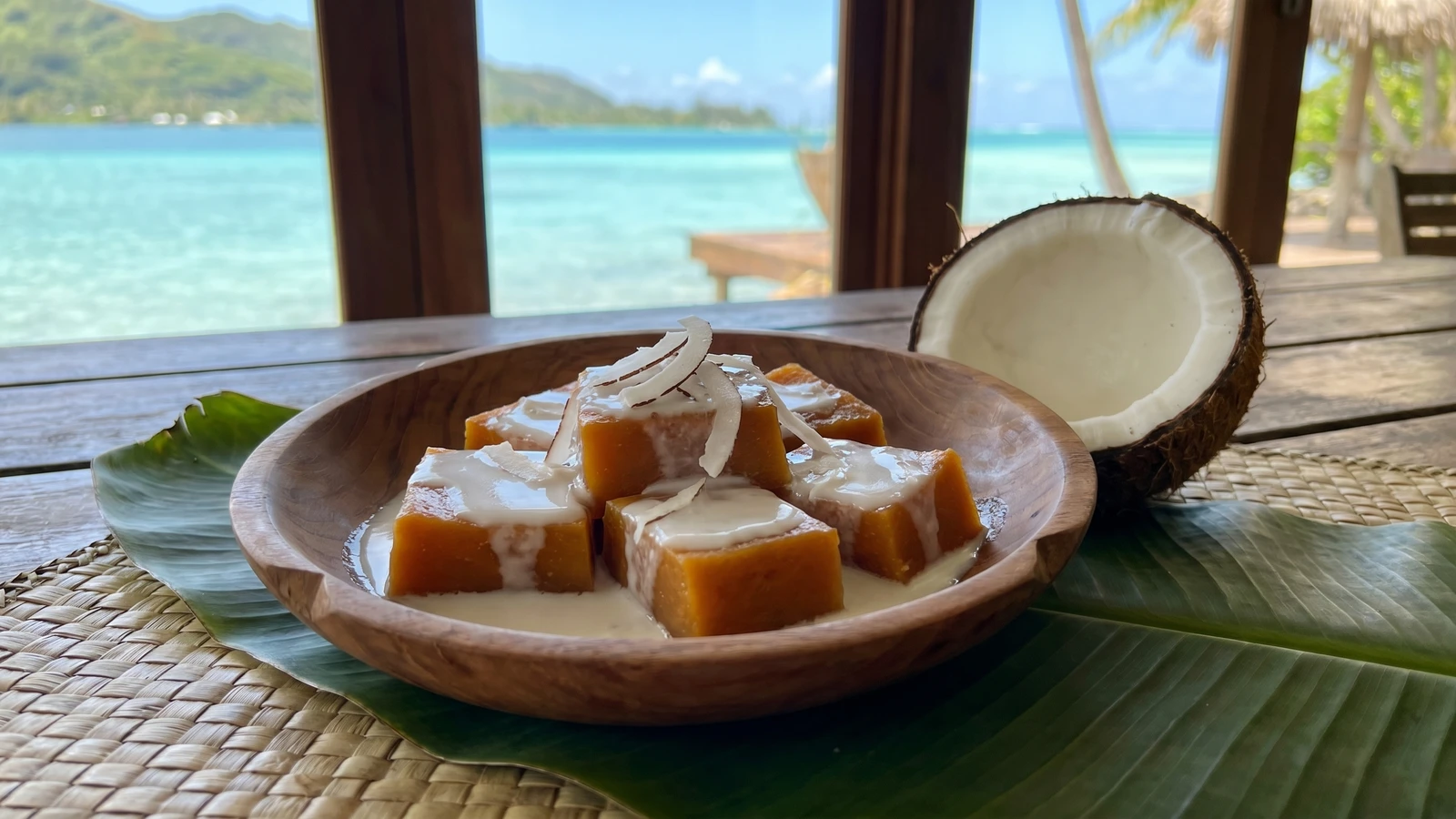
Tahiti's poʻe ʻumara turns sweet potato into a glossy baked pudding, cut cool and served under fresh coconut milk. A canoe-crop sweet, soft enough for comfort and generous enough for celebration.
Desserts
Polynesian, Tahitian
Celebration
Special Occasion
Comfort Food
25 min
Active Time
1 hr cook•1 hr 25 min total
Yield8 servings
The canoe carried more than people. It carried roots, starts, memory, and the way a family feeds itself when the land is new under their feet. This poʻe ʻumara belongs to Tahiti, to the fenua, the land, and to the Tahitian hand that learned how sweet potato, starch, heat, and coconut milk could become the Sunday sweet.
Poʻe, in reo Tahiti, is a soft pudding made from a cooked fruit or root, thickened with starch, then baked or steamed until it sets glossy and tender. Here the ʻumara, the sweet potato, gets cooked soft, mashed smooth, and held together with tapioca or arrowroot before the coconut milk comes over it at the table. That's the why behind the method: cook the root until it gives, bind it only enough to hold, then let the coconut carry the richness.
This is Tahiti's bowl, but it has cousins all across the Triangle. Hawaiʻi has poi and paʻiʻai from kalo, the Cooks pound and cook their own root and fruit puddings, Sāmoa and Tonga keep talo and coconut close to the center of the table. One ocean, one canoe, one root. Same family, different hands.
I cook this open-handed, because Tahiti's deep table is not mine to claim. For the old ceremonial lines, go sit with Tahitian elders and cooks who carry them. For your kitchen tonight, keep it warm and unfussy: good ʻumara, enough starch to set, fresh coconut if you can, canned if that's what you have. Eat what you have. No need make it precious.
Poʻe is a Tahitian pudding family, made from cooked canoe crops and island fruits such as ʻumara, mei or breadfruit, taro, banana, papaya, or pumpkin, thickened with starch and served with coconut milk. Before imported flour and refined sweets became ordinary, these roots and fruits were the sweet table, tied to the same voyaging plant grammar that carried taro, breadfruit, coconut, and sweet potato across Polynesia. The modern baking dish and canned coconut milk sit beside the older leaf, stone, and coconut work, proof that Tahitian food keeps moving without forgetting where its feet stand.
The technique, the tradition, and the story behind every dish.
•Pot with steamer basket or sheet pan for roasting
•Potato masher or heavy wooden spoon
•Fine grater and clean cloth for fresh coconut milk, optional
Instructions
1
Cook the ʻumara
Heat the oven to 350F. Steam or roast the ʻumara, the sweet potato, until a knife slides through with no fight, 35 to 45 minutes depending on size. Let them cool just enough to handle, then peel while still warm.
2
Mash it smooth
Mash the warm ʻumara until no hard pieces remain. It should look dense and soft, like it wants to hold together. No rush here. The smoothness now becomes the gloss later.
A few small bits are fine for home eating, but hard chunks will make the pudding break unevenly. Work them out with the back of a spoon.
3
Make the batter
Stir in the tapioca starch, sugar, salt, vanilla if using, and 1 cup coconut milk. Mix until the starch disappears and the batter turns heavy and shiny. It should be thick enough to mound, but loose enough to spread. Add a spoonful more coconut milk if it stands too stiff.
4
Line and bake
Line an 8-inch square baking dish with banana leaf, or oil it lightly. Scrape in the batter and smooth the top. Bake 35 to 45 minutes, until the poʻe is set, glossy on top, and pulls a little from the sides. The center should spring back softly, not slosh.
5
Cool and cut
Let the poʻe cool to room temperature, then chill if you want clean slices. Cut into squares or diamonds with a wet knife. The pudding should be firm, tender, and a little bouncy from the starch.
6
Flood with coconut
Serve the pieces in a wooden bowl or on banana leaf, then pour fresh coconut milk or coconut cream over the top until it pools around the pudding. Eat it cool, sweet, and simple. That coconut flood is not decoration. That's where the dish comes home.
Chef Tips
•Use the sweetest ʻumara you can find. Orange sweet potatoes give a soft sunset color, purple ones make a deeper, earthier pudding. Both belong if the root is good.
•Fresh coconut milk makes the serving sauce taste alive. Grate mature coconut, squeeze it with a little warm water, and use it the same day. A thick can is fine for a weeknight, just stir it smooth first.
•The starch is there to bind, not turn the pudding rubbery. If your sweet potatoes are dry, add a little more coconut milk. If they are wet, give the batter a few extra minutes in the oven.
•Serve it cool or room temperature. Leftovers are good from the fridge with more coconut milk poured over, because we no waste good food.
Advance Preparation
•Cook and peel the ʻumara up to 1 day ahead, then refrigerate covered. Warm slightly before mashing so the batter comes together smooth.
•Bake the poʻe up to 1 day ahead and chill it covered. Pour the coconut milk over only when serving so the pieces stay clean and glossy.
•Fresh coconut milk is best made the same day. It separates as it sits, so stir it back together before pouring.
Frequently Asked Questions
Nutrition Information
1 serving (about 190g)
Calories
370 calories
Total Fat
19 g
Saturated Fat
16 g
Trans Fat
0 g
Unsaturated Fat
3 g
Cholesterol
0 mg
Sodium
150 mg
Total Carbohydrates
46 g
Dietary Fiber
5 g
Sugars
20 g
Protein
4 g
Where cooking meets culture.
Culinary guides, cultural storytelling, and the editorial depth that makes cooking meaningful.