
Chef Makoa
Faraoa ʻIpo (Tahitian Coconut Dumplings)
Soft Tahitian ʻipo, coconut-milk dough rolled by hand and steamed until tender, born from the atoll table of the Tuamotu and carried now to Society Islands kitchens.
A cooking platform built around craft, culture, and the stories behind what we eat.
Created by
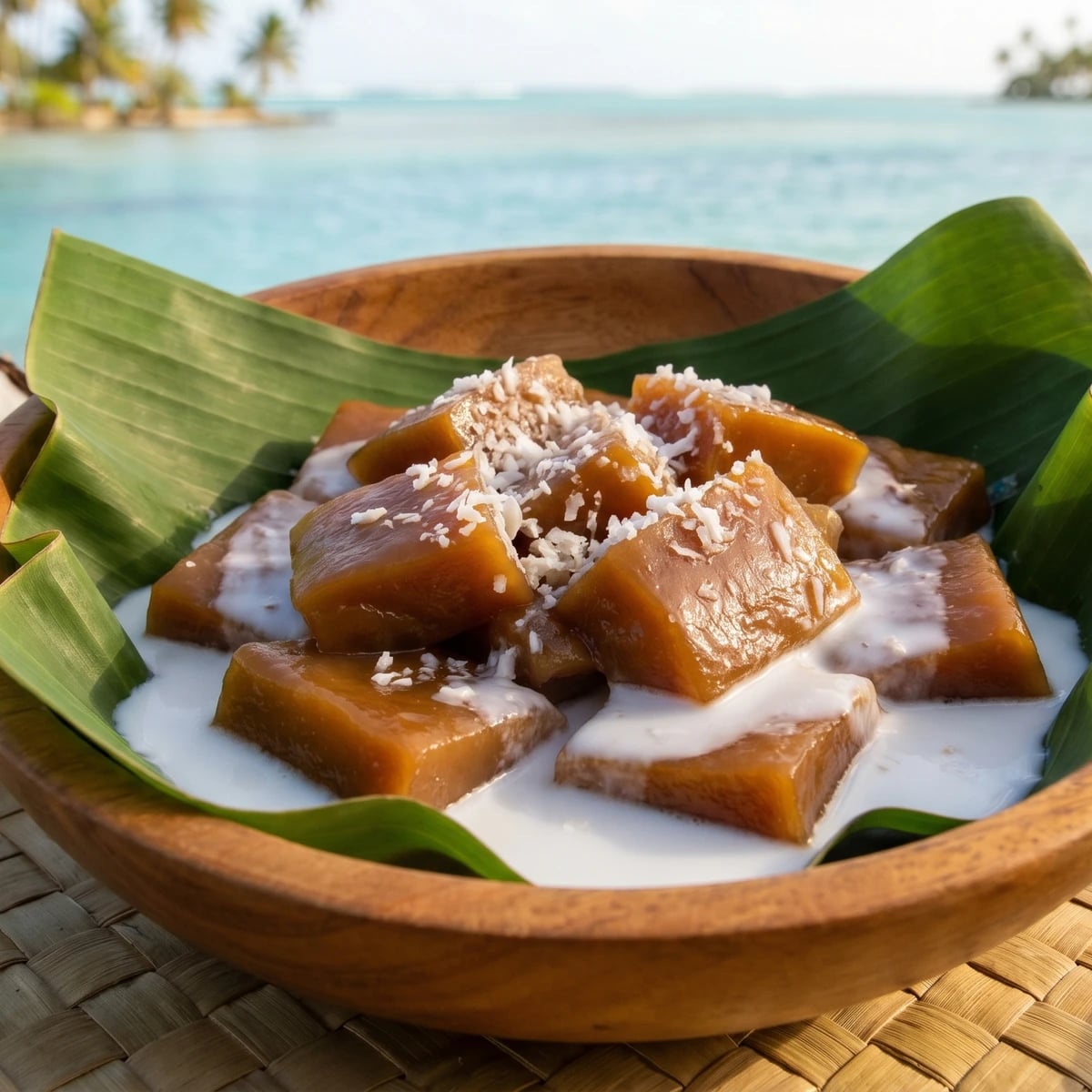
Ripe banana mashed soft, bound with pia or tapioca starch, baked until amber and springy, then drowned in fresh coconut milk. Tahiti calls this poʻe meika, the banana one.
The canoe didn't just carry plants, it carried ways to make sweetness from what the fenua, the land, was already giving. Poʻe meika belongs to Tahiti: ripe meika, banana, mashed soft with pia, Polynesian arrowroot starch, baked until it shines and sets, then fed with fresh coconut milk. I learned it as a cousin dish, not from my own papa kuʻi ʻai, the Hawaiian pounding board, so I keep my hands open with it. For the deep parts of maʻa Tahiti, the Tahitian table, go sit with Tahitian metua, the elders. They should tell their own story.
Back home in Hawaiʻi, we pound kalo into paʻiʻai and poi, and I know that board in my bones. Tahiti takes another path here. The fruit isn't pounded into Hāloa's line the way our kalo is, but it still gets treated like a canoe-crop relative: no wasting the speckled bananas, no rushing the starch, no hiding it under fancy. Cook it until the center has no chalk left and the top is glossy, amber, and springy under your fingers.
Then the coconut milk goes over generously. Not a drizzle. This is comfort food and celebration food at once, the sweet that can sit beside fish, leaf parcels, ʻuru, and all the everyday plates the islands eat now. Cook Islands cousins have poke, banana or pumpkin pudding with coconut cream; the Marquesas keep popoi with breadfruit and banana; Hawaiʻi has poi at the board. One ocean, one canoe, one root, but this bowl is Tahiti's. Name the hand and the food comes alive.
Poʻe is part of maʻa Tahiti, the Tahitian table of older foods, where fruit and starch were set in leaf and cooked in the ahimaʻa, the Tahitian earth oven, before home ovens took over the weeknight job. The set once came from pia, Polynesian arrowroot, though tapioca and cornstarch became common pantry stand-ins after mission and trade foods reshaped the kitchen. Its closest dessert cousin is Cook Islands poke, banana or pumpkin set with starch and covered in coconut cream, while Marquesan popoi and Hawaiian poi show the wider pounded-starch family moving under different island names.
Quantity
8 medium, about 2 1/2 pounds unpeeled
peeled and mashed to about 4 cups
Quantity
3/4 to 1 cup
Quantity
2 to 4 tablespoons
use the smaller amount if the bananas are very sweet
Quantity
1/2 teaspoon
Quantity
1 teaspoon
Quantity
1 tablespoon
for the pan
Quantity
1 piece
for lining the pan
Quantity
2 cups
or 1 can full-fat coconut milk, well stirred
Quantity
1/4 cup
for serving
| Ingredient | Quantity |
|---|---|
| very ripe bananas (meika)peeled and mashed to about 4 cups | 8 medium, about 2 1/2 pounds unpeeled |
| pia (Polynesian arrowroot starch), tapioca starch, or cornstarch | 3/4 to 1 cup |
| raw sugaruse the smaller amount if the bananas are very sweet | 2 to 4 tablespoons |
| fine sea salt | 1/2 teaspoon |
| vanilla extract (optional) | 1 teaspoon |
| coconut oilfor the pan | 1 tablespoon |
| banana leaf, or parchmentfor lining the pan | 1 piece |
| fresh coconut milkor 1 can full-fat coconut milk, well stirred | 2 cups |
| grated fresh coconut (optional)for serving | 1/4 cup |
Heat the oven to 350F. Oil a 9-inch square pan or a 2-quart baking dish, then line it with banana leaf if you have it, glossy side up, or parchment if you don't. If the leaf is stiff, pass it quickly over a low flame or dip it in hot water until it bends without tearing.
Peel the bananas and mash them in a wide bowl until mostly smooth, with a few small soft pieces left. You want about 4 cups. The bananas should smell deep and sweet, with skins gone speckled or black. If they're firm and pale, wait another day. No blame the banana if you used it too young.
Stir in 3/4 cup of the pia, tapioca starch, or cornstarch, then add the sugar, salt, and vanilla if using. Mix until no dry streaks remain and the mash turns into a thick, shiny batter. If it still pours like juice, add the remaining 1/4 cup starch. If it sits heavy on the spoon, stop there.
Scrape the batter into the lined pan and smooth the top. Bake 45 to 55 minutes, until the pudding turns amber, glossy, and springy in the center, and the edges begin to pull from the leaf or pan. A tester should come out sticky but not chalky. Chalky means the starch still needs time.
Let the poʻe rest at least 20 minutes. It firms as it cools, so don't rush the knife. Cut it into generous squares or diamonds while still warm or at room temperature, the way you'd set out something meant for the whole table, not one careful little portion.
Spoon the pieces into a carved wooden bowl or onto banana leaf, then pour the fresh coconut milk over until it pools around the pudding. Finish with grated coconut if you like. The poʻe should be soft, glossy, lightly chewy, and sweet enough to taste the banana first.
1 serving (about 180g)
Culinary guides, cultural storytelling, and the editorial depth that makes cooking meaningful.
Discover Culinary Explorer
Chef Makoa
Soft Tahitian ʻipo, coconut-milk dough rolled by hand and steamed until tender, born from the atoll table of the Tuamotu and carried now to Society Islands kitchens.

Chef Makoa
Tahiti's fēʻi are orange-fleshed mountain bananas, cooked until tender and served like a starch, warm with sea salt, coconut cream, and the quiet sweetness of the high valleys.

Chef Makoa
Tahiti's sharp, funky coconut condiment, grated coco fermented with brine and shrimp until it smells of reef and feast, then spooned over fish, ʻuru, taro, and maʻa Tahiti.

Chef Makoa
Deep-gold Tahitian poʻe mautini, orange squash mashed with starch and vanilla, baked until firm and tender, then cooled and spooned with fresh coconut milk at the table.