
Chef Dean
Chilled Overnight Oats with Fresh Berries and Honey
Silky oats that do their work while you sleep, waking you to layers of ripe summer berries, crunchy toasted almonds, and golden honey that pools into every spoonful.
A cooking platform built around craft, culture, and the stories behind what we eat.
Created by
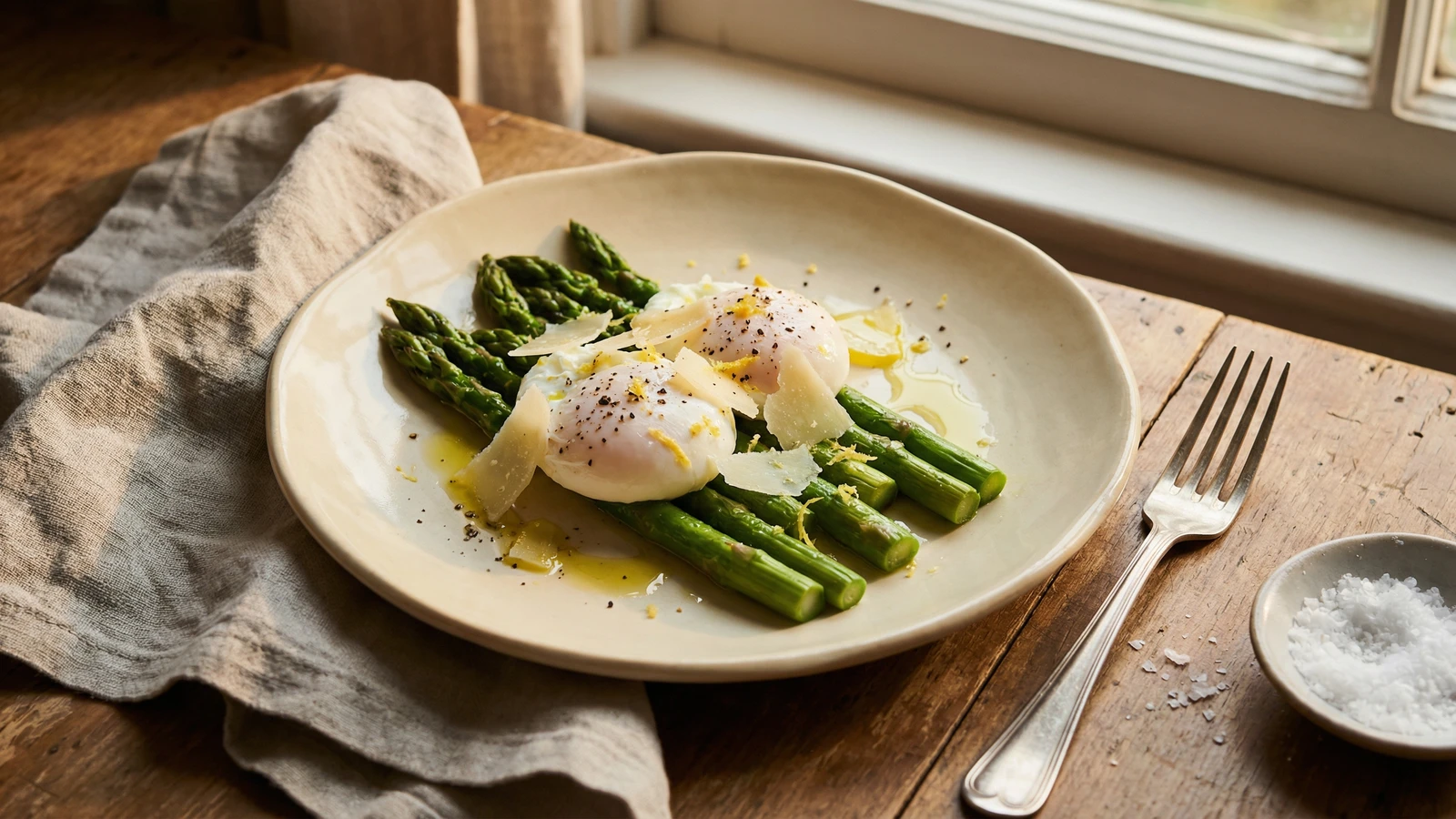
Tender spring asparagus blanketed with softly poached eggs, their golden yolks ready to break into a sauce that needs nothing more than good olive oil and shards of aged Parmesan.
Spring asparagus is a fleeting thing. The season lasts six weeks, maybe eight if you are lucky. When you find spears that were cut that morning, still firm and sweet and alive with the taste of the earth, this is what you make.
The technique is simple because it has to be. You are not building flavor so much as protecting it. Blanch the asparagus until it gives just slightly to a knife. Poach the eggs until the whites set but the yolks remain liquid gold. Bring them together on a warm plate with olive oil, Parmesan, and salt. When the yolk breaks, it becomes the sauce.
I learned to cook eggs this way in France, where the quality of the egg was assumed. A runny yolk was not a choice but an expectation. The same is true of the asparagus. If your ingredients are right, your job is simply to get out of the way.
Every meal is a meaningful choice. Buying asparagus from a farmer who cut it that morning, eggs from hens that see the sun, cheese that was aged with care: these choices matter. They taste different, and they keep the people who grow your food in business.
Quantity
1 pound
thick spears preferred
Quantity
4
freshest available
Quantity
2 tablespoons
Quantity
2 tablespoons
Quantity
1 ounce
shaved with a vegetable peeler
Quantity
to taste
Quantity
to taste
freshly cracked
Quantity
from 1 small lemon
| Ingredient | Quantity |
|---|---|
| fresh asparagusthick spears preferred | 1 pound |
| large eggsfreshest available | 4 |
| white wine vinegar | 2 tablespoons |
| good olive oil | 2 tablespoons |
| Parmigiano-Reggianoshaved with a vegetable peeler | 1 ounce |
| flaky sea salt | to taste |
| black pepperfreshly cracked | to taste |
| lemon zest (optional) | from 1 small lemon |
Look for asparagus with tight, compact tips and stalks that snap cleanly when you bend them. If they bend without breaking, they have been sitting too long. The cut ends should look moist, not dried or woody. Thick spears work best here because they hold their texture and have more sweetness.
Snap off the woody ends where each stalk naturally wants to break. Hold the base in one hand and bend until it gives. The asparagus knows where to break. If spears are thick, peel the bottom third lightly with a vegetable peeler to ensure even cooking.
Bring a wide pot of water to a rolling boil and salt it generously. It should taste like the sea. Add the asparagus and cook until just tender when pierced with a knife, two to four minutes depending on thickness. You want resistance, not mush. Drain and spread on a clean towel. Do not shock in ice water; the residual warmth is part of the dish.
Fill a deep skillet or wide saucepan with about three inches of water. Add the white wine vinegar. Bring to a bare simmer over medium heat. You want lazy bubbles rising from the bottom, not a roiling boil. Aggressive water tears the whites apart.
Crack each egg into a small cup or ramekin. This gives you control. One at a time, lower the cup to the water's surface and let the egg slip in gently. Swirl the water with a spoon before adding the next egg. Cook for three minutes for a runny yolk, four for a yolk that still flows but holds its shape. Lift each egg out with a slotted spoon and let it drain for a moment.
Divide the warm asparagus between two plates, arranging the spears in a single layer. Drizzle with olive oil. Place two poached eggs over each portion of asparagus. The yolk should rest like a gift waiting to be opened.
Shower each plate with shaved Parmesan. The curls should fall casually, not precisely. Season with flaky salt and cracked pepper. Add lemon zest if you like brightness against the richness. Serve immediately. When the yolk breaks over the asparagus, that is the sauce.
1 serving (about 330g)
Culinary guides, cultural storytelling, and the editorial depth that makes cooking meaningful.
Discover Culinary ExplorerChef Dean
Silky oats that do their work while you sleep, waking you to layers of ripe summer berries, crunchy toasted almonds, and golden honey that pools into every spoonful.

Chef Ally
Eggs from a farmer you trust, cooked low and slow in butter until the whites crisp at the edges and the yolks stay golden and runny, resting on a tangle of just-wilted greens from the morning market.

Chef Ally
Whole oats, raw nuts, and seeds bound together with local honey and slow-toasted until the kitchen fills with the kind of warmth that makes people wander in asking what smells so good.

Chef Dean
Pillowy soft-scrambled eggs enriched with tangy goat cheese and summer herbs, crowned with barely warmed cherry tomatoes that burst with concentrated sweetness. This is California farmers market cooking at its most honest.