
Chef Dean
Baked Ham and Cheese Croissants
Buttery, shatteringly crisp croissants filled with smoky ham and molten Gruyère, brushed with honey mustard glaze and baked until the kitchen smells like a Parisian bakery on Christmas morning.
A cooking platform built around craft, culture, and the stories behind what we eat.
Created by
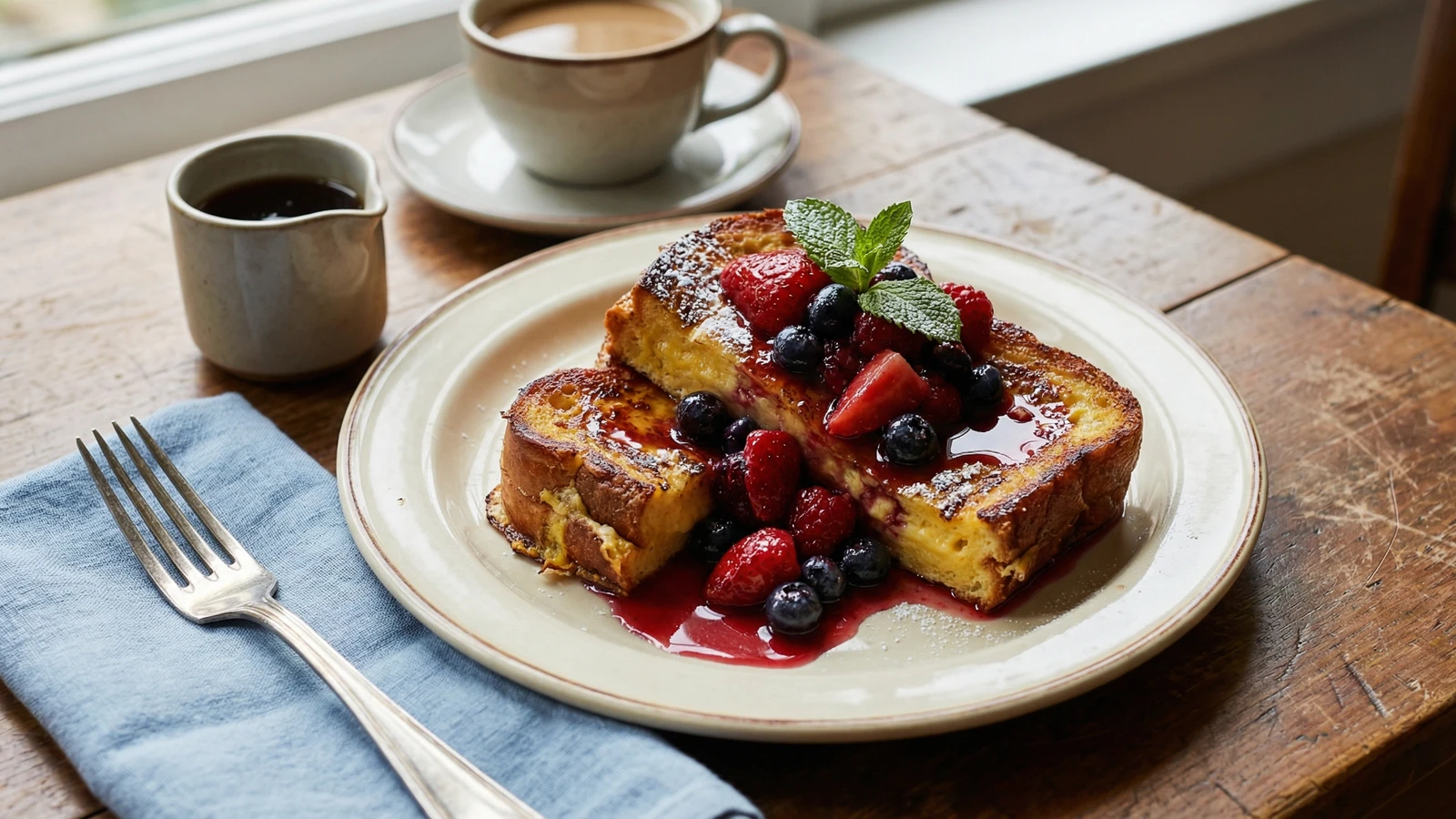
Thick slices of buttery brioche soaked in vanilla custard and cooked to a golden crust, crowned with summer berries that have surrendered their juices into a natural syrup no bottle could match.
Start with the brioche. A good loaf, baked by someone who used real butter and eggs, is already halfway to something extraordinary. Day-old is what you want. The slight staleness lets the bread drink up the custard without falling apart, and the texture after cooking is incomparably better: crisp and caramelized outside, custardy within.
The berries matter just as much. Find them at peak season, from a farmer who picked them that morning or the day before. Strawberries that smell like strawberries. Raspberries that stain your fingers. Blueberries tight with juice. When fruit is this good, sugar and a squeeze of lemon are all you need. The berries do the rest, releasing their own syrup as they sit.
This is not a complicated dish. It is breakfast the way it should be: good ingredients, simple technique, and the patience to let things become what they want to become. The thirty minutes the berries spend macerating while you cook the toast is not waiting. It is transformation.
Quantity
1 (about 1 pound)
day-old, cut into 8 thick slices
Quantity
4
at room temperature
Quantity
1 cup
Quantity
2 tablespoons, plus more for serving
Quantity
1 teaspoon
Quantity
1/4 teaspoon
Quantity
3 tablespoons
divided
Quantity
2 cups
strawberries hulled and quartered, others left whole
Quantity
2 tablespoons
Quantity
1 teaspoon
| Ingredient | Quantity |
|---|---|
| brioche loafday-old, cut into 8 thick slices | 1 (about 1 pound) |
| large eggsat room temperature | 4 |
| heavy cream | 1 cup |
| pure maple syrup | 2 tablespoons, plus more for serving |
| pure vanilla extract | 1 teaspoon |
| fine sea salt | 1/4 teaspoon |
| unsalted butterdivided | 3 tablespoons |
| mixed summer berriesstrawberries hulled and quartered, others left whole | 2 cups |
| sugar | 2 tablespoons |
| fresh lemon juice | 1 teaspoon |
Combine the berries in a bowl with sugar and lemon juice. Toss gently. The sugar draws out their juices, creating a syrup that needs nothing else. Let them sit at room temperature while you prepare everything else, at least twenty minutes. Longer is better. The berries will soften and their colors will deepen into the pooling liquid.
Whisk together the eggs, cream, maple syrup, vanilla, and salt in a wide, shallow dish. The mixture should be uniform, no streaks of white remaining. This is your soaking liquid, rich enough to transform day-old bread into something silken.
Place two slices of brioche into the custard. Let them rest for thirty seconds, then flip and soak another thirty seconds. The bread should feel heavy and saturated but still hold its shape. Brioche is forgiving because of all that butter and egg in the dough, but do not leave it swimming or it will fall apart in the pan.
Melt a tablespoon of butter in a large skillet or griddle over medium heat. When the foam subsides and the butter smells nutty, add the soaked brioche. Cook undisturbed for three to four minutes until the bottom is deeply golden. The custard sets into a delicate crust. Flip gently and cook another three minutes on the second side. The finished toast should give slightly when pressed but feel set, not liquid, at the center.
Transfer finished toast to a wire rack set over a baking sheet in a 200F oven. This keeps it warm without steaming the crisp surfaces against a plate. Add more butter to the pan as needed and continue soaking and cooking the remaining slices.
Place two slices on each plate. Spoon the macerated berries and their juices generously over the top, letting the syrup pool and soak into the edges. A small pitcher of maple syrup can go on the table for those who want it, but taste first. With good berries, you may not need anything more.
1 serving (about 300g)
Culinary guides, cultural storytelling, and the editorial depth that makes cooking meaningful.
Discover Culinary ExplorerChef Dean
Buttery, shatteringly crisp croissants filled with smoky ham and molten Gruyère, brushed with honey mustard glaze and baked until the kitchen smells like a Parisian bakery on Christmas morning.

Chef Ally
Tender, nutty buckwheat pancakes crowned with a simple compote of whatever fruit the market offers, the kind of breakfast that turns a slow morning into something worth remembering.

Chef Ally
Tender leeks melted in butter until sweet, folded into silky custard with aged Gruyère, and baked in a shatteringly flaky crust that speaks of French farmhouse kitchens and unhurried weekend mornings.

Chef Ally
Eggs gently baked in butter and crème fraîche, the whites barely set, the yolks still trembling, finished with a scatter of herbs that taste like the garden on a spring morning.