Chef Thomas
Anchovy Sauce
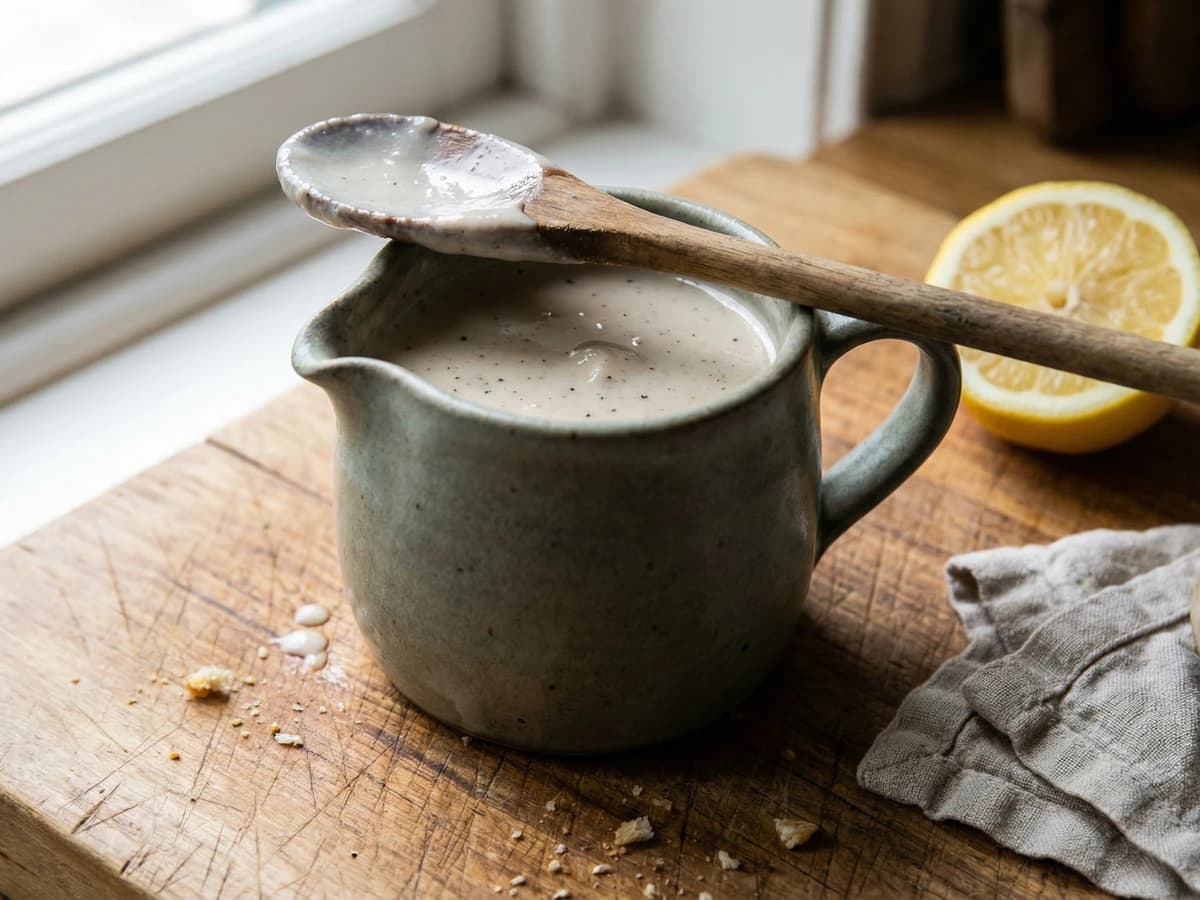
A proper white sauce sharpened with pounded anchovy, the old Georgian trick for waking up a piece of poached fish or a slice of roast lamb on a Sunday in spring.
A cooking platform built around craft, culture, and the stories behind what we eat.

Created by Chef Thomas
A proper ploughman's pickle, dark and sticky and full of bite, made from a heap of winter roots and the kind of patience that pays you back four weeks later.
There's a Saturday in November when the market starts looking like winter. The leafy things have gone, the tomatoes are a memory, and what's left is honest: swede, carrot, cauliflower, onions, the kind of vegetables that survive frost and don't ask for much. This is the pickle that uses all of them at once.
A ploughman's pickle isn't about any one ingredient. It's about what happens when you dice a great pile of winter vegetables small, throw them into a pan with vinegar and dark sugar and treacle and spices, and let the whole thing collapse slowly into something the colour of wet bark. The kitchen smells of cloves and malt and burnt sugar for two hours. By the time you're spooning it into jars, you'll have forgotten what your kitchen smelled like before.
Make it now and you'll be opening the first jar around Christmas, when the cheese board comes out and someone asks if there's any pickle. There will be. A great spoonful next to a wedge of mature cheddar, a hunk of bread, a pickled onion, a slice of ham. That's the whole point of this. You're not making pickle. You're making the future of every cold lunch you'll eat this winter.
I wrote it down in the notebook the first year I made it: "Roots. Treacle. Wait." That's still about right.
Quantity
1 small (about 300g)
peeled and finely diced
Quantity
2 medium (about 200g)
peeled and finely diced
Quantity
1 large
finely diced
Quantity
200g
broken into very small florets
Quantity
150g
finely diced
Quantity
100g
finely chopped
Quantity
75g
finely chopped
Quantity
3
crushed
Quantity
1 small
peeled, cored, finely diced
Quantity
400ml
Quantity
200g
Quantity
3 tablespoons
Quantity
2 tablespoons
Quantity
1 tablespoon
Quantity
1 tablespoon
Quantity
2 teaspoons
Quantity
1 teaspoon
Quantity
1 teaspoon
Quantity
1/2 teaspoon
Quantity
1/2 teaspoon
Quantity
1
juiced
| Ingredient | Quantity |
|---|---|
| swedepeeled and finely diced | 1 small (about 300g) |
| carrotspeeled and finely diced | 2 medium (about 200g) |
| onionfinely diced | 1 large |
| cauliflowerbroken into very small florets | 200g |
| courgette or marrowfinely diced | 150g |
| pitted datesfinely chopped | 100g |
| gherkinsfinely chopped | 75g |
| garlic clovescrushed | 3 |
| eating applepeeled, cored, finely diced | 1 small |
| malt vinegar | 400ml |
| dark muscovado sugar | 200g |
| black treacle | 3 tablespoons |
| tomato puree | 2 tablespoons |
| English mustard | 1 tablespoon |
| Worcestershire sauce | 1 tablespoon |
| fine sea salt | 2 teaspoons |
| ground allspice | 1 teaspoon |
| ground coriander | 1 teaspoon |
| ground cloves | 1/2 teaspoon |
| cayenne pepper | 1/2 teaspoon |
| lemonjuiced | 1 |
This is the part that asks for patience. Put the radio on. The vegetables all need to be cut to roughly the same size, somewhere between a pea and a small dice. Not minced, not chunky, somewhere in between. The swede and carrot are the firmest, so start with those. The cauliflower wants to be broken into tiny florets, no bigger than a fingernail. Tip everything into your largest bowl as you go. It will look like a great deal of vegetables. It is.
Pour the vinegar into a large, heavy-bottomed pan, the biggest you have. Add the muscovado sugar, the treacle, the tomato puree, the mustard, the Worcestershire sauce, the salt, and all the spices. Set it over a low heat and stir until the sugar has dissolved and the treacle has melted into the vinegar. The kitchen will start to smell like Christmas in November, dark and sweet and a little fierce.
Tip in all the diced vegetables, the dates, the gherkins, the garlic, and the apple. Stir well. It will look dry at first, then the vegetables will start to give up their water and the whole thing will loosen into a dark, glossy mess that already smells like the inside of a cheese sandwich.
Bring it up to a gentle simmer, then turn the heat down as low as it will go. Cook uncovered for an hour and a half to two hours, stirring every ten minutes or so to stop it catching on the bottom. You want the vegetables tender but still holding their shape, and the liquid reduced to a thick, dark, glossy sauce that coats the back of a spoon. Drag a wooden spoon through the middle of the pan. If the channel holds for a moment before the sauce flows back in, it's ready. If it floods straight back, give it another fifteen minutes.
Off the heat, stir in the lemon juice. Taste it carefully, it's hot, but you need to know what you've made. It should be sweet, sharp, savoury, and a little spicy, all at once. If it tastes flat, more salt. If it tastes too sweet, a splash more vinegar. Season and taste. Then taste again.
While the pickle is still warm, spoon it into hot, sterilised jars, pressing it down with the back of a spoon to push out any air pockets. Fill right to the top, then seal immediately with vinegar-proof lids. Label them with the date. Now comes the hardest part: put them in a dark cupboard and forget about them for at least four weeks. Six is better. The pickle needs that time to mellow, to let the harsh edges of the vinegar soften and the spices marry into something deeper.
1 serving (about 20g)
Culinary guides, cultural storytelling, and the editorial depth that makes cooking meaningful.
Discover Culinary ExplorerChef Thomas
A proper white sauce sharpened with pounded anchovy, the old Georgian trick for waking up a piece of poached fish or a slice of roast lamb on a Sunday in spring.

Chef Thomas
A spiced autumn chutney made from a glut of apples and a quiet afternoon, simmered down until the kitchen smells of October and the jars line up on the counter like a small, useful insurance policy.
Chef Thomas
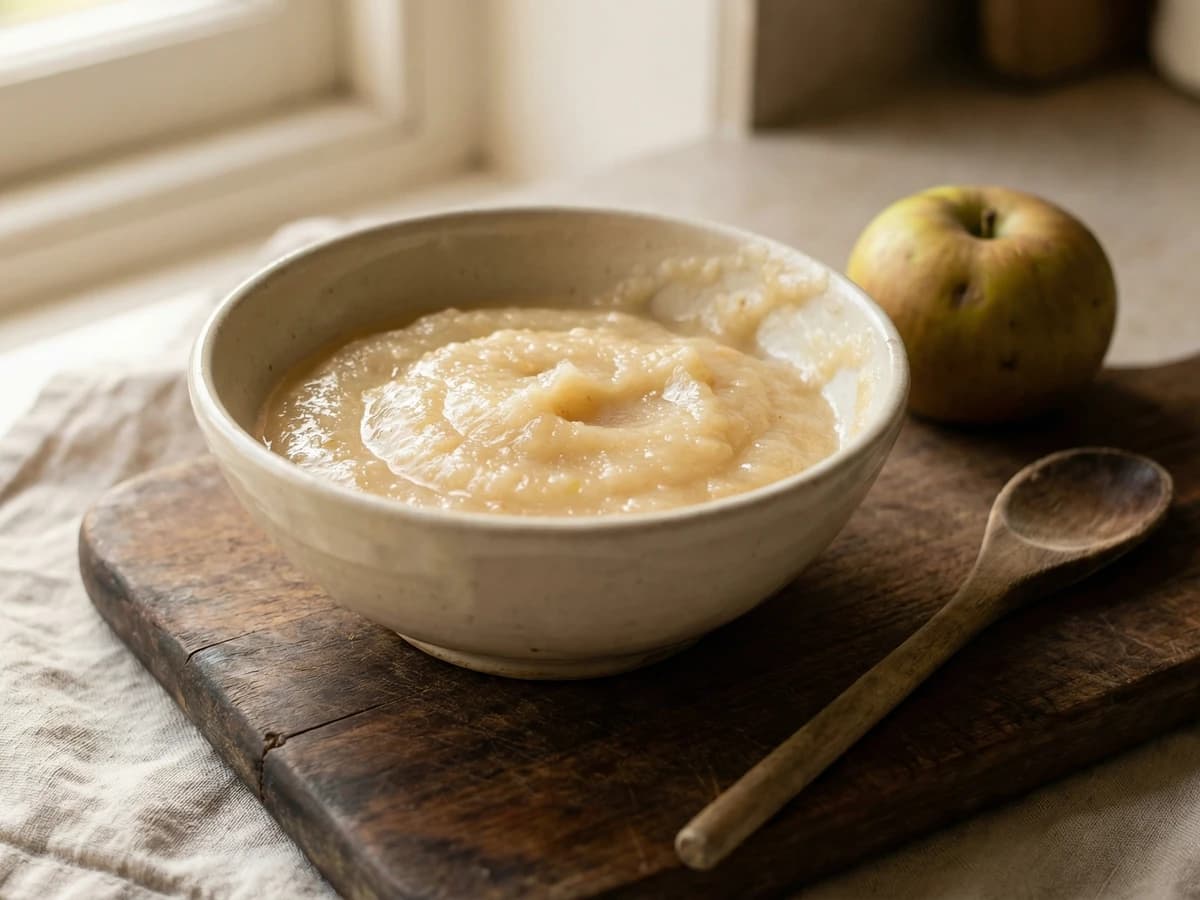
A bowl of sharp, fluffy Bramley apple sauce, made in the time it takes to carve the pork, the kind of small condiment that quietly makes the whole meal make sense.
Chef Thomas
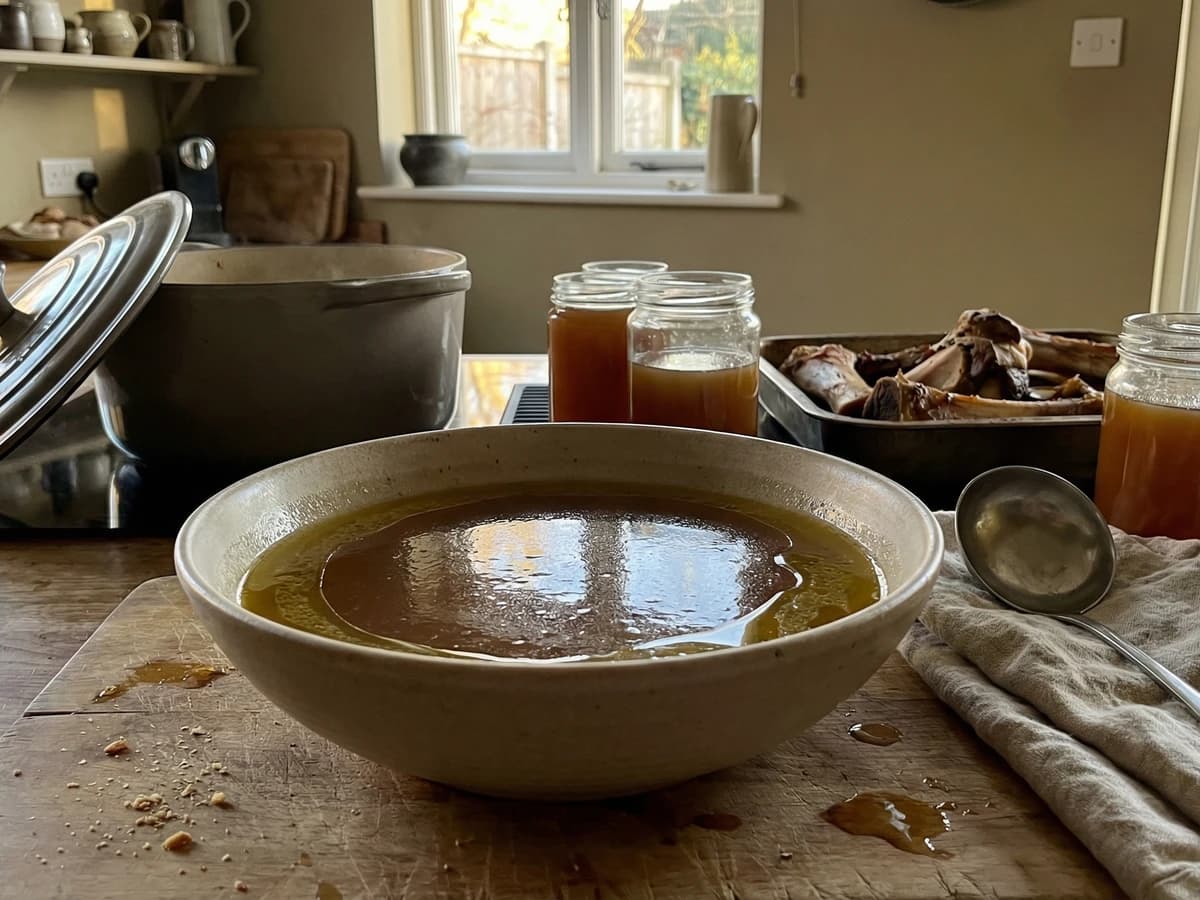
Beef bones roasted until dark, then coaxed for a long afternoon into a deep amber stock, the foundation of every good gravy, every braise, every bowl of winter soup worth the trouble.