Culinary Explorer

A cooking platform built around craft, culture, and the stories behind what we eat.
Discover Culinary Explorer
Plátanos Rellenos de Frijol Guerrerenses

Plátanos Rellenos de Frijol Guerrerenses

Created by

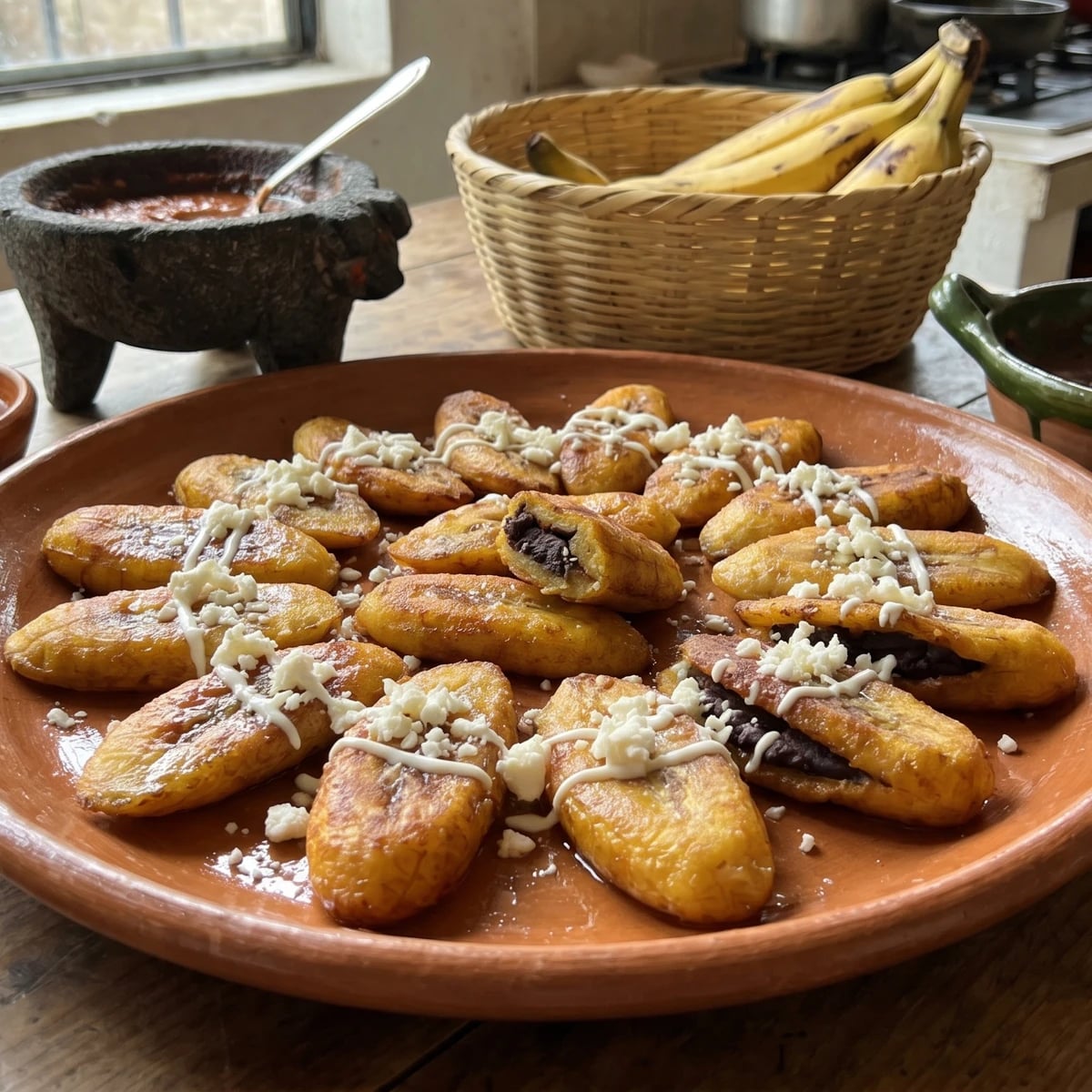
Guerrero's Costa Grande turns ripe plátano macho and refried beans into a sweet-savory fried side, crisp at the edges, soft inside, and built from mercado economy.

Side Dishes
Mexican
Comfort Food
Budget Friendly
Make Ahead
35 min
Active Time
45 min cook1 hr 20 min total
Yield8 stuffed plantains

Guerrero's Costa Grande is where this version belongs, with one foot reaching into Michoacán's coast because food does not stop at a state line just because a map says so. Plátano macho grows well in the warm Pacific belt, and beans are the daily pot that keeps a household fed. Put them together and you have comida de casa: cheap, filling, and serious when made correctly.

The defining flavor here is not heat. It is the sweet ripe plantain against black beans refried in manteca de cerdo with epazote and chile costeño. Not every Mexican dish is trying to burn your mouth. This one is about balance: sugar from the plantain, earth from the beans, green bitterness from the epazote, and just enough chile to remind you where you are.

I learned a version like this from a woman near Zihuatanejo who shaped the plantain in her palm without measuring anything. Her rule was better than a timer: the beans must be thick enough to sit on the spoon, and the plantain must be ripe enough to mash but not so soft it collapses. That is the recipe before the recipe. Cada estado, su propia cocina.

Plantains arrived in Mexico through Spanish colonial trade routes after being carried from Africa and the Canary Islands into the Caribbean and mainland ports, then settled naturally into tropical coastal cooking. In Guerrero, Michoacán, Veracruz, Tabasco, and Chiapas, plátano macho became a practical starch beside corn, especially in humid lowland regions where it grew easily and fed families cheaply. Stuffing mashed ripe plantain with refried beans reflects a post-conquest household economy: African and Caribbean plantain traditions meeting Indigenous bean cookery and Mexican lard-frying technique.

The technique, the tradition, and the story behind every dish.

Discover Culinary Explorer

Ingredients

very ripe plátanos machos

Quantity

4

yellow with black spots but still firm

kosher salt

Quantity

1 teaspoon

divided

manteca de cerdo

Quantity

2 tablespoons

white onion

Quantity

1/4 medium

finely chopped

fresh chile costeño verde or chile serrano

Quantity

1

finely chopped

cooked black beans

Quantity

2 cups

drained, with 1/4 cup cooking liquid reserved

epazote

Quantity

1 small sprig

queso fresco (optional)

Quantity

1/2 cup

crumbled

all-purpose flour

Quantity

1/3 cup

for dusting

vegetable oil or additional manteca de cerdo

Quantity

1 cup

for frying

crema mexicana (optional)

Quantity

for serving

queso fresco (optional)

Quantity

for serving

crumbled

salsa de chile costeño (optional)

Quantity

for serving

Equipment Needed

  • Heavy skillet or cast iron pan
  • Pot for simmering plantains
  • Potato masher or wooden spoon
  • Thin spatula for turning the rellenos
  • Wire rack for draining

Instructions

  1. 1

    Cook the plantains

    Cut the ends from the plátanos machos and slice each peel lengthwise without cutting into the flesh. Place them in a pot, cover with water, and add 1/2 teaspoon salt. Simmer for 18 to 22 minutes, until a knife slides through the center. They should be soft enough to mash, not collapsing into sugar. Drain and let them cool just until you can handle them.

  2. 2

    Refry the beans

    Melt the manteca de cerdo in a skillet over medium heat. Add the onion and cook until translucent, about 4 minutes. Add the chile costeño verde and cook until it smells sharp and green. Stir in the black beans, epazote, remaining 1/2 teaspoon salt, and 2 tablespoons of bean cooking liquid. Mash with the back of a spoon until thick and spreadable. The beans must hold their shape on the spoon. Loose beans will leak in the fryer.

    If you use canned beans, rinse them, then refry them hard in the lard with epazote. A can is a compromise, not an upgrade, but the manteca and epazote will make it respectable.
  3. 3

    Mash the plantains

    Peel the warm plantains and place the flesh in a bowl. Mash until mostly smooth, with a few small pieces left for texture. Do not add sugar. A ripe plátano macho has enough sweetness. If the mash sticks badly to your hands, let it cool another 10 minutes. Hot plantain behaves like glue and teaches impatient cooks a lesson.

  4. 4

    Shape the rellenos

    Dust your hands lightly with flour. Divide the plantain mash into 8 portions. Flatten one portion into an oval in your palm, add 1 generous tablespoon of refried beans in the center, and add a little queso fresco if using. Close the plantain around the filling and shape it into a fat oval, sealing every crack. Repeat with the rest. Set them on a floured plate.

  5. 5

    Chill to firm

    Refrigerate the shaped rellenos for 20 minutes. This is not decorative waiting. The plantain firms up, the seams close, and the filling stays where it belongs. No me vengas con atajos. If you fry them warm and soft, they open.

  6. 6

    Fry until golden

    Heat 1/2 inch of oil or manteca in a heavy skillet over medium heat. The fat is ready when a pinch of plantain sizzles immediately but does not darken in seconds. Fry the rellenos in batches, turning gently, 2 to 3 minutes per side. They should be deep golden with crisp edges and a soft center. Move them with a thin spatula, not tongs, or you will tear them.

  7. 7

    Serve warm

    Drain on a rack or brown paper, not a stack of paper towels that traps oil underneath. Serve warm with a little crema, queso fresco, and salsa de chile costeño if you want the Guerrero table. The dish is sweet, salty, earthy, and practical. Saber cocinar es saber vivir.

Chef Tips

  • Buy plátano macho that is mostly black on the peel but still firm when you press it. Green plantain will taste starchy. Overripe plantain will turn into paste and break in the pan.
  • Chile costeño is the right Guerrero chile here. If you cannot find it, use chile serrano for the beans and serve with a salsa made from dried chile de arbol. You will miss the coastal flavor, but the dish will still stand.
  • The beans must be refried until thick. Watery beans are the reason rellenos burst. Cook them down until a spoon dragged through the skillet leaves a clean trail.
  • La manteca es el sabor in the beans. Use it. If you fry the finished rellenos in vegetable oil, fine. But the beans need pork lard or they taste flat.

Advance Preparation

  • The beans can be refried up to 3 days ahead and refrigerated. Rewarm until spreadable before stuffing.
  • The shaped rellenos can be held covered in the refrigerator for up to 8 hours before frying.
  • Fried rellenos reheat best on a comal or in a 375F oven for 8 to 10 minutes. A microwave makes the crust soft.

Frequently Asked Questions

Nutrition Information

1 serving (about 180g)

Calories
365 calories
Total Fat
15 g
Saturated Fat
4 g
Trans Fat
0 g
Unsaturated Fat
10 g
Cholesterol
15 mg
Sodium
445 mg
Total Carbohydrates
52 g
Dietary Fiber
9 g
Sugars
15 g
Protein
8 g

Note: Chef personas and recipes are created with AI assistance. Cook with care: follow safe food-handling practices, check doneness with a thermometer when needed, and adapt for allergies and your kitchen.

Where cooking meets culture.

Culinary guides, cultural storytelling, and the editorial depth that makes cooking meaningful.

Discover Culinary Explorer

More from Occidente Side Dishes

Browse the full collection