
Chef Lupita
Blistered Serrano Chiles
Jalisco's chiles toreados are whole serranos blistered hard on a comal, tossed with white onion, lime, and soy, then set beside birria or carne asada for anyone brave enough.
A cooking platform built around craft, culture, and the stories behind what we eat.
Created by
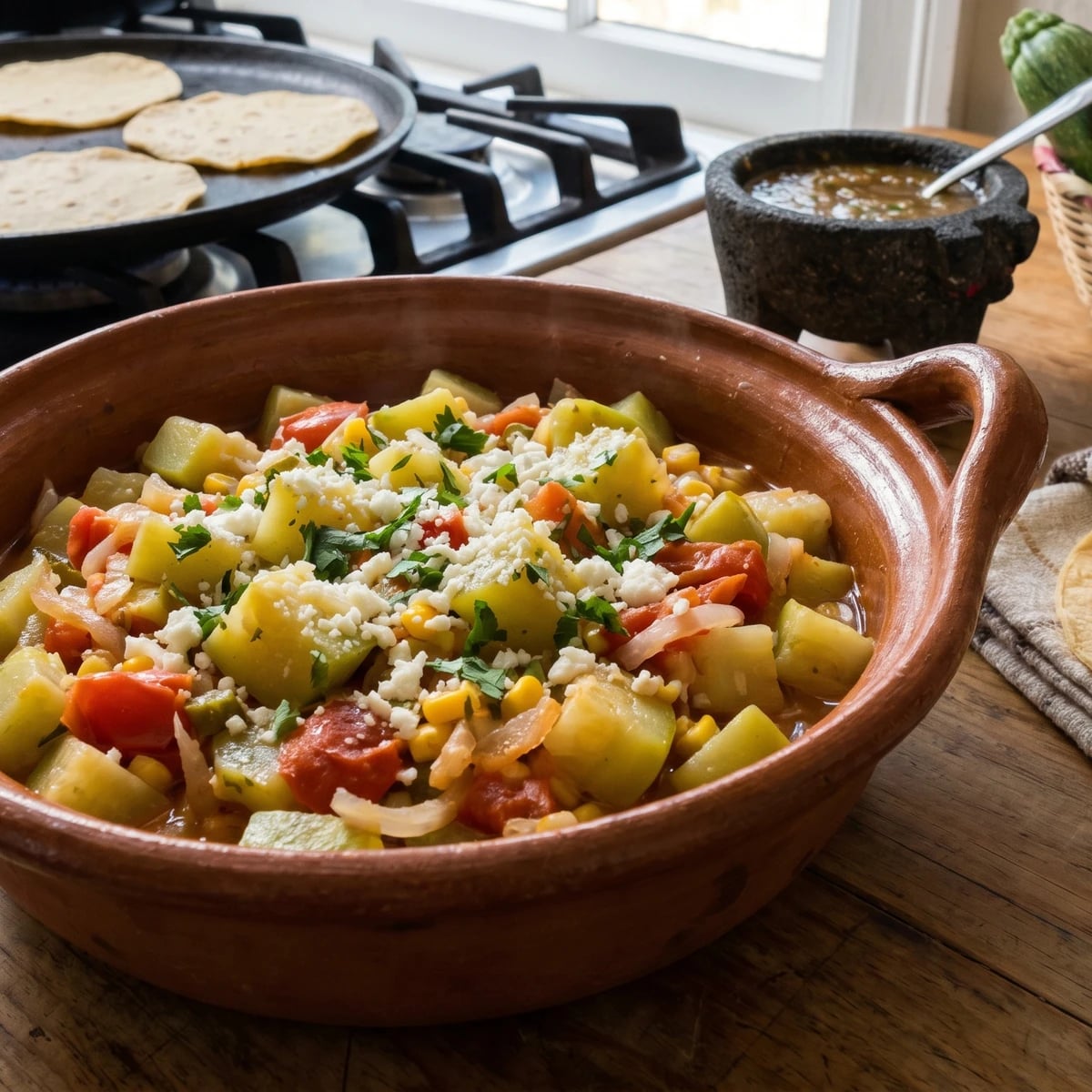
Jalisco's weeknight calabacitas, built from tender squash, sweet corn, jitomate, white onion, chile serrano, and a little manteca, finished with Cotija because the west knows its cheese.
Jalisco, western Mexico, this is where I place these calabacitas: on a Guadalajara kitchen table in summer, beside frijoles de la olla, warm corn tortillas, and a clay cazuela still shiny from the stove. Calabacitas a la mexicana belongs to many states, yes, but this version speaks with a western accent: sweet elote, chile serrano, jitomate saladet, and Cotija crumbled over the top.
The technique is not complicated, but don't confuse quick with careless. The onion must soften first. The tomato must cook down until it stains the fat. The squash goes in after that, because if you throw everything into the pan at once, you get watery vegetables with no character. No me vengas con atajos. Even a fifteen-minute dish has order.
My mother made this when the mercado was full of small pale-green calabacitas, the kind with tender skins and no tired spongy center. She used manteca de cerdo when there was a spoonful left from frying beans. La manteca es el sabor. You can smell the difference before you taste it.
This is budget food, comfort food, weeknight food. That doesn't make it small. Corn, squash, chile, tomato, onion, cheese: a whole map of Mexican cooking in one cazuela. Cada estado, su propia cocina.
Squash and corn were part of the Mesoamerican milpa system long before the Spanish arrived, grown together with beans as a practical agricultural partnership and a daily kitchen foundation. The style called 'a la mexicana,' usually onion, tomato, and fresh green chile, became common in post-independence Mexican cooking because the colors echoed the national flag, though the ingredients themselves come from different historical layers: tomato and chile are native, while onion arrived through Spanish colonial trade. Cotija cheese, named for Cotija de la Paz in Michoacán, traveled across western Mexico and became a natural finishing cheese for Jalisco home cooking.
Quantity
1 1/2 pounds
cut into 1/2-inch dice
Quantity
2 ears
kernels cut from the cob
Quantity
2 tablespoons
Quantity
1/2 medium
finely chopped
Quantity
2
finely chopped
Quantity
2 medium
seeded and chopped
Quantity
1
finely chopped
Quantity
1/2 teaspoon, plus more to taste
Quantity
1/4 teaspoon
Quantity
1 sprig
Quantity
1/2 cup
crumbled
Quantity
2 tablespoons
chopped
Quantity
for serving
| Ingredient | Quantity |
|---|---|
| Mexican gray squash or small zucchinicut into 1/2-inch dice | 1 1/2 pounds |
| fresh cornkernels cut from the cob | 2 ears |
| manteca de cerdo (pork lard) | 2 tablespoons |
| white onionfinely chopped | 1/2 medium |
| garlic clovesfinely chopped | 2 |
| jitomates saladet or Roma tomatoesseeded and chopped | 2 medium |
| fresh chile serranofinely chopped | 1 |
| kosher salt | 1/2 teaspoon, plus more to taste |
| freshly ground black pepper | 1/4 teaspoon |
| fresh epazote | 1 sprig |
| queso Cotijacrumbled | 1/2 cup |
| cilantrochopped | 2 tablespoons |
| warm corn tortillas (optional) | for serving |
Cut the calabacitas into even 1/2-inch pieces so they cook at the same pace. Cut the corn kernels from the cob and scrape the cob once with the back of the knife to catch the sweet milk. Keep the squash and corn separate. They do not enter the cazuela at the same time.
Heat the manteca in a wide clay cazuela or heavy skillet over medium heat. Add the white onion and cook for 3 to 4 minutes, stirring often, until it turns translucent and smells sweet. Do not brown it. This dish should taste fresh, not roasted.
Add the garlic and chile serrano. Stir for 30 seconds, just until the garlic wakes up. Add the chopped jitomate and salt. Cook for 5 minutes, stirring and pressing the tomato with the spoon, until it softens, loses its raw smell, and stains the fat orange-red. This is your base. If the tomato stays raw, the whole dish tastes unfinished.
Stir in the corn kernels and cook for 2 minutes, until they brighten and start to smell sweet. Add the calabacitas and black pepper. Fold gently so the squash is coated in the tomato base. Cook uncovered for 6 to 8 minutes, stirring now and then, until the squash is tender but still holds its shape.
Lay the epazote sprig over the vegetables for the last 2 minutes of cooking, then remove it. Epazote is strong. You want its green, resinous perfume, not a mouthful of medicine. Taste for salt. The Cotija will add salt too, so don't get brave too early.
Turn off the heat and let the calabacitas sit for 2 minutes so the juices settle. Spoon them into a shallow clay serving dish, crumble Cotija over the top, and scatter the cilantro. Serve with warm corn tortillas. If there is liquid at the bottom, good. Drag a tortilla through it. Saber cocinar es saber vivir.
1 serving (about 210g)
Culinary guides, cultural storytelling, and the editorial depth that makes cooking meaningful.
Discover Culinary Explorer
Chef Lupita
Jalisco's chiles toreados are whole serranos blistered hard on a comal, tossed with white onion, lime, and soy, then set beside birria or carne asada for anyone brave enough.

Chef Lupita
Michoacán's fresh-corn uchepos sliced and baked with poblano rajas, crema, and cotija, a sweet corn tamal casserole that belongs to the Purépecha table.

Chef Lupita
Jalisco's grill side of whole cambray onions, blistered over charcoal until sweet, brushed with manteca, and finished with lime, salt, and chile de arbol de Yahualica.

Chef Lupita
Jalisco's quiet weeknight side of tender chayote, white onion, thick crema, and queso panela, the mild dish that knows its job beside beans, rice, salsa, and chile-built stews.