
Chef Lupita
Arroz a la Oaxaqueña
Oaxaca's red rice, stained with tomato and fried in lard, steamed with carrots, ejotes, black beans, and epazote. The side that anchors a Oaxacan family meal and earns its place beside the main.
A cooking platform built around craft, culture, and the stories behind what we eat.

Created by
Jalisco's quiet weeknight side of tender chayote, white onion, thick crema, and queso panela, the mild dish that knows its job beside beans, rice, salsa, and chile-built stews.
Jalisco, especially the kitchens around Guadalajara and the smaller towns that still cook from the mercado first, owns this version of chayotes con crema. This is not restaurant food. This is the cazuela that lands beside arroz rojo, frijoles de la olla, a plate of enchiladas, or a guisado with enough chile to need something gentle next to it.
The chayote is the point. Buy it firm, pale green, and heavy for its size, with skin that doesn't wrinkle under your thumb. At Mercado San Juan de Dios, the señoras will tell you which ones are tender and which ones have been sitting too long. Pregúntale a las señoras del mercado. If you start with tired chayote, the crema won't save you.
There is no chile in this dish because not every Mexican dish is trying to burn your tongue. The flavor comes from white onion softened in butter, chayote simmered until just tender, thick Mexican crema, and queso panela folded in at the end so it warms without disappearing. My mother made this when the table needed calm. She wrote in her notebook: 'no lo deshagas,' don't break it apart. She was right. The pieces should hold their shape.
Use a clay cazuela if you have one. It keeps the heat gentle and brings the dish to the table the way a Jalisco home cook would recognize it: pale green chayote, white crema, soft cheese, a little black pepper, nothing pretending. Cada estado, su propia cocina.
Chayote is native to Mesoamerica and was cultivated long before the Spanish conquest; its name comes from the Nahuatl 'chayotli.' Cream-based vegetable dishes became common in western and central Mexican home cooking after colonial dairy production expanded, especially in regions such as Jalisco where milk, fresh cheese, and crema became everyday ingredients. Chayotes con crema shows that Mexican cooking is not only chile sauces and long moles: it also includes quiet household dishes built from seasonal vegetables, dairy, and careful heat.
Quantity
4
peeled, pitted, and cut into 1/2-inch cubes
Quantity
1 1/2 teaspoons, divided, plus more to taste
Quantity
2 tablespoons
Quantity
1 tablespoon
Quantity
1/2 medium
finely chopped
Quantity
2
finely minced
Quantity
1/3 cup
Quantity
1 cup
Quantity
5 ounces
cut into small cubes
Quantity
1/4 teaspoon
Quantity
2 tablespoons
chopped
Quantity
for serving
| Ingredient | Quantity |
|---|---|
| medium chayotespeeled, pitted, and cut into 1/2-inch cubes | 4 |
| kosher salt | 1 1/2 teaspoons, divided, plus more to taste |
| unsalted Mexican-style butter | 2 tablespoons |
| manteca de cerdo | 1 tablespoon |
| white onionfinely chopped | 1/2 medium |
| garlic clovesfinely minced | 2 |
| water or light chicken broth | 1/3 cup |
| thick Mexican crema | 1 cup |
| queso panelacut into small cubes | 5 ounces |
| freshly ground black pepper | 1/4 teaspoon |
| fresh cilantro (optional)chopped | 2 tablespoons |
| warm corn tortillas (optional) | for serving |
Peel the chayotes under running water if the sap bothers your hands. Cut them lengthwise, remove the pale seed, and dice the flesh into 1/2-inch cubes. Keep the pieces even. Uneven chayote gives you one spoonful mushy and the next one hard. That is not cooking, that is guessing.
Set a 10-inch clay cazuela or heavy skillet over medium heat. Add the butter and manteca de cerdo. When the fat is melted and glossy, add the white onion and 1/2 teaspoon salt. Cook for 4 to 5 minutes, stirring often, until the onion turns translucent and sweet but does not brown. Browned onion pushes the dish in the wrong direction.
Stir in the garlic and cook for 30 seconds, just until it smells sharp and alive. Add the diced chayote and another 1/2 teaspoon salt. Stir until every piece is coated in the fat. This is where the flavor starts clinging to the vegetable. Do not dump the crema in yet. No me vengas con atajos.
Add the water or light chicken broth, cover the cazuela, and lower the heat to medium-low. Cook for 12 to 15 minutes, stirring once or twice, until the chayote is tender when pierced with a knife but still holds its shape. If the pan dries out, add a spoonful of water. You are simmering, not boiling the vegetable into baby food.
Lower the heat to the smallest flame. Stir in the Mexican crema and black pepper. Let it warm for 3 to 4 minutes, moving the spoon gently so the sauce coats the chayote. Do not let the crema boil hard or it can separate. Gentle heat gives you a thick, smooth sauce that sits on the spoon.
Fold in the queso panela and cook 1 to 2 minutes, only until the cheese warms through. Panela should soften at the edges but stay in little cubes. Taste for salt. Chayote is mild, so the seasoning has to be clear. Mild does not mean bland.
Bring the cazuela to the table while the crema is still glossy. Scatter cilantro over the top only if your household uses it. Serve with warm corn tortillas, rice, beans, or a chile-forward guisado. This dish calms the plate. That is its work. Así se hace y punto.
1 serving (about 265g)
Culinary guides, cultural storytelling, and the editorial depth that makes cooking meaningful.
Discover Culinary ExplorerChef Lupita
Oaxaca's red rice, stained with tomato and fried in lard, steamed with carrots, ejotes, black beans, and epazote. The side that anchors a Oaxacan family meal and earns its place beside the main.
Chef Lupita
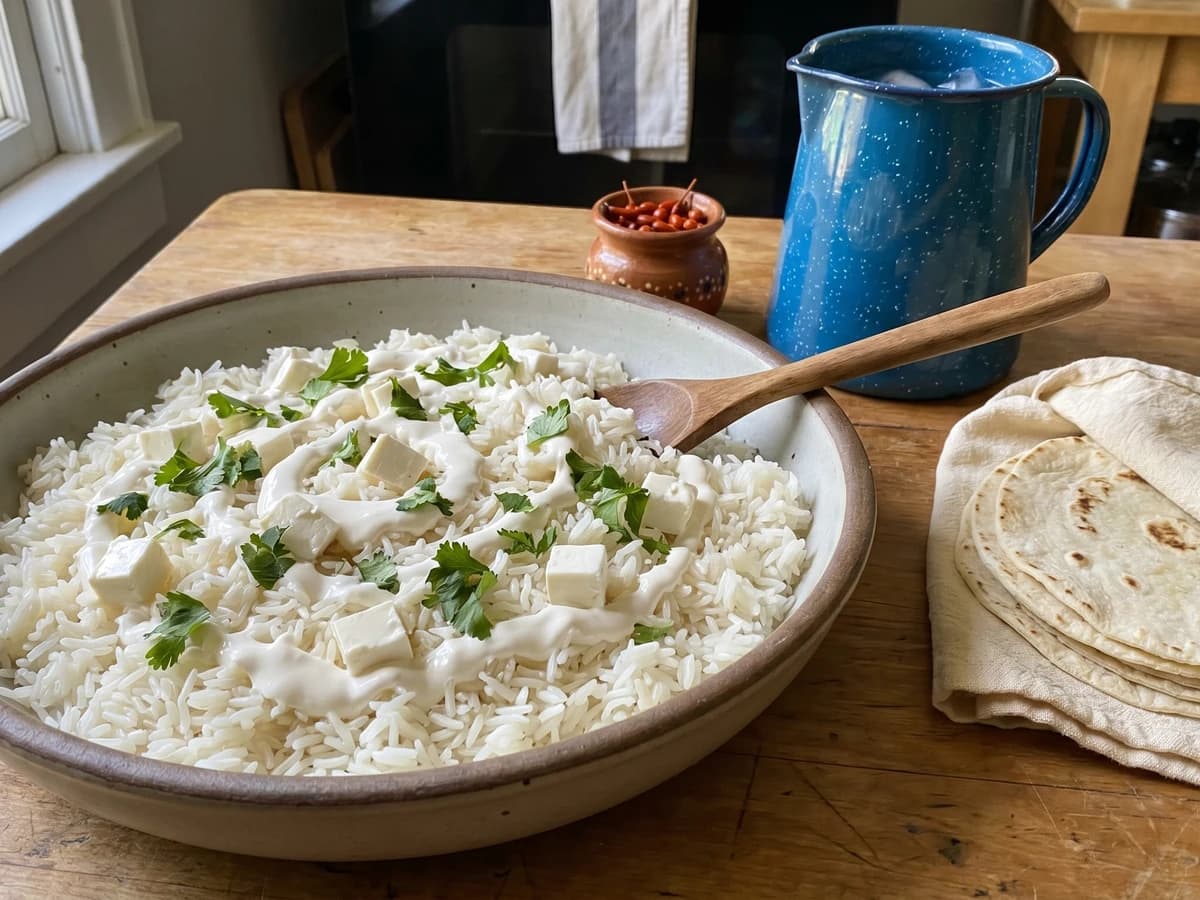
Sinaloa's home-cook white rice topped with cold cubes of cream cheese that soften into the warm grain, finished with crema and a sprinkle of chiltepin at the table. The trick that makes a side dish feel like a small luxury.
Chef Lupita
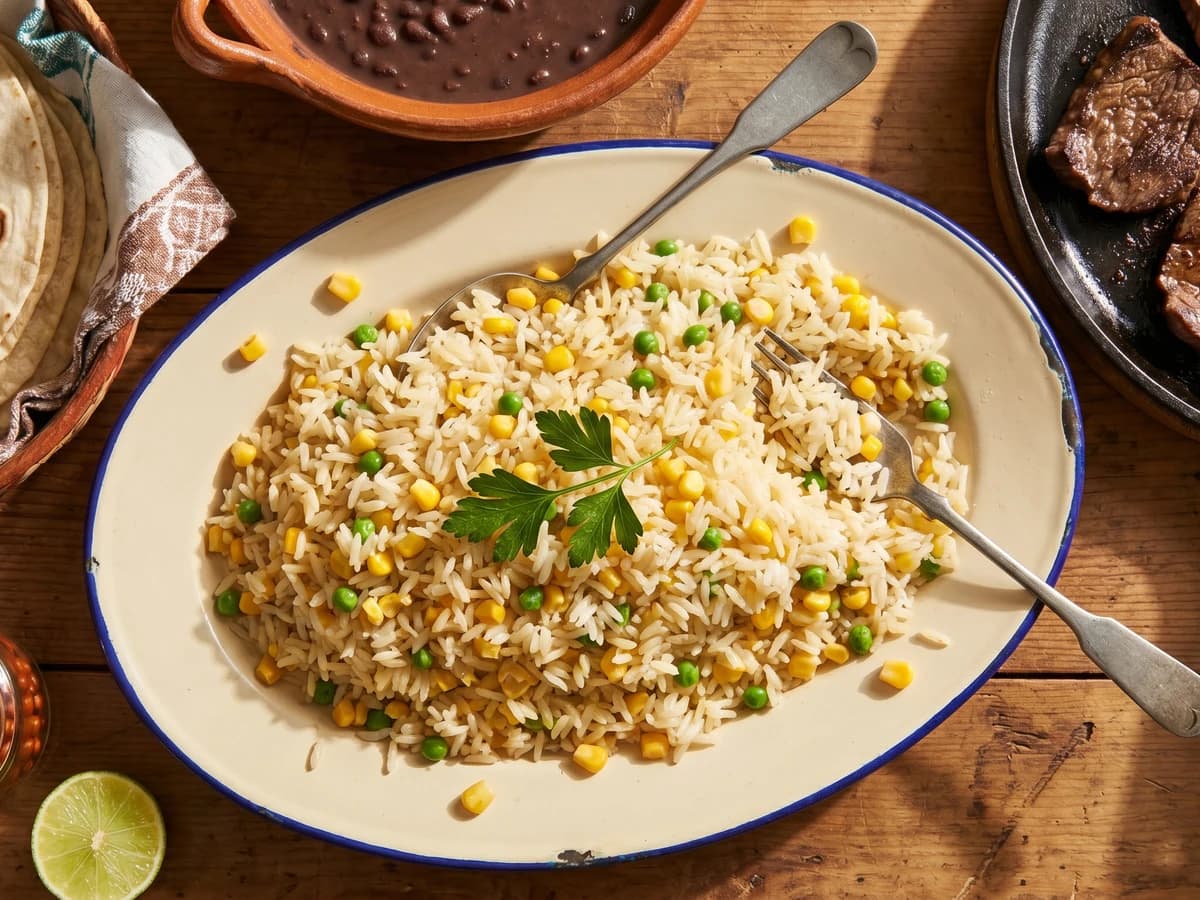
Sonora's white rice, toasted in butter and steamed with sweet corn and tender peas. The clean, quiet partner to a plate of carne asada, not the red rice of central Mexico.

Chef Lupita
Yucatán's white rice with sweet corn kernels, toasted in lard with garlic and onion. The quiet base that holds up against the peninsula's bold achiote-stained stews.