
Chef Lupita
Arroz a la Oaxaqueña
Oaxaca's red rice, stained with tomato and fried in lard, steamed with carrots, ejotes, black beans, and epazote. The side that anchors a Oaxacan family meal and earns its place beside the main.
A cooking platform built around craft, culture, and the stories behind what we eat.
Created by
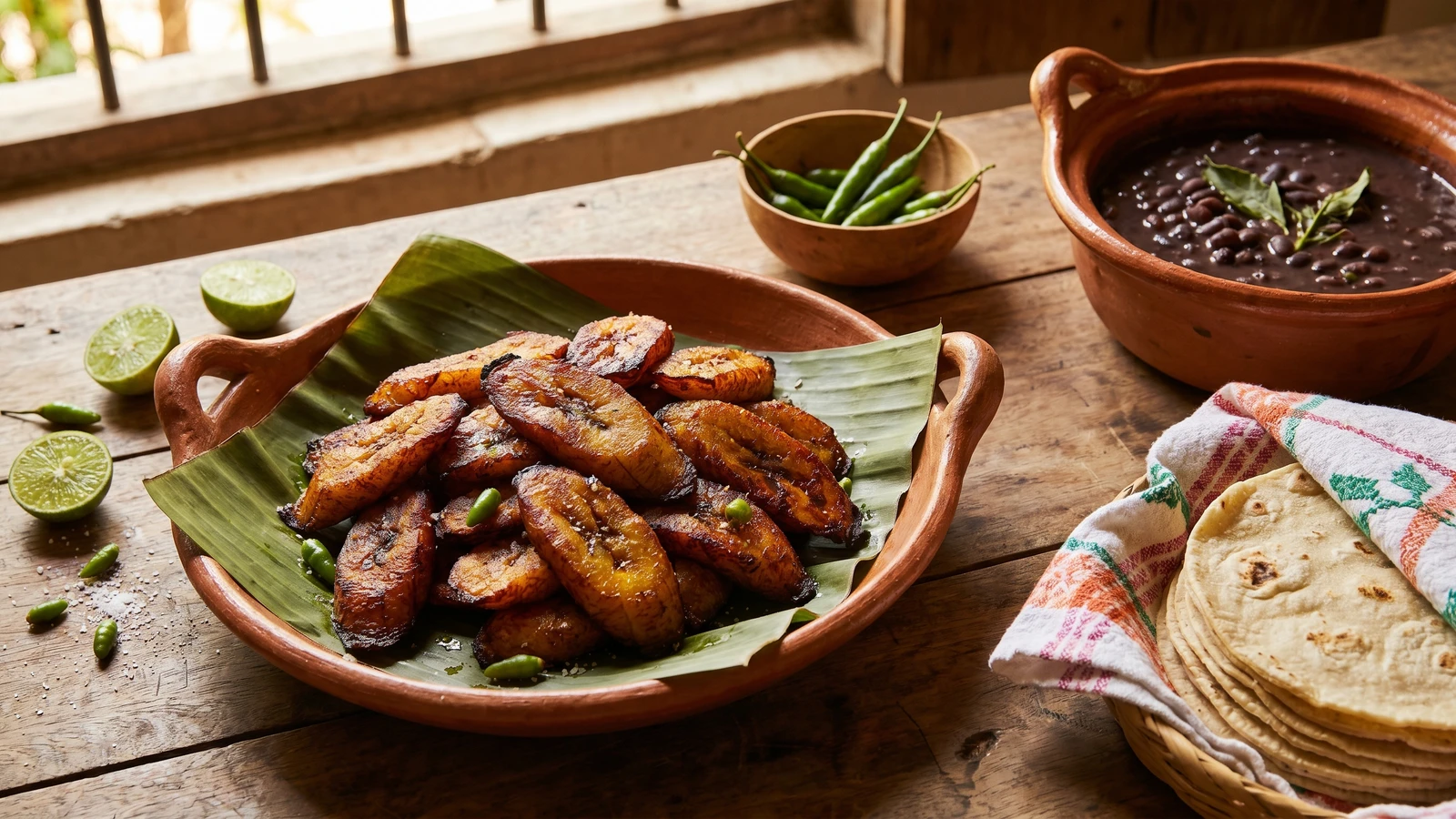
Tabasco's ripe plantain side, sliced thick and fried in manteca de cerdo until the edges caramelize dark, made to sit beside frijol negro, rice, and any salty guisado from the lowlands.
Tabasco, the humid lowland state between the Gulf, the Grijalva, and the Usumacinta, knows what to do with ripe plantain. This is Chontal country, cacao country, banana country. Plátano macho grows where the air is heavy and the soil is generous, and a Tabasco kitchen uses it the way another state uses squash or corn: often, plainly, without asking permission.
These plátanos machos fritos are not dessert. They are the sweet counterweight on the table, the thing that calms frijol negro cooked with epazote, rice, pejelagarto, chirmol, or a salty pork guisado. The plantain must be ripe, yellow with black patches, soft enough to yield when you press it. Green plantain is for another dish. Here you need sugar in the fruit, because the pan only reveals what the market already gave you.
Use manteca de cerdo. A little, not a bucket. The slices fry until the edges go deep brown and the centers stay tender. The women I watched in Villahermosa and Nacajuca did not fuss with this dish. They cut on the bias, fried in a heavy pan, drained on paper or a woven basket, and sent the plate to the table while the beans were still glossy. La cocina no es decoración, es trabajo. Simple-looking food still has rules.
If you want to put chile amashito on the table with lime and salt, good. That is Tabasco speaking. But do not turn the plantains into a pile of toppings. Cada estado, su propia cocina, and this one belongs to the lowland kitchen.
Plantains arrived in Mexico through Spanish colonial trade routes after moving from Southeast Asia to Africa and then into the Caribbean and the Gulf coast. In Tabasco, the tropical river plain made plantain a practical staple, especially in Chontal Maya communities where it joined cacao, achiote, corn, freshwater fish, and herbs like chipilin and epazote. Fried ripe plantain became a household side across the Gulf and southeast, but in Tabasco it is especially tied to black beans, rice, and salty guisados that need a sweet balance on the plate.
Quantity
3 large
yellow with black patches, peeled and sliced on a bias into 1/2-inch pieces
Quantity
3 tablespoons
Quantity
1/2 teaspoon, plus more to taste
Quantity
1
finely chopped, for serving
Quantity
1
cut into halves, for serving
| Ingredient | Quantity |
|---|---|
| ripe plátanos machosyellow with black patches, peeled and sliced on a bias into 1/2-inch pieces | 3 large |
| manteca de cerdo | 3 tablespoons |
| fine sea salt | 1/2 teaspoon, plus more to taste |
| fresh chile amashito (optional)finely chopped, for serving | 1 |
| lime (optional)cut into halves, for serving | 1 |
Use plátanos machos that are yellow with black patches and feel slightly soft under your thumb. Not rotten. Ripe. If they are mostly green, wait two or three days. The sweetness has to be inside the fruit before it touches the pan. No me vengas con atajos.
Cut off both ends of each plantain. Make one long slit through the peel, then pull the peel away with your fingers. Slice the plantains on a bias into 1/2-inch pieces. The diagonal cut gives you more surface against the pan, which means better caramelized edges.
Set a heavy skillet or clay cazuela over medium heat and add the manteca de cerdo. Let it melt until it shimmers and moves easily across the pan. Do not let it smoke. You want steady heat, not anger. La manteca es el sabor, but burned fat tastes tired.
Lay the plantain slices in one layer with space between them. They should sizzle when they touch the fat. Fry for 2 to 3 minutes per side, turning once, until the edges are dark brown and the centers turn deep gold. Crowding the pan makes them soften and stick. Work in batches if your pan is small.
Transfer the fried plantains to a paper-lined plate or a woven basket and sprinkle lightly with salt while they are still glossy. Serve warm beside frijol negro with epazote, rice, or a salty Tabasco guisado. If you put chile amashito and lime on the table, let each person add it. The plantain itself needs no costume.
1 serving (about 140g)
Culinary guides, cultural storytelling, and the editorial depth that makes cooking meaningful.
Discover Culinary ExplorerChef Lupita
Oaxaca's red rice, stained with tomato and fried in lard, steamed with carrots, ejotes, black beans, and epazote. The side that anchors a Oaxacan family meal and earns its place beside the main.
Chef Lupita
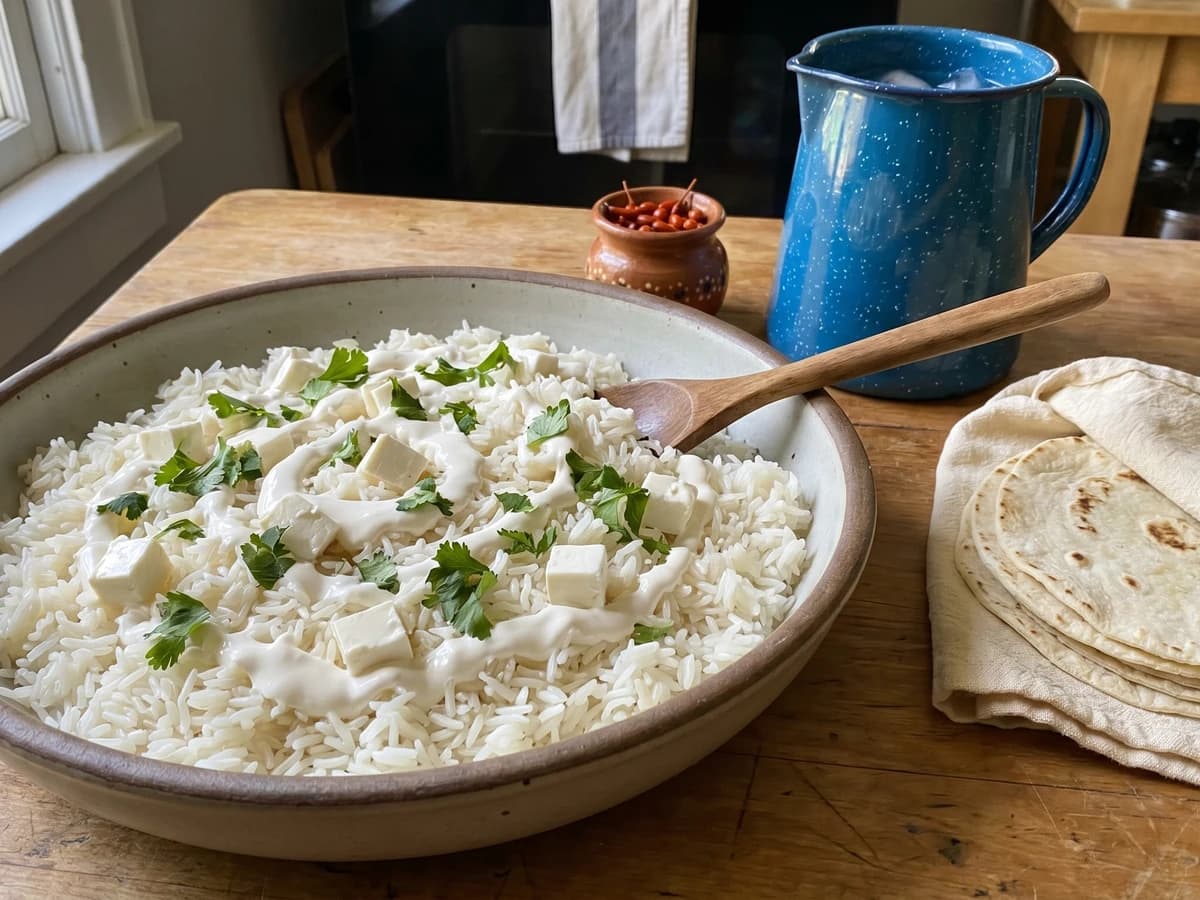
Sinaloa's home-cook white rice topped with cold cubes of cream cheese that soften into the warm grain, finished with crema and a sprinkle of chiltepin at the table. The trick that makes a side dish feel like a small luxury.
Chef Lupita
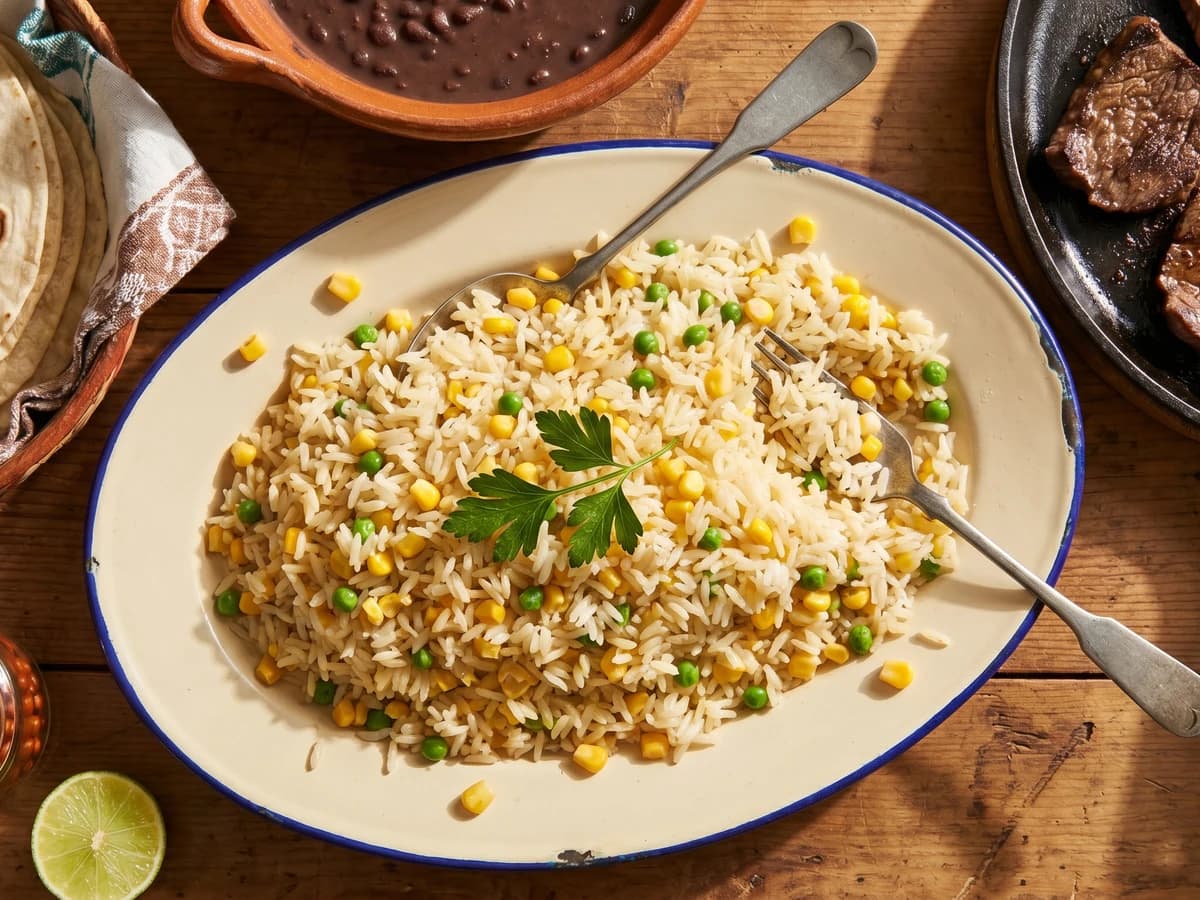
Sonora's white rice, toasted in butter and steamed with sweet corn and tender peas. The clean, quiet partner to a plate of carne asada, not the red rice of central Mexico.

Chef Lupita
Yucatán's white rice with sweet corn kernels, toasted in lard with garlic and onion. The quiet base that holds up against the peninsula's bold achiote-stained stews.