
Chef Lupita
Arroz a la Oaxaqueña
Oaxaca's red rice, stained with tomato and fried in lard, steamed with carrots, ejotes, black beans, and epazote. The side that anchors a Oaxacan family meal and earns its place beside the main.
A cooking platform built around craft, culture, and the stories behind what we eat.

Created by
Oaxaca's daily plate of ripe plantains fried thick in lard until the edges go mahogany and the centers turn jammy. Served with black beans, queso fresco, and a thread of Oaxacan crema.
This is Oaxaca. Not the Caribbean version with cinnamon and brown sugar, not the Central American version served as a starchy side, the Oaxacan version: thick slices of black-ripe plantain fried in pork lard, salted while they are still hot, and set on the table next to frijoles negros and queso fresco. It is a daily food in the Valles Centrales. Comida diaria. The kind of plate that shows up at breakfast, at the comida, and at the cena, in homes from Tlacolula to Etla.
The plantain has to be black. Not yellow, not yellow with a few spots, black. The sugars do not develop until the skin has gone almost completely dark, and without those sugars there is no caramelization, no jammy center, no reason to make this dish. If your plantains are still firm at the market, buy them anyway and leave them on the counter for three or four days. The plantain ripens on its own time, not yours.
Lard is not negotiable here. The Oaxacan kitchen runs on manteca de cerdo and the platanos fritos are no exception. Lard browns the edges in a way oil cannot, and it gives the slices a savory base that holds up against the sweetness of the fruit. La manteca es el sabor. My mother was from Jalisco, not Oaxaca, but she had a page in her notebook from a senora she met in the Mercado Benito Juarez in Oaxaca city, and the note in the margin said only: 'manteca, sal, plato.' Three words. That was the recipe. Cada estado, su propia cocina.
The plantain arrived in Mexico in the 16th century via the trans-Atlantic exchange from West Africa through the Caribbean, and it took root most deeply in the southern states of Oaxaca, Veracruz, Tabasco, and Chiapas, where the climate suited it and where Afro-descendant and indigenous cooks integrated it into their daily food. In the Valles Centrales of Oaxaca, fried ripe plantains became a fixture on the comida plate alongside arroz, frijoles negros, and tasajo, an example of how a non-native ingredient was absorbed so completely into regional cooking that it now reads as wholly Oaxacan. The pairing with black beans and crema reflects the Oaxacan plate's signature negotiation of sweet, savory, and tangy elements in a single bite, a structural logic that runs through much of the state's cuisine.
Quantity
4
skins almost black with yellow flecks
Quantity
1/2 cup
Quantity
1 pinch
Quantity
1 cup
for drizzling at the table
Quantity
1 cup
crumbled
Quantity
1 cup
warmed
| Ingredient | Quantity |
|---|---|
| very ripe plantainsskins almost black with yellow flecks | 4 |
| pork lard (manteca de cerdo) | 1/2 cup |
| sea salt | 1 pinch |
| Oaxacan crema (optional)for drizzling at the table | 1 cup |
| queso fresco (optional)crumbled | 1 cup |
| frijoles negros refritos (optional)warmed | 1 cup |
Look at the skins. You want them mostly black with patches of deep yellow showing through. A green plantain or a yellow one with no spots will fry into something starchy and sad. The black skin is the sugar. The black skin is the recipe. If your plantains are still firm and yellow at the market, buy them and leave them on the counter for three or four days until they look like they should be thrown out. That is when they are ready.
Cut off both ends of each plantain. Score the skin lengthwise with the tip of a paring knife, just through the peel, and lift it away in strips. Slice the plantains on a slight bias into pieces about three-quarters of an inch thick. Thick. Not the wafer-thin chips people make for tostones. These are platanos fritos and they need body so the outside caramelizes while the inside stays jammy.
In a wide cast iron skillet or a heavy comal with a rim, melt the lard over medium heat. You want about a quarter inch of melted fat across the surface, hot enough that a small piece of plantain dropped in sizzles immediately but does not brown in seconds. La manteca es el sabor. Vegetable oil will fry the plantains, yes, but it will not give you the round, savory depth that lard does. In Oaxaca, no me vengas con atajos.
Lay the plantain slices in the hot lard in a single layer. Do not crowd the pan. Crowding drops the temperature and the plantains steam instead of caramelize, and you will end up with pale, soft pieces that taste boiled. Fry for three to four minutes on the first side. Do not move them. Let them sit until the edges turn deep mahogany and the bottom releases easily from the pan when you slide a spatula under it.
Turn each slice with a thin spatula. Fry the second side for another two to three minutes, until that face is also dark gold with caramelized edges and the center has gone soft enough that a fork slides in without resistance. The smell at this point is unmistakable: brown sugar, toasted starch, and clean rendered lard. That is how you know.
Lift the slices out with a slotted spatula and lay them on a wire rack set over a plate. Skip the paper towels. Paper towels trap steam and soften the crust you just worked to build. Sprinkle a pinch of sea salt over the hot plantains while the surface is still glossy. The salt is small but it is not optional. It is what turns this from candy into food.
Pile the plantains generously onto a barro negro plate. Set a small bowl of warm frijoles negros refritos beside them, a dish of crumbled queso fresco, and a jar of Oaxacan crema. Each person builds their own bite: a slice of plantain, a smear of beans, a pinch of cheese, a thread of crema. Sweet, savory, salty, sour from the cheese. That is the Oaxacan plate. Asi se hace y punto.
1 serving (about 255g)
Culinary guides, cultural storytelling, and the editorial depth that makes cooking meaningful.
Discover Culinary ExplorerChef Lupita
Oaxaca's red rice, stained with tomato and fried in lard, steamed with carrots, ejotes, black beans, and epazote. The side that anchors a Oaxacan family meal and earns its place beside the main.
Chef Lupita
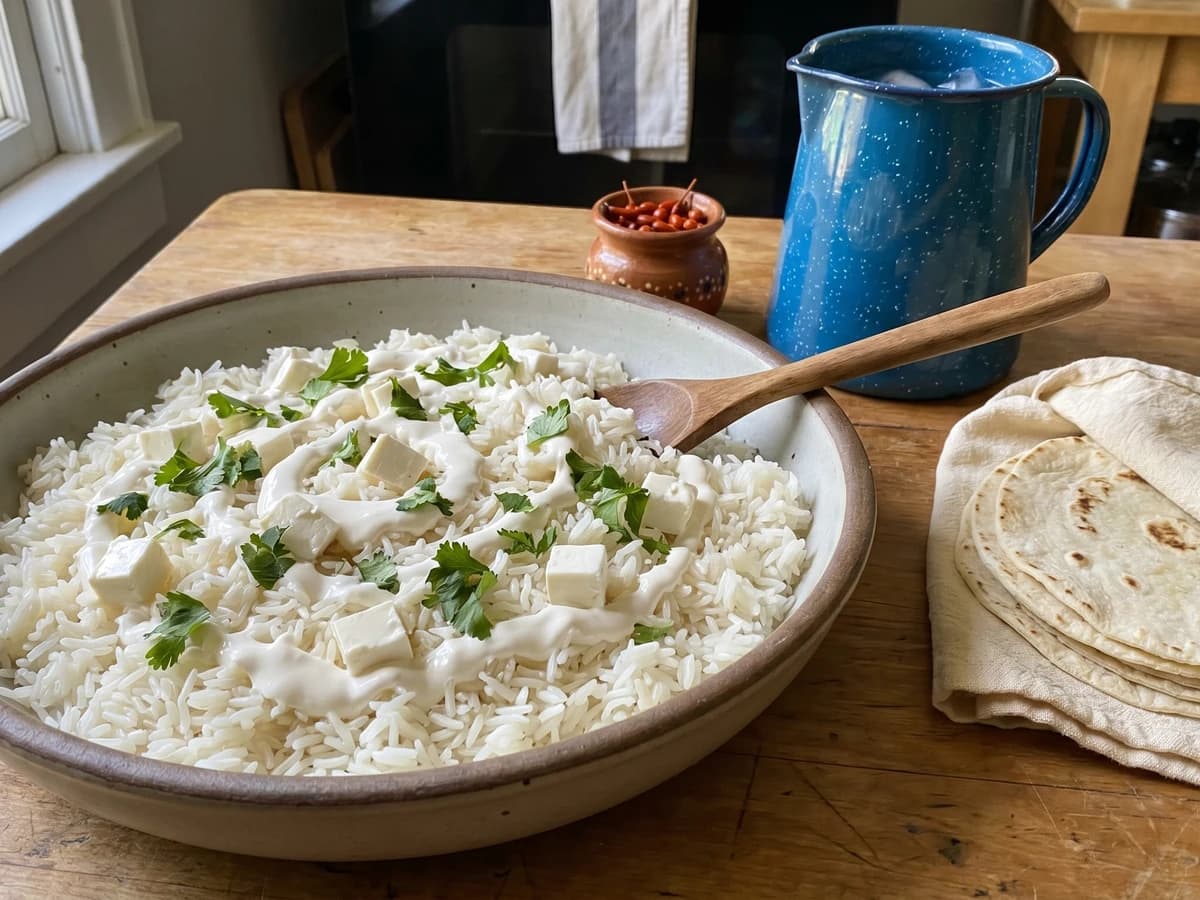
Sinaloa's home-cook white rice topped with cold cubes of cream cheese that soften into the warm grain, finished with crema and a sprinkle of chiltepin at the table. The trick that makes a side dish feel like a small luxury.
Chef Lupita
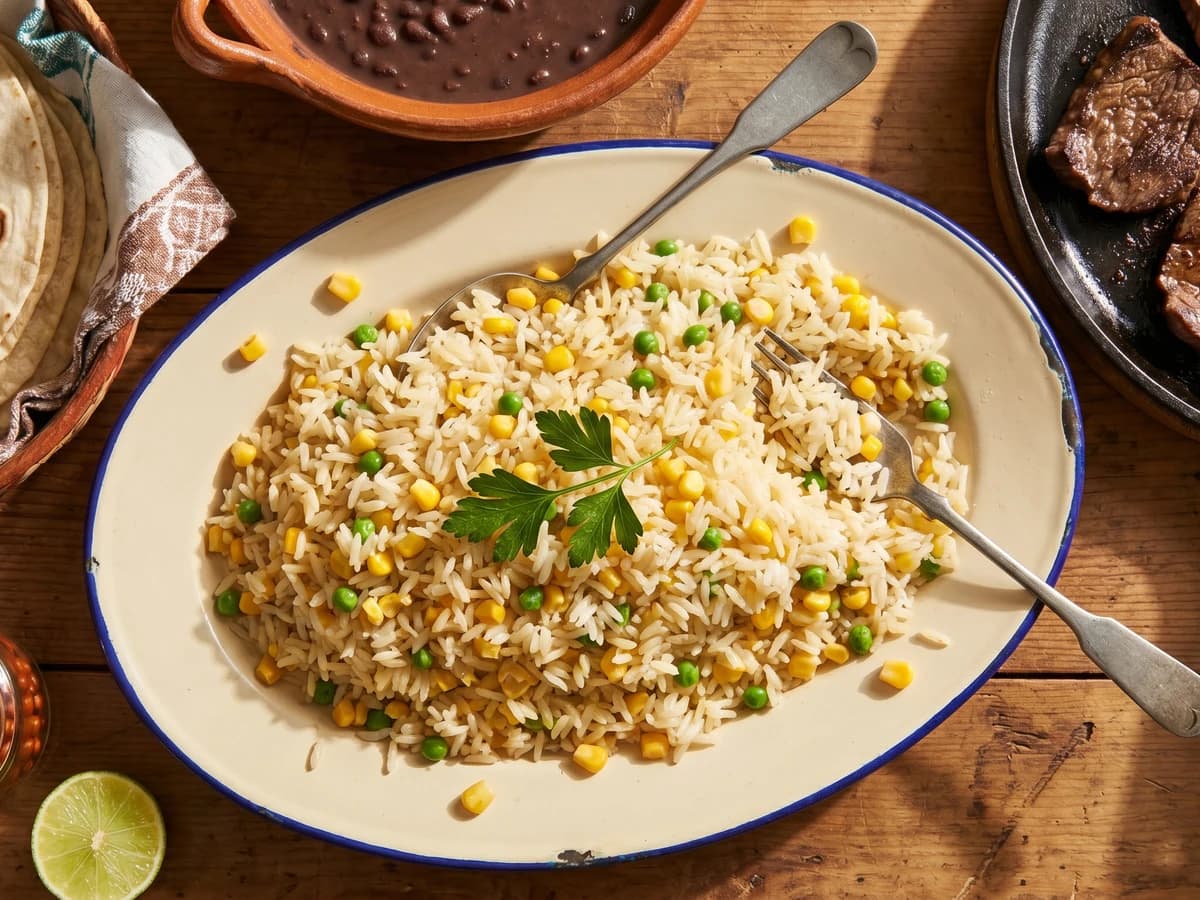
Sonora's white rice, toasted in butter and steamed with sweet corn and tender peas. The clean, quiet partner to a plate of carne asada, not the red rice of central Mexico.

Chef Lupita
Yucatán's white rice with sweet corn kernels, toasted in lard with garlic and onion. The quiet base that holds up against the peninsula's bold achiote-stained stews.