
Chef Lupita
Acitrón de Cidra Conventual
Puebla's convent-style acitrón, made from cidra peel instead of endangered biznaga, built through repeated syrup soakings until the cubes turn firm, translucent, and ready for rosca or chiles en nogada.
A cooking platform built around craft, culture, and the stories behind what we eat.
Created by
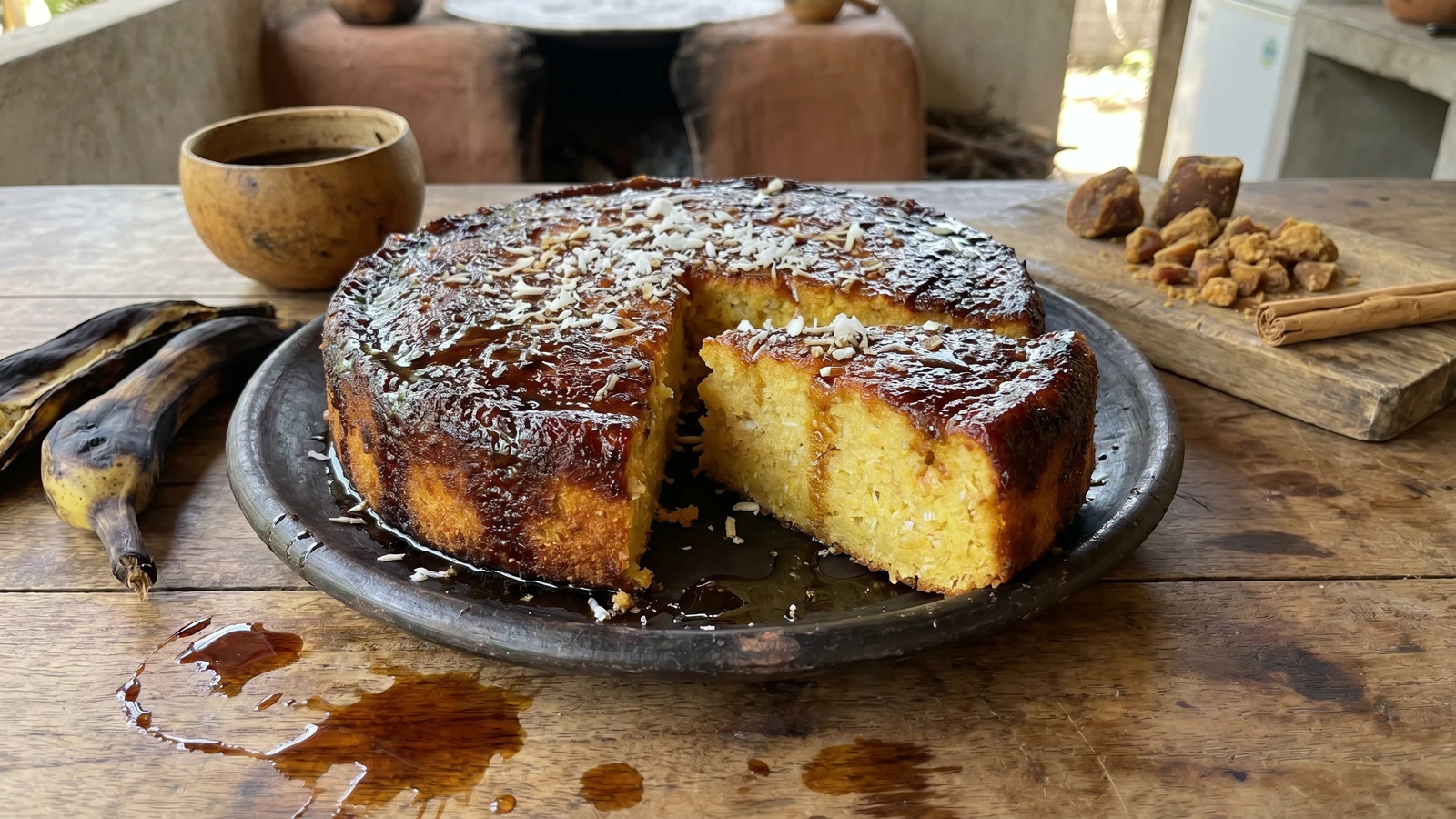
Guerrero's Costa Chica plantain cake, baked dense with ripe plátano macho, piloncillo syrup, fresh coconut, eggs, flour, and manteca until the edges turn gold.
Guerrero, Costa Chica, Cuajinicuilapa. Put the town on the map first, because this dessert belongs to an Afro-Mexican community that has protected its kitchen with the same discipline it protects its music, its dances, and its family names.
This is a baked plátano macho cake, not banana bread. No me vengas con atajos. The plantains must be ripe enough that the skins are blackened and the flesh smells sweet before it touches the bowl. Piloncillo gives the dark mineral sweetness. Fresh grated coconut gives the coast. Manteca de cerdo gives the tender crumb and the browned edge that vegetable oil cannot give you. La manteca es el sabor.
I learned a version of this in Cuajinicuilapa from a woman who baked it in a metal pan set inside a clay oven, then served it on a dark earthen platter with coffee so strong it could argue back. The cake is dense, gold, a little chewy at the edges, and meant to sit on the table for people to cut pieces all afternoon. Así se hace y punto.
This is not food from a single Mexico. Esto no es comida de un solo México. The sweet pantry here is plátano macho, coconut, piloncillo, panela, yuca, and canela, because the coast cooks from what the coast grows and trades. Cada estado, su propia cocina.
Cuajinicuilapa, in Guerrero's Costa Chica, is one of Mexico's most important Afro-Mexican communities, shaped by African-descended populations who worked cattle ranches, coastal farms, and trade routes from the colonial period onward. Plantain entered Mexican coastal cooking through the Caribbean and Pacific circuits of the Spanish empire, and in Afro-Mexican kitchens it became both everyday starch and sweet pantry ingredient. Baked plantain desserts from Guerrero and Oaxaca's Costa Chica are community foods, not pastry-shop cakes, and their density comes from home methods built around ripe fruit, lard, piloncillo, and wood-fired ovens.
Quantity
6
skins mostly black, about 3 pounds total
Quantity
1 cone, about 8 ounces
chopped
Quantity
1/2 cup
Quantity
1 stick
Quantity
1/2 teaspoon
Quantity
1/2 cup, plus more for pan
melted and cooled slightly
Quantity
3
at room temperature
Quantity
1 1/2 cups
Quantity
1 teaspoon
Quantity
1 cup
not dried coconut
Quantity
1 teaspoon
Quantity
2 tablespoons
for brushing the top
| Ingredient | Quantity |
|---|---|
| very ripe plátanos machosskins mostly black, about 3 pounds total | 6 |
| piloncillo conechopped | 1 cone, about 8 ounces |
| water | 1/2 cup |
| Mexican canela | 1 stick |
| fine sea salt | 1/2 teaspoon |
| manteca de cerdomelted and cooled slightly | 1/2 cup, plus more for pan |
| large eggsat room temperature | 3 |
| all-purpose flour | 1 1/2 cups |
| baking powder | 1 teaspoon |
| fresh grated coconutnot dried coconut | 1 cup |
| vanilla extract | 1 teaspoon |
| piloncillo syrup or melted mantecafor brushing the top | 2 tablespoons |
Combine the chopped piloncillo, water, canela, and salt in a small saucepan. Simmer over medium-low heat until the piloncillo dissolves and the syrup looks dark and glossy, 8 to 10 minutes. Remove the canela and let the syrup cool until warm, not hot. Hot syrup cooks the eggs. We are making cake, not sweet scrambled eggs.
Heat the oven to 350F. Grease a 9-inch round clay cazuela, heavy ceramic baking dish, or metal cake pan with manteca. Be generous in the corners. That fat makes the edge brown and release cleanly.
Peel the plátanos machos and place the flesh in a wide bowl. Mash with a fork or potato masher until mostly smooth with a few small pieces left. Do not blend them into baby food. The small pieces give the cake its body, and a Cuajinicuilapa cook would recognize that texture.
Whisk the eggs into the warm piloncillo syrup. Add the melted manteca and vanilla, then stir this mixture into the mashed plantains. The batter should smell of canela, ripe fruit, and warm sugar. Add the flour and baking powder and fold only until no dry flour remains. Stir in the fresh grated coconut. Do not beat the batter hard or the cake will turn tough.
Scrape the batter into the greased pan and smooth the top. Bake for 50 to 55 minutes, until the surface is deep gold, the edges pull slightly from the pan, and a toothpick comes out with moist crumbs but no wet batter. The center should feel set and dense, not airy. This is a plantain cake, not a sponge.
Brush the hot top with 2 tablespoons of piloncillo syrup or melted manteca. Let the cake rest at least 30 minutes before cutting. Warm plantain needs time to settle. Cut too soon and it collapses. Wait, and the slices hold their shape.
Serve thick wedges from the pan or turn the cake onto a dark clay platter. It belongs in the middle of the table with café de olla or atole in jícaras. No frosting. No white plate with a mint leaf pretending to help. Recetas probadas y garantizadas.
1 serving (about 150g)
Culinary guides, cultural storytelling, and the editorial depth that makes cooking meaningful.
Discover Culinary ExplorerChef Lupita
Puebla's convent-style acitrón, made from cidra peel instead of endangered biznaga, built through repeated syrup soakings until the cubes turn firm, translucent, and ready for rosca or chiles en nogada.

Chef Lupita
Ciudad de México's Tulyehualco alegría is popped huautli folded into piloncillo honey, pressed with peanuts, pepitas, and raisins, then cut into the rectangular bars that built a pueblo's identity.

Chef Lupita
Oaxaca's pre-Columbian amaranth bar, popped on a hot comal and bound with piloncillo, honey, and the sacred Zapotec grain that the Spanish tried, and failed, to outlaw.

Chef Lupita
Querétaro's mercado candy of popped amaranto pressed with dark piloncillo syrup, pepitas, pecans, and cacahuate, a Bajío sweet that respects the seed before it decorates the table.