
Chef Lupita
Acitrón de Cidra Conventual
Puebla's convent-style acitrón, made from cidra peel instead of endangered biznaga, built through repeated syrup soakings until the cubes turn firm, translucent, and ready for rosca or chiles en nogada.
A cooking platform built around craft, culture, and the stories behind what we eat.
Created by
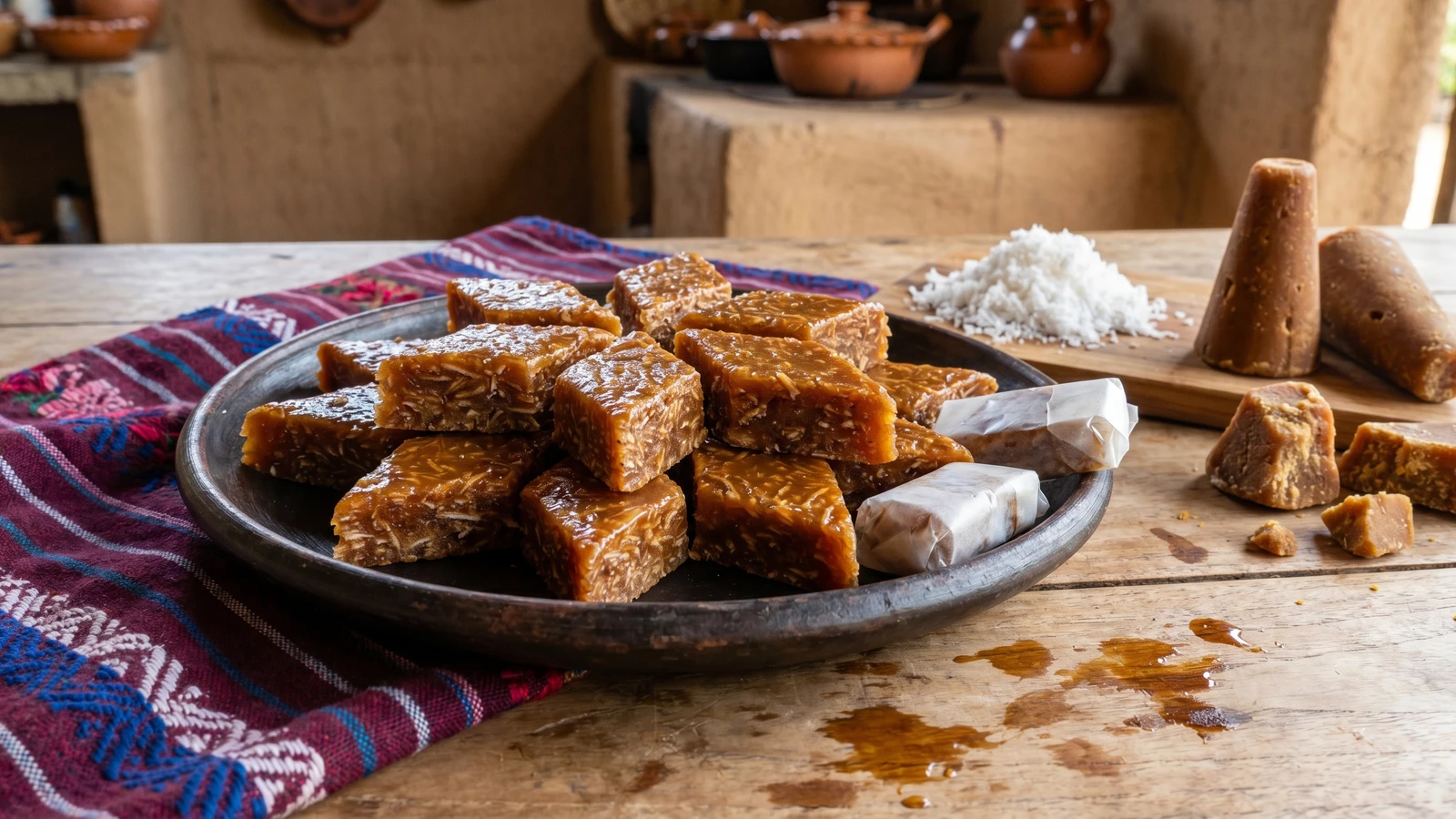
Guerrero's Costa Chica chamacuero is a firm coconut milk caramel from Cuajinicuilapa, cooked with piloncillo, panela, and canela until the spoon leaves a path in the pot.
Guerrero, Costa Chica, Cuajinicuilapa. Put it on the map first. This chamacuero belongs to the Black Pacific coast, where coconut palms, cattle milk, piloncillo, panela, and canela built a sweet pantry that does not need permission from the center of the country.
This is not a soft cajeta and it is not a coconut cookie. It is milk and unrefined sugar cooked down until thick, then loaded with fresh grated coconut and pushed past sauce into candy. The point matters. Too early and it slumps. Too late and it breaks under your teeth like burned sugar. No me vengas con atajos. Stir and watch.
I learned this style of sweet from women who treated the spoon like a measuring instrument. They listened to the drag against the pot, watched the bubbles turn heavy, and knew when the candy was ready before any thermometer could tell them. Use fresh coconut. Use piloncillo cones. Use panela sugar. White sugar makes a pale sweet with no memory. Cada estado, su propia cocina.
Cuajinicuilapa, on Guerrero's Costa Chica near the Oaxaca border, is one of Mexico's most important Afro-Mexican communities and was officially recognized in national public life through the work of local historians and the Museo de las Culturas Afromestizas, founded in 1988. The region's sweet cooking reflects coastal trade, coconut cultivation, cattle keeping, and sugarcane processing, with piloncillo and panela carrying the flavor of small trapiche sugar mills. Chamacuero belongs to that Afromestizo confectionery tradition, where firm milk candies, grated coconut sweets, plátano macho, yuca, and canela mark celebration tables more clearly than any national dessert category.
Quantity
2 cups
brown skin peeled away before grating
Quantity
4 cups
Quantity
12 ounces
chopped
Quantity
8 ounces
grated or finely chopped
Quantity
1
Quantity
1/2 teaspoon
Quantity
1 tablespoon, plus more for greasing the pan
Quantity
1 teaspoon
| Ingredient | Quantity |
|---|---|
| freshly grated mature coconutbrown skin peeled away before grating | 2 cups |
| whole milk | 4 cups |
| piloncillo coneschopped | 12 ounces |
| panela sugargrated or finely chopped | 8 ounces |
| Mexican cinnamon stick (canela) | 1 |
| fine sea salt | 1/2 teaspoon |
| unsalted butter | 1 tablespoon, plus more for greasing the pan |
| Mexican vanilla extract | 1 teaspoon |
Butter an 8-inch square pan or a shallow clay platter lined with banana leaf. Set it near the stove before you begin. Once the chamacuero is ready, it will not wait for you to start looking for a dish.
Crack the mature coconut, remove the meat, peel away the brown skin, and grate it fine. Do not use desiccated coconut. That dry bagged coconut has already lost the coastal sweetness and moisture this candy needs. Fresh coconut is the dish.
In a heavy cazuela or thick-bottomed pot, combine the milk, piloncillo, panela sugar, canela, and salt. Cook over medium heat, stirring until the sugars dissolve and the milk turns the color of wet clay. Keep the spoon moving across the bottom so the milk does not catch.
Lower the heat to medium-low and cook, stirring often, for 35 to 45 minutes. The mixture will thicken slowly, then more quickly. Watch the bubbles. At first they are loose and pale. Later they become heavy, glossy, and slow. That is the milk and piloncillo becoming candy, not sauce.
Remove the canela stick. Stir in the grated coconut and the tablespoon of butter. Cook 15 to 20 minutes more, stirring constantly now, until the mixture pulls away from the sides of the pot and leaves a clear path when you drag the spoon through the bottom.
Drop a small spoonful into a cup of cold water. It should hold together as a firm, bendable ball between your fingers. If it dissolves, keep cooking. If it turns hard and brittle, you took it too far. The women who make this in Cuajinicuilapa know by the sound of the spoon. You will learn by testing.
Turn off the heat and stir in the Mexican vanilla. Scrape the hot candy into the prepared pan and press it flat with a buttered spoon. Let it cool until firm, about 45 minutes, then cut into small squares or diamonds. This is sweet, dense candy, not cake. Serve small pieces.
1 serving (about 24g)
Culinary guides, cultural storytelling, and the editorial depth that makes cooking meaningful.
Discover Culinary ExplorerChef Lupita
Puebla's convent-style acitrón, made from cidra peel instead of endangered biznaga, built through repeated syrup soakings until the cubes turn firm, translucent, and ready for rosca or chiles en nogada.

Chef Lupita
Ciudad de México's Tulyehualco alegría is popped huautli folded into piloncillo honey, pressed with peanuts, pepitas, and raisins, then cut into the rectangular bars that built a pueblo's identity.

Chef Lupita
Oaxaca's pre-Columbian amaranth bar, popped on a hot comal and bound with piloncillo, honey, and the sacred Zapotec grain that the Spanish tried, and failed, to outlaw.

Chef Lupita
Querétaro's mercado candy of popped amaranto pressed with dark piloncillo syrup, pepitas, pecans, and cacahuate, a Bajío sweet that respects the seed before it decorates the table.