
Chef Lupita
Acitrón de Cidra Conventual
Puebla's convent-style acitrón, made from cidra peel instead of endangered biznaga, built through repeated syrup soakings until the cubes turn firm, translucent, and ready for rosca or chiles en nogada.
A cooking platform built around craft, culture, and the stories behind what we eat.
Created by
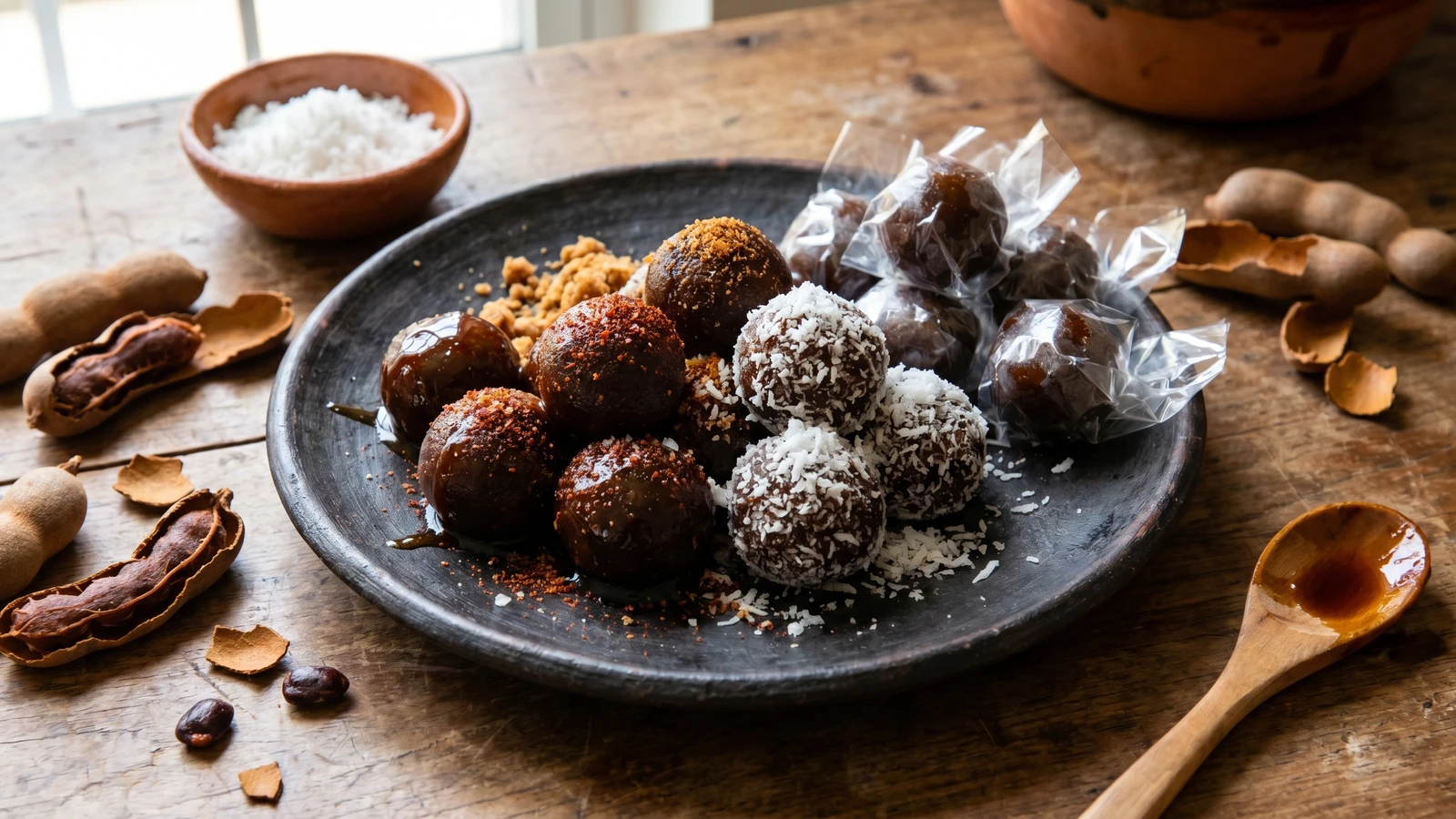
Guerrero Costa Chica tamarind candy cooked down with piloncillo, canela, sea salt, and chile costeño rojo until it pulls from the cazuela and can be rolled by hand.
Guerrero, Costa Chica. This dulce belongs to the coastal road between Copala, Marquelia, and Cuajinicuilapa, where tamarind trees lean into the heat and the sweet pantry speaks with Afro-Mexican memory: piloncillo, coconut, plátano macho, yuca, panela, canela. Esto no es comida de un solo México.
The tamarind is the authority here. Not candy syrup. Not white sugar. You peel the pods, simmer the pulp, press out the seeds, then cook it with piloncillo until the paste thickens and shines dark brown. The chile, when used, is chile costeño rojo, toasted and ground fine. It gives warmth and a little bitterness against the sour fruit. Not all Mexican sweets are delicate. Some bite back.
I learned this version from a woman outside the market in Cuajinicuilapa who sold the balls wrapped in squares of cellophane, stacked in a plastic tub under a damp towel so they wouldn't dry out. She told me, 'No lo dejes solo,' don't leave it alone. She was right. Tamarind burns fast once the piloncillo grabs the bottom of the cazuela. Stir it like you mean it. La cocina no es decoración, es trabajo.
Roll the candy in piloncillo sugar, chile-salt, or fresh grated coconut if your house makes it that way. Fresh coconut, not desiccated. Cada estado, su propia cocina, and this one tastes like Guerrero's coast.
Tamarind is native to tropical Africa and traveled through the Indian Ocean before reaching New Spain through colonial trade routes, including the Manila galleon that connected Acapulco to Asia from 1565 to 1815. On Guerrero's Costa Chica, where Afro-Mexican communities such as Cuajinicuilapa and Copala preserved coastal cooking traditions shaped by African, Indigenous, and Spanish contact, tamarind became part of the everyday sweet pantry alongside piloncillo, coconut, and plantain. The modern candy form, cooked into a paste and rolled into balls with chile or sugar, reflects mercado candy-making rather than convent pastry, and that difference matters.
Quantity
1 pound
shells and strings removed
Quantity
3 cups, plus more as needed
Quantity
12 ounces
chopped
Quantity
1 small
Quantity
1/2 teaspoon
Quantity
1 tablespoon
Quantity
1
toasted and ground fine
Quantity
1/2 cup
for rolling
Quantity
1 teaspoon
for chile-salt rolling mix
Quantity
1/4 teaspoon
for chile-salt rolling mix
Quantity
1/2 cup
for rolling
| Ingredient | Quantity |
|---|---|
| fresh tamarind podsshells and strings removed | 1 pound |
| water | 3 cups, plus more as needed |
| piloncillo coneschopped | 12 ounces |
| Mexican canela stick | 1 small |
| sea salt | 1/2 teaspoon |
| fresh lime juice | 1 tablespoon |
| dried chile costeño rojotoasted and ground fine | 1 |
| finely grated piloncillo or raw cane sugarfor rolling | 1/2 cup |
| ground toasted chile costeño rojofor chile-salt rolling mix | 1 teaspoon |
| sea saltfor chile-salt rolling mix | 1/4 teaspoon |
| freshly grated coconut (optional)for rolling | 1/2 cup |
Crack the tamarind shells and pull away the brittle peel and the stringy veins. Keep the sticky pulp with the seeds inside. If the pods are dry and smell dusty, they are old. Good tamarind smells sharp, fruity, and a little brown-sugary before it ever touches the pot.
Put the tamarind pulp in a clay cazuela or heavy saucepan with 3 cups water. Bring to a gentle simmer and cook for 15 to 20 minutes, pressing the pods with a wooden spoon until the pulp loosens from the seeds. Do not boil it violently. You want the fruit to relax, not scorch.
Set a coarse sieve over a bowl. Pour in the softened tamarind and press hard with the back of a spoon until the thick pulp passes through and the seeds and fibers stay behind. Scrape the underside of the sieve. That pulp is the candy. Add a splash of water only if it is too thick to press.
Toast the dried chile costeño rojo on a dry comal for 10 to 15 seconds per side, just until fragrant. Do not blacken it. Let it cool, then grind it fine in a molcajete or spice grinder. Chile costeño belongs to this coast. Chile piquín works in other sweets, but here the costeño gives the right dry warmth.
Return the tamarind pulp to the cazuela. Add the chopped piloncillo, canela stick, 1/2 teaspoon sea salt, lime juice, and half of the ground chile costeño. Cook over medium-low heat, stirring constantly with a wooden spoon, until the piloncillo dissolves and the mixture turns glossy and dark. This takes 25 to 35 minutes. When the paste pulls away from the sides and you can drag the spoon through the bottom for two seconds before it closes, it is ready.
Remove the canela stick. Scrape the hot tamarind paste onto a lightly oiled tray or a piece of banana leaf if you have it. Let it cool until you can handle it without burning your fingers, about 20 minutes. Do not refrigerate it to hurry the job. Cold paste firms unevenly and fights your hands.
For a sweet coating, put the finely grated piloncillo or raw cane sugar in a shallow clay bowl. For a chile-salt coating, mix 1 teaspoon ground toasted chile costeño rojo with 1/4 teaspoon sea salt and 3 tablespoons of the sugar. If using coconut, grate it fresh and spread it on a plate. Fresh coconut is soft and fragrant. Desiccated coconut tastes like a drawer.
Lightly oil your palms. Pinch off pieces of tamarind paste and roll them into walnut-sized balls. Roll each one in piloncillo sugar, chile-salt, or fresh coconut. Set them on a tray to firm for at least 1 hour. Wrap in small squares of wax paper or cellophane if storing. Recetas probadas y garantizadas.
1 serving (about 23g)
Culinary guides, cultural storytelling, and the editorial depth that makes cooking meaningful.
Discover Culinary ExplorerChef Lupita
Puebla's convent-style acitrón, made from cidra peel instead of endangered biznaga, built through repeated syrup soakings until the cubes turn firm, translucent, and ready for rosca or chiles en nogada.

Chef Lupita
Ciudad de México's Tulyehualco alegría is popped huautli folded into piloncillo honey, pressed with peanuts, pepitas, and raisins, then cut into the rectangular bars that built a pueblo's identity.

Chef Lupita
Oaxaca's pre-Columbian amaranth bar, popped on a hot comal and bound with piloncillo, honey, and the sacred Zapotec grain that the Spanish tried, and failed, to outlaw.

Chef Lupita
Querétaro's mercado candy of popped amaranto pressed with dark piloncillo syrup, pepitas, pecans, and cacahuate, a Bajío sweet that respects the seed before it decorates the table.