Chef Juliana
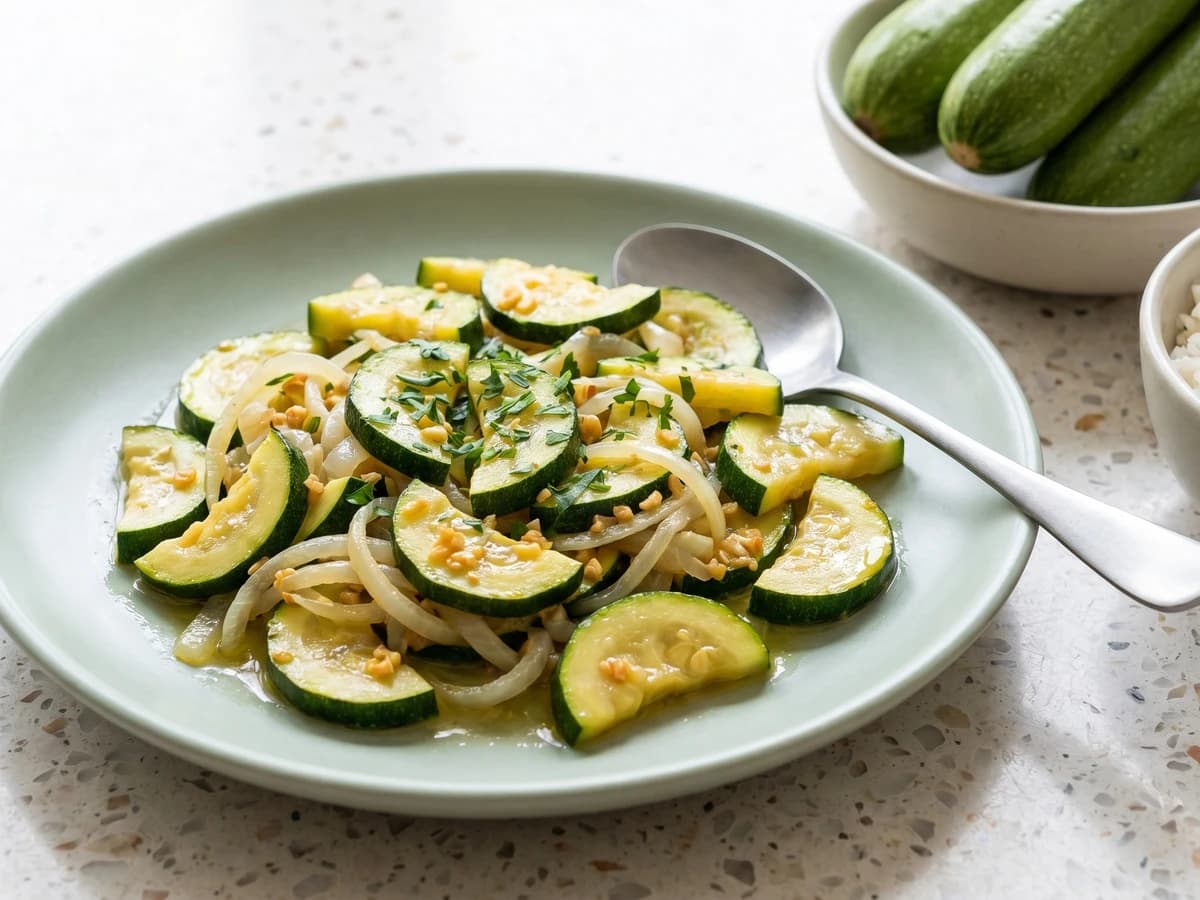
Abobrinha Refogada
You think you'll turn zucchini into mush. Fine. Anota aí: high heat, wide pan, salt at the end, and suddenly this little green side starts solving dinner.
A cooking platform built around craft, culture, and the stories behind what we eat.

Created by
You thought the good part was already gone. Wrong. Save the moqueca broth, whisk in farinha slowly, and you've got the spoonful that makes the plate make sense.
You look at the pot after the fish is gone and think, pronto, acabou. Then you almost pour the broth down the sink. Anota aí: that's not leftover. That's dinner still talking.
Pirão is for the cook who says "isso não é pra mim" because farinha scares them. I understand. Add it too fast and you get little balls of paste floating around, and nobody needs that humiliation on a Tuesday. But this is not talent, it's timing. Cozinhar não é dom, é um aprendizado. You take the pot off the hard boil, rain the farinha in slowly, and whisk until the broth turns glossy and spoonable.
Here the caldo matters because this is Espírito Santo speaking: fish, limão, alho, tomate, cebola, coentro, and oil stained warm orange-red with urucum. No azeite de dendê, no coconut milk, no bell pepper. That absence isn't a missing step, it's the definition. Bahia has its own beautiful moqueca, and I'm not here to crown a winner. A gente respects both kitchens and learns each one properly.
Serve the pirão beside white rice, beans if they're on the table, the fish from the pot, and something green. That's the pê-efe doing what it always does: real food, nothing wasted, a country quietly keeping itself fed.
Pirão is an old Brazilian way of thickening a seasoned broth with farinha de mandioca, turning fish, meat, or seafood cooking liquid into a second dish instead of waste. In Espírito Santo, it is tied closely to moqueca capixaba, traditionally cooked in the black, unglazed panela de barro made by the Paneleiras de Goiabeiras, a craft registered by IPHAN as Brazilian intangible heritage in 2002. The proud saying "moqueca é capixaba, o resto é peixada" belongs to Capixaba pride, not to a final verdict over Bahia, whose dendê moqueca is its own tradition.
Quantity
3 cups
strained
Quantity
3/4 cup, plus more only if needed
Quantity
2 tablespoons
Quantity
1 teaspoon
Quantity
1/2 small
finely chopped
Quantity
1 small
seeded and finely chopped
Quantity
1 clove
minced
Quantity
1 tablespoon, plus more to taste
Quantity
2 tablespoons
chopped
Quantity
1/2 teaspoon, plus more to taste
| Ingredient | Quantity |
|---|---|
| caldo from moqueca capixaba or homemade fish brothstrained | 3 cups |
| fine farinha de mandioca | 3/4 cup, plus more only if needed |
| oil | 2 tablespoons |
| urucum seeds or colorau | 1 teaspoon |
| onionfinely chopped | 1/2 small |
| ripe tomatoseeded and finely chopped | 1 small |
| garlicminced | 1 clove |
| fresh lime juice | 1 tablespoon, plus more to taste |
| fresh cilantrochopped | 2 tablespoons |
| salt | 1/2 teaspoon, plus more to taste |
Strain 3 cups of moqueca capixaba broth into a bowl, pressing gently on the tomato and onion but leaving fish flakes and bones behind. You want a smooth caldo because pirão thickens fast, and little bones hide badly in a spoonful.
Warm the oil with the urucum seeds over low heat for 2 to 3 minutes, until the oil turns clear orange-red and smells warm, not toasted. Strain out the seeds. If using colorau, stir it straight into the oil for 30 seconds. Keep the heat gentle because burnt urucum goes bitter, and bitterness is not a seasoning.
Add the onion to the urucum oil and refogar until it murcha, soft and see-through, about 4 minutes. Add the tomato and cook until it slumps into the oil, then add the garlic for 1 minute, just until you smell it. This is the small base that wakes up the broth, so don't throw everything in cold and hope flavor appears. Hope is not dinner.
Pour the strained caldo into the pot and bring it to a gentle simmer. Taste it now and add salt only if it needs it, because moqueca broth may already be seasoned. Let it bubble quietly for 5 minutes so the refogado and the fish broth become one thing instead of two things sharing a pot.
Lower the heat to the smallest flame, then rain in the farinha with one hand while whisking with the other. Go slowly. The pirão should thicken from loose soup to creamy porridge in 3 to 5 minutes, glossy and heavy enough to leave a trail when the whisk passes. Dump the farinha in all at once and it clumps, because dry cassava grabs liquid faster than you can apologize.
Turn off the heat and stir in the lime juice and cilantro. Taste again. The pirão should be savory from fish, bright at the end from limão, and creamy enough to mound softly on a spoon. Serve right away beside the moqueca, rice, and something green, from the pot if you can.
1 serving (about 240g)
Culinary guides, cultural storytelling, and the editorial depth that makes cooking meaningful.
Discover Culinary ExplorerChef Juliana
You think you'll turn zucchini into mush. Fine. Anota aí: high heat, wide pan, salt at the end, and suddenly this little green side starts solving dinner.

Chef Juliana
You think this is sacred enough to be impossible. It isn't. Acaçá is patience, stirring, and ponto, taught plainly, with respect for the terreiros that carry it.
Chef Juliana
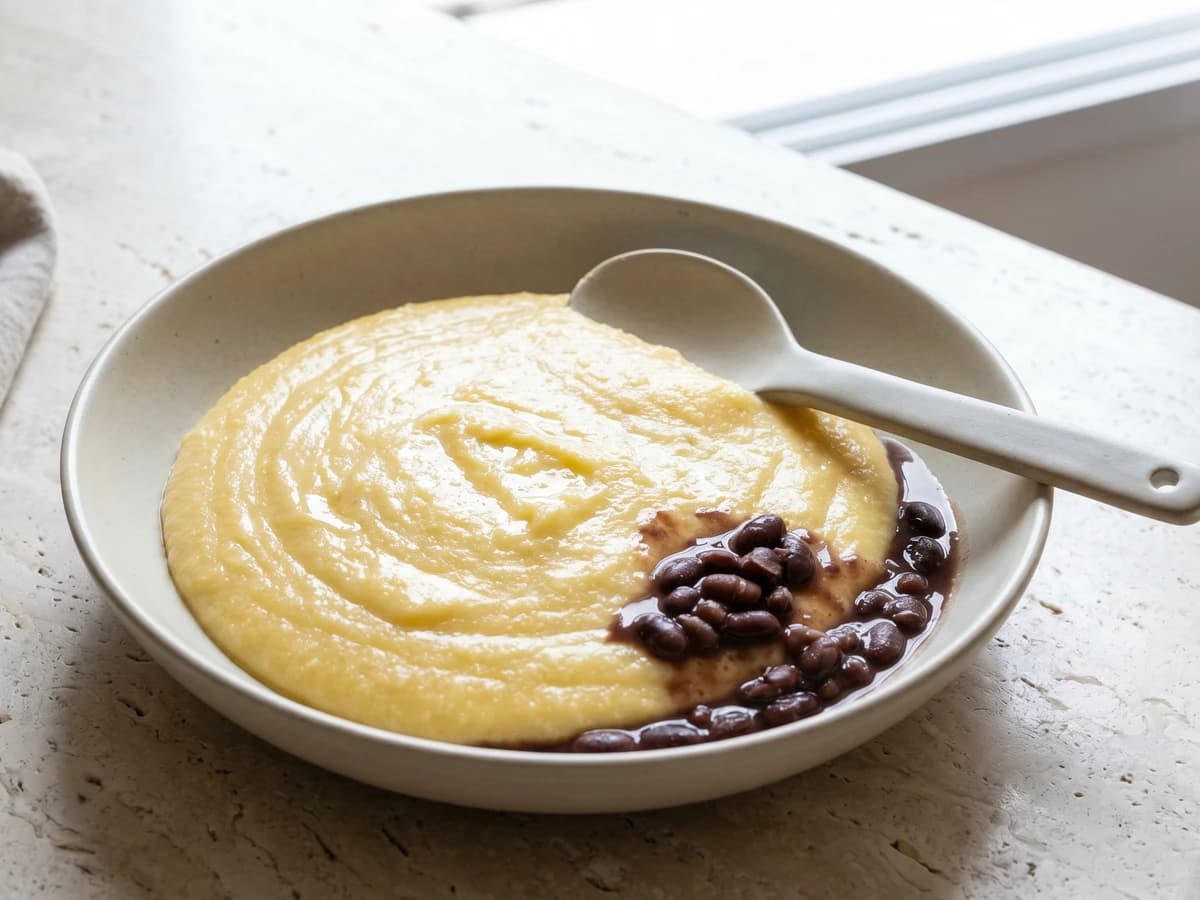
You think cornmeal will turn into lumps and shame. It won't. Cold water first, patient stirring, and a real garlic base give you angu that solves dinner.
Chef Juliana
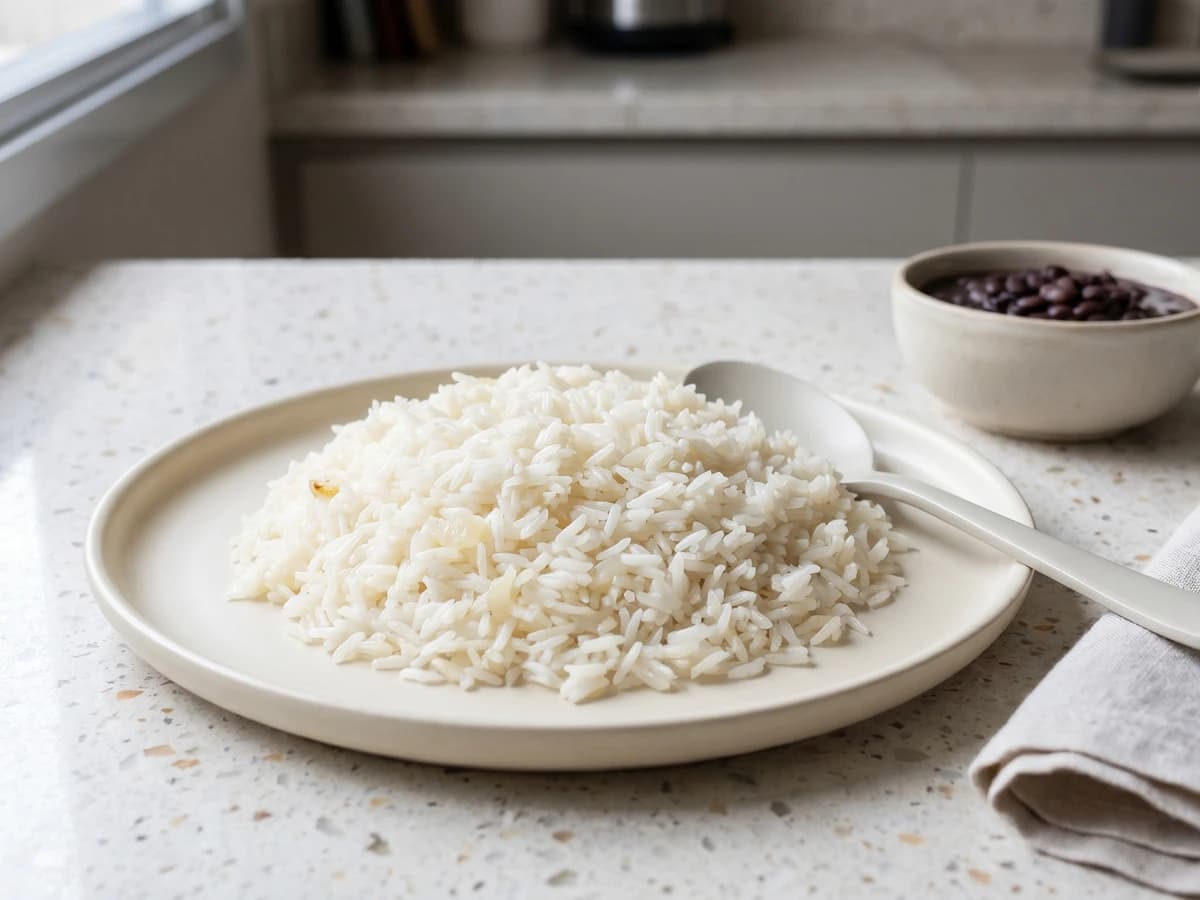
Everyone swears they can't make good rice. They're wrong. Refogue onion and garlic, use two parts water to one rice, then close the lid and leave the poor thing alone.