
Chef Juliana
Açaí com Camarão do Pará
You think açaí belongs with banana and granola because that's the version that traveled. In Pará, thick unsweetened açaí sits beside shrimp, rice, and farinha. Anota aí: same fruit, different meal.
A cooking platform built around craft, culture, and the stories behind what we eat.
Created by
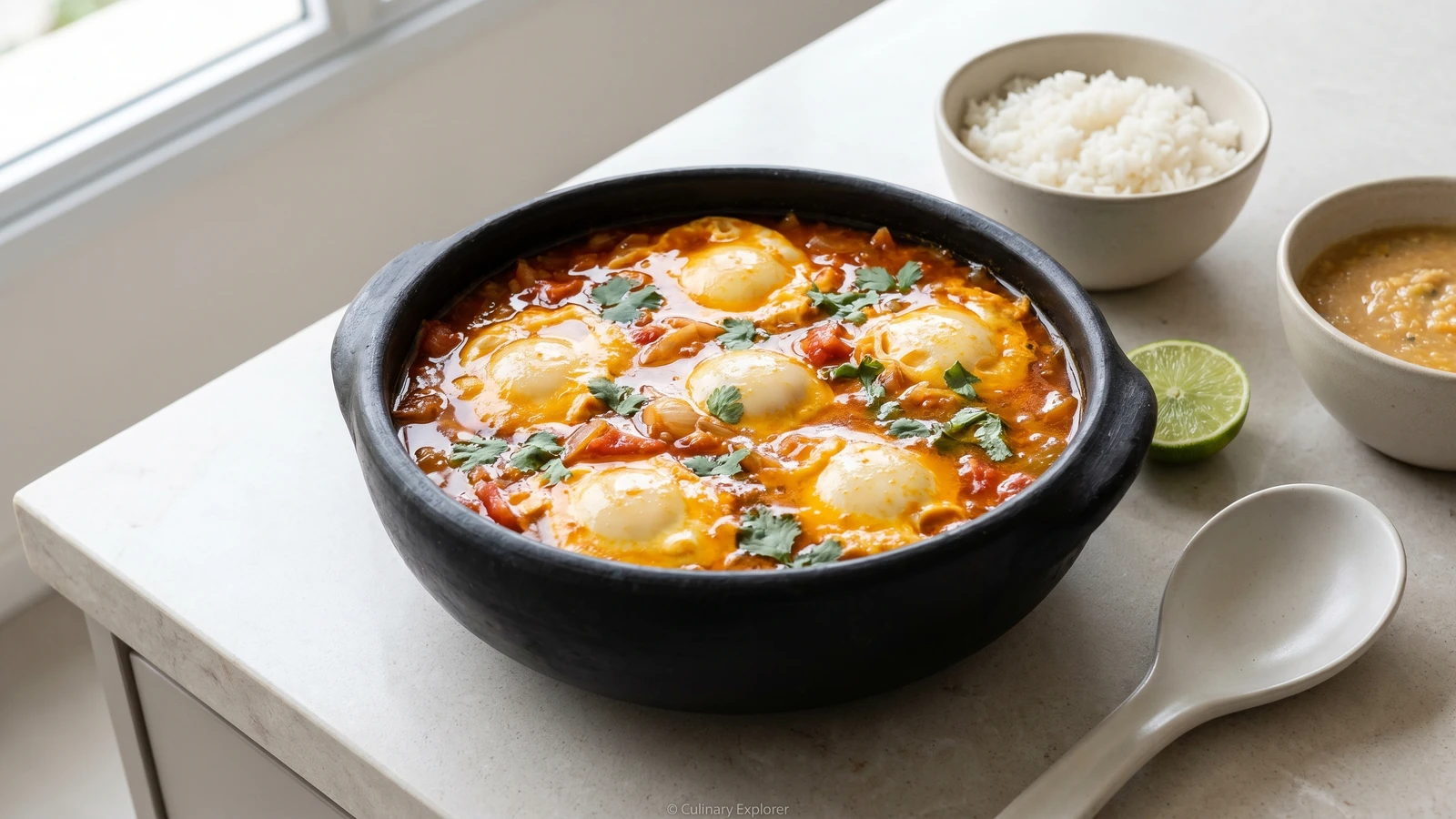
You thought moqueca needed fish and ceremony. Wrong. Eggs, tomato, onion, coentro, limao, and urucum make a meatless pot that still resolves dinner.
You may be standing there with eggs in the fridge, no fish in the house, and that quiet little sentence starting up: isso nao e pra mim. Anota ai: cooking isn't a gift, it's something you learn. And moqueca, especially this one, is not a rich person's secret. It's a method. A good refogado, ripe tomato, urucum in the oil, and the discipline to let the pot cook without poking it to death.
I learned this kind of confidence late, after plenty of ridiculous kitchen disasters. So I don't teach by mystery. We build the flavor where flavor actually begins: onion until it murcha, garlic just until it smells alive, tomato until it gives up its juice. The urucum stains the oil that warm orange-red, not dendê. No coconut milk, no bell pepper, no packet pretending to be seasoning. In the Capixaba pot, those absences aren't missing pieces. They're the point.
This is comida de verdade for a Tuesday. Serve it with arroz soltinho, feijao, and something green, and suddenly the everyday plate, the pe-efe, has changed clothes without losing its bones. Eggs give you the center of the plate, the broth gives you pirao, and the pot gives you dinner without drama.
The traditional vessel is the black, unglazed panela de barro from Goiabeiras, and if you have one, use it proudly. If you don't, use a heavy shallow pot and keep going. A gente is here to cook, not to wait for the perfect object to give us permission.
Moqueca capixaba is the seafood stew of Espirito Santo, marked by urucum-stained oil, fresh tomato, onion, garlic, coentro, and limao, without azeite de dende, coconut milk, or bell pepper. The black clay pots made by the Paneleiras de Goiabeiras were registered by IPHAN as Brazilian intangible heritage in 2002, tying the dish to a living craft as much as to the coast. The slogan "moqueca e capixaba, o resto e peixada" is Capixaba pride, not a verdict: Bahia has its own dende moqueca, Para has its own variants, and nobody needs me crowning a winner from my São Paulo counter.
Quantity
8
Quantity
2 tablespoons, plus wedges for serving
Quantity
3 cloves
minced
Quantity
1 1/4 teaspoons, divided, plus more to taste
Quantity
3 tablespoons
Quantity
1 tablespoon seeds or 2 teaspoons ground annatto
Quantity
1 large
thinly sliced
Quantity
4
sliced into thin rounds
Quantity
1/2 cup
stems chopped fine, leaves chopped or torn
Quantity
1/2 cup, plus more as needed
Quantity
1/4 teaspoon
Quantity
1/2 cup
for optional pirao
Quantity
as needed
Quantity
as needed
Quantity
as needed
| Ingredient | Quantity |
|---|---|
| large eggs | 8 |
| lime juice | 2 tablespoons, plus wedges for serving |
| garlicminced | 3 cloves |
| salt | 1 1/4 teaspoons, divided, plus more to taste |
| neutral oil or olive oil | 3 tablespoons |
| urucum seeds or colorau | 1 tablespoon seeds or 2 teaspoons ground annatto |
| onionthinly sliced | 1 large |
| ripe tomatoessliced into thin rounds | 4 |
| cilantrostems chopped fine, leaves chopped or torn | 1/2 cup |
| water | 1/2 cup, plus more as needed |
| black pepper | 1/4 teaspoon |
| fine cassava flourfor optional pirao | 1/2 cup |
| cooked white rice (optional) | as needed |
| cooked beans (optional) | as needed |
| sauteed greens (optional) | as needed |
Crack each egg into a small cup, one at a time, and keep them ready near the stove. Stir the lime juice, minced garlic, and 1/2 teaspoon salt together in a small bowl. You are not marinating the eggs like fish, because eggs would fall apart and make a mess. You're making the fresh seasoning that will go into the sauce at the right moment, where it can perfume the whole pot.
Warm the oil in a black panela de barro or a heavy shallow pot over medium-low heat. Add the urucum seeds and stir until the oil turns orange-red, about 2 minutes, then strain out the seeds and return the oil to the pot. If using colorau, stir it straight into the warm oil for 30 seconds. Keep the heat gentle, because burned urucum tastes dusty and bitter, and no cook needs that insult on a Tuesday.
Add the sliced onion to the stained oil and cook, stirring now and then, until it softens and goes glossy, about 5 minutes. Add the chopped cilantro stems and the garlic-lime mixture, then stir for 1 minute, just until the garlic smells sharp and good. Garlic burns fast, and burned garlic follows you through the whole pot like a bad decision.
Spread half the tomato slices over the onion, sprinkle with 1/4 teaspoon salt, then layer the remaining tomato on top. Add the water around the edge of the pot, not straight over the tomatoes, and shake the pot once to settle everything. Don't stir. Layers cook into a clear, bright broth; stirring breaks them down too early and gives you a muddy sauce.
Cover the pot and simmer over medium-low heat until the tomatoes slump, release juice, and the broth looks orange and glossy around the edges, 8 to 10 minutes. Taste the broth and add the remaining 1/2 teaspoon salt and the black pepper. This is where you correct the pot before the eggs go in, because once they're poaching, you stop fussing.
Make 8 shallow spaces in the tomatoes with a spoon and slide one egg into each space. Spoon a little broth around them, not over the yolks, then cover the pot. Cook 5 to 7 minutes, until the whites are set and the yolks are still soft, or 8 to 9 minutes for firm yolks. Do not stir. The eggs need quiet heat to stay whole, and a busy spoon is how a moqueca becomes scrambled eggs with ambition.
Turn off the heat and scatter the cilantro leaves over the top. Let the pot rest uncovered for 3 minutes so the sauce calms and the eggs finish gently. Serve from the pot with lime wedges, arroz soltinho, feijao, and sauteed greens. That's the pe-efe doing its job: rice, beans, the center of the plate, and something green.
After serving the eggs, ladle about 2 cups of the leftover broth into a small pan. Warm it over low heat and rain in the cassava flour slowly, stirring all the time, until it thickens into a soft porridge, 3 to 5 minutes. Stop when it falls from the spoon in heavy ribbons. Too much flour and it turns stiff; add a splash of water and bring it back. Nothing here gets wasted.
1 serving (about 275g)
Culinary guides, cultural storytelling, and the editorial depth that makes cooking meaningful.
Discover Culinary ExplorerChef Juliana
You think açaí belongs with banana and granola because that's the version that traveled. In Pará, thick unsweetened açaí sits beside shrimp, rice, and farinha. Anota aí: same fruit, different meal.

Chef Juliana
You think savory açaí is not for you. I understand. Then you taste the cold, dark bowl beside hot fried fish, rice, greens, and farinha, and dinner gets very quiet.

Chef Juliana
You think salted beef and rice sound like trouble. Anota aí: soak the charque, brown it properly, build the refogado, and this one pot resolves dinner.

Chef Juliana
You think a Maranhão green rice belongs to somebody else's clever hands. It doesn't. Wilt the vinagreira, build the refogado, fold it through arroz soltinho, and dinner gets bright, coastal, and yours.