
Chef Elsa
Allerheiligenstriezel
A rich, buttery braided bread that Austrian godfathers bring their godchildren on All Saints' Day. The golden six-strand braid is as much ritual as recipe, and the kitchen smells like love while it bakes.
A cooking platform built around craft, culture, and the stories behind what we eat.
Created by
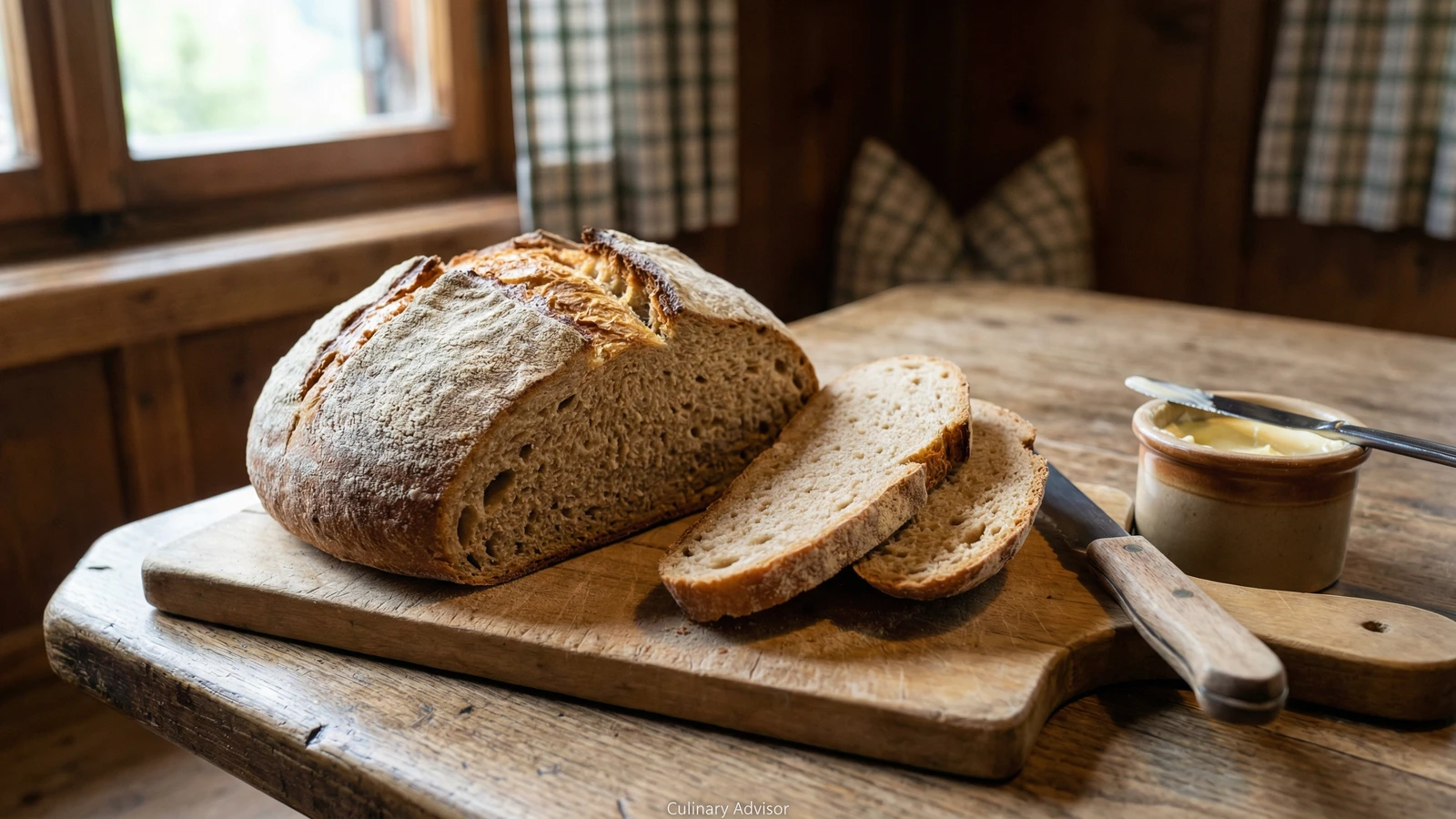
A round Alpine sourdough from the Pinzgau valley, built on an overnight Salzsauer sponge with crushed caraway and lighter mountain rye that keeps for a week and gets better every day.
The first time I tasted Pinzgauer Bauernbrot properly, I was ten years old, sitting at a Gasthaus table in Saalfelden with Gretel and my grandmother Eva. The bread arrived on a wooden board with nothing but butter and a pot of Liptauer cheese, and I remember thinking it was the best thing I'd ever eaten. The crust crackled when you pressed it. The crumb was dense but not heavy, with a sweetness that had nothing to do with sugar. That was the rye talking, the caraway, the slow overnight ferment doing what time does when you leave good ingredients alone.
Now I live in Salzburg, and Pinzgauer Bauernbrot is the bread I come home to. The Pinzgau is the valley just south of the city, climbing toward the Hohe Tauern mountains, and the farmers there have been baking this bread for centuries. It's not a dark, sour northern rye. Alpine rye is lighter, nuttier, almost sweet. The method is different too. Where northern bakers build their sourdough on sharp acidity, Pinzgau bakers use a Salzsauer, a salt sponge, where salt goes into the overnight starter and slows the fermentation down. The result is a milder, rounder flavor that lets the grain speak for itself.
This bread is good Austrian home cooking at its most honest. Flour, water, salt, sourdough, caraway. Five ingredients and twelve hours of patience. You mix the Salzsauer before bed, finish the dough in the morning, and by early afternoon your kitchen smells like an Alpine bakery. The loaf keeps for a week, getting better for toast and Brotzeit as the days go on. Gretel always said the mark of a good bread is whether you're still reaching for it on day three. This one, you'll be reaching for on day five.
Pinzgauer Bauernbrot belongs to a bread-baking tradition rooted in the Alpine farming communities of the Salzburg province, where families baked large loaves in communal wood-fired ovens called Backofen once every two to three weeks. The Salzsauer method, adding salt to the sourdough sponge rather than the final dough alone, developed as a practical solution in these mountain valleys: the salt tempered the wild fermentation of local rye starters and produced a milder loaf that kept well in cool farmhouse pantries. The bread was so central to Pinzgau identity that a family's reputation could rest on the quality of their Bauernbrot, and young women were expected to demonstrate their baking before marriage.
Quantity
150g
Quantity
300g
Quantity
15g
Quantity
250ml
about 35°C
Quantity
200g
Quantity
250g
Quantity
8g
Quantity
2 teaspoons
lightly crushed
Quantity
1 teaspoon
lightly crushed
Quantity
250ml
about 30°C
Quantity
for dusting
| Ingredient | Quantity |
|---|---|
| active rye sourdough starter | 150g |
| medium rye flour (Roggenmehl), for the Salzsauer | 300g |
| fine sea salt, for the Salzsauer | 15g |
| warm water, for the Salzsauerabout 35°C | 250ml |
| medium rye flour (Roggenmehl), for the main dough | 200g |
| strong bread flour | 250g |
| fine sea salt, for the main dough | 8g |
| caraway seedslightly crushed | 2 teaspoons |
| fennel seeds (optional)lightly crushed | 1 teaspoon |
| warm water, for the main doughabout 30°C | 250ml |
| rye flour | for dusting |
The evening before you bake, combine the rye sourdough starter, 300g rye flour, 15g salt, and 250ml warm water in a large bowl. Mix with a wooden spoon or your hand until no dry flour remains. The mixture will be thick and paste-like, heavier than a wheat sponge. Cover with a damp cloth or cling film and leave it at room temperature overnight, ten to fourteen hours. The salt does something important here: it slows the fermentation, keeping the wild yeasts and bacteria in check so the sponge develops flavor without tipping into harsh acidity. This is the Salzsauer, and it's why Pinzgauer bread tastes rounder and sweeter than the sour rye loaves you find further north.
The next morning, the Salzsauer should smell pleasantly tangy, like sour apples, and look slightly puffed. Add the remaining 200g rye flour, the bread flour, 8g salt, crushed caraway seeds, and fennel seeds if you're using them. Pour in most of the warm water and mix everything together. Rye dough behaves nothing like wheat dough. It's sticky and heavy and it won't develop the elastic, stretchy quality you're used to with bread flour. Don't fight it. Mix until the ingredients are fully combined and the dough is uniformly shaggy and wet, about five minutes by hand. Add the remaining water if the dough feels stiff or if dry bits persist at the bottom. You want it tacky but holding together in one mass.
Cover the bowl and leave it in a warm spot for one and a half to two hours. Rye dough doesn't rise dramatically the way wheat dough does, so don't wait for it to double. You're looking for the dough to expand by about a third and feel slightly lighter when you tilt the bowl. The surface may show a few fine cracks. That's fine. That's the fermentation working.
Dust your work surface generously with rye flour. Turn the dough out and dust the top as well. With well-floured hands, gather the dough into a round by folding the edges into the center, turning the mass a quarter turn after each fold. You'll make six or seven folds. Flip it seam-side down and use your hands to gently tighten the surface, rotating the ball against the counter until it feels taut. Don't overwork it. Rye dough tears if you handle it too aggressively. Dust a banneton or a deep bowl lined with a clean linen cloth with a heavy coating of rye flour and place the loaf seam-side up inside.
Cover the banneton with a cloth and proof for forty-five minutes to one hour. The surface will develop small cracks when it's ready, and the dough will feel puffy but still spring back slowly when you press it with a floured finger. While the loaf proofs, place a baking stone or your heaviest baking sheet on the middle rack of your oven and set an empty roasting tin on the floor of the oven. Preheat to 240°C. You need the stone ripping hot before the bread goes in.
Turn the proofed loaf onto a sheet of baking paper, seam-side down now. The rye flour from the banneton will leave a beautiful white dusting on the surface. Score the top with a deep cross using a bread lame or sharp serrated knife, cutting about one centimeter deep with confident strokes. The cuts let the bread expand evenly in the oven and givethe loaf its traditional Pinzgau look. Slide the bread, paper and all, onto the hot baking stone. Pour a cup of hot water into the roasting tin and close the oven door quickly. That burst of moisture helps the crust develop before it sets. Bake at 240°C for fifteen minutes, then reduce the heat to 200°C and continue for another thirty-five to forty minutes. The bread is done when you knock the bottom and it sounds unmistakably hollow, a deep thud, not a dull thump.
Set the loaf on a wire rack and leave it alone. This is the hardest part and the most important. Rye bread must cool completely before you cut it, at least two hours, and ideally longer. The crumb continues to set as the loaf cools, and cutting too early gives you a gummy, underbaked interior no matter how long it spent in the oven. I know the smell will test your patience. Walk out of the kitchen if you have to. Come back in two hours with a bread knife and the satisfaction of having done this properly. Mahlzeit!
1 serving (about 108g)
Culinary guides, cultural storytelling, and the editorial depth that makes cooking meaningful.
Discover Culinary ExplorerChef Elsa
A rich, buttery braided bread that Austrian godfathers bring their godchildren on All Saints' Day. The golden six-strand braid is as much ritual as recipe, and the kitchen smells like love while it bakes.

Chef Elsa
Austria's rye sourdough farmhouse loaf, dark-crusted and tangy, laced with hand-crushed Brotgewürz, the kind of bread that fills a kitchen with the smell of caraway and makes everything else on the table taste better.
Chef Elsa
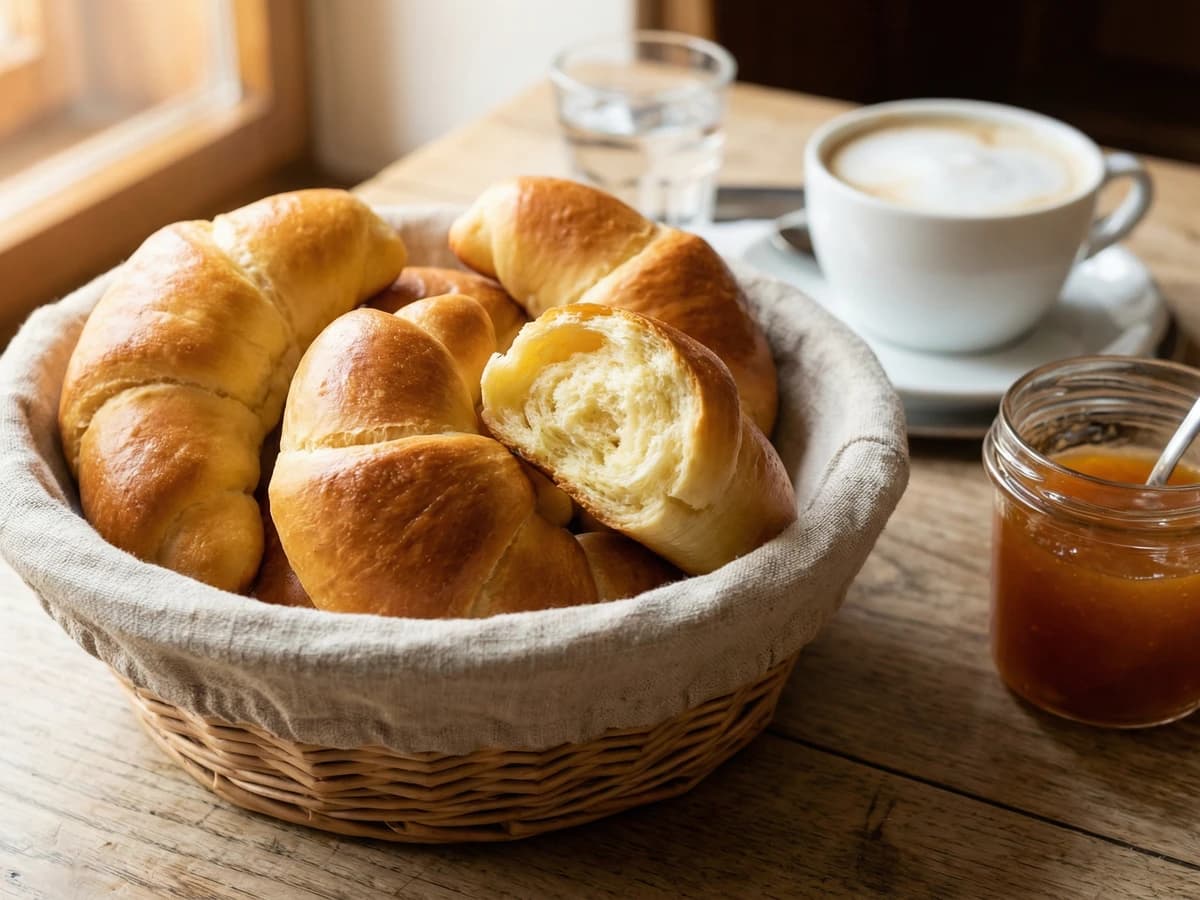
Buttery Viennese crescents, golden with egg wash and soft as a Sunday morning, shaped the way Viennese bakers have shaped them for eight hundred years.

Chef Elsa
Vienna's five-petaled imperial roll, hand-folded into a star and baked until the crust shatters at first touch, with a crumb so soft and airy it barely weighs a thing.