
Chef Lupita
Bolas de Queso de León
Guanajuato's La Pulga snack: fresh cow's milk cheese sealed in nixtamalized masa, dipped in egg capeado, fried in manteca, and dragged through a roasted guajillo and chile de árbol salsa.
A cooking platform built around craft, culture, and the stories behind what we eat.
Created by
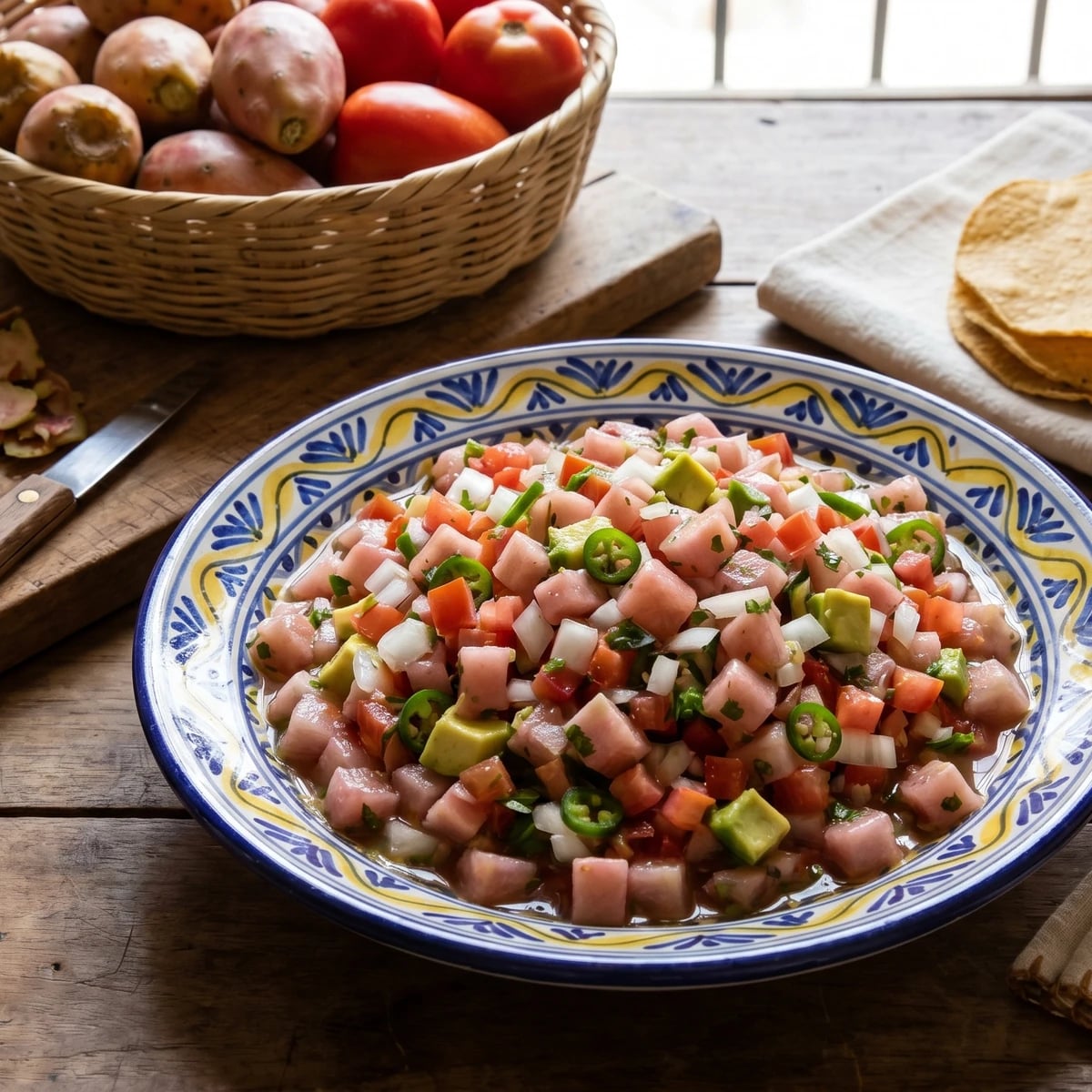
Don Francisco's Guanajuato pico replaces lime with xoconostle, the sour cactus fruit of the semi-desert, chopped with tomato, avocado, chile serrano, white onion, and cilantro for the picnic table.
Guanajuato's northern Bajio, dry and nopal-heavy where the land leans toward the Sierra Gorda, is where Don Francisco's pico de gallo belongs. The acid is not lime. It is xoconostle, the sour cactus fruit that grows on nopales tough enough for heat, dust, and poor soil. You taste the place before you taste the tomato.
Do not confuse xoconostle with sweet tuna. Sweet tuna is for eating out of hand with sticky fingers. Xoconostle is tart, firm, and stubborn, with the seeds held in the center and the flavor in the thick wall of the fruit. At the market in Guanajuato, the women will show you the difference before they let you waste your money. Preguntale a las señoras del mercado.
The women who make this in Guanajuato's markets perfected the order: xoconostle first with salt, then jitomate saladet, cebolla blanca, chile serrano, cilantro, and avocado only at the end. A food processor is lazy here. It bruises the tomato and turns avocado into paste. Knife work is the technique. No me vengas con atajos.
At the table this belongs in mayolica de Dolores Hidalgo, with tostadas beside it and grilled meat coming off the asador. It is picnic food, yes, but not careless food. The balance is exact: acid from cactus fruit, fat from avocado, heat from serrano, freshness from cilantro. This is a 32-state cuisine, and Guanajuato has its own voice.
The word xoconostle comes from Nahuatl xococ, sour, and nochtli, prickly pear, marking it as a fruit understood in central Mexico long before citrus became an everyday acid. Unlike sweet tunas, xoconostles have thick tart flesh and a seed core, and they can stay on the nopal for months, which made them useful in the dry kitchens of the Bajio, Hidalgo, San Luis Potosi, and the Guanajuato semi-desert. Pico de gallo in central Mexico has long meant a chopped raw mixture of fruit, vegetables, chile, and salt, not only the tomato-lime salsa that restaurants turned into a national shorthand in the 20th century.
Quantity
4 medium
spines removed, peeled, seed cores removed, flesh diced small
Quantity
3 medium
ripe but firm, diced small
Quantity
1
ripe but firm, diced just before serving
Quantity
1/2 small
finely diced
Quantity
1 to 2
stemmed and finely minced
Quantity
1/2 cup packed
chopped
Quantity
3/4 teaspoon, plus more to taste
Quantity
12
for serving
| Ingredient | Quantity |
|---|---|
| xoconostles cuaresmenos or rosadosspines removed, peeled, seed cores removed, flesh diced small | 4 medium |
| jitomates saladet or Roma tomatoesripe but firm, diced small | 3 medium |
| Hass avocadoripe but firm, diced just before serving | 1 |
| white onionfinely diced | 1/2 small |
| fresh chile serranostemmed and finely minced | 1 to 2 |
| fresh cilantro leaves and tender stemschopped | 1/2 cup packed |
| sea salt | 3/4 teaspoon, plus more to taste |
| corn tostadas or warm hand-pressed corn tortillas (optional)for serving | 12 |
Lay the xoconostles on a towel. If they still have tiny spines, rub them with the towel or a stiff brush before you touch the flesh. Cut off both ends, make a shallow lengthwise cut through the skin, and peel it away. Cut each fruit lengthwise and scoop out the seed core with a small spoon. Keep the firm tart wall of the fruit and dice it into 1/4-inch cubes. This is why xoconostle is not sweet tuna. The acid lives in that thick wall.
Put the diced xoconostle in a ceramic or glass bowl and add 1/2 teaspoon of the salt. Toss and let it sit for 10 minutes. The fruit will release a tart juice that tastes sharp and clean. That juice is the dressing. No lime. The acid is from the desert, not a bottle.
Dice the jitomates saladet the same size as the xoconostle. If they are watery, scrape out some of the seed jelly first. Finely dice the white onion. Mince one chile serrano for a moderate bite, or two if the table knows what it is asking for. Not all Mexican food is hot, but this pico needs the green edge of serrano.
Chop the cilantro leaves and tender stems with a knife. Do not use a food processor. It bruises the tomato, smears the cilantro, and turns a clean pico into wet confetti. Knife work is the technique here. Así se hace y punto.
Add the tomato, onion, serrano, and cilantro to the salted xoconostle. Fold gently and let the mixture stand for 5 minutes so the salt can pull the juices together. Taste it. It should be tart first, then green from the serrano and cilantro, then sweet from the tomato. If it tastes flat, add a little more salt or more xoconostle, not lime.
Dice the avocado just before serving and fold it in with a light hand. The cubes should stay whole. If you are taking this to a picnic or carne asada, carry the avocado whole and add it at the table. Don Francisco gave me the name for this pico. The señoras in Guanajuato's markets gave me the order of work.
Spoon the pico into a food-safe, lead-free ceramic bowl, ideally mayolica from Dolores Hidalgo if you have it. Serve with corn tostadas or warm hand-pressed corn tortillas. For outdoor dining, keep it shaded and cool, and eat it within two hours once the avocado is added. This is Guanajuato picnic food: sharp, generous, and practical. Cada estado, su propia cocina.
1 serving (about 125g)
Culinary guides, cultural storytelling, and the editorial depth that makes cooking meaningful.
Discover Culinary Explorer
Chef Lupita
Guanajuato's La Pulga snack: fresh cow's milk cheese sealed in nixtamalized masa, dipped in egg capeado, fried in manteca, and dragged through a roasted guajillo and chile de árbol salsa.

Chef Lupita
San Luis Potosí's spring cabuches, the unopened buds of the biznaga roja, blanched and settled in sharp vinegar with onion, carrot, serrano, bay, and oregano for Lent and the year after.

Chef Lupita
Guanajuato's Bajío market botana, built from pressed pork cracklings and a sharp chile de árbol salsa, spooned hot from the cazuela into tortillas or onto tostadas.

Chef Lupita
Hidalgo's Sierra Gorda chinicuiles, red maguey worms cleaned, toasted on the comal, then fried in manteca de cerdo with epazote and served with salsa de chile de árbol.