
Chef Joost
Acar Ketimun (Indo-Dutch Cucumber Pickle)
Acar means pickle, ketimun means cucumber, and this little bowl of sweet vinegar, chilli, and crunch is the cool note that lets an Indo-Dutch rijsttafel keep its balance.
A cooking platform built around craft, culture, and the stories behind what we eat.
Created by
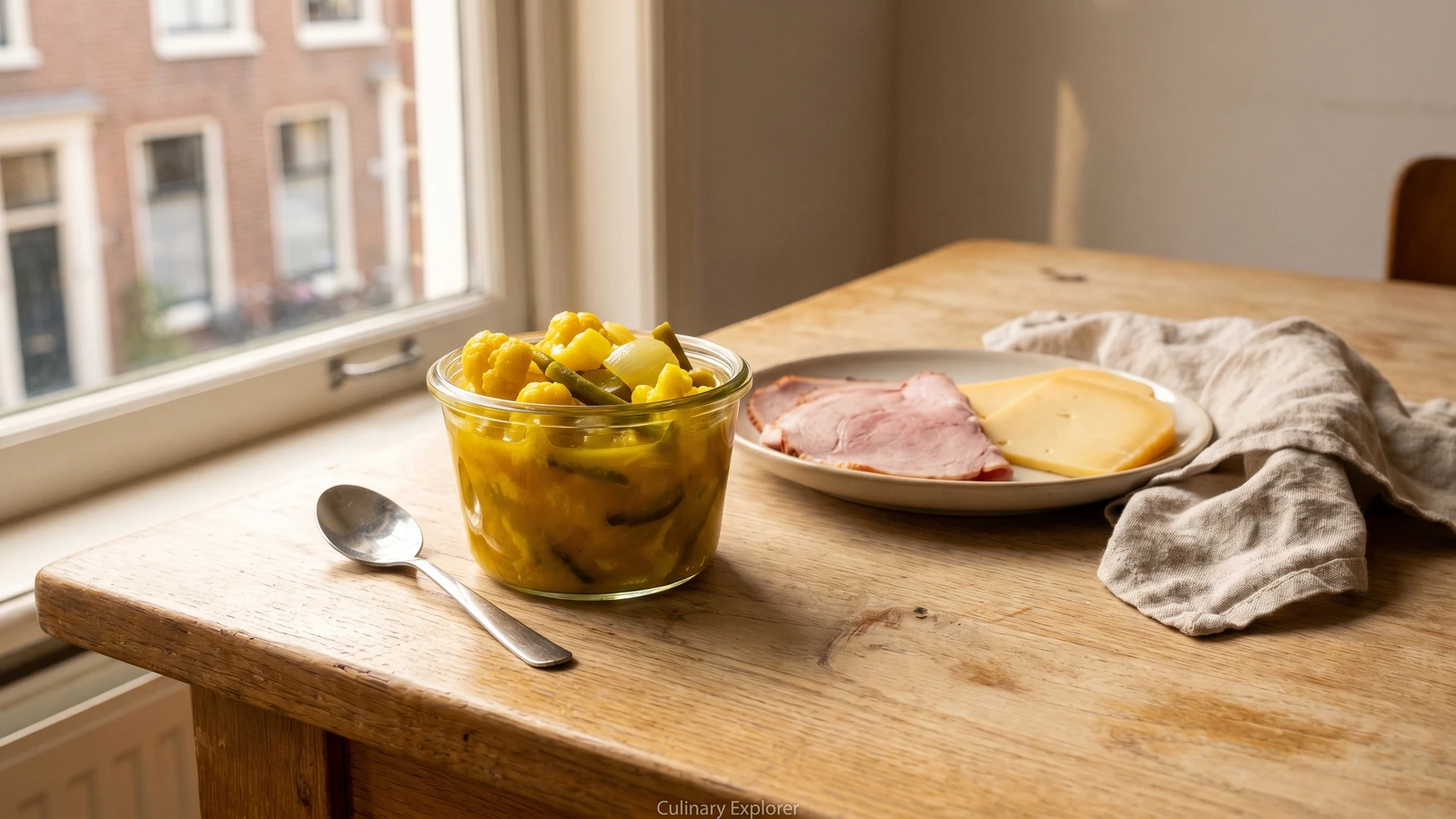
A British colonial pickle wandered into the Dutch cupboard and became our yellow answer to leftover roast, old cheese, and every honest cold plate that needed a sharp tongue.
Piccalilly is what happens when a frugal table gets hold of empire's spice drawer and refuses to become grand about it. In my grandmother's second notebook it sat between pickled onions and appeltjesmoes, apple sauce, which is exactly where it belongs: not as a showpiece, but as one of the small jars that rescue a cold plate from boredom. A spoonful beside sliced ham, boiled beef, oude kaas, old cheese, or yesterday's potatoes, and suddenly the meal has a bright yellow argument on it.
The name already tells you it travelled, though it refuses to give a tidy confession. English cookery books were writing about India pickle in the eighteenth century, then piccalillo, then piccalilli, a cheerful corruption around mixed pickles, mustard, turmeric, and the British habit of domesticating things it had first met abroad. The Dutch received it in the practical way we receive most useful foreigners: we put it in the cupboard, served it with cold meats, and acted as if it had always been there. For obvious reasons, the jar did not object.
But let me tell you a secret. The sauce is not there to drown the vegetables. It is there to hold them in a sharp, mustardy suspension, so cauliflower still snaps, onion still bites, and gherkin keeps its vinegar backbone. Salt the vegetables first and you pull out their excess water; rush that step and the sauce thins into yellow disappointment. Hou het altijd simpel, always keep it simple: salt, rinse, simmer the sauce, fold, jar, wait. The waiting is the seasoning.
Piccalilly in the Netherlands descends from the British piccalilli tradition, itself recorded in eighteenth-century cookbooks under names such as India pickle and piccalillo, reflecting the influence of South Asian pickle-making on British colonial kitchens. Dutch versions became a supermarket and pantry standard in the twentieth century, especially as a condiment for cold meats, cheese, meatballs, and fries. Its yellow colour comes from turmeric, while the sharpness belongs to the older northern European habit of preserving late-summer vegetables in vinegar before winter narrowed the table.
Quantity
500g
cut into small florets
Quantity
200g
peeled and halved if large
Quantity
200g
diced
Quantity
150g
trimmed and cut into 2cm pieces
Quantity
2 tablespoons
Quantity
500ml
Quantity
150g
Quantity
2 tablespoons
Quantity
1 tablespoon
Quantity
1 teaspoon
Quantity
1/2 teaspoon
Quantity
2 tablespoons
Quantity
3 tablespoons
| Ingredient | Quantity |
|---|---|
| cauliflowercut into small florets | 500g |
| small pickling onions or pearl onionspeeled and halved if large | 200g |
| cucumber or firm gherkinsdiced | 200g |
| green beanstrimmed and cut into 2cm pieces | 150g |
| fine sea salt | 2 tablespoons |
| white wine vinegar or cider vinegar | 500ml |
| granulated sugar | 150g |
| English mustard powder | 2 tablespoons |
| ground turmeric | 1 tablespoon |
| ground ginger | 1 teaspoon |
| ground white pepper | 1/2 teaspoon |
| cornflour | 2 tablespoons |
| cold water | 3 tablespoons |
Put the cauliflower, onions, cucumber, and green beans in a large bowl and toss with the salt. Cover and leave for 2 hours. The salt draws out water and firms the vegetables, which is why piccalilly keeps its bite instead of becoming a soft yellow stew.
Tip the salted vegetables into a colander, rinse quickly under cold water, and drain very well. Spread them on a clean towel for ten minutes if they look wet. Excess water is the enemy here; it weakens both the vinegar and the mustard.
Put the vinegar, sugar, mustard powder, turmeric, ginger, and white pepper into a wide pan. Bring to a gentle boil, stirring until the sugar dissolves and the mustard blooms into a bright, sharp sauce. Mix the cornflour with the cold water, stir it into the pan, and simmer for 2 to 3 minutes until glossy and lightly thickened.
Add the drained vegetables to the sauce and stir gently for 3 to 4 minutes, just long enough to coat them and take off the raw edge. Do not cook them tender. The pleasure of piccalilly is the small crunch under the mustard, the cupboard speaking back.
Spoon the hot piccalilly into clean, warm jars, pressing down so the sauce fills the gaps. Seal, cool, and refrigerate. Leave it at least 48 hours before eating; the vinegar calms, the turmeric stains everything properly yellow, and the vegetables learn their new language.
1 serving (about 30g)
Culinary guides, cultural storytelling, and the editorial depth that makes cooking meaningful.
Discover Culinary ExplorerChef Joost
Acar means pickle, ketimun means cucumber, and this little bowl of sweet vinegar, chilli, and crunch is the cool note that lets an Indo-Dutch rijsttafel keep its balance.

Chef Joost
Appelcompote is the apple left with its dignity: soft enough to spoon beside pork or potatoes, still chunky enough to remind you autumn did the real work.

Chef Joost
The little bowl beside the plate is never decoration: appelmoes is the Dutch treaty between sweet and savoury, spooned beside sausage, potatoes, pancakes, and childhood itself.

Chef Joost
Appelstroop is the orchard made patient: apples, pears, and beet syrup boiled down until morning bread, farmhouse cheese, and zuurvlees taste of Limburg in autumn.