
Chef Lupita
Arroz a la Oaxaqueña
Oaxaca's red rice, stained with tomato and fried in lard, steamed with carrots, ejotes, black beans, and epazote. The side that anchors a Oaxacan family meal and earns its place beside the main.
A cooking platform built around craft, culture, and the stories behind what we eat.
Created by
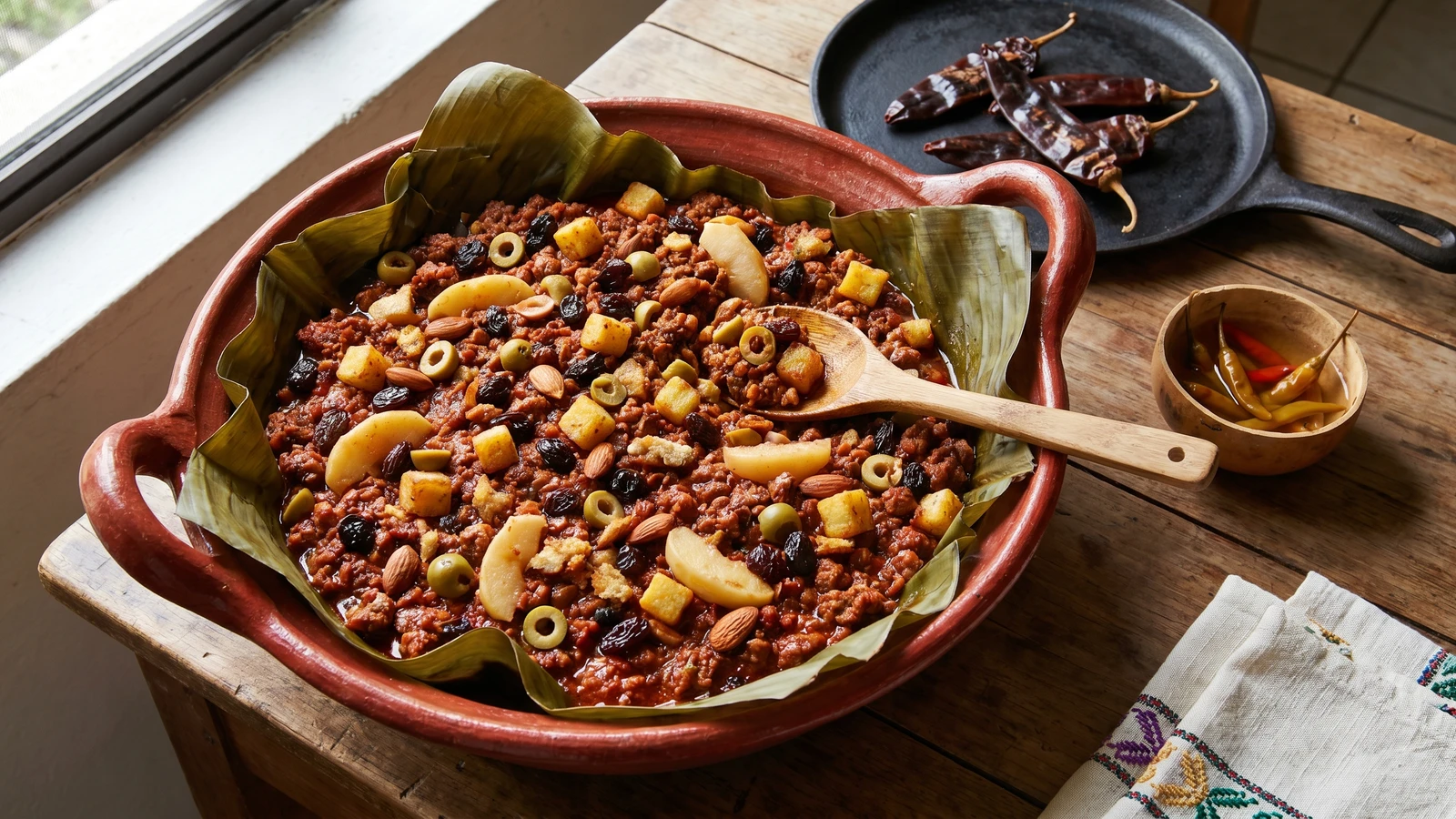
Chiapas Christmas picadillo stuffing, built in lard with pork, chile ancho, raisins, almonds, aceitunas, plátano macho, apple, and pan molido, the sweet-savory filling that makes holiday turkey taste like the south.
Chiapas, from the highland kitchens around San Cristóbal de las Casas and Comitán down toward Tuxtla Gutiérrez, keeps Christmas on the table with pavo relleno and a picadillo that knows exactly where it comes from. This is not northern picadillo with potatoes. This is holiday stuffing: pork, chile ancho, raisins, almonds, aceitunas, plátano macho, apple, and pan molido holding everything together so the turkey juices have somewhere to go.
The chile ancho gives color and quiet depth, not punishment. Not all Mexican food is built to burn your mouth. Here the sweetness of the chile sits with the fruit, the olives cut through the fat, and the bread crumbs bind the pan into something spoonable, generous, and serious enough for Nochebuena. La manteca es el sabor. Use it.
I learned this kind of Christmas picadillo from women who cooked by sight, not by measuring spoons. One señora in the mercado in Tuxtla told me, "El relleno debe quedar jugoso, no aguado," moist, not watery. She was right. If it runs across the plate, you failed the bread. If it sits like cement, you feared the broth. Cooking is judgment. Saber cocinar es saber vivir.
Serve it from a red clay cazuela like the women potters of Amatenango del Valle make, with the edges browned and the plantain showing gold against the pork. Cada estado, su propia cocina. Chiapas has its own Christmas, and this is part of it.
Turkey was domesticated in Mesoamerica long before the Spanish conquest, while olives, almonds, raisins, wheat bread, cinnamon, and cloves entered Mexican holiday kitchens through colonial trade beginning in the 16th century. Chiapas remained tied politically and culturally to the Captaincy General of Guatemala until 1824, which helps explain the southern sweet-savory holiday picadillos shared across Chiapas and Guatemala. The use of plátano macho and local fruit alongside Spanish pantry ingredients marks this dish as southern Mexican, not a generic national stuffing.
Quantity
2
stemmed and seeded
Quantity
4 ripe
roasted
Quantity
4
roasted in their skins, then peeled
Quantity
1/2 cup, plus more as needed
hot
Quantity
4 tablespoons
divided
Quantity
1 large
ripe but firm, peeled and diced into 1/2-inch cubes
Quantity
1/2 cup
toasted and roughly chopped
Quantity
2 pounds
not lean
Quantity
1 medium
finely chopped
Quantity
1 teaspoon, plus more to taste
Quantity
1/2 teaspoon
Quantity
1/2 teaspoon
Quantity
1/4 teaspoon
Quantity
1
Quantity
1 small piece, about 2 inches
Quantity
2
Quantity
1/2 cup
Quantity
1/2 cup
sliced
Quantity
2 tablespoons
rinsed
Quantity
1
peeled, cored, and diced small
Quantity
1 teaspoon
Quantity
1 cup
lightly toasted
Quantity
1
passed over a flame to soften, for lining the cazuela
| Ingredient | Quantity |
|---|---|
| dried chile anchostemmed and seeded | 2 |
| Roma tomatoes or jitomates guajeroasted | 4 ripe |
| garlic clovesroasted in their skins, then peeled | 4 |
| turkey or chicken brothhot | 1/2 cup, plus more as needed |
| manteca de cerdo (pork lard)divided | 4 tablespoons |
| plátano machoripe but firm, peeled and diced into 1/2-inch cubes | 1 large |
| blanched almondstoasted and roughly chopped | 1/2 cup |
| coarsely ground pork shouldernot lean | 2 pounds |
| white onionfinely chopped | 1 medium |
| kosher salt | 1 teaspoon, plus more to taste |
| freshly ground black pepper | 1/2 teaspoon |
| dried Mexican oregano | 1/2 teaspoon |
| dried tomillo (thyme) | 1/4 teaspoon |
| bay leaf | 1 |
| canela mexicana | 1 small piece, about 2 inches |
| whole cloves | 2 |
| raisins | 1/2 cup |
| green aceitunas manzanillasliced | 1/2 cup |
| capersrinsed | 2 tablespoons |
| manzana criolla or tart applepeeled, cored, and diced small | 1 |
| grated piloncillo (optional) | 1 teaspoon |
| pan molido from stale bolillo or teleralightly toasted | 1 cup |
| hoja de plátano (optional)passed over a flame to soften, for lining the cazuela | 1 |
Heat a dry comal over medium. Toast the chile ancho for 20 to 30 seconds per side, just until the skin softens, darkens slightly, and smells sweet like dried fruit. Do not blacken it. Burned ancho turns bitter and that bitterness will sit in the whole picadillo.
Place the toasted chile ancho in a small bowl and cover with hot water for 15 minutes. Drain it. Blend the softened chile with the roasted tomatoes, peeled roasted garlic, and 1/2 cup hot broth until smooth. This sauce should be brick red and thick enough to coat a spoon.
Melt 2 tablespoons of the manteca in a wide heavy skillet or cazuela over medium heat. Add the diced plátano macho and fry, turning gently, until the edges are golden and the centers are soft but not falling apart, about 5 minutes. Lift the plantain out with a slotted spoon and set it aside. Leave the flavored lard in the pan.
Add the remaining 2 tablespoons manteca to the same pan. Add the onion and cook until it turns translucent and smells sweet, about 5 minutes. Add the coarsely ground pork shoulder, salt, and black pepper. Cook, breaking the meat into small pieces, until the liquid evaporates and the pork begins to sizzle in its own fat. That sound matters. Wet pork does not make good stuffing.
Pour the chile ancho and tomato sauce into the pork. Add the Mexican oregano, tomillo, bay leaf, canela, and cloves. Stir well and cook over medium-low heat for 18 to 20 minutes, until the sauce darkens, the pork absorbs the chile, and a little red fat shows at the edge of the pan. This is where the flavor deepens. No me vengas con atajos.
Stir in the raisins, aceitunas, capers, diced apple, and piloncillo if the tomatoes taste sharp. Cook for 6 to 8 minutes, just until the raisins swell and the apple softens without disappearing. Remove the canela stick, cloves, and bay leaf if you can find them. If one clove hides, warn your family. That is kitchen honesty.
Fold in the fried plátano macho, toasted almonds, and pan molido. Add a splash of broth if the mixture looks dry. The picadillo should be moist, glossy, and able to mound on a spoon without leaking across the pan. Taste for salt now. The olives and capers bring salinity, so do not salt blindly.
For a side dish, line a 2-quart clay cazuela with the softened hoja de plátano if using, spoon in the picadillo, and bake at 350F for 20 to 25 minutes, until the top browns lightly and the edges glisten. To stuff a turkey, cool the cooked picadillo completely first, fill the bird loosely, and roast until the center of the stuffing reaches 165F. Food safety is not a suggestion. Así se hace y punto.
1 serving (about 205g)
Culinary guides, cultural storytelling, and the editorial depth that makes cooking meaningful.
Discover Culinary ExplorerChef Lupita
Oaxaca's red rice, stained with tomato and fried in lard, steamed with carrots, ejotes, black beans, and epazote. The side that anchors a Oaxacan family meal and earns its place beside the main.
Chef Lupita
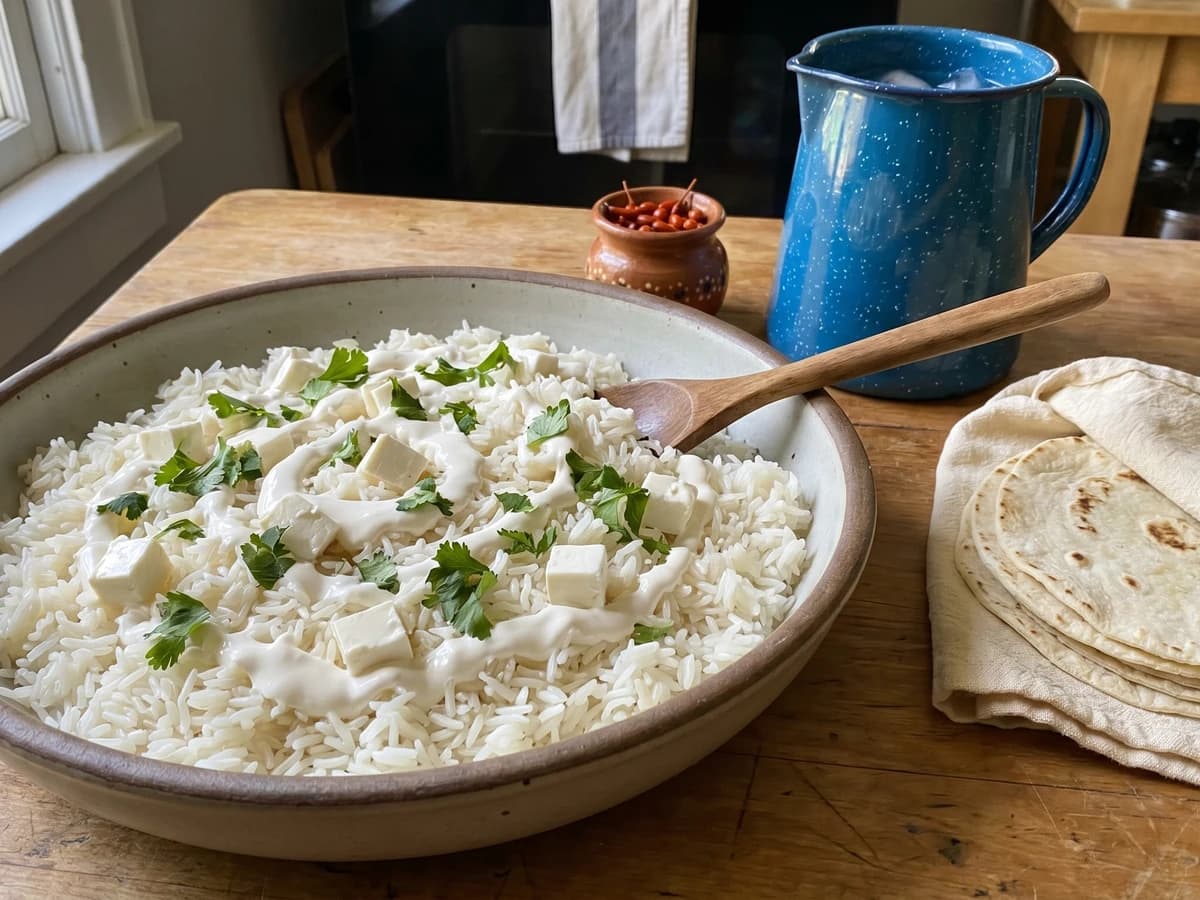
Sinaloa's home-cook white rice topped with cold cubes of cream cheese that soften into the warm grain, finished with crema and a sprinkle of chiltepin at the table. The trick that makes a side dish feel like a small luxury.
Chef Lupita
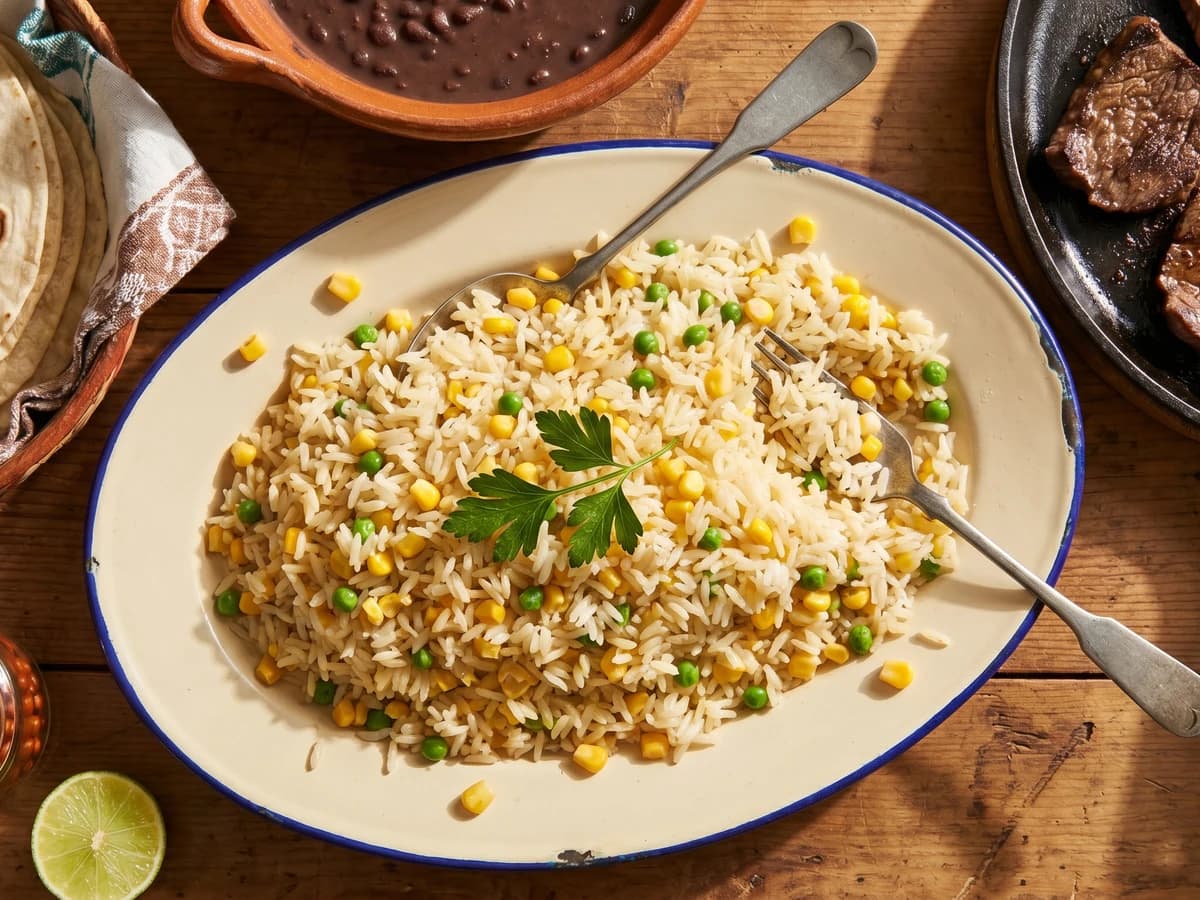
Sonora's white rice, toasted in butter and steamed with sweet corn and tender peas. The clean, quiet partner to a plate of carne asada, not the red rice of central Mexico.

Chef Lupita
Yucatán's white rice with sweet corn kernels, toasted in lard with garlic and onion. The quiet base that holds up against the peninsula's bold achiote-stained stews.