Culinary Explorer
A cooking platform built around craft, culture, and the stories behind what we eat.
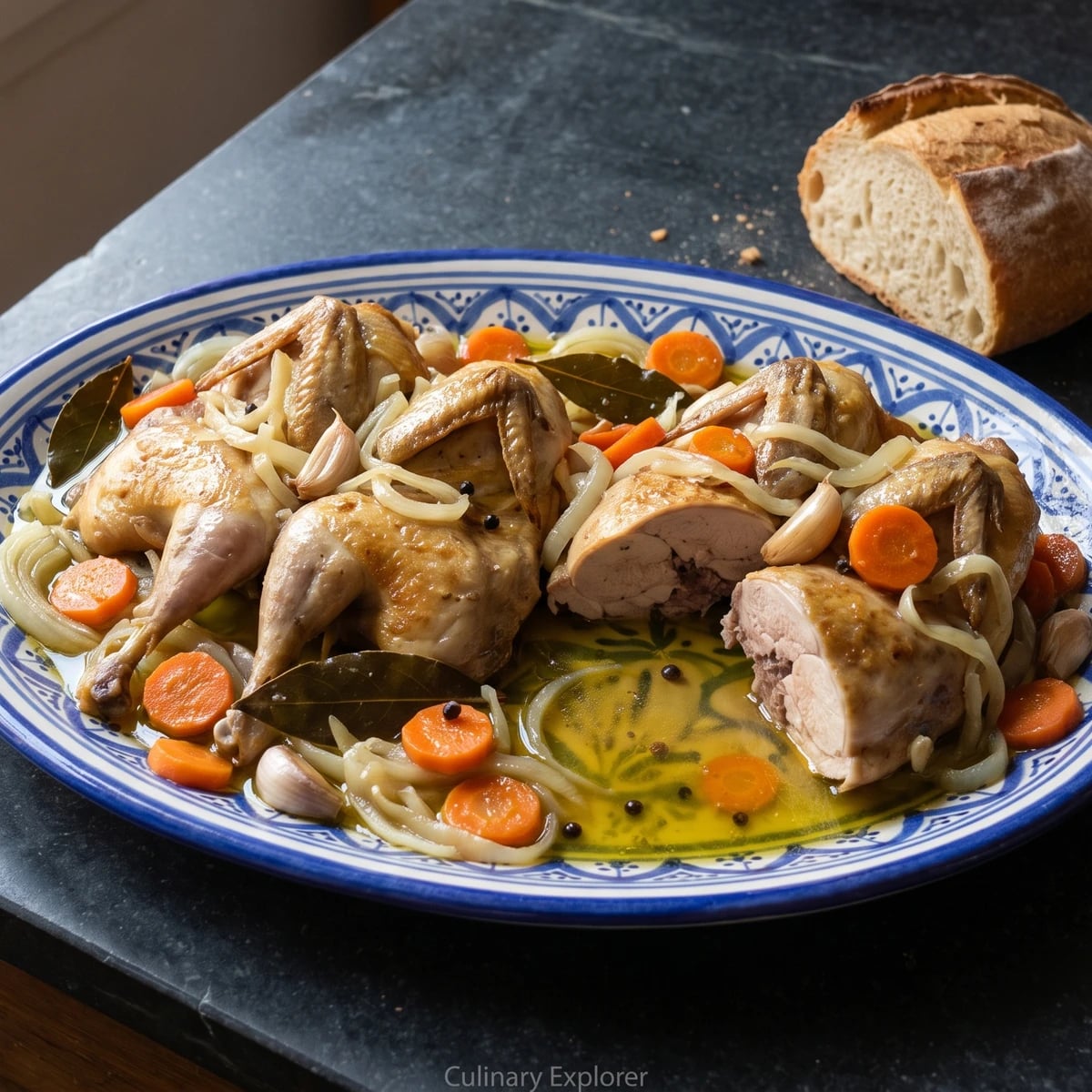
Perdices en Escabeche
Created by Chef Isabel
Castilla-La Mancha keeps partridge tender in a quiet bath of olive oil, white wine vinegar, garlic and bay, then lets a night's rest turn sharpness into the clean, deep flavor of escabeche.
Perdices en escabeche are Castilian, above all of Castilla-La Mancha: lean partridge gently cooked with olive oil, white wine vinegar, garlic, bay, onion, carrot and pepper, then left beneath that liquor until every bite carries it. This isn't a roast bird with vinegar poured over afterward. The cooking and the keeping are one job.
The method that decides it is the barest tremble, followed by a full night's rest. Let the escabeche boil hard and the lean breast tightens before the legs soften. Cook it covered, turn the birds once, and stop when the thigh joint yields and the meat is safely cooked through. Then cool the partridges under their liquor. By the next day the vinegar has rounded, the garlic has softened, and the oil carries everything through the meat. I make this before I need it because impatience contributes nothing useful here.
If partridge is beyond reach, use eight whole quail and cook them for only 20 to 25 minutes. A Castilian kitchen knows that as codornices en escabeche, quail in escabeche. The meat is milder and the portions smaller, but the preserving method remains true. No hace falta haber pisado España. Use sound birds, clean wine vinegar and a gentle heat. In the Margin beside mine, I wrote only this: the second day, not the first. Siempre sale, si lo sigues.
Ingredients
whole oven-ready partridges
Quantity
2 (400 to 500g each)
giblets removed
fine sea salt
Quantity
12g
divided
freshly ground black pepper
Quantity
1g
| Ingredient | Quantity |
|---|---|
| whole oven-ready partridgesgiblets removed | 2 (400 to 500g each) |
| fine sea saltdivided | 12g |
| freshly ground black pepper | 1g |
Where cooking meets culture.
Culinary guides, cultural storytelling, and the editorial depth that makes cooking meaningful.
Discover Culinary Explorer