Chef Lupita
Acúmara Tatemada al Comal
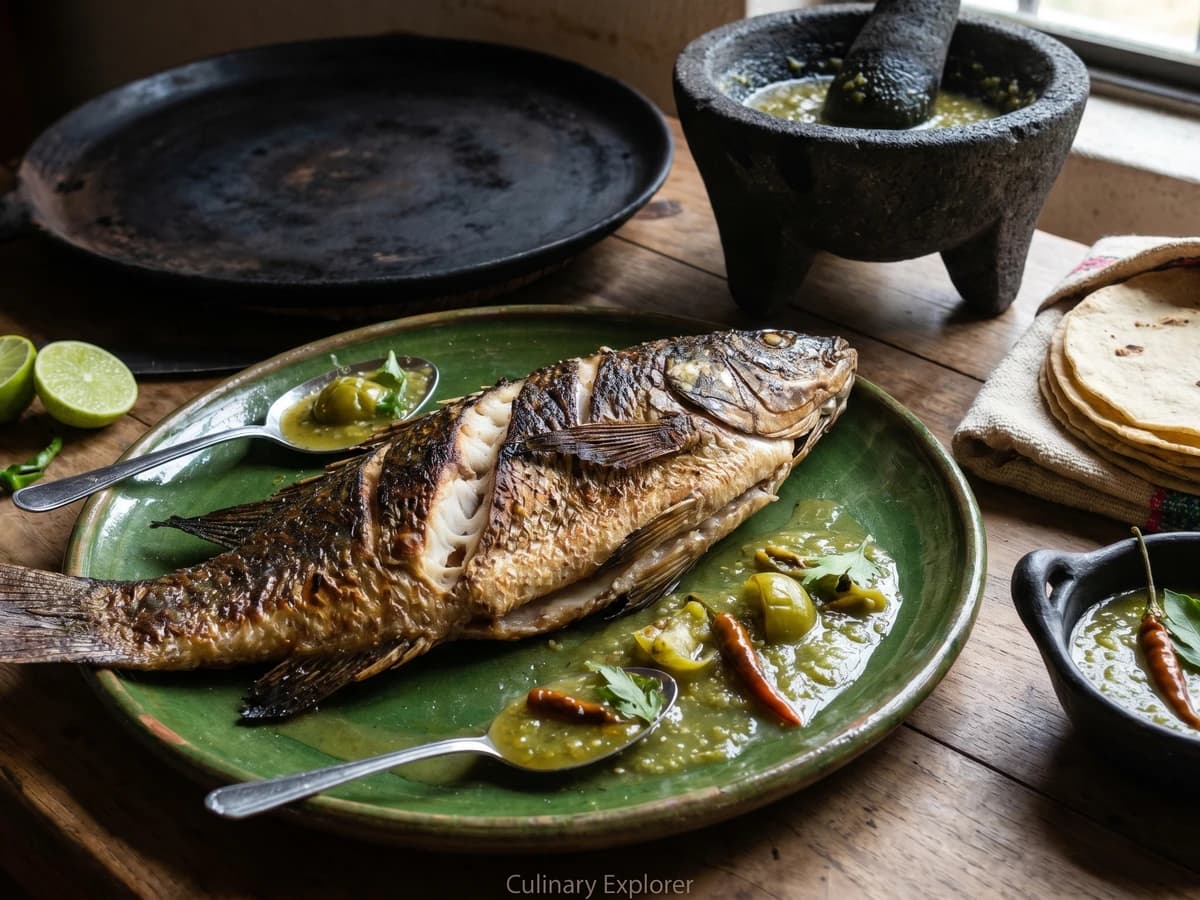
Michoacán's Lake Pátzcuaro acúmara, a whole kurucha from the lago tatemada on a comal de leña and served with chile perón atápakua, corn tortillas, and P'urhépecha discipline.
A cooking platform built around craft, culture, and the stories behind what we eat.

Created by
Yucatán's Christmas turkey, rubbed with achiote recado and sour orange, wrapped in banana leaves, and slow-roasted until the skin lacquers mahogany and the meat pulls apart with a fork.
This turkey is from Yucatán. Not from the United States, not from Ciudad de México, not from any vague idea of "Mexican Christmas." Yucatán. The peninsula has its own cuisine, its own language still spoken in the villages around Valladolid, its own ceramics, and its own way with the bird that has been on Mayan tables for two thousand years. The turkey is native to this land. The pavo arrived nowhere. It was already here.
The recado rojo is the dish. Achiote, sour orange, garlic, toasted spices, salt. Nothing else. Achiote is the seed of the annatto tree and it grows across the peninsula. The seeds are ground into a brick-red paste that stains your hands, your cutting board, and the kitchen counter for two days. Naranja agria, the sour orange, is the second pillar. Its sharp, bitter juice cuts through the richness and gives the recado its life. If you cannot find sour orange, use a mix of fresh orange, lime, and a splash of white vinegar. It is a compromise, not an upgrade. Cada estado, su propia cocina, and this one belongs to the peninsula.
The banana leaves matter. They are not decoration. Passed over the flame until they shine, then wrapped around the bird, they perfume the meat with an aroma you cannot get any other way. This is the pib technique adapted to the home oven, the same logic that drives cochinita pibil and tamales colados. Pre-Hispanic Mayan method dressed in Spanish ingredients, finished with the manteca brought by the colony. That is Yucatecan food.
My mother never made this. She was jalisciense and Christmas for her meant romeritos and bacalao. The recipe for pavo al horno came from Doña Hortensia, a señora from Maní, Yucatán, who let me sit in her kitchen for three days in 1998. She told me the secret was the overnight rest in the recado. Saber cocinar es saber vivir. Doña Hortensia is gone now. Her recipe is not. That is the whole point of what I do.
The wild turkey (Meleagris ocellata, the ocellated turkey of Yucatán) was domesticated by the ancient Maya more than two thousand years ago and was a sacred and ceremonial animal in pre-Columbian peninsular cuisine, often cooked in pib (the underground earthen oven) wrapped in banana or hoja santa leaves with achiote and local spices. The arrival of Spanish citrus in the 16th century, particularly the sour orange (Citrus aurantium) brought from the Mediterranean, gave Yucatecan cooks the acidic counterpoint they had previously drawn from local fruits, and the modern recado rojo took its current form by the 18th century. Pavo al horno con recado rojo replaced the older pibil version on most Mérida and Campeche Christmas tables in the 20th century, as gas and electric ovens displaced the earthen pib in urban kitchens, though the banana-leaf wrap survives as the bridge between the two methods.
Quantity
1 (12 to 14 pounds)
fresh or fully thawed
Quantity
1 cup
preferably from a Yucatecan brand
Quantity
1 1/2 cups
about 12 sour oranges
Quantity
10
peeled
Quantity
2 tablespoons
toasted on a comal
Quantity
1 tablespoon
Quantity
1 tablespoon
toasted on a comal
Quantity
6
toasted on a comal
Quantity
4
Quantity
1 (about 2 inches)
Quantity
2 tablespoons, plus more for seasoning
Quantity
1/2 cup
melted
Quantity
2 large
one quartered, one thinly sliced
Quantity
1
halved crosswise
Quantity
2 large
passed over an open flame until pliable and shiny
Quantity
2 cups
Quantity
4 large
thinly sliced into half-moons
Quantity
1 cup
Quantity
2 tablespoons
Quantity
6
charred whole on a comal
Quantity
for serving
warmed
Quantity
for tortas de pavo the next day
| Ingredient | Quantity |
|---|---|
| whole turkeyfresh or fully thawed | 1 (12 to 14 pounds) |
| recado rojo (achiote paste)preferably from a Yucatecan brand | 1 cup |
| fresh sour orange juice (naranja agria)about 12 sour oranges | 1 1/2 cups |
| garlic clovespeeled | 10 |
| dried Mexican oregano, preferably oregano yucatecotoasted on a comal | 2 tablespoons |
| whole black peppercorns | 1 tablespoon |
| whole cumin seedstoasted on a comal | 1 tablespoon |
| whole allspice berries (pimienta gorda)toasted on a comal | 6 |
| whole cloves | 4 |
| Mexican cinnamon stick (canela) | 1 (about 2 inches) |
| kosher salt | 2 tablespoons, plus more for seasoning |
| manteca de cerdo (pork lard)melted | 1/2 cup |
| white onionsone quartered, one thinly sliced | 2 large |
| head of garlichalved crosswise | 1 |
| banana leavespassed over an open flame until pliable and shiny | 2 large |
| chicken stock | 2 cups |
| purple onions (cebolla morada)thinly sliced into half-moons | 4 large |
| fresh sour orange juice (for the pickled onions) | 1 cup |
| kosher salt (for the pickled onions) | 2 tablespoons |
| fresh chile habanero (optional)charred whole on a comal | 6 |
| hand-pressed corn tortillas (optional)warmed | for serving |
| French baguette rolls (pan frances) (optional) | for tortas de pavo the next day |
Set a dry comal over medium heat. Toast the peppercorns, cumin, allspice, cloves, and cinnamon stick for about a minute, until they release their oils and the kitchen smells like a Mérida spice stall. Toast the oregano separately for 15 seconds, just until fragrant. Grind everything to a fine powder in a spice grinder or molcajete. This is the foundation. Pre-ground supermarket spices will give you a flat recado. No me vengas con atajos.
In a blender, combine the achiote paste, sour orange juice, 10 peeled garlic cloves, the ground toasted spices, and the salt. Blend until completely smooth, about two minutes. The paste should be a deep brick red, the color of Mérida rooftops at sunset, and loose enough to coat the turkey without running off. If it is too thick, add another splash of sour orange. The recado does the work. Build it correctly or the bird tastes like nothing.
Pat the turkey dry inside and out. Loosen the skin over the breast and thighs with your fingers, taking care not to tear it. Rub the recado generously under the skin, into every cavity, and all over the surface. Use your hands. Your fingernails will stain orange for two days. That is part of it. Put the quartered onion and halved garlic head in the cavity. Place the bird on a rack in a roasting pan, cover loosely, and refrigerate overnight, ideally 12 to 16 hours. This is not optional. The recado needs time to penetrate the meat. A turkey rubbed and roasted the same day tastes painted, not seasoned.
While the turkey rests, slice the purple onions thin and place them in a bowl. Pour boiling water over them, wait 30 seconds, then drain immediately. This takes the raw bite out without cooking them. Return to the bowl and add the cup of sour orange juice and the salt. Toss and let sit at room temperature for at least two hours, then refrigerate. They will turn a vivid pink-magenta. Cebollas encurtidas are not optional with this turkey. They cut the richness and they are the Yucatecan signature. Without them you have a roast bird. With them you have pavo al horno yucateco.
Pass each banana leaf over an open gas flame, moving steadily so the surface turns from matte to shiny and the leaf becomes pliable. Do not burn it. The heat releases the oils that perfume the bird. If you only have an electric stove, hold the leaves over a hot dry comal for the same effect. Leaves that have not been heated will crack when you fold them and they will not give up their aroma. This step is the pre-Hispanic technique that links this turkey to the older tradition of pib cooking in the earthen oven.
Heat the oven to 325°F. Line a deep roasting pan with the prepared banana leaves, letting them hang over the sides. Scatter the sliced white onion across the bottom. Lift the turkey out of the refrigerator and set it breast-up on top of the onion. Pour the melted lard over the bird. La manteca es el sabor and it bastes the meat as it roasts. Pour the chicken stock into the bottom of the pan, not over the bird. Fold the overhanging banana leaves up and over the turkey, tucking and overlapping until the bird is enclosed. Cover the whole pan tightly with foil.
Roast covered for 2 1/2 hours. The banana leaves trap the moisture and the recado steam-bastes the meat. After 2 1/2 hours, remove the foil and fold back the banana leaves to expose the breast. Raise the heat to 375°F and continue roasting for 60 to 90 minutes, basting every 20 minutes with the pan juices, until the skin is dark mahogany, lacquered with achiote, and a thermometer in the thickest part of the thigh reads 165°F. The breast should read 160°F. The skin will look almost burned. It is not. That dark color is the achiote and the lard caramelizing together.
Lift the turkey onto a large white porcelain platter, the kind they use at every Mérida Christmas table. Tent loosely with the banana leaves and let it rest 30 minutes. Do not skip the rest. The juices need time to settle or they pour out the moment you carve. Strain the pan juices into a small pitcher and skim the fat. Carve the turkey at the table. Serve with the pickled red onions piled in a clay bowl, the charred habaneros for the brave, warm corn tortillas, and the pan juices. The leftover meat tomorrow becomes tortas de pavo on French rolls. Recetas probadas y garantizadas.
1 serving (about 490g)
Culinary guides, cultural storytelling, and the editorial depth that makes cooking meaningful.
Discover Culinary ExplorerChef Lupita
Michoacán's Lake Pátzcuaro acúmara, a whole kurucha from the lago tatemada on a comal de leña and served with chile perón atápakua, corn tortillas, and P'urhépecha discipline.

Chef Lupita
Puebla's weekday adobo of pork shoulder braised in a thick guajillo and ancho sauce sharpened with vinegar, cumin, and clove. The deep red of a market spice stall, the dish a poblana cooks without thinking.

Chef Lupita
Loreto's pit-roasted clams, planted hinge-up in beach sand and tatemadas under a fast fire of dried romerillo brush, the resinous Baja desert shrub that gives this dish its smoke.

Chef Lupita
Oaxaca's eighth mole, the silky, almond-and-cinnamon almendrado, served over poached chicken. Mild, sweet, restrained, and a quiet rebuttal to anyone who thinks Mexican food has to be hot to be Mexican.