
Chef Lupita
Arroz a la Oaxaqueña
Oaxaca's red rice, stained with tomato and fried in lard, steamed with carrots, ejotes, black beans, and epazote. The side that anchors a Oaxacan family meal and earns its place beside the main.
A cooking platform built around craft, culture, and the stories behind what we eat.

Created by
Sinaloa's potato gratin built on poblano rajas, queso Chihuahua, and crema mexicana, layered into a cazuela and baked until the top blisters dark gold. The northern Sunday side dish that holds up the family roast.
This is a northern dish. Sinaloa, specifically, where the Pacific coast meets cattle country and the kitchens look more like Sonora than like Oaxaca. Crema, queso Chihuahua, and manteca de cerdo are the fats of the north. If you grew up in Culiacan or Mazatlan eating Sunday comida with your family, you know this gratin sat on the table beside the roast, the frijoles puercos, and a basket of hand-pressed flour tortillas.
The rajas are the dish. Charred poblano, peeled clean, cooked in manteca with onion and garlic until the smoke and the fat marry. Skip the open-flame char and you have steamed pepper. The whole point of rajas is the smoke pulled into the flesh. If you have a mesquite grill, use it. If not, the open burner on a gas stove will get you most of the way there.
People outside Mexico see a gratin and assume it must be French, or worse, that the Mexican version is somehow a copy. It is not. The northern Mexican kitchen has been baking layered dishes in cazuelas with crema and queso for over a century, and the technique is its own thing: lighter than the French version, built on the brightness of poblano and the tang of crema, not on butter and gruyere. La manteca es el sabor. Cada estado, su propia cocina.
My mother did not make this. She was from Jalisco and Jalisco cooks differently. I learned this gratin from a senora named Imelda in a kitchen in Culiacan in 2014, the third week of my Sinaloa trip. She wrote nothing down. She showed me with her hands. The notebook entry I keep is mine, copied from watching her, corrected over the next three Sundays she let me back in her kitchen.
Northern Mexican cooking absorbed European dairy and wheat traditions more thoroughly than the central or southern regions, a consequence of Spanish ranching colonization in the 17th and 18th centuries and the later arrival of German Mennonite communities to Chihuahua in the 1920s who established the cheese-making tradition that gave queso Chihuahua its name. Rajas con crema, the foundational preparation behind this gratin, is documented in regional cookbooks as early as the late 19th century and predates the broader Mexican adoption of cream-based casseroles. The Sinaloan version distinguishes itself from the central Mexican preparation by leaning heavier on the smoke of fire-charred poblano and by using the gratin as a substantial side dish for the carne asada and roasted meats that anchor Sunday family meals across the northwest.
Quantity
3 pounds
peeled and sliced 1/8-inch thick
Quantity
6
Quantity
2 tablespoons
Quantity
1 large
sliced into thin half-moons
Quantity
4
finely minced
Quantity
2 cups
Quantity
1 cup
Quantity
1 pound
shredded
Quantity
1/2 cup
crumbled
Quantity
2 teaspoons, plus more for the potato water
Quantity
1 teaspoon
Quantity
1 teaspoon
Quantity
1 tablespoon
Quantity
for serving
| Ingredient | Quantity |
|---|---|
| Yukon Gold potatoespeeled and sliced 1/8-inch thick | 3 pounds |
| fresh chile poblano | 6 |
| manteca de cerdo (pork lard) | 2 tablespoons |
| white onionsliced into thin half-moons | 1 large |
| garlic clovesfinely minced | 4 |
| crema mexicana | 2 cups |
| whole milk | 1 cup |
| queso Chihuahuashredded | 1 pound |
| queso cotijacrumbled | 1/2 cup |
| kosher salt | 2 teaspoons, plus more for the potato water |
| freshly ground black pepper | 1 teaspoon |
| dried Mexican oregano | 1 teaspoon |
| manteca de cerdo (for greasing) | 1 tablespoon |
| chiltepin, crushed (optional) | for serving |
Set the poblanos directly over an open flame on the stovetop, or under a hot broiler. Turn them with tongs every minute or so until the skin is blistered and blackened on every side. You want the skin charred, not the flesh. This is the moment that defines the rajas. Underchar and the skin will not peel cleanly. Overchar and you will lose the chile under the carbon.
Drop the hot poblanos into a paper bag, close it, and let them sit for 15 minutes. The trapped warmth loosens the skins. Peel the skins off with your fingers under cold running water only if you must, but try to do it dry. Water washes away the smoky oils that are the whole point. Stem and seed the chiles, then slice them into rajas, strips about 1/4-inch wide. Set aside.
Melt 2 tablespoons of manteca in a heavy skillet over medium heat. Add the onion and cook for 8 to 10 minutes, stirring often, until soft and translucent with edges starting to gold. Add the garlic and cook another minute. Stir in the poblano rajas, 1 teaspoon of salt, and the dried oregano. Cook for 5 more minutes so the flavors marry. Pull off the heat. Cada estado, su propia cocina, and the north cooks its onions in manteca, not in butter.
Bring a large pot of generously salted water to a boil. Add the potato slices and cook for 4 to 5 minutes, just until the edges turn translucent and a slice bends slightly when you lift it. They should not be fully cooked. They will finish in the oven, absorbing the crema as they go. Drain carefully so the slices do not break. Spread them on a clean kitchen towel to dry.
In a bowl, whisk together the crema mexicana, milk, the remaining teaspoon of salt, and the black pepper. The mixture should pour like heavy cream. Do not substitute sour cream. Sour cream curdles in the oven and tastes wrong. Crema mexicana is thinner, sweeter, and built for this kind of cooking.
Heat the oven to 375F. Grease a 9x13 cazuela or baking dish with the remaining tablespoon of manteca. Lay down a third of the potatoes, overlapping the slices like roof tiles. Season lightly with salt. Spread half of the rajas mixture over the potatoes. Pour a third of the crema base evenly over the top. Scatter a third of the queso Chihuahua. Repeat with another layer of potatoes, the rest of the rajas, another third of the crema, and another third of the cheese. Finish with the last of the potatoes, the last of the crema, and the remaining queso Chihuahua. Top with the crumbled queso cotija.
Cover the cazuela with foil and bake for 30 minutes. The crema should be bubbling at the edges. Remove the foil and bake another 20 to 25 minutes, until the top is deep gold with dark blistered spots and a paring knife slides through the center without resistance. If the top is not blistering after 20 uncovered minutes, run it under the broiler for 2 minutes. Watch it. Cheese under a broiler goes from gold to black in seconds.
Let the gratin sit on the counter for 10 minutes before serving. The crema needs time to settle back into the potatoes. Cut into squares and serve from the cazuela. Pass crushed chiltepin at the table for those who want heat. Asi se hace y punto.
1 serving (about 425g)
Culinary guides, cultural storytelling, and the editorial depth that makes cooking meaningful.
Discover Culinary ExplorerChef Lupita
Oaxaca's red rice, stained with tomato and fried in lard, steamed with carrots, ejotes, black beans, and epazote. The side that anchors a Oaxacan family meal and earns its place beside the main.
Chef Lupita
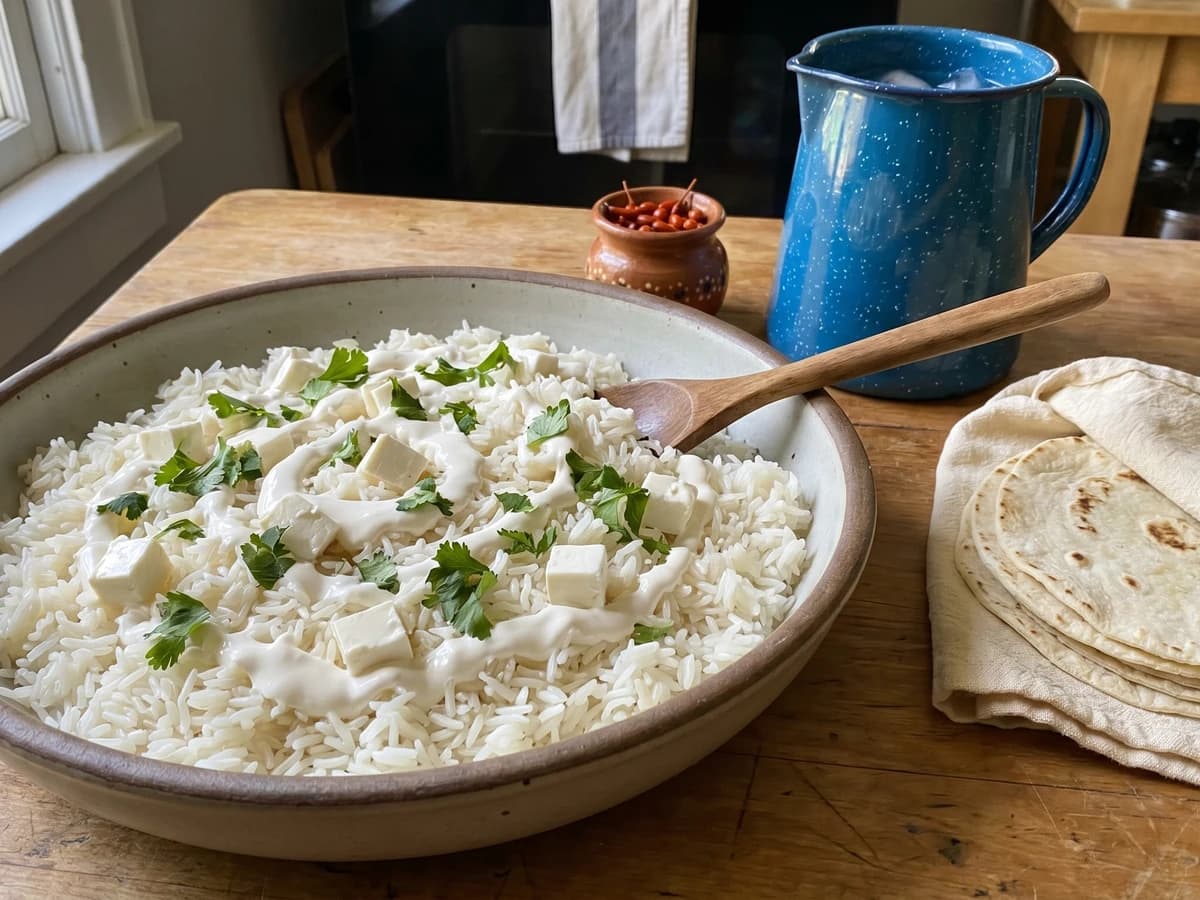
Sinaloa's home-cook white rice topped with cold cubes of cream cheese that soften into the warm grain, finished with crema and a sprinkle of chiltepin at the table. The trick that makes a side dish feel like a small luxury.
Chef Lupita
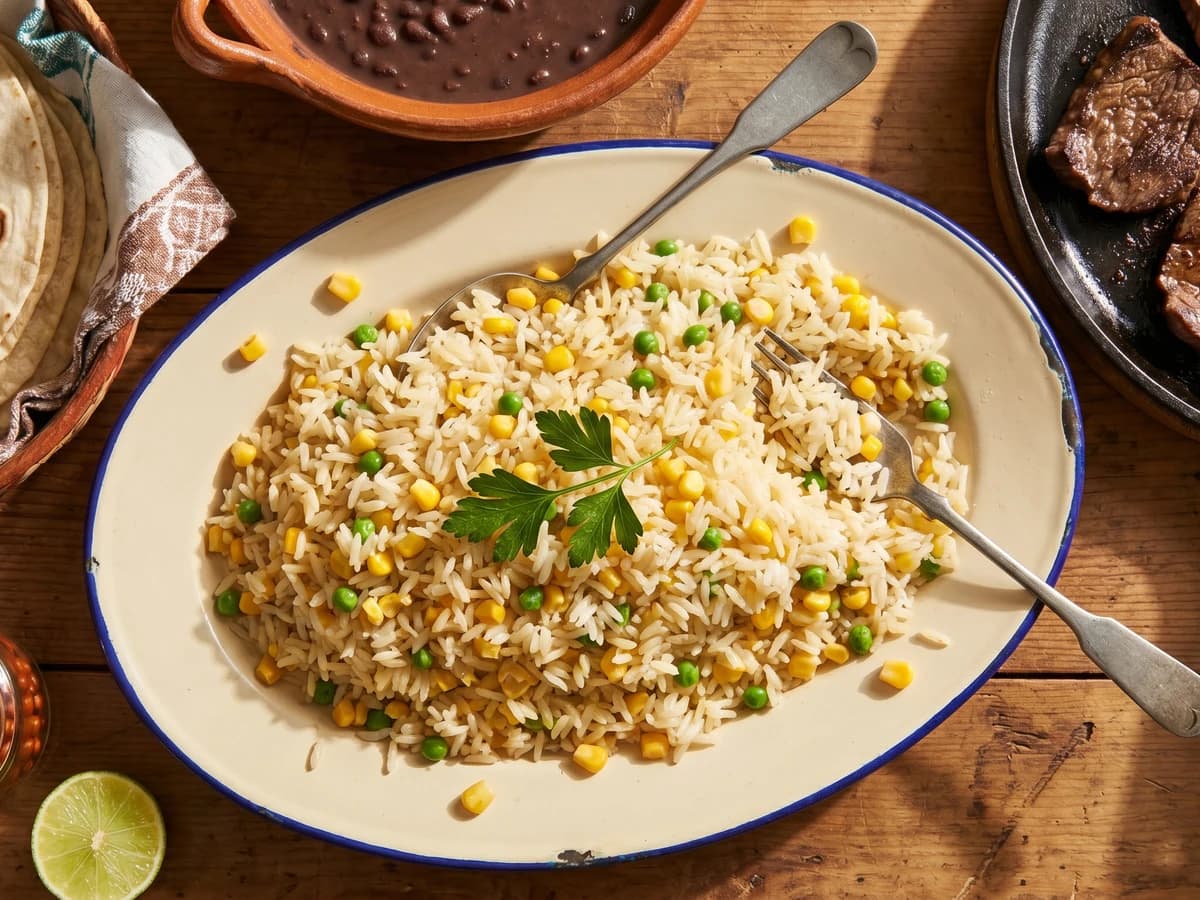
Sonora's white rice, toasted in butter and steamed with sweet corn and tender peas. The clean, quiet partner to a plate of carne asada, not the red rice of central Mexico.

Chef Lupita
Yucatán's white rice with sweet corn kernels, toasted in lard with garlic and onion. The quiet base that holds up against the peninsula's bold achiote-stained stews.