
Chef Lupita
Arroz a la Oaxaqueña
Oaxaca's red rice, stained with tomato and fried in lard, steamed with carrots, ejotes, black beans, and epazote. The side that anchors a Oaxacan family meal and earns its place beside the main.
A cooking platform built around craft, culture, and the stories behind what we eat.

Created by
Sinaloa's grilled sweet potato, roasted directly in mesquite coals until the skin blackens and the sugars run amber, split open with butter melting into the flesh and a pinch of crushed chiltepin salt at the table.
This is Sinaloa. The northwest. Cattle country, shrimp country, mesquite country. The state that grills more meat per Sunday than anywhere else in Mexico, and that grills it over mesquite because mesquite is what grows out of the dry ground.
Camote asado is the dish that finishes a parrillada. The carne asada comes off the grill, the cebollitas are charred and squeezed with lime, and somebody, usually a tio with a long pair of tongs, pushes the camotes into the coals to cook slowly while everyone eats. By the time the meat is gone and the beer is half-warm, the camotes are ready. They come out black on the outside, the skin papery and hard, with amber syrup bleeding out of any split. You crack them open and the inside is the color of saffron, soft, almost custardy, sweet the way a roasted onion is sweet, concentrated by an hour in the embers.
The chile here is chiltepin. Not jalapeno. Not serrano. Chiltepin, the wild bird's-eye chile that grows in the sierras of Sonora and Sinaloa, harvested by hand in the fall and dried until it turns deep red. It is small, round, and hot, and Sinaloans crush it into salt to dust over almost anything that needs a finish: a slice of mango, a cold beer's rim, a split camote pulled from the coals. The salt is the condiment, not a garnish. Cada estado, su propia cocina.
My mother did not make this. She was from Jalisco and Jalisco roasts its sweet potatoes differently, more often in the oven. But I learned this in a backyard in Culiacan, watching a senora named Dona Mariela pull six camotes out of a fire with kitchen tongs while she told me how her father used to do it on the ranch. She handed me one wrapped in newspaper, gave me a pinch of chiltepin salt in a piece of folded paper, and said: pruebalo asi. I have made it that way ever since.
The camote, Ipomoea batatas, is native to the Americas and was cultivated in Mesoamerica for at least 5,000 years before the conquest; its name derives from the Nahuatl 'camotli.' Pre-Columbian cooks roasted camotes directly in the embers of cooking fires, a technique that survived essentially unchanged in rural Sinaloa and Sonora because it required no equipment and produced reliably good results. The chiltepin chile, Capsicum annuum var. glabriusculum, is the only wild chile native to what is now Mexico and the southwestern United States, and remains uncultivated; the Sinaloa and Sonora harvest is gathered by hand from the sierra each autumn, making chiltepin one of the most expensive chiles per ounce in Mexico despite its tiny size.
Quantity
6 medium (about 8 ounces each)
unpeeled, scrubbed clean
Quantity
2 tablespoons
melted
Quantity
1 teaspoon
Quantity
1 tablespoon
crushed between your fingers
Quantity
1 teaspoon
Quantity
4 tablespoons
at room temperature
Quantity
2
halved
Quantity
as needed
| Ingredient | Quantity |
|---|---|
| camotes (sweet potatoes)unpeeled, scrubbed clean | 6 medium (about 8 ounces each) |
| manteca de cerdo (pork lard)melted | 2 tablespoons |
| flaky sea salt (for rubbing) | 1 teaspoon |
| dried chiltepincrushed between your fingers | 1 tablespoon |
| flaky sea salt (for the chiltepin salt) | 1 teaspoon |
| unsalted butterat room temperature | 4 tablespoons |
| limones (optional)halved | 2 |
| flaky sea salt for finishing (optional) | as needed |
Light a chimney of mesquite charcoal or hardwood lump and let it burn down until the coals glow red under a coat of gray ash. You want a medium bed of coals, not flames. Camote takes time, and a screaming fire will char the skin black before the inside is cooked. In Sinaloa they cook these on the side of the parrillada after the carne asada comes off, when the coals have softened.
Pat the scrubbed camotes dry. Rub each one with melted manteca and a pinch of sea salt, working the fat into every wrinkle of the skin. La manteca es el sabor, and here it does double duty: it conducts the heat into the flesh and helps the sugars caramelize at the edges where the skin meets the coal.
Crush the dried chiltepin between your fingers into a small molcajete or a clay bowl. They are tiny, round, and ferocious. Add the second teaspoon of sea salt and grind together briefly with the pestle, just enough to marry them. Do not pulverize. You want flakes of red chile visible in the salt. This is the condiment of Sonora and Sinaloa, the chile that grows wild in the sierra and the foothills, picked by hand and dried in the sun.
Nestle the camotes directly into the bed of coals, pushing them in so the embers come halfway up the sides. Yes, in the coals, not on the grate. This is how the rancheros do it. The skin will blacken and turn into a hard, papery shell. Inside, the flesh steams in its own sugars. Roast for about 45 minutes to an hour, turning each camote a quarter turn every fifteen minutes with long tongs.
The camote is ready when a knife slides through the flesh without resistance and the skin has gone black and brittle in patches. You will see candied sugar bubbling out of any split in the skin, a dark amber syrup that smells like burnt molasses. That is the signature of camote asado. If the skin is charred but the inside still feels firm, push the camote to a cooler edge of the coals and give it another ten minutes.
Pull the camotes from the coals with tongs and brush off any loose ash. Let them rest on a board for two minutes. Split each one lengthwise with a knife, pushing the ends toward the middle so the flesh opens up like a flower. The inside should be deep orange, soft, and glossy with its own sugars. Drop a generous knob of butter into the opening and let it melt into the heat of the flesh.
Set the split camotes on a wide stoneware platter. Pass the chiltepin salt and the lime halves at the table. Each person dusts their camote with the chile salt and squeezes a little lime over it. The sweet of the camote, the slow burn of the chiltepin, the brightness of the lime. That is the Sinaloa balance. Asi se hace y punto.
1 serving (about 220g)
Culinary guides, cultural storytelling, and the editorial depth that makes cooking meaningful.
Discover Culinary ExplorerChef Lupita
Oaxaca's red rice, stained with tomato and fried in lard, steamed with carrots, ejotes, black beans, and epazote. The side that anchors a Oaxacan family meal and earns its place beside the main.
Chef Lupita
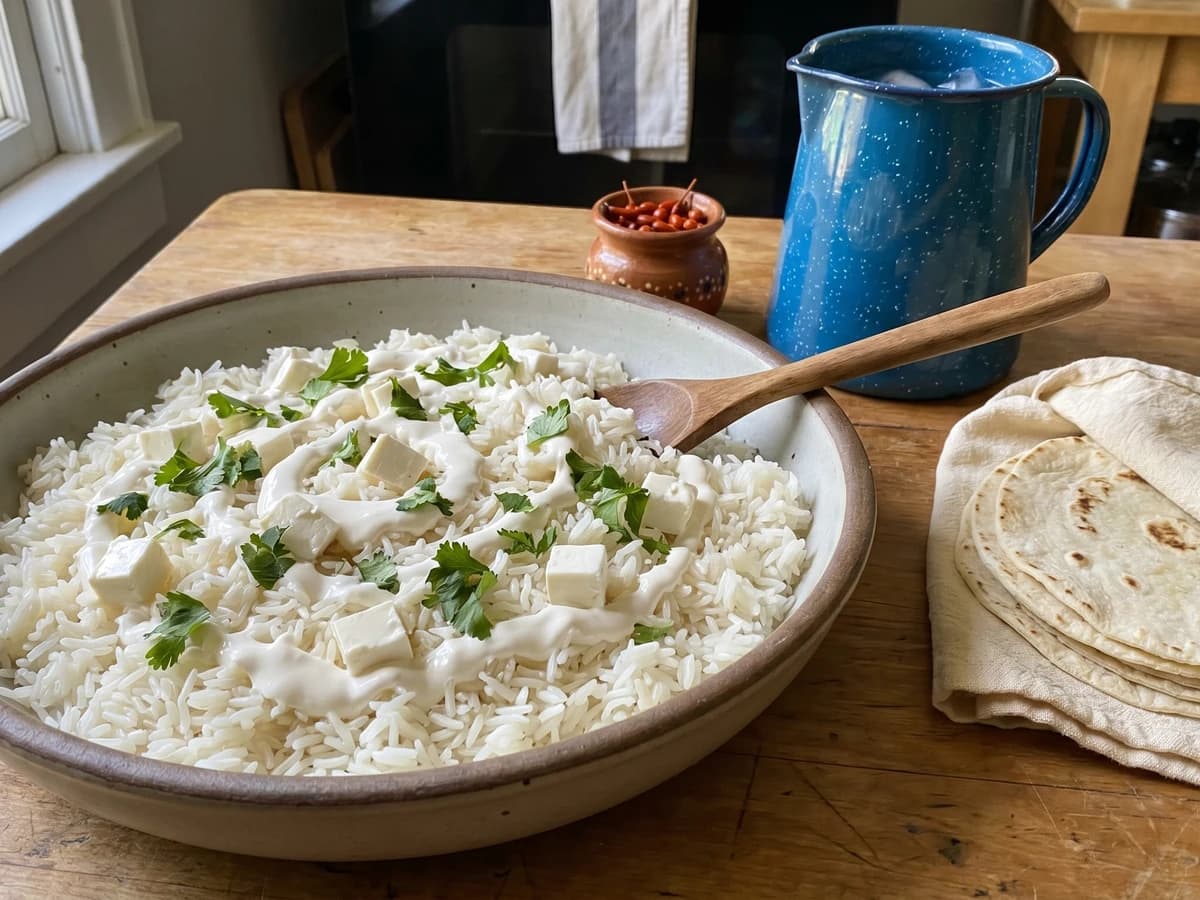
Sinaloa's home-cook white rice topped with cold cubes of cream cheese that soften into the warm grain, finished with crema and a sprinkle of chiltepin at the table. The trick that makes a side dish feel like a small luxury.
Chef Lupita
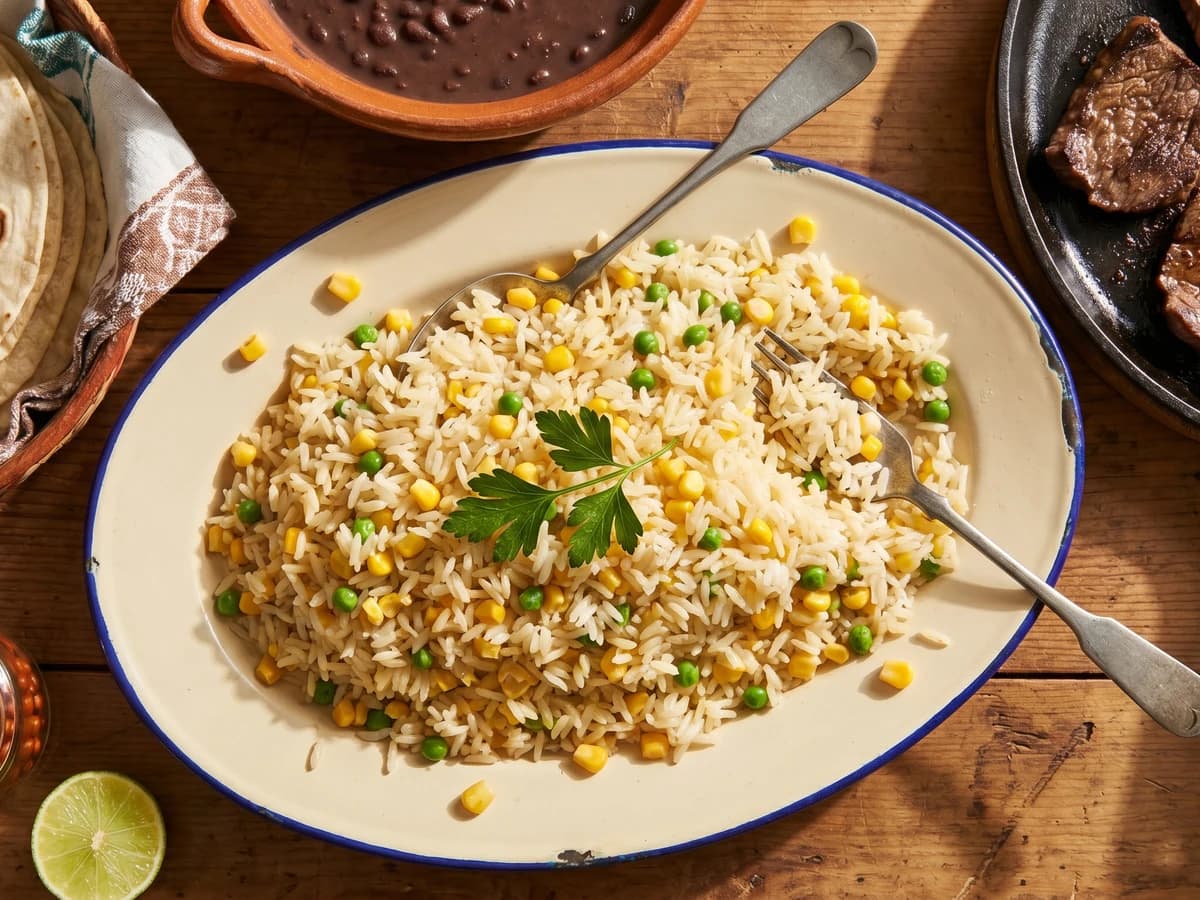
Sonora's white rice, toasted in butter and steamed with sweet corn and tender peas. The clean, quiet partner to a plate of carne asada, not the red rice of central Mexico.

Chef Lupita
Yucatán's white rice with sweet corn kernels, toasted in lard with garlic and onion. The quiet base that holds up against the peninsula's bold achiote-stained stews.