Culinary Explorer

A cooking platform built around craft, culture, and the stories behind what we eat.
Discover Culinary Explorer
Papas con Rajas al Estilo Oaxaqueño

Papas con Rajas al Estilo Oaxaqueño

Created by

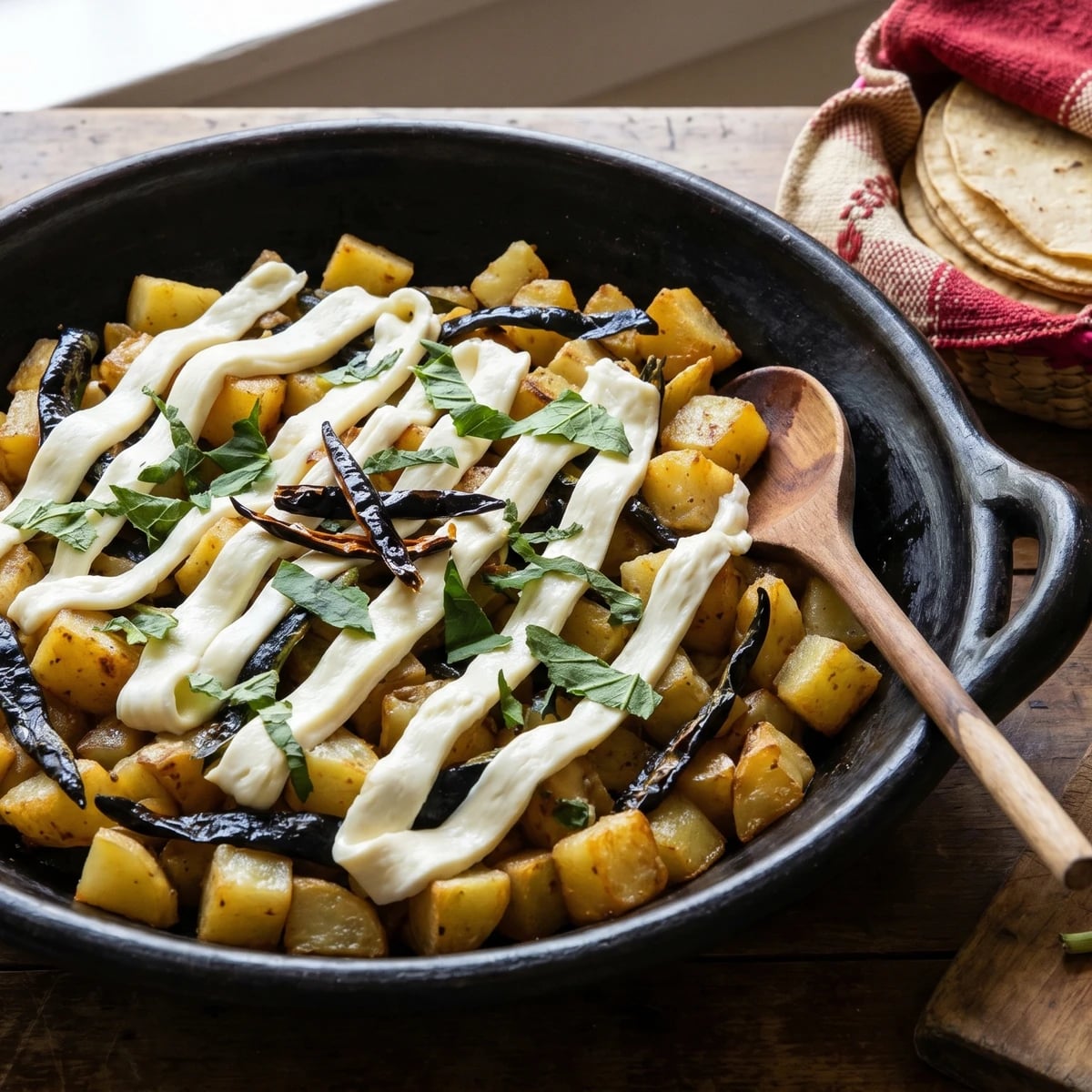
Oaxaca City's weeknight plate of charred chile de agua, lard-crisped potatoes, and quesillo pulled into long stringy ribbons that fold into a corn tortilla and disappear in three bites.

Side Dishes
Mexican
Weeknight
Comfort Food
20 min
Active Time
25 min cook45 min total
Yield4 to 6 servings

This is from Oaxaca. Specifically from the Valles Centrales, the valleys around Oaxaca City where chile de agua grows and where quesillo is hand-pulled fresh every morning in the dairy towns of Etla.

Rajas in central Mexico means strips of chile poblano. In Oaxaca, rajas means chile de agua, and the difference is everything. Chile de agua is thinner-walled, more delicate, with a bright vegetal heat that does not exist anywhere else in Mexico. It does not travel well. It does not dry well. It belongs to one valley and one season, and a Oaxacan cook will tell you that papas con rajas made with poblano is a fine dish but it is not this dish.

The technique is simple and the rules are not negotiable. Char the chile until the skin blisters black. Sweat it under a plate. Peel by hand, never under water. Cook the potatoes in lard until the edges crisp. Add the rajas and the epazote. Pull the quesillo into ribbons and let the residual heat melt it. Six steps. No mole. No two-day commitment. This is what a senora in Oaxaca cooks on a Tuesday when her family wants something honest and fast.

My notebook has three versions of papas con rajas, all collected in the Mercado Benito Juarez in 2014. The senora who taught me the Oaxacan one, Doña Petra from a stall near the cheese vendors, watched me peel the chiles and slapped my hand away from the faucet. "Asi no, mija. El humo es el sabor." Don't wash off the smoke. The smoke is the flavor. I have not peeled a chile under running water since.

Chile de agua is an heirloom variety cultivated almost exclusively in the Valles Centrales of Oaxaca, particularly around Tlacolula, Ocotlán, and Zimatlán, and is rarely commercialized outside the state due to its thin walls and short shelf life. The pairing of potatoes with chile rajas is a post-conquest dish, since the potato traveled from the Andes northward via Spanish colonial trade routes and was integrated into central and southern Mexican cocina mestiza by the 18th century. Quesillo itself, often miscalled queso Oaxaca outside the state, was invented in the village of Reyes Etla in 1885 by a young cheesemaker named Leobarda Castellanos, who accidentally over-acidified a batch of fresh cheese and pulled the curds into elastic strands rather than discarding them.

The technique, the tradition, and the story behind every dish.

Discover Culinary Explorer

Ingredients

fresh chile de agua

Quantity

6

charred, sweated, peeled, stemmed, and seeded

waxy potatoes (papa alpha or Yukon gold)

Quantity

1.5 pounds

peeled and cut into 1/2-inch dice

white onion

Quantity

1 medium

halved and sliced into thin half-moons

garlic cloves

Quantity

3

finely chopped

manteca de cerdo (pork lard)

Quantity

3 tablespoons

kosher salt

Quantity

1 teaspoon, plus more to taste

fresh epazote

Quantity

2 sprigs

leaves only, roughly torn

quesillo (Oaxaca string cheese)

Quantity

8 ounces

pulled into long ribbons by hand

hand-pressed corn tortillas (optional)

Quantity

for serving

warmed

salsa de chile pasilla mixe (optional)

Quantity

for serving

Equipment Needed

  • Cast iron comal or open gas burner for charring chiles
  • Wide heavy skillet or 12-inch clay cazuela
  • Tongs for turning the chiles
  • Mixing bowl with a tight-fitting plate for sweating the chiles

Instructions

  1. 1

    Char the chile de agua

    Set the chiles directly on a dry comal over medium-high heat, or over an open gas flame if you have one. Turn them with tongs until the skin blisters and blackens in patches on every side, about 6 to 8 minutes. You want char, not ash. The flesh underneath should still feel firm. This is the chile that defines the dish, and the smoke from the skin is half the flavor.

    Chile de agua grows almost exclusively in the Valles Centrales of Oaxaca and is the soul of this version. If you cannot find it, chile poblano is the honest substitute. Anaheim is a distant third. Bell pepper is not a substitute. Bell pepper is a different vegetable.
  2. 2

    Sweat and peel

    Drop the charred chiles into a bowl and cover tightly with a plate or a damp cloth. Let them sit for 10 minutes. The trapped heat loosens the skin so it slips off in sheets. Peel the chiles with your fingers, not under running water. Water washes away the smoke you just worked to put there. Stem and seed them, then slice the flesh lengthwise into rajas about a third of an inch wide.

  3. 3

    Start the potatoes

    While the chiles sweat, melt the lard in a wide heavy skillet or clay cazuela over medium heat. La manteca es el sabor. When it shimmers, add the diced potatoes in a single layer with half the salt. Let them sit without stirring for 4 minutes so a golden crust forms on the bottom. Then stir, lower the heat to medium-low, cover partially, and cook for 12 to 15 minutes, stirring every few minutes, until the potatoes are tender at the center and crisp on the edges.

  4. 4

    Build with onion and garlic

    Push the potatoes to the edges of the pan. Add the onion to the center and cook for 4 minutes, stirring, until it softens and turns translucent without taking on color. Add the garlic and cook for 30 seconds more, just until it smells sweet. Burned garlic turns the whole dish bitter. Stir everything together so the onion and garlic spread through the potatoes.

  5. 5

    Fold in the rajas and epazote

    Add the chile de agua rajas and the torn epazote leaves. Stir gently, just enough to distribute. Cook for 3 minutes so the chile gives up its smoke into the lard and the epazote wakes up. Taste and adjust the salt now. The potatoes need it more than you think.

    Epazote is not oregano and it is not parsley. It is its own herb, with a flavor that smells faintly of gasoline in the best possible way. If you cannot find it fresh, leave it out. Dried epazote in this dish tastes like dust.
  6. 6

    Add the quesillo at the end

    Pull the quesillo into long thin ribbons with your fingers, the way it is sold in the Oaxacan markets. Scatter it over the top of the potatoes and rajas. Cover the pan and turn off the heat. Let it sit for 2 minutes. The residual warmth softens the cheese into long stringy ribbons without breaking it into greasy curds. Do not stir aggressively. You want strands, not a melted blob.

    Real quesillo is hand-pulled fresh in Etla, just outside Oaxaca City, and sold in coiled balls at the mercado. Outside Mexico, look for it labeled queso Oaxaca at a Mexican grocery. Mozzarella is a compromise, and a noticeable one. Cheddar is not a substitute. Cheddar belongs nowhere near this dish.
  7. 7

    Serve in the cazuela

    Bring the pan or cazuela straight to the table. Set warm corn tortillas alongside and a bowl of salsa de chile pasilla mixe for those who want more heat. People scoop the potatoes, rajas, and stretchy quesillo into the tortillas and eat them as tacos. This is weeknight food in Oaxaca. Asi se hace y punto.

Chef Tips

  • The potato matters. Use a waxy variety like papa alpha, papa cambray, or Yukon gold. Russet potatoes turn to mush in this dish and the texture is wrong. The dice should hold its shape with crisp edges and a tender center.
  • Lard is non-negotiable. Vegetable oil will give you a flat, greasy result. La manteca es el sabor. If you do not have manteca, render it from pork fat trimmings the night before. It keeps for months and you will use it for everything.
  • Pull the quesillo by hand into long thin ribbons. Do not grate it. Grating breaks the protein structure that makes quesillo string the way it does, and you will end up with a puddle of cheese instead of strands. The pulling is the technique.

Advance Preparation

  • The chiles can be charred, sweated, peeled, and sliced into rajas one day ahead. Store refrigerated in a covered container and bring to room temperature before adding to the pan.
  • The full dish does not hold well. The quesillo seizes when reheated and the rajas lose their bright character. Make it the day you eat it. This is not a make-ahead dish.

Frequently Asked Questions

Nutrition Information

1 serving (about 220g)

Calories
325 calories
Total Fat
18 g
Saturated Fat
9 g
Trans Fat
0 g
Unsaturated Fat
9 g
Cholesterol
50 mg
Sodium
690 mg
Total Carbohydrates
29 g
Dietary Fiber
3 g
Sugars
3 g
Protein
13 g

Note: Chef personas and recipes are created with AI assistance. Cook with care: follow safe food-handling practices, check doneness with a thermometer when needed, and adapt for allergies and your kitchen.

Where cooking meets culture.

Culinary guides, cultural storytelling, and the editorial depth that makes cooking meaningful.

Discover Culinary Explorer

More from Oaxacan Side Dishes

Browse the full collection