
Chef Lupita
Arroz a la Oaxaqueña
Oaxaca's red rice, stained with tomato and fried in lard, steamed with carrots, ejotes, black beans, and epazote. The side that anchors a Oaxacan family meal and earns its place beside the main.
A cooking platform built around craft, culture, and the stories behind what we eat.

Created by
Jalisco's market-stall potatoes fried in pork chorizo, chile ancho, guajillo, vinegar, and garlic, the everyday cazuela that becomes tacos before anyone admits it was meant as a side.
Jalisco gives this version its backbone: pork chorizo seasoned with chile ancho, chile guajillo, garlic, vinegar, and dried Mexican oregano, then fried down with potatoes until the fat turns red and the edges crisp. In Guadalajara, in the mercados around San Juan de Dios and the neighborhood fondas, papas con chorizo is not trying to impress anyone. It feeds people. That is serious work.
This dish lives in the kitchen between breakfast and comida. It fills tacos, sits next to frijoles de la olla, and rescues potatoes that were waiting in a basket by the stove. The chorizo is the decision that matters. If you buy a pale, greasy tube with no chile smell, no pan can save you. Start at the carniceria, not the stove. Si no conoces el mercado, no conoces la cocina.
My mother was from Jalisco, and in her notebook this recipe had only six lines. Boil the potatoes a little. Fry the chorizo well. Do not drown it in tomato. She underlined that last part twice. Tomato makes another guiso. Papas con chorizo jalisciense is potato, pork, chile, vinegar, onion, and patience at the skillet. Cada estado, su propia cocina.
Chorizo arrived in Mexico through Spanish colonial sausage-making, but Mexican cooks changed it by using fresh pork, vinegar, and native chiles instead of the cured paprika-heavy style of Iberia. Potatoes, originally domesticated in the Andes, entered Mexican kitchens after colonial trade connected South American and New Spanish ingredients, becoming common in everyday guisos by the 18th and 19th centuries. In Jalisco, fresh red chorizo became a practical market meat, sold loose or in links, and papas con chorizo followed naturally as a household dish built from inexpensive starch, rendered pork fat, and chile seasoning.
Quantity
1 1/2 pounds
peeled and diced into 1/2-inch cubes
Quantity
1 tablespoon, plus more to taste
for the potato water
Quantity
12 ounces
casing removed
Quantity
1 tablespoon
use only if the chorizo is lean
Quantity
1/2 medium
finely diced
Quantity
2
minced
Quantity
1
stemmed, seeded, toasted, soaked, and blended with 2 tablespoons soaking water
Quantity
1/2 teaspoon
crushed between the palms
Quantity
1
Quantity
to taste
Quantity
for serving
Quantity
for serving
Quantity
for serving
Quantity
for serving
Quantity
for serving
| Ingredient | Quantity |
|---|---|
| waxy potatoes, such as Yukon Gold or small white potatoespeeled and diced into 1/2-inch cubes | 1 1/2 pounds |
| kosher saltfor the potato water | 1 tablespoon, plus more to taste |
| fresh Jalisco-style pork chorizocasing removed | 12 ounces |
| manteca de cerdo (optional)use only if the chorizo is lean | 1 tablespoon |
| white onionfinely diced | 1/2 medium |
| garlic clovesminced | 2 |
| dried chile guajillostemmed, seeded, toasted, soaked, and blended with 2 tablespoons soaking water | 1 |
| dried Mexican oreganocrushed between the palms | 1/2 teaspoon |
| bay leaf | 1 |
| freshly ground black pepper | to taste |
| warm corn tortillas (optional) | for serving |
| salsa roja de chile de arbol (optional) | for serving |
| diced raw white onion (optional) | for serving |
| chopped cilantro (optional) | for serving |
| lime halves (optional) | for serving |
Put the diced potatoes in a saucepan and cover with cold water by one inch. Add the tablespoon of salt. Bring to a simmer and cook 6 to 8 minutes, until the edges are just tender but the centers still hold. Drain well and spread the potatoes on a towel for 5 minutes. Wet potatoes do not fry. They sulk in the pan.
Toast the chile guajillo on a dry comal over medium heat, about 20 seconds per side, just until fragrant and flexible. Do not blacken it. Soak it in hot water for 10 minutes, then blend it with 2 tablespoons of the soaking water until smooth. This small chile paste strengthens the color and reminds the pan what Jalisco chorizo should taste like.
Heat a wide cast iron skillet or clay cazuela over medium heat. Add the chorizo and break it apart with a wooden spoon. Cook 7 to 9 minutes, stirring often, until the pork is cooked through and the fat turns brick red. If the chorizo is dry or too lean, add the manteca de cerdo. La manteca es el sabor, and potatoes need fat if you expect crisp edges.
Add the diced white onion to the chorizo fat and cook 3 minutes, scraping the browned bits from the pan. Add the garlic, Mexican oregano, bay leaf, black pepper, and the guajillo paste. Cook 1 minute more. The mixture should darken and smell sharp from the vinegar in the chorizo and warm from the chile. That is the base.
Add the drained potatoes and fold them gently through the chorizo. Spread them into one even layer and leave them alone for 4 minutes. Stir, spread again, and cook another 4 to 6 minutes, until the potato edges are crisp, stained red, and catching in spots against the pan. Do not mash them into puree. Papas con chorizo should have pieces you can see.
Remove the bay leaf. Taste for salt. Chorizo varies wildly, so salt at the end, not before. Serve from the cazuela with warm corn tortillas, salsa roja de chile de arbol, raw onion, cilantro, and lime halves. Or put it beside eggs, beans, or rice on the comida plate. Recetas probadas y garantizadas.
1 serving (about 250g)
Culinary guides, cultural storytelling, and the editorial depth that makes cooking meaningful.
Discover Culinary ExplorerChef Lupita
Oaxaca's red rice, stained with tomato and fried in lard, steamed with carrots, ejotes, black beans, and epazote. The side that anchors a Oaxacan family meal and earns its place beside the main.
Chef Lupita
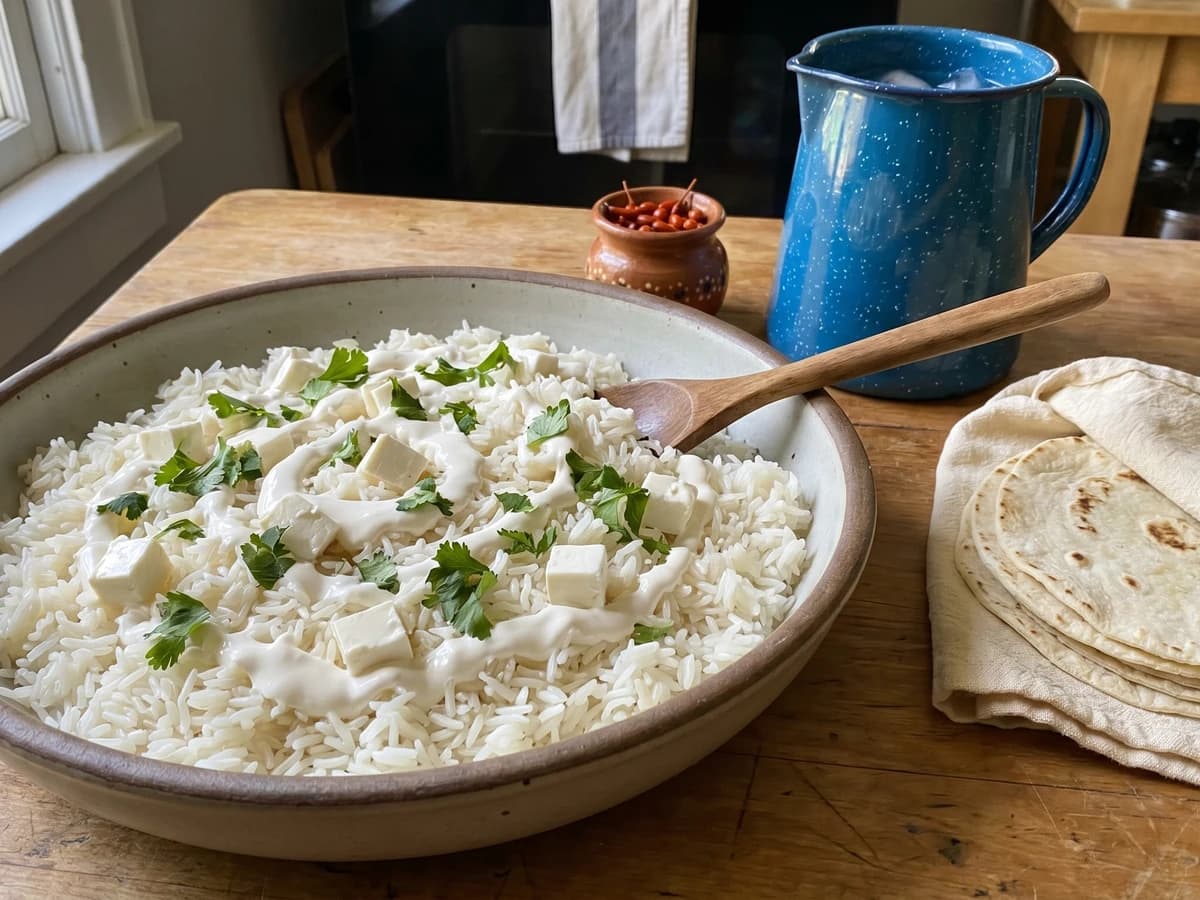
Sinaloa's home-cook white rice topped with cold cubes of cream cheese that soften into the warm grain, finished with crema and a sprinkle of chiltepin at the table. The trick that makes a side dish feel like a small luxury.
Chef Lupita
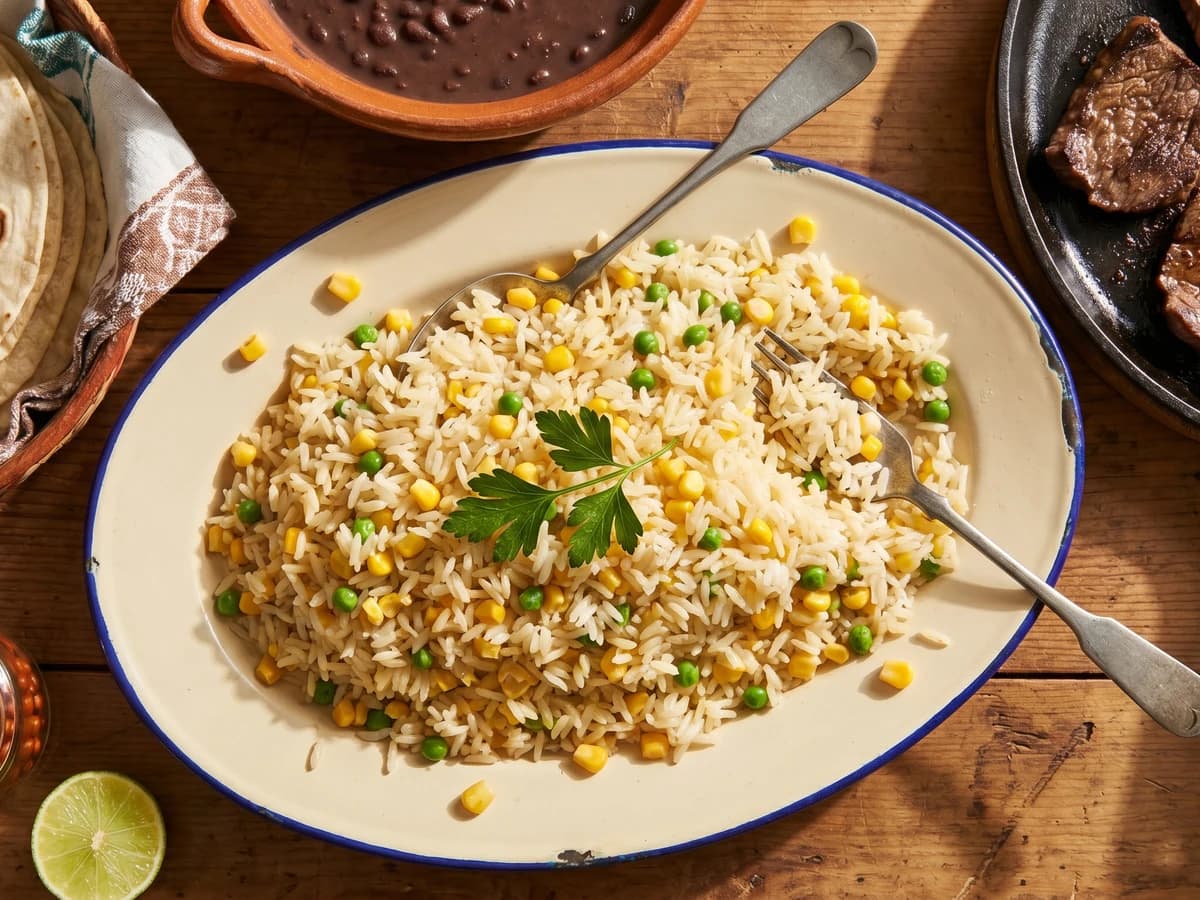
Sonora's white rice, toasted in butter and steamed with sweet corn and tender peas. The clean, quiet partner to a plate of carne asada, not the red rice of central Mexico.

Chef Lupita
Yucatán's white rice with sweet corn kernels, toasted in lard with garlic and onion. The quiet base that holds up against the peninsula's bold achiote-stained stews.