
Chef Lupita
Arroz a la Oaxaqueña
Oaxaca's red rice, stained with tomato and fried in lard, steamed with carrots, ejotes, black beans, and epazote. The side that anchors a Oaxacan family meal and earns its place beside the main.
A cooking platform built around craft, culture, and the stories behind what we eat.
Created by
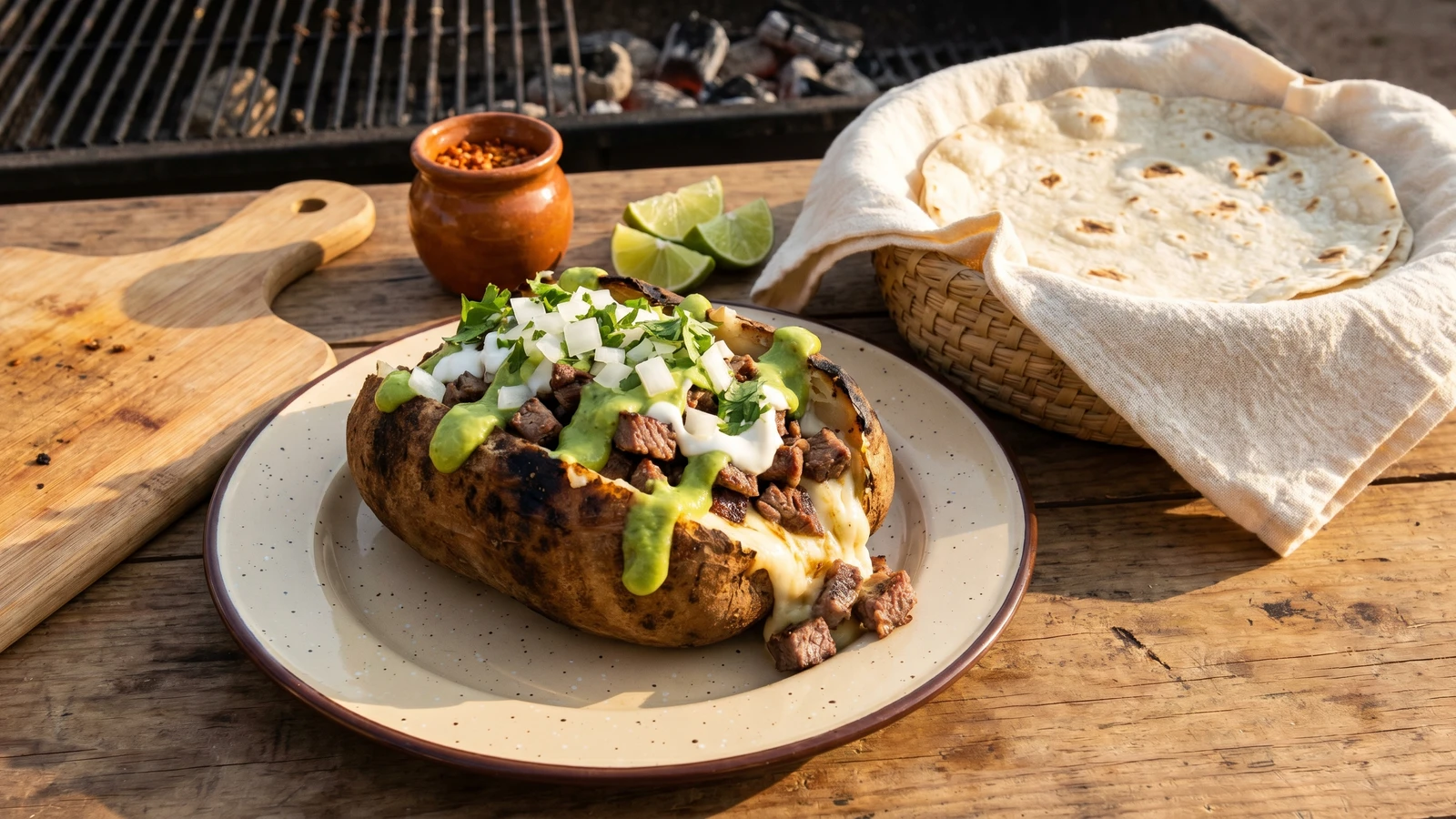
Sonora's parrillada potato bomb, a mesquite-roasted russet split open and loaded with butter, crema, queso Chihuahua, chopped carne asada, and a green ribbon of salsa de aguacate.
This is Sonora. Cattle country, wheat country, mesquite country. The state where the meal revolves around the parrilla and where the men and women who tend the fire know how to coax flavor out of an open grate the way a Oaxacan cook coaxes it out of a comal.
The papa loca is a taqueria invention from Hermosillo and Ciudad Obregon, born in the late-night spots where the parrilla is already loaded with carne asada and somebody decided to throw a few russets onto the coals next to the meat. The potato roasts in the mesquite smoke. The asada comes off the fire chopped fine, the way they cut it on the wooden boards out front. Queso Chihuahua melts into the hot flesh of the potato and crema makes it loose. Salsa de aguacate, bright with chile serrano and lime, floods the whole thing. It is excessive, generous, and exactly the kind of food you eat with your hands at a folding table in the desert at midnight.
Mexicans from other states sometimes look at Sonoran food and call it heavy. Sonorenses look back and shrug. This is ranch food. You spend the day moving cattle and you do not come home to a delicate plate. Flour tortillas de harina belong here, not corn. Queso Chihuahua and queso menonita belong here. Beef belongs here. Cada estado, su propia cocina, and the cocina of Sonora was built on the parrilla, with mesquite smoke in the air and chiltepin on the table.
Sonora's grilling tradition traces directly to the introduction of European cattle in the 16th century and the development of the hacienda ganadera system across the state's vast plains, which made beef the backbone of the regional diet in a way that distinguishes the noroeste from central and southern Mexico. Flour tortillas de harina, larger and thinner in Sonora than anywhere else in Mexico, became staple bread there because wheat grows in the irrigated valleys of the Yaqui and Mayo rivers while corn struggles in the arid climate. The chiltepin, the tiny wild chile that grows in the foothills of the Sierra Madre Occidental, is considered the mother of all cultivated chiles by Sonoran cooks and is harvested by hand each fall by families who guard their picking spots like inheritance.
Quantity
4 large (about 1 pound each)
scrubbed
Quantity
2 tablespoons
melted
Quantity
1 tablespoon
Quantity
1 1/2 pounds
Quantity
2
juiced
Quantity
2
finely minced
Quantity
1 teaspoon
Quantity
1/2 teaspoon
Quantity
4 tablespoons
cut into pieces
Quantity
1/2 cup
Quantity
1 1/2 cups
shredded
Quantity
1/2 cup
pulled into thin strands
Quantity
2
Quantity
1/2 cup
Quantity
2
stemmed
Quantity
1
Quantity
1/4 cup
Quantity
1/4 cup
Quantity
3/4 teaspoon
Quantity
1/2 cup
Quantity
1/4 cup
Quantity
for serving
crushed
Quantity
for serving
Quantity
for serving
| Ingredient | Quantity |
|---|---|
| russet potatoesscrubbed | 4 large (about 1 pound each) |
| manteca de cerdomelted | 2 tablespoons |
| kosher salt (for the potatoes) | 1 tablespoon |
| Sonoran arrachera or thin-cut beef sirloin | 1 1/2 pounds |
| limes (for marinating the asada)juiced | 2 |
| garlic cloves (for the asada)finely minced | 2 |
| kosher salt (for the asada) | 1 teaspoon |
| coarse black pepper | 1/2 teaspoon |
| unsalted buttercut into pieces | 4 tablespoons |
| Mexican crema | 1/2 cup |
| queso Chihuahuashredded | 1 1/2 cups |
| queso Oaxacapulled into thin strands | 1/2 cup |
| ripe Hass avocados | 2 |
| fresh cilantro leaves and tender stems | 1/2 cup |
| fresh chile serranostemmed | 2 |
| garlic clove (for the salsa) | 1 |
| fresh lime juice (for the salsa) | 1/4 cup |
| cold water | 1/4 cup |
| kosher salt (for the salsa) | 3/4 teaspoon |
| finely diced raw white onion (optional) | 1/2 cup |
| chopped cilantro (optional) | 1/4 cup |
| chiltepin (optional)crushed | for serving |
| lime wedges (optional) | for serving |
| warm flour tortillas de harina (optional) | for serving |
Light a charcoal grill with mesquite wood or mesquite charcoal. In Sonora the smoke is the seasoning, and mesquite is the wood. Let it burn down until the coals are covered with gray ash and the grate is hot enough that you can hold your hand over it for only two seconds. While the fire settles, dry the potatoes well. Wet potatoes will steam instead of roast.
Pierce each potato several times with the tip of a knife. Rub the skins with melted manteca de cerdo, then crust them all over with kosher salt. La manteca es el sabor, even on a potato. Set the potatoes over indirect heat on the grill, cover, and roast for 75 to 90 minutes, turning a few times, until a knife slides through the center without resistance and the skin is dark, blistered, and crackling. The potato should look like it has been working hard.
While the potatoes roast, lay the arrachera in a shallow dish. Pour the lime juice over the meat, add the minced garlic, salt, and black pepper. Turn the meat to coat. Let it sit for 20 minutes at room temperature. Not longer. Lime cooks the surface of the meat the way it cooks shrimp, and an over-marinated asada turns gray and mealy. When the coals are still hot but the potatoes are nearly done, lay the meat directly over the fire. Sonoran arrachera cooks fast, about 90 seconds per side for thin cuts, until charred at the edges and medium-rare inside.
Move the meat to a wooden board and let it rest for five minutes. Do not skip the rest. Chop it into rough quarter-inch pieces, knife in one hand, second knife or cleaver in the other, the way they do it on the taqueria boards in Hermosillo. Toss the chopped meat with its own juices and a pinch of salt. Cover loosely while you finish the potatoes.
While the meat rests, combine the avocados, cilantro, serranos, garlic clove, lime juice, water, and salt in a blender. Blend until completely smooth. The salsa should pour off a spoon in a thick ribbon, bright green, sharp from the chile, rich from the avocado. If it is too thick, add cold water one tablespoon at a time. Taste for salt. This is not guacamole. It is a salsa, and it has to be loose enough to flood into the potato.
Pull the potatoes off the grill and rest them for two minutes. Slice each one open lengthwise without cutting all the way through. Use a fork to rough up the inside, breaking the flesh but leaving it inside the skin like a boat. Drop a tablespoon of butter and two tablespoons of crema into each potato and mash them right into the hot flesh. Season with salt. The potato should be loose and creamy, not whipped. This is the foundation. Everything else stacks on top of it.
Pile a generous handful of queso Chihuahua into each open potato. The cheese melts against the hot flesh and binds the layers together. Pull a few strands of queso Oaxaca over the top. Pile the chopped asada onto the cheese, juices and all. Pour the salsa de aguacate over the meat in a slow ribbon, letting it pool wherever it wants to go. No me vengas con atajos. Each layer matters.
Scatter raw white onion and chopped cilantro across the top. Set crushed chiltepin and lime wedges on the table for each person to add to taste. Chiltepin is the Sonoran chile, small as a peppercorn and twice as hot. A pinch is plenty. Serve the papas locas in shallow enamelware plates with warm flour tortillas de harina alongside, the way a sonorense would do it. Tear pieces of the potato and the asada into the tortilla, roll, eat. Asi se hace y punto.
1 serving (about 840g)
Culinary guides, cultural storytelling, and the editorial depth that makes cooking meaningful.
Discover Culinary ExplorerChef Lupita
Oaxaca's red rice, stained with tomato and fried in lard, steamed with carrots, ejotes, black beans, and epazote. The side that anchors a Oaxacan family meal and earns its place beside the main.
Chef Lupita
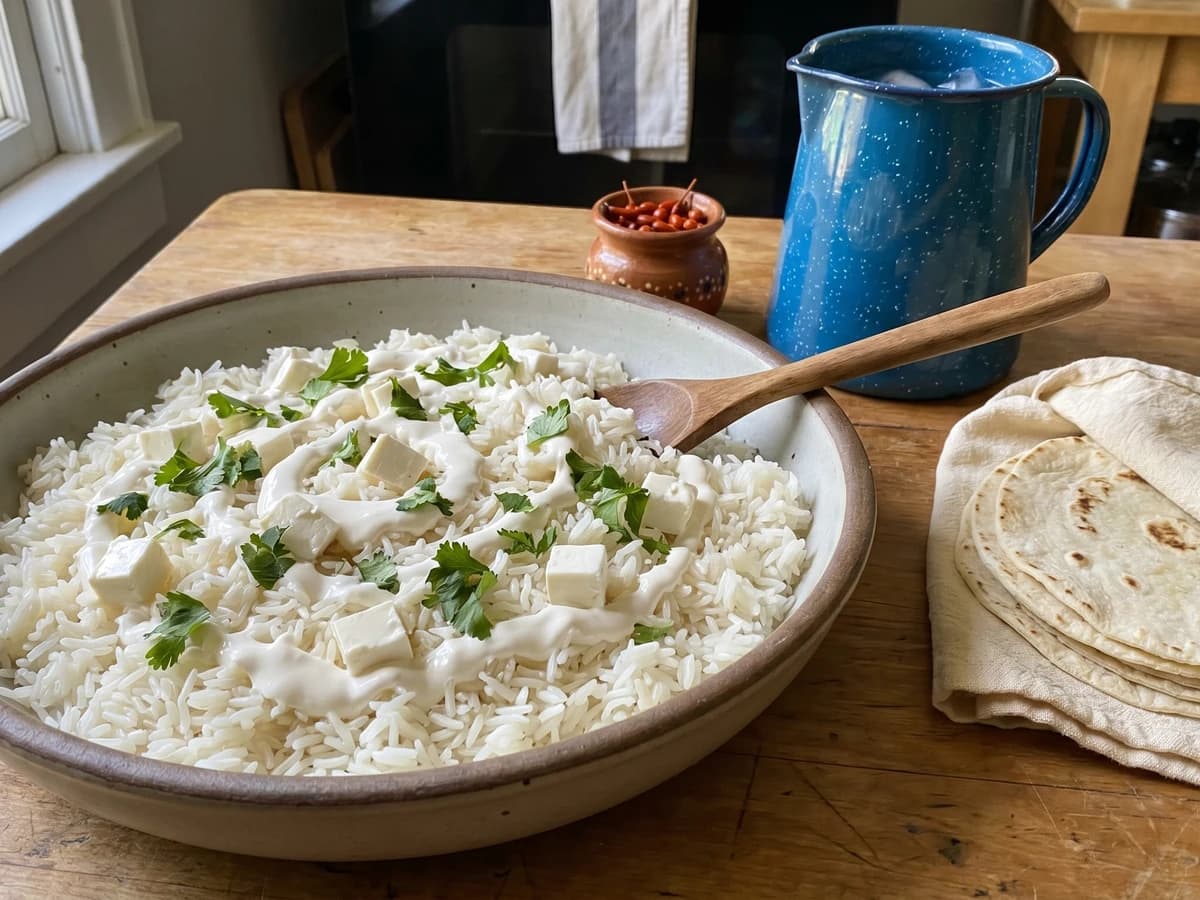
Sinaloa's home-cook white rice topped with cold cubes of cream cheese that soften into the warm grain, finished with crema and a sprinkle of chiltepin at the table. The trick that makes a side dish feel like a small luxury.
Chef Lupita
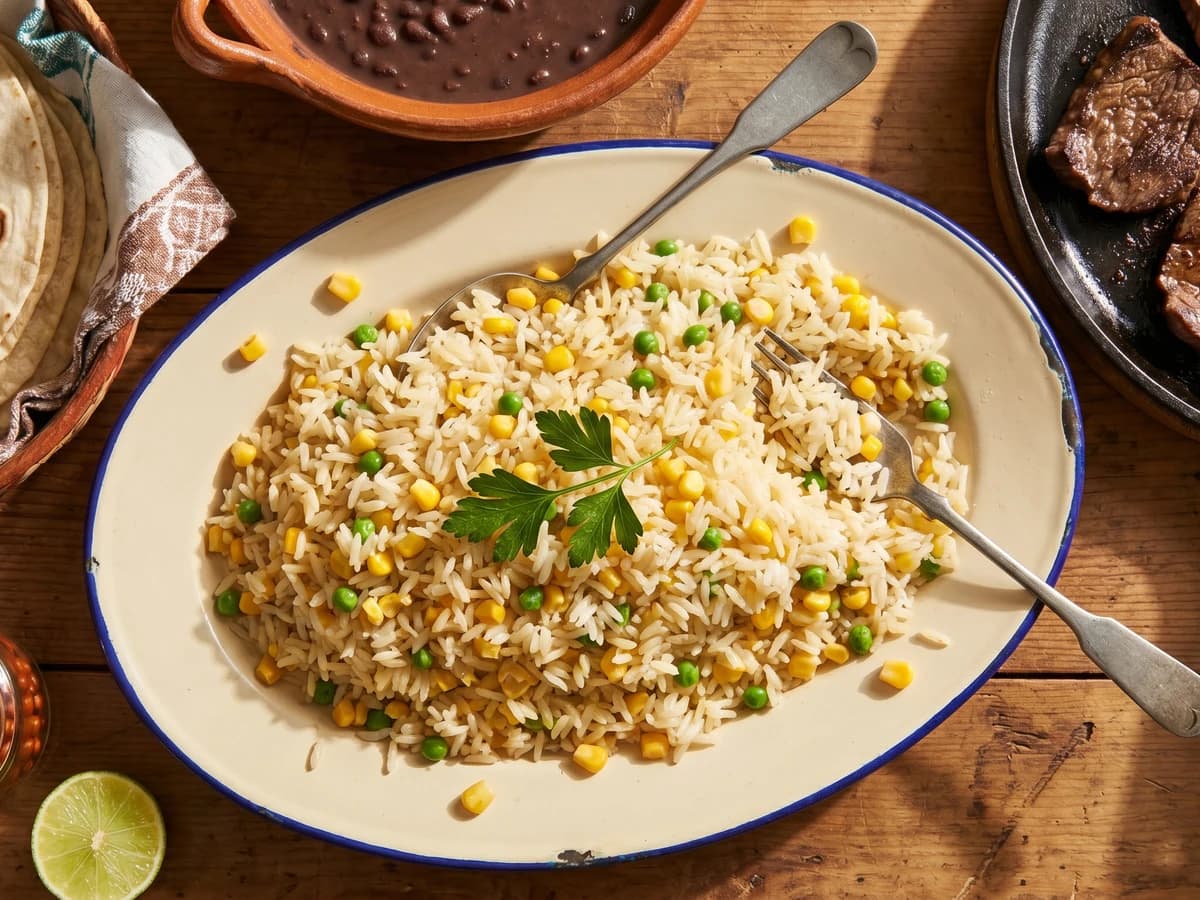
Sonora's white rice, toasted in butter and steamed with sweet corn and tender peas. The clean, quiet partner to a plate of carne asada, not the red rice of central Mexico.

Chef Lupita
Yucatán's white rice with sweet corn kernels, toasted in lard with garlic and onion. The quiet base that holds up against the peninsula's bold achiote-stained stews.