
Chef Freja
Andelår med Rødkål
Slow-roasted duck legs with crisp, deeply golden skin, served with braised red cabbage and caramelized potatoes. The weeknight Danish duck that proves the best part of the bird is the one that takes its time.
A cooking platform built around craft, culture, and the stories behind what we eat.

Created by Chef Freja
Bone-in pork chops fried golden in butter, slow-cooked onions collapsed into silky sweetness, and a brown gravy built from the pan. The Tuesday night meal that every Danish kitchen knows by heart.
Denmark is a country of pork. More pigs than people, the old joke goes, and it's not far off. The pig has fed this country for centuries, and the pork chop is where that relationship is most honest. No brining, no rub, no overnight marinade. Just a good thick chop, a hot pan, and butter.
Pandestegte svinekoteletter med løg is Tuesday night. It's what you make when you get home and the question isn't what to cook but how fast. The chop goes in the pan, the onions cook slowly alongside, and by the time the potatoes are boiled you have a plate of food that does exactly what it promises. The onions are the secret. Four of them, sliced thin and cooked gently until they turn golden and sweet and collapse into something that barely remembers being an onion. They become a sauce on their own before the gravy even enters the picture.
Pay attention to two things. First, the onions: low heat, real patience, twenty minutes at least. Rushed onions bite. Slow onions surrender. Second, the resting. Five minutes off the heat, covered loosely on a warm plate. That's the difference between juice in the meat and juice on the plate. Everything else is straightforward, and I'll walk you through it so you're never guessing.
Pork has been the defining meat of the Danish table since the agricultural reforms of the late 1800s, when cooperative farming transformed Denmark into one of Europe's largest pork producers. Svinekoteletter, pan-fried bone-in chops, became the weeknight standard of the twentieth-century Danish household, served with løgsovs, the slow-cooked onion gravy that remains one of the most quietly beloved sauces in Danish home cooking. The dish belongs to the tradition of husmandsret, the plain, honest food of the working household, a tradition that has never fallen out of fashion because it was never trying to be fashionable.
Quantity
4, about 2cm thick
Quantity
40g, plus 20g extra for the gravy
Quantity
1 tablespoon
Quantity
4 large
halved, sliced into thin half-moons
Quantity
1 tablespoon
Quantity
300ml
Quantity
1 teaspoon
Quantity
1 teaspoon
Quantity
to taste
Quantity
freshly ground, to taste
Quantity
a few sprigs
Quantity
to serve
| Ingredient | Quantity |
|---|---|
| bone-in pork chops | 4, about 2cm thick |
| unsalted butter | 40g, plus 20g extra for the gravy |
| neutral oil | 1 tablespoon |
| yellow onionshalved, sliced into thin half-moons | 4 large |
| plain flour | 1 tablespoon |
| pork or chicken stock | 300ml |
| Dijon mustard | 1 teaspoon |
| dark soy sauce | 1 teaspoon |
| fine sea salt | to taste |
| black pepper | freshly ground, to taste |
| fresh thyme (optional) | a few sprigs |
| boiled or steamed potatoes | to serve |
Take the pork chops out of the fridge thirty minutes before you cook them. Cold meat in a hot pan seizes. The muscle contracts and the chop curls up at the edges, cooking unevenly and pushing the center away from the heat. Room temperature meat lies flat and cooks through gently. While they rest, pat each chop dry with kitchen paper and season both sides generously with salt and pepper. Dry surfaces brown. Wet surfaces steam. That's the whole principle.
Melt 20g of butter in a heavy frying pan over medium-low heat. Add the sliced onions and a good pinch of salt. The salt draws moisture from the onions, which helps them soften rather than fry. Stir them through the butter, then let them cook gently for twenty to twenty-five minutes, stirring every few minutes. You're not caramelizing them. You want them soft, golden, and sweet, collapsing into silky tangles that melt against the pork. If they start to catch or darken too quickly, lower the heat and add a splash of water. Patience here is everything. Rushed onions taste sharp. Slow onions taste like themselves, only more so.
When the onions are ready, scoop them out of the pan and set them aside. Don't wash the pan. Everything in the bottom of that pan is flavor. Add the remaining 20g of butter and the tablespoon of oil. Butter alone burns before the chop is done. Oil raises the smoke point and gives you time. When the butter foams and the foam starts to subside, lay the chops in. You should hear a firm, confident sizzle. If you don't, the pan isn't hot enough. Cook for four to five minutes on the first side without touching them. Let the crust form. Flip once and cook for another three to four minutes. The chop is done when the flesh near the bone has gone from pink to pale and the juices that bead on the surface run clear.
Lift the chops onto a warm plate and cover them loosely. Five minutes of rest. During this time the muscle fibers relax and reabsorb the juices that the heat drove to the center. Cut into a rested chop and the juices stay in the meat. Cut into an unrested one and they pool on the plate. That's flavor you've lost. The pan stays on the heat.
With the pan still over medium heat, sprinkle in the flour and stir it into the fat and drippings. Cook for one minute, stirring constantly, until the raw flour smell disappears and the paste turns a shade darker. This is your roux, and it's what gives the gravy its body. Pour in the stock in a steady stream, whisking as you go to prevent lumps. Add the mustard and the dark soy sauce. The soy is there for color and depth, not for saltiness. It gives the gravy that rich mahogany tone that Danish cooks achieve instinctively. Bring everything to a gentle simmer and cook for four to five minutes until the gravy coats the back of a spoon. Taste it. Adjust the salt. Return the softened onions to the pan and stir them through. The gravy should be glossy, savory, and just thick enough to pool on the plate without running everywhere.
Place each chop on a warm plate. Spoon the onion gravy generously over and alongside the meat, letting it pool around the boiled potatoes. Finish with a sprig of thyme if you have it. Bring the pan to the table with whatever gravy remains, because someone will want more. This is food that asks for nothing except a fork, a knife, and the people you want to share it with. Tak for mad.
1 serving (about 390g)
Culinary guides, cultural storytelling, and the editorial depth that makes cooking meaningful.
Discover Culinary ExplorerChef Freja
Slow-roasted duck legs with crisp, deeply golden skin, served with braised red cabbage and caramelized potatoes. The weeknight Danish duck that proves the best part of the bird is the one that takes its time.

Chef Freja
The whole roasted duck of juleaften, stuffed with tart apples and dark prunes, slow-roasted for four patient hours until the skin crackles like something earned and the meat underneath gives way without resistance.
Chef Freja
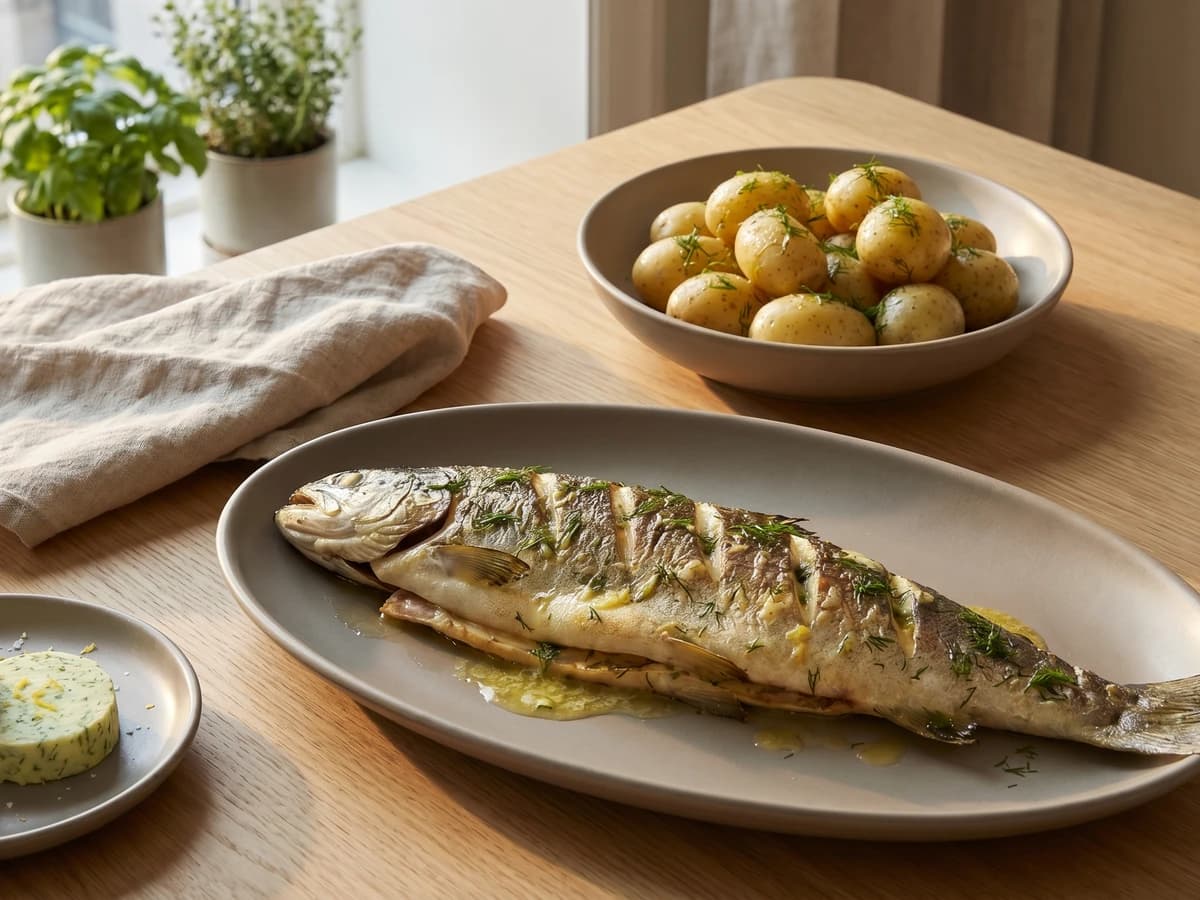
Whole sea trout baked with butter, lemon, and armfuls of dill, served beside the first nye kartofler of the season and a melting slab of dildsmor. The Danish summer table at its most generous.
Chef Freja
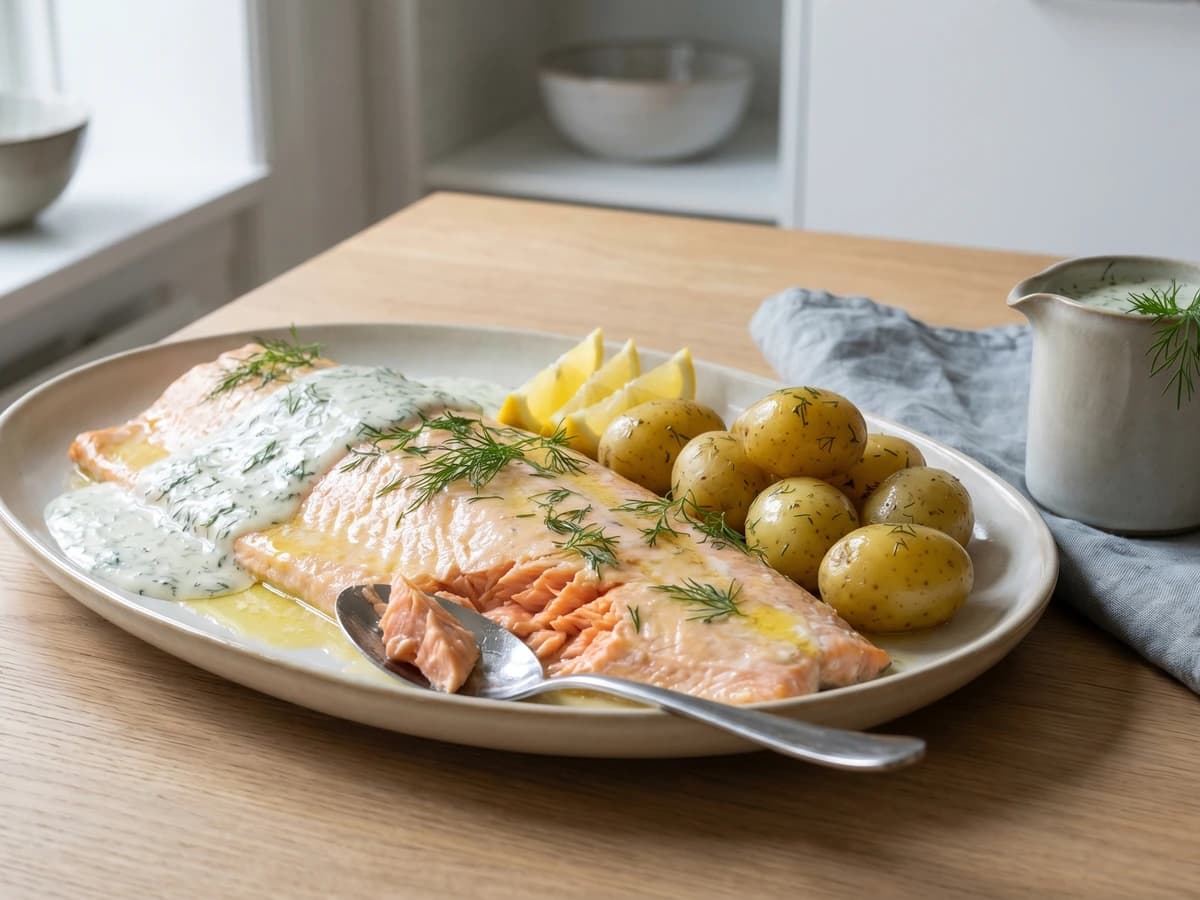
A side of salmon baked gently in butter and white wine, served warm with a bright dill cream sauce and the season's first nye kartofler. Late spring on a Danish table, cooked with love.