
Chef Lupita
Acambaritas de Acámbaro
Guanajuato's daily bread from Acámbaro, a small glazed roll built on pata, enriched with manteca de cerdo, and baked until the top shines lightly for merienda.
A cooking platform built around craft, culture, and the stories behind what we eat.
Created by
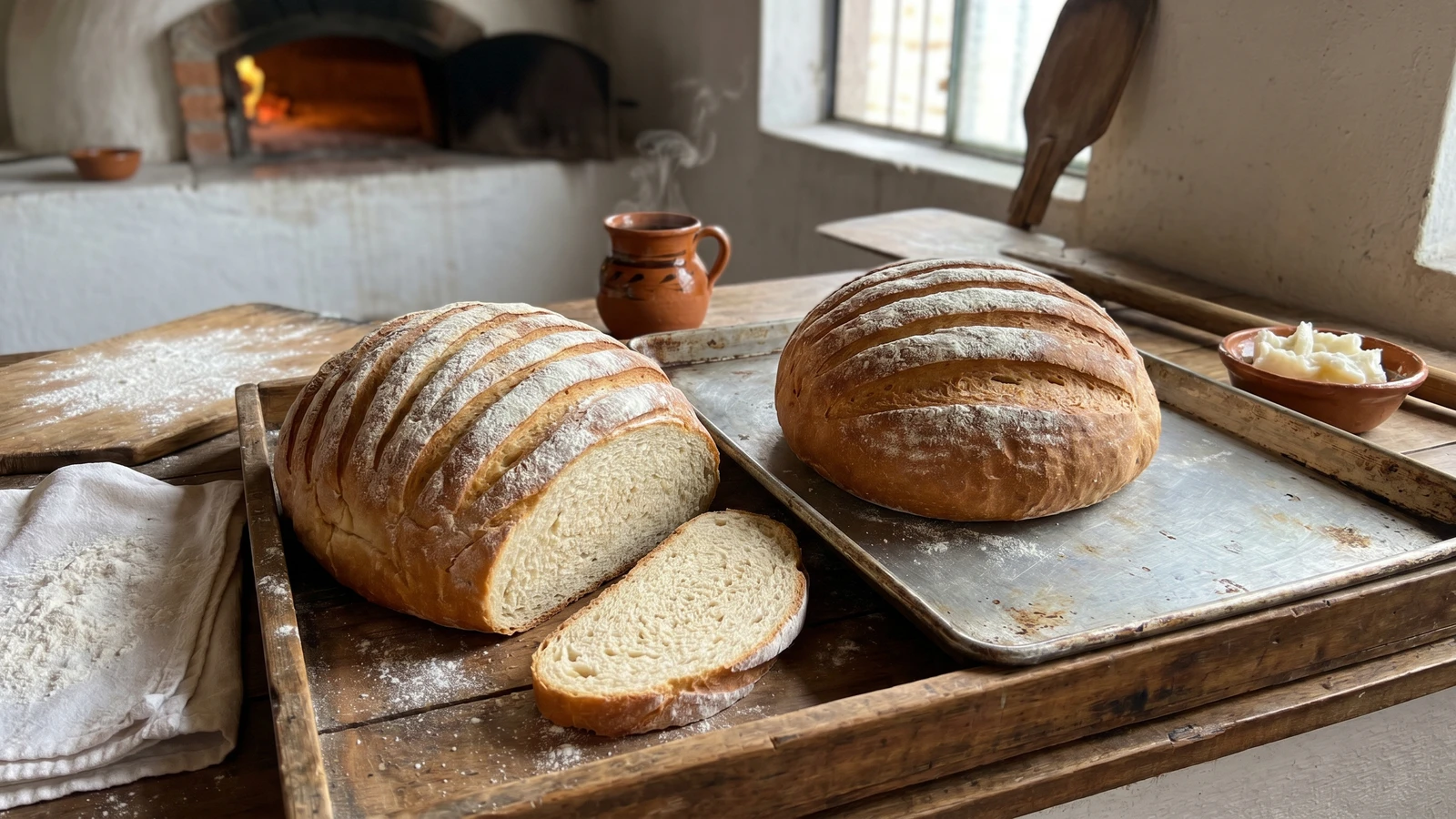
Guanajuato's Acámbaro pan tallado is a two-day enriched loaf made with pata starter, pork lard, sugar, and deep scoring that opens into the town's carved crown.
Guanajuato, in the Bajío, gives Acámbaro its bread identity. This pan tallado belongs to the bakery towns east of the state, where the old hornos de bóveda still decide the crust better than any timer. Tallado means carved, and here the knife does real work: deep cuts before the oven so the loaf rises into ridges instead of a smooth dome.
The soul is the pata. Not baking powder. Not a packet of chemical leavener. Pata is masa madre, a piece of living dough held from one batch to feed the next. In Acámbaro, the pan grande and its family of breads depend on that slow fermentation. It gives the crumb its slight chew, its quiet acidity, and the flavor that tells you this loaf came from a panadería, not from a supermarket shelf.
The fat is manteca de cerdo in the secular register. La manteca es el sabor. It softens the crumb without making it cake, and it helps the crust take that deep golden color in a hot oven. My mother did not make Acámbaro bread, she was from Jalisco, but in my notebook from Guanajuato I wrote what a baker's wife told me near the oven: cut with decision, not fear. She was right. If you barely mark the dough, the bread ignores you.
Make this over two days. Feed the pata at night, mix and shape in the morning, bake when the dough is alive and light under your hand. No me vengas con atajos. This is a 32-state cuisine, and Acámbaro's bread deserves its own patience.
Acámbaro became one of Guanajuato's strongest bread towns during the 19th and 20th centuries, when wheat from the Bajío and wood-fired bakery ovens supported a local guild culture of large loaves, decorated breads, and daily pan dulce. The protected reputation of Pan Grande de Acámbaro is tied to the use of pata, a fermented dough starter passed from batch to batch, rather than chemical leavening. Pan tallado belongs to that same bakery family: its identity comes from the starter, the enriched wheat dough, and the deep scoring that lets the loaf open into a ridged crown.
Quantity
1/2 cup
at 100 percent hydration
Quantity
1 cup
Quantity
1/2 cup
Quantity
5 1/2 cups
plus more for dusting
Quantity
3/4 cup
Quantity
1 1/2 teaspoons
Quantity
1 teaspoon
Quantity
3
at room temperature
Quantity
3/4 cup
lukewarm
Quantity
1/2 cup
softened
Quantity
2 tablespoons
softened
Quantity
1 teaspoon
Quantity
1 egg beaten with 1 tablespoon milk
for glazing
Quantity
2 tablespoons
| Ingredient | Quantity |
|---|---|
| active wheat masa madre or sourdough starterat 100 percent hydration | 1/2 cup |
| bread flour for feeding the pata | 1 cup |
| lukewarm water for feeding the pata | 1/2 cup |
| bread flourplus more for dusting | 5 1/2 cups |
| granulated sugar | 3/4 cup |
| fine sea salt | 1 1/2 teaspoons |
| ground canela mexicana | 1 teaspoon |
| large eggsat room temperature | 3 |
| whole milklukewarm | 3/4 cup |
| manteca de cerdosoftened | 1/2 cup |
| unsalted buttersoftened | 2 tablespoons |
| vanilla extract | 1 teaspoon |
| egg washfor glazing | 1 egg beaten with 1 tablespoon milk |
| bread flour for dusting (optional) | 2 tablespoons |
The night before baking, mix the active masa madre with 1 cup bread flour and 1/2 cup lukewarm water. Knead it into a firm dough, cover it, and let it ferment at room temperature for 8 to 12 hours. It should smell clean, lightly sour, and wheaty, with small bubbles under the surface. That is pata. If it smells sharp like vinegar or has collapsed into paste, feed it again before you trust it.
Tear the ripe pata into small pieces and place it in a large bowl. Add the milk, eggs, sugar, salt, canela, and vanilla. Work with your hand until the pata softens and breaks apart. Add the 5 1/2 cups bread flour and mix until no dry flour remains. The dough will look rough. Let it rest for 20 minutes so the flour drinks properly before you add the fat.
Add the softened manteca de cerdo and butter in small pieces. Knead for 12 to 15 minutes by hand, or 8 to 10 minutes in a stand mixer on medium-low, until the dough is smooth, elastic, and slightly tacky. Do not drown it with extra flour. Enriched dough needs time to come together. La manteca es el sabor, but it has to be kneaded in completely or the crumb will bake heavy.
Shape the dough into a ball and place it in a lightly greased bowl. Cover and let rise for 3 to 4 hours at warm room temperature, until it increases by about half and feels aerated when pressed. Pata dough does not behave like commercial yeast. It rises slower and tastes better. Watch the dough, not the clock.
Turn the dough onto a lightly floured table and divide it into 2 equal pieces. Shape each piece into a tight round, pulling the surface against the table so the top has tension. Set the rounds on a parchment-lined sheet pan or a floured wooden board if you are using a baking stone. Dust the tops lightly with flour.
Cover the shaped loaves with a clean cotton cloth and proof for 2 to 3 hours, until they look fuller and a finger pressed into the side leaves a slow mark. Do not wait until they wobble like overproofed pan dulce. The oven needs strength left in the dough so the tallado opens.
Heat the oven to 400F with a baking stone or heavy sheet pan inside if you have one. Brush each loaf lightly with egg wash, then use a sharp lame or thin knife to cut 5 to 7 deep slashes across the top, about 1/2 inch deep. Cut with decision. These are not decorative scratches. They guide the rise and create the ridged crown that makes pan tallado recognizable in Acámbaro.
Slide the loaves into the hot oven and bake for 10 minutes at 400F. Lower the heat to 350F and bake 22 to 25 minutes more, until the ridges are deep golden, the cuts have opened, and the bottom sounds hollow when tapped. If the tops darken too quickly, lay a piece of foil loosely over them. The bread should smell of wheat, lard, sugar, and canela, not raw flour.
Move the loaves to a rack and let them cool at least 45 minutes before slicing. Hot enriched bread tears and turns gummy under the knife. Serve thick slices with cafe de olla or hot chocolate from Guanajuato clay mugs. Saber cocinar es saber vivir.
1 serving (about 95g)
Culinary guides, cultural storytelling, and the editorial depth that makes cooking meaningful.
Discover Culinary ExplorerChef Lupita
Guanajuato's daily bread from Acámbaro, a small glazed roll built on pata, enriched with manteca de cerdo, and baked until the top shines lightly for merienda.

Chef Lupita
Michoacan's Tinguindin aguacatas are flat, leaf-scored sweet breads made with harina de trigo, piloncillo, anise, and manteca de cerdo, shaped by hand for the wood oven.

Chef Lupita
From Ajijic on Lake Chapala, Pan Tachihual is a lightly sweet wedding loaf built with harina de trigo, harina de maiz, piloncillo, manteca, anise, and the old Guadalajara pata.

Chef Lupita
Comitán's pan de yema shaped into little pigs, birds, and rabbits, a Chiapas bakery bread rich with egg yolks, manteca de cerdo, and anís, baked golden on hoja de plátano.