
Chef Lupita
Acambaritas de Acámbaro
Guanajuato's daily bread from Acámbaro, a small glazed roll built on pata, enriched with manteca de cerdo, and baked until the top shines lightly for merienda.
A cooking platform built around craft, culture, and the stories behind what we eat.
Created by
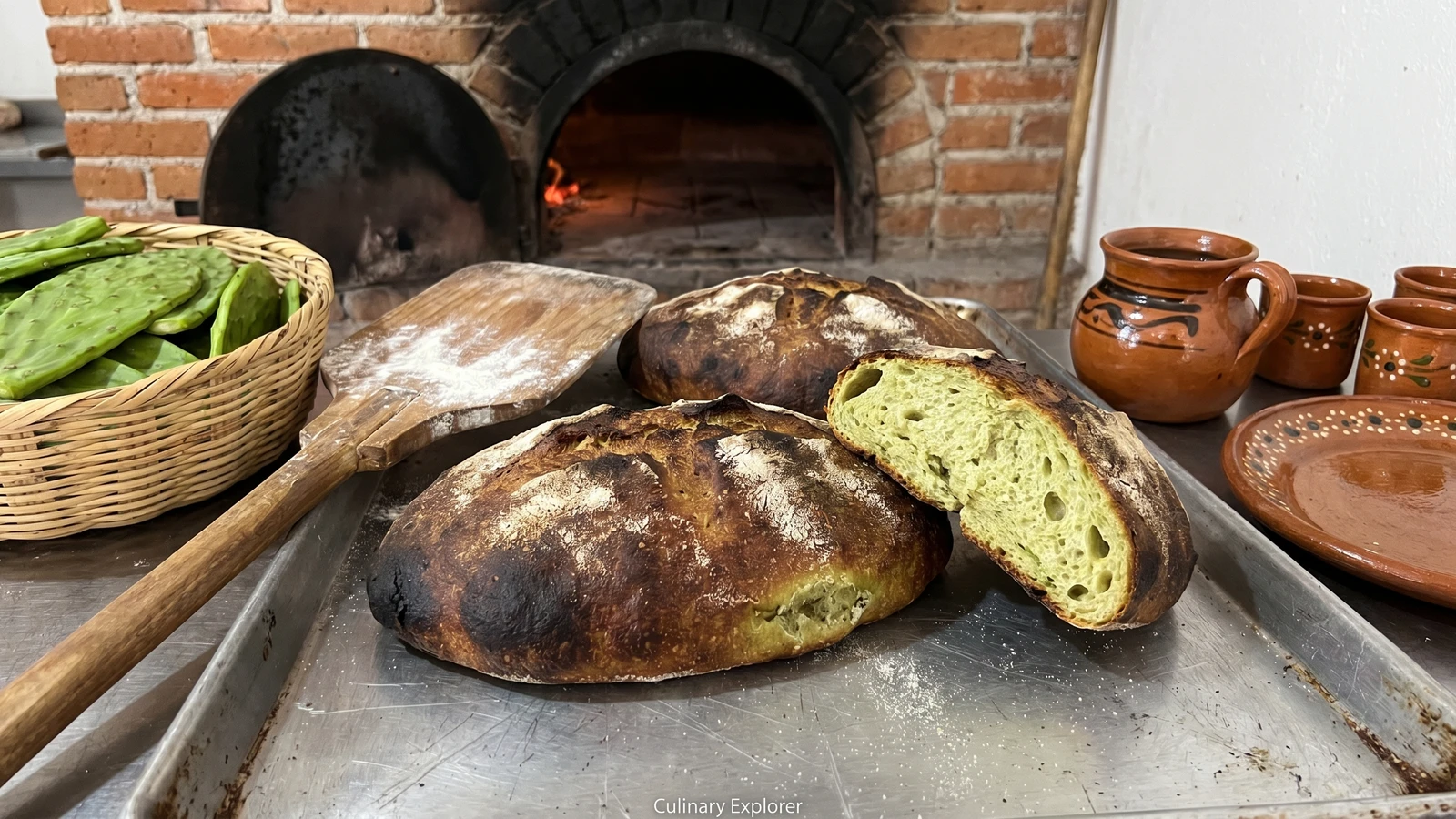
Guanajuato's Acámbaro bread guild takes wheat, masa madre, manteca de cerdo, and fresh nopal puree and turns them into a green-crumbed loaf that belongs to the southeast Bajío.
Guanajuato, southeast Bajío, Acámbaro by the Lerma River and the Michoacán border: that is where this bread belongs. This is not a chile dish. Not every Mexican food needs chile to announce itself. Here the flavor comes from wheat, fresh nopal, slow fermentation, and manteca de cerdo.
The green crumb comes from tender nopal paddles, the small ones from the mercado, not old fibrous pencas that taste like fence. The leaven is the pata, the panadero's masa madre, not chemical leavener. That matters. Acámbaro bread has a living base, saved from the previous batch and worked into the next one by people who understand dough with their hands.
I learned this style watching women in Acámbaro bakeries portion dough before dawn, their fingers moving faster than conversation. One of them tapped the green dough and told me: weigh the nopal or the bread turns heavy. She was right. The nopal gives tenderness, but it also tests your discipline.
Serve it on a barro vidriado plate from Guanajuato, with cafe de olla in a jarrito. Let the loaf look hand-shaped. Let the edges darken. La cocina no es decoración, es trabajo. Cada estado, su propia cocina.
The Bajío became one of New Spain's major wheat zones during the colonial period, with Guanajuato and neighboring Michoacán supplying mines, haciendas, and market towns. Acámbaro's reputation for pan grande grew from that wheat economy and from wood-fired panaderías clustered along the Guanajuato-Michoacán road. Pan de nopal is a contemporary Acámbaro guild adaptation, joining Spanish-introduced wheat bread with nopal from the older milpa landscape of Otomí and Chichimeca communities; the leaven is pata, a masa madre held from batch to batch, not chemical leavener.
Quantity
50 grams
at peak
Quantity
120 grams
Quantity
70 grams
Quantity
10 grams
Quantity
2, about 250 grams trimmed weight
thorns removed, rinsed, and chopped
Quantity
2 tablespoons
Quantity
600 grams, plus more for dusting
Quantity
80 grams
Quantity
2
room temperature
Quantity
90 grams, plus up to 30 grams more if needed
room temperature
Quantity
10 grams
Quantity
80 grams
soft but not melted
Quantity
1 tablespoon
for brushing the warm loaves
| Ingredient | Quantity |
|---|---|
| active wheat masa madre or sourdough starterat peak | 50 grams |
| bread flour, for the pata | 120 grams |
| room-temperature water, for the pata | 70 grams |
| finely grated piloncillo or unrefined cane sugar, for the pata | 10 grams |
| tender nopal paddlesthorns removed, rinsed, and chopped | 2, about 250 grams trimmed weight |
| water, for blending the nopal (optional) | 2 tablespoons |
| bread flour | 600 grams, plus more for dusting |
| unrefined cane sugar | 80 grams |
| large eggsroom temperature | 2 |
| whole milkroom temperature | 90 grams, plus up to 30 grams more if needed |
| fine sea salt | 10 grams |
| manteca de cerdosoft but not melted | 80 grams |
| melted manteca de cerdofor brushing the warm loaves | 1 tablespoon |
The night before baking, mix the active masa madre, 120 grams bread flour, 70 grams water, and 10 grams piloncillo into a firm dough. Knead it for two minutes, cover it, and leave it at room temperature for 8 to 12 hours, until domed, expanded, and lightly sour-sweet. This is the pata of Acámbaro, a masa madre held from batch to batch. It is not baking powder. No me vengas con atajos.
Trim the nopales well, removing every spine and tough edge. Chop them and blend until smooth, adding the 2 tablespoons water only if the blades refuse to move. Measure 180 grams of puree for the dough. It will look thick and slippery. That natural gel keeps the crumb tender, but too much makes the bread gummy. Weigh it. The señoras at the bakery table do not guess.
Tear the ripe pata into pieces and put it in a large bowl or stand mixer. Add the nopal puree, eggs, 90 grams milk, sugar, and 600 grams bread flour. Mix until no dry flour remains, then rest the dough for 20 minutes. Add the salt after the rest. The dough should already show a pale green color, not neon, not gray.
Knead until the dough begins to stretch, 5 to 7 minutes by machine or closer to 12 by hand. Add the soft manteca de cerdo in three additions, kneading each one in before adding the next. At first the dough will smear and look ruined. Keep working. It will come back together, satin-smooth and elastic. La manteca es el sabor.
Place the dough in a lightly greased bowl, cover it, and let it rise at warm room temperature for 3 to 4 hours. Fold it once after the first hour. Because this dough has nopal, sugar, eggs, and lard, it moves slowly. It may not double like lean white bread. Look for a 70 percent increase, small bubbles at the edges, and a dough that feels alive under your fingers.
Turn the dough onto a lightly floured table and divide it into two equal pieces. Shape each into a tight oval loaf, tucking the seam underneath with the side of your hand. Let the tops stay a little irregular. Machine-perfect bread does not belong on an Acámbaro tray. Set the loaves on a parchment-lined charola and dust the tops lightly with flour.
Cover the loaves with a clean cotton cloth and proof for 2 to 3 hours, until puffy and slow to spring back when pressed gently. If your kitchen is cold, give them more time. The clock is not the boss here. The dough is.
Heat the oven to 400F with a baking stone or heavy sheet pan inside for at least 40 minutes. A horno de bóveda gives Acámbaro bread its dark edge; at home, strong heat and a preheated surface get you closest. Slash each loaf once down the center, slide the charola into the oven, and bake 10 minutes. Lower the heat to 350F and bake 20 to 25 minutes more, until the edges are deep golden and the center reaches about 195F.
Brush the hot crust lightly with melted manteca de cerdo, especially along the edges. Let the loaves cool at least one hour before cutting. Nopal crumb needs time to set. Cut too early and it will drag against the knife. Serve with cafe de olla, or with cajeta from Celaya if the merienda is serious. Recetas probadas y garantizadas.
1 serving (about 80g)
Culinary guides, cultural storytelling, and the editorial depth that makes cooking meaningful.
Discover Culinary ExplorerChef Lupita
Guanajuato's daily bread from Acámbaro, a small glazed roll built on pata, enriched with manteca de cerdo, and baked until the top shines lightly for merienda.

Chef Lupita
Michoacan's Tinguindin aguacatas are flat, leaf-scored sweet breads made with harina de trigo, piloncillo, anise, and manteca de cerdo, shaped by hand for the wood oven.

Chef Lupita
From Ajijic on Lake Chapala, Pan Tachihual is a lightly sweet wedding loaf built with harina de trigo, harina de maiz, piloncillo, manteca, anise, and the old Guadalajara pata.

Chef Lupita
Comitán's pan de yema shaped into little pigs, birds, and rabbits, a Chiapas bakery bread rich with egg yolks, manteca de cerdo, and anís, baked golden on hoja de plátano.