Culinary Explorer

A cooking platform built around craft, culture, and the stories behind what we eat.
Discover Culinary Explorer
Pan de Muerto del Valle de México

Pan de Muerto del Valle de México

Created by

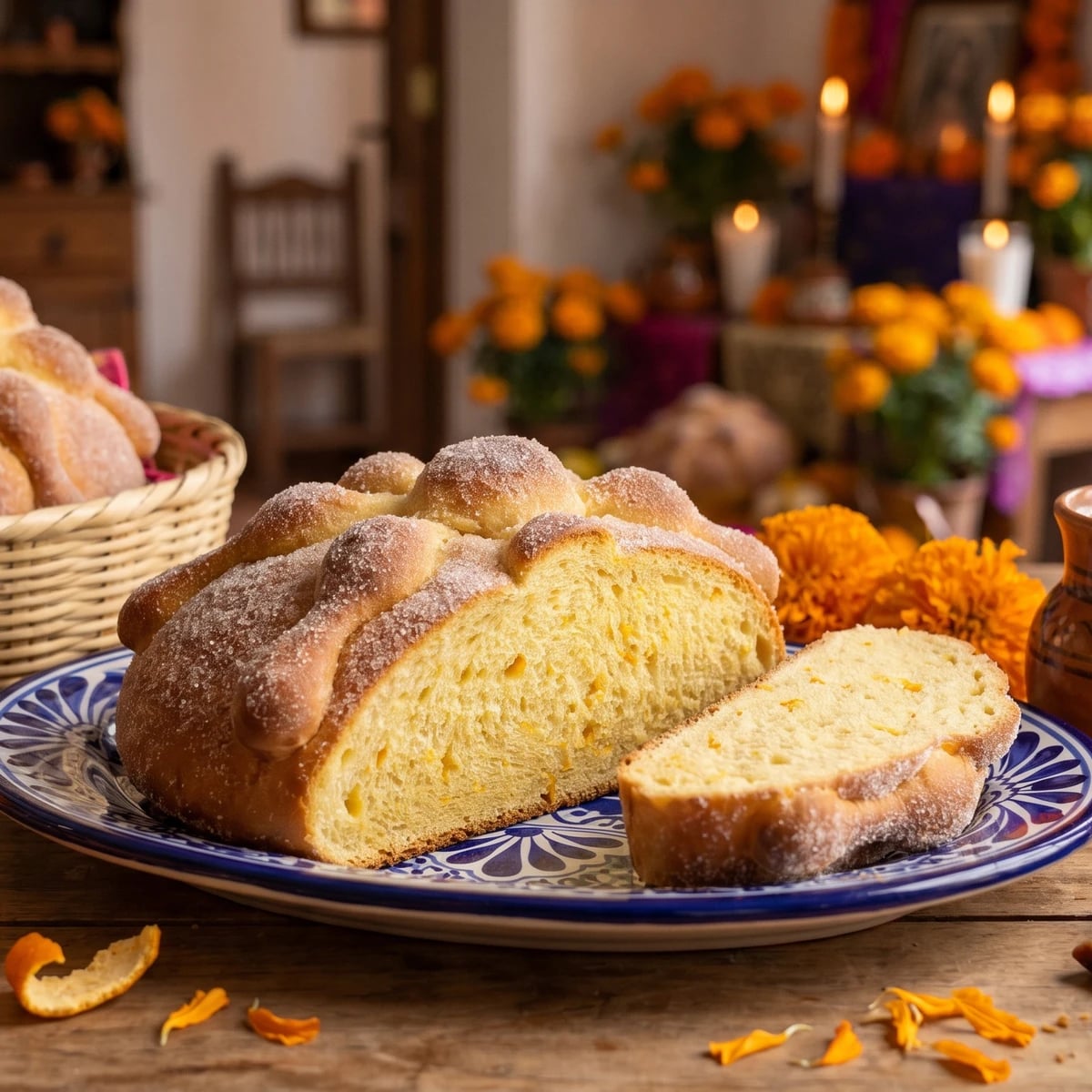
CDMX and Estado de México's Día de Muertos bread, an orange-blossom egg loaf shaped with crossed bones, brushed with butter, and buried in sugar for the family altar.

Breads
Mexican
Holiday
Celebration
Make Ahead
45 min
Active Time
28 min cook4 hr 15 min total
Yield2 large loaves or 10 individual breads

Ciudad de México and Estado de México share this bread across the Valle de México, from the panaderías of Coyoacán and La Merced to the family ovens around Toluca, Metepec, and Mixquic. This is pan de muerto for the ofrenda: round, fragrant with azahar and orange, crossed with bone-shaped canillas, finished with butter and sugar.

The bread is not chile, not salsa, not the cartoon version of Mexican food people expect from outside. It is wheat, egg, butter, yeast, orange blossom water, and patience. Central Mexico learned bread through colonial ovens, then made it speak the language of Día de Muertos. Cada estado, su propia cocina, and in this part of the country the dead are welcomed with bread that smells like orange peel and a panadería at dawn.

The dough is enriched, so it moves slowly. Let it. If you rush the rise, the crumb turns tight and dry. The bones need to sit proud on the surface, not melt into the loaf. The sugar goes on after baking, while the butter can still catch it. My mother wrote in her notebook: 'azúcar generosa, sin miedo.' She was right. This bread is for the altar before it is for the mouth. Saber cocinar es saber vivir.

The modern pan de muerto of central Mexico is a colonial-era bread form, because wheat flour, dairy butter, refined sugar, and European-style ovens arrived after the Spanish conquest in the 16th century. Its association with Día de Muertos comes from the older Indigenous practice of placing food offerings for the dead, later folded into the Catholic calendar of All Saints' Day on November 1 and All Souls' Day on November 2. The round loaf is commonly read as the cycle of life, the crossed strips as bones, and the top knob as a skull or tear, though shapes vary widely across Mexico, including sesame-topped panes in central highland towns and human-shaped breads in other regions.

The technique, the tradition, and the story behind every dish.

Discover Culinary Explorer

Ingredients

bread flour

Quantity

4 1/2 cups

plus more for dusting

instant yeast

Quantity

2 1/4 teaspoons

whole milk

Quantity

3/4 cup

lukewarm

granulated sugar

Quantity

1/2 cup

fine sea salt

Quantity

1 1/2 teaspoons

large eggs

Quantity

4

at room temperature

large egg yolks

Quantity

2

at room temperature

orange zest

Quantity

1 tablespoon

finely grated

orange blossom water (agua de azahar)

Quantity

1 tablespoon

anise seed

Quantity

1 teaspoon

lightly crushed

unsalted butter for dough

Quantity

10 tablespoons

softened

neutral oil

Quantity

1 tablespoon

for the bowl

egg wash

Quantity

1 large egg beaten with 1 tablespoon milk

unsalted butter for finishing

Quantity

4 tablespoons

melted

granulated sugar for finishing

Quantity

1/2 cup

Equipment Needed

  • Stand mixer with dough hook, or a strong pair of hands and patience
  • Two rimmed baking sheets lined with parchment
  • Pastry brush for egg wash and melted butter
  • Instant-read thermometer for checking the enriched crumb

Instructions

  1. 1

    Wake the dough

    In the bowl of a stand mixer, combine the flour, yeast, sugar, and salt. Add the lukewarm milk, whole eggs, egg yolks, orange zest, orange blossom water, and crushed anise seed. Mix on low until a rough dough forms. It will look sticky and uneven at first. Good. Enriched dough starts messy before it becomes obedient.

  2. 2

    Knead with butter

    Knead on medium-low for 6 minutes, then add the softened butter one tablespoon at a time. Wait until each piece disappears before adding the next. Continue kneading 8 to 10 minutes more, until the dough is glossy, elastic, and pulls from the sides of the bowl while still clinging lightly to the bottom. Butter slows gluten down, so give it time. No me vengas con atajos.

  3. 3

    First rise

    Scrape the dough into a lightly oiled bowl, cover, and let rise at warm room temperature for 1 1/2 to 2 hours, until doubled. If your kitchen is cool, it may take longer. The dough should feel airy when you press it, not dense like raw clay. The calendar does not bake bread. The dough does.

    For better flavor, refrigerate the covered dough overnight after 45 minutes at room temperature. Bring it back to cool room temperature before shaping. Panaderías know this: slow fermentation gives better bread.
  4. 4

    Divide the dough

    Turn the dough onto a lightly floured board. For two large loaves, cut off about one quarter of the dough and reserve it for the bones and knobs. Divide the remaining dough into 2 equal pieces and shape each into a tight round. For individual breads, reserve one quarter for decoration and divide the rest into 10 rounds.

  5. 5

    Shape the bones

    Divide the reserved dough into pieces for the canillas and top knobs. Roll each bone strip with your fingers spread open, pressing lightly in three places so the dough forms raised knuckles. Cross two strips over each loaf. Roll a small ball or tear-drop knob and press it into the center. This shape is the signature. If the bones are flat, you rushed the work.

  6. 6

    Proof the loaves

    Set the shaped breads on parchment-lined baking sheets. Cover loosely and let rise 45 to 60 minutes, until puffy and almost doubled. Press the side gently with a floured finger. The dent should fill back slowly. If it springs back immediately, wait. If it collapses, you waited too long. Bread teaches discipline without saying a word.

  7. 7

    Bake until golden

    Heat the oven to 350F. Brush the loaves lightly with egg wash, avoiding heavy puddles around the bones. Bake individual breads for 18 to 22 minutes, or large loaves for 26 to 30 minutes, until deep golden and the center registers about 190F. The crust should smell of butter, orange, and toasted sugar from the egg wash.

  8. 8

    Butter and sugar

    Let the bread cool 10 minutes. Brush the surface with melted butter, then cover generously with granulated sugar while the butter is still tacky. Do not sprinkle timidly. This is pan de muerto from the Valle de México, not diet bread. Let it cool fully before placing it on the ofrenda or slicing for chocolate caliente.

Chef Tips

  • Buy orange blossom water from a Mexican or Middle Eastern market and smell it before using it. It should smell floral and clean, not like perfume from a bathroom. Bad azahar ruins the bread.
  • Use bread flour if you can. All-purpose flour works, but the loaf will be softer and less structured. That is a compromise, not an upgrade.
  • The anise seed is not mandatory in every CDMX bakery, but it belongs to many central Mexican versions. Crush it lightly so it perfumes the dough without turning every bite into licorice.
  • Do not overbake pan de muerto. Dry bread on the ofrenda is common because people bake it like a lean loaf. This is enriched bread. Pull it when the center reaches 190F and the crust is golden.
  • Serve with chocolate caliente, cafe de olla with piloncillo and canela, or atole. The bread is sweet, but it was built for a bitter or spiced drink beside it.

Advance Preparation

  • The dough can be mixed the night before. Let it rise 45 minutes at room temperature, refrigerate overnight, then shape the next day after it softens slightly.
  • Baked pan de muerto is best the day it is made. It keeps 2 days wrapped at room temperature, and day-old slices are excellent toasted lightly and served with chocolate caliente.
  • Do not sugar the bread before freezing. Freeze baked, unsugared loaves tightly wrapped for up to 1 month, thaw, warm gently, then brush with butter and sugar before serving.

Frequently Asked Questions

Nutrition Information

1 serving (about 130g)

Calories
495 calories
Total Fat
22 g
Saturated Fat
12 g
Trans Fat
1 g
Unsaturated Fat
9 g
Cholesterol
175 mg
Sodium
395 mg
Total Carbohydrates
62 g
Dietary Fiber
2 g
Sugars
21 g
Protein
12 g

Note: Chef personas and recipes are created with AI assistance. Cook with care: follow safe food-handling practices, check doneness with a thermometer when needed, and adapt for allergies and your kitchen.

Where cooking meets culture.

Culinary guides, cultural storytelling, and the editorial depth that makes cooking meaningful.

Discover Culinary Explorer

More from Central Mexican Breads

Browse the full collection