
Chef Lupita
Acambaritas de Acámbaro
Guanajuato's daily bread from Acámbaro, a small glazed roll built on pata, enriched with manteca de cerdo, and baked until the top shines lightly for merienda.
A cooking platform built around craft, culture, and the stories behind what we eat.
Created by
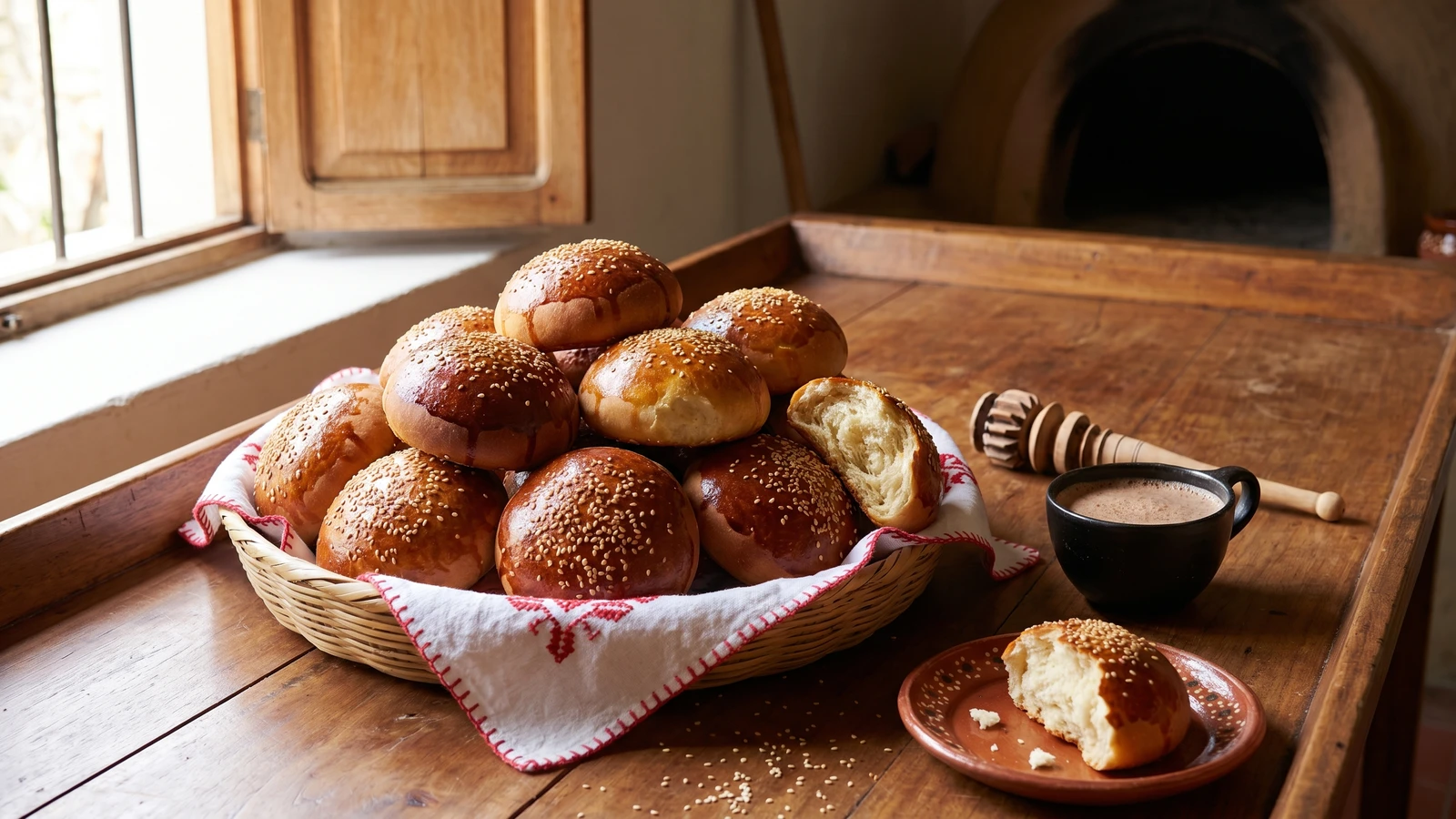
Oaxaca's everyday lard bread, soft and faintly sweet, enriched with manteca de cerdo and glazed deep gold with egg yolk. The roll that lives beside the chocolate de agua at every Oaxacan breakfast.
This bread is from Oaxaca. Specifically from the panaderías of the Valles Centrales, the bakeries in Tlacolula, Zaachila, Mitla, and the small storefronts that ring the markets of Oaxaca de Juárez. Pan de manteca is everyday bread, not festival bread, not pan de muerto, not the sweet hojaldra you only see in November. This is the roll that sits in a basket on the table every morning beside the cup of chocolate de agua frothed with a molinillo.
The bread is enriched with manteca de cerdo. Not butter. Not vegetable shortening. Manteca. The pork fat is what gives the crumb its tender, faintly savory richness and what makes the bread keep its softness for two days on the counter. Substitute butter and you have made a French roll. Substitute shortening and you have made a sad American dinner roll. Pan de manteca takes manteca. La manteca es el sabor.
The panadera at Mercado Alarii in Zaachila told me her family has made this bread the same way for three generations. The yeast, the manteca, the egg yolk glaze, the ajonjolí. The wood-fired oven gives the crust a smoky depth a home oven cannot match, but the recipe itself works in any kitchen. What it needs is patience: two rises, both of them slow, and a hot oven at the end. Oaxaca eats this bread every day. There is no occasion required. Saber cocinar es saber vivir.
Pan de manteca belongs to the panadería tradition that arrived with Spanish colonization in the 16th century, when wheat, yeast cultures, and the enclosed brick oven displaced the indigenous comal-and-flatbread paradigm in colonial cities. Oaxaca developed a distinctive panadería culture that fused European bread-making with local fats and seeds: pork lard replaced olive oil and butter, ajonjolí brought from the Pacific trade routes was scattered on the crust, and the egg yolk glaze became the regional signature visible from one bakery to the next across the Valles Centrales. By the 19th century, Oaxacan panaderías were producing dozens of distinct everyday and ceremonial breads, with pan de manteca emerging as the daily staple alongside pan de yema, while specialty forms like the cabecita-decorated pan de muerto remained reserved for Día de Muertos.
Quantity
500 grams (about 4 cups)
plus more for the work surface
Quantity
100 grams (1/2 cup)
Quantity
10 grams (1 tablespoon)
Quantity
8 grams (1 1/2 teaspoons)
Quantity
150 grams (about 3/4 cup)
soft but not melted
Quantity
2
at room temperature
Quantity
180 milliliters (3/4 cup)
lukewarm
Quantity
1 teaspoon
Quantity
1
beaten with 1 tablespoon whole milk, for the glaze
Quantity
2 tablespoons
for sprinkling
| Ingredient | Quantity |
|---|---|
| all-purpose flourplus more for the work surface | 500 grams (about 4 cups) |
| granulated sugar | 100 grams (1/2 cup) |
| instant yeast | 10 grams (1 tablespoon) |
| fine sea salt | 8 grams (1 1/2 teaspoons) |
| manteca de cerdosoft but not melted | 150 grams (about 3/4 cup) |
| large eggsat room temperature | 2 |
| whole milklukewarm | 180 milliliters (3/4 cup) |
| Mexican vanilla extract | 1 teaspoon |
| large egg yolkbeaten with 1 tablespoon whole milk, for the glaze | 1 |
| ajonjolí (sesame seeds)for sprinkling | 2 tablespoons |
Warm the milk until it feels like the inside of your wrist, no hotter. Stir in a pinch of the sugar and the yeast. Let it sit for ten minutes, until the surface is foamy and smells like beer. If nothing happens, your yeast is dead. Throw it out and start with a new packet. No me vengas con atajos.
In a large bowl, whisk together the flour, sugar, and salt. Make a well in the center. Pour in the activated milk, the eggs, and the vanilla. Mix with your hand or a wooden spoon until a shaggy dough forms. Now add the manteca de cerdo, soft but not melted, in three additions. Each addition has to disappear into the dough before you add the next. La manteca es el sabor. Hurry this and the bread will be greasy instead of tender.
Turn the dough out onto a lightly floured surface. Knead for ten to twelve minutes by hand, or eight minutes in a stand mixer with a dough hook on medium-low. The dough is ready when it pulls away from the counter cleanly, feels supple, and springs back slowly when you press it with your finger. It should be soft, almost tacky, never sticky to the point of sticking to your palm.
Lightly grease a clean bowl with a little manteca. Place the dough inside, turn it once to coat, and cover with a damp cloth. Set it somewhere warm and still, away from drafts. Let it rise for one and a half to two hours, until it has roughly doubled. Oaxaca is warm. If your kitchen is cold, the dough takes longer. Do not rush it. The flavor of pan de manteca comes from a slow first fermentation.
Punch the dough down gently to release the gas. Divide it into twelve equal pieces, about 80 grams each if you want to weigh them. The panaderas at Mercado Alarii in Zaachila weigh every piece. Round each piece into a tight ball by cupping it under your palm and rolling it on the counter until the surface is smooth and the seam is sealed underneath. Place the rolls on a parchment-lined baking sheet, leaving about three fingers of space between each one. They will grow.
Cover the shaped rolls loosely with a clean cotton servilleta or a piece of plastic wrap brushed with a little manteca. Let them rise again for 45 minutes to an hour, until they are puffed and pillowy. Press one gently with your finger. The dent should fill back in slowly, not snap back instantly. If it snaps back, give it more time.
Heat the oven to 190 degrees Celsius (375 Fahrenheit) with a rack in the center. Beat the yolk with the tablespoon of milk until smooth. Brush each roll generously with the glaze. The yolk is what gives pan de manteca its deep, glossy gold crust. Skip the glaze and the bread will look pale and amateur. Sprinkle ajonjolí across the tops while the glaze is still wet so the seeds stick.
Bake for 22 to 25 minutes, rotating the pan once halfway through. The rolls are done when the tops are deep amber, almost mahogany at the edges, and the bottoms sound hollow when you tap them. Internal temperature should read 88 to 90 degrees Celsius if you want certainty. Cool on a wire rack for at least fifteen minutes before tearing one open. Eat warm, with chocolate de agua or café de olla, the way they eat it in Mitla on a Sunday morning. Asi se hace y punto.
1 serving (about 90g)
Culinary guides, cultural storytelling, and the editorial depth that makes cooking meaningful.
Discover Culinary ExplorerChef Lupita
Guanajuato's daily bread from Acámbaro, a small glazed roll built on pata, enriched with manteca de cerdo, and baked until the top shines lightly for merienda.

Chef Lupita
Michoacan's Tinguindin aguacatas are flat, leaf-scored sweet breads made with harina de trigo, piloncillo, anise, and manteca de cerdo, shaped by hand for the wood oven.

Chef Lupita
From Ajijic on Lake Chapala, Pan Tachihual is a lightly sweet wedding loaf built with harina de trigo, harina de maiz, piloncillo, manteca, anise, and the old Guadalajara pata.

Chef Lupita
Comitán's pan de yema shaped into little pigs, birds, and rabbits, a Chiapas bakery bread rich with egg yolks, manteca de cerdo, and anís, baked golden on hoja de plátano.