Culinary Explorer

A cooking platform built around craft, culture, and the stories behind what we eat.
Discover Culinary Explorer
Pan de Cazón Campechano

Pan de Cazón Campechano

Created by

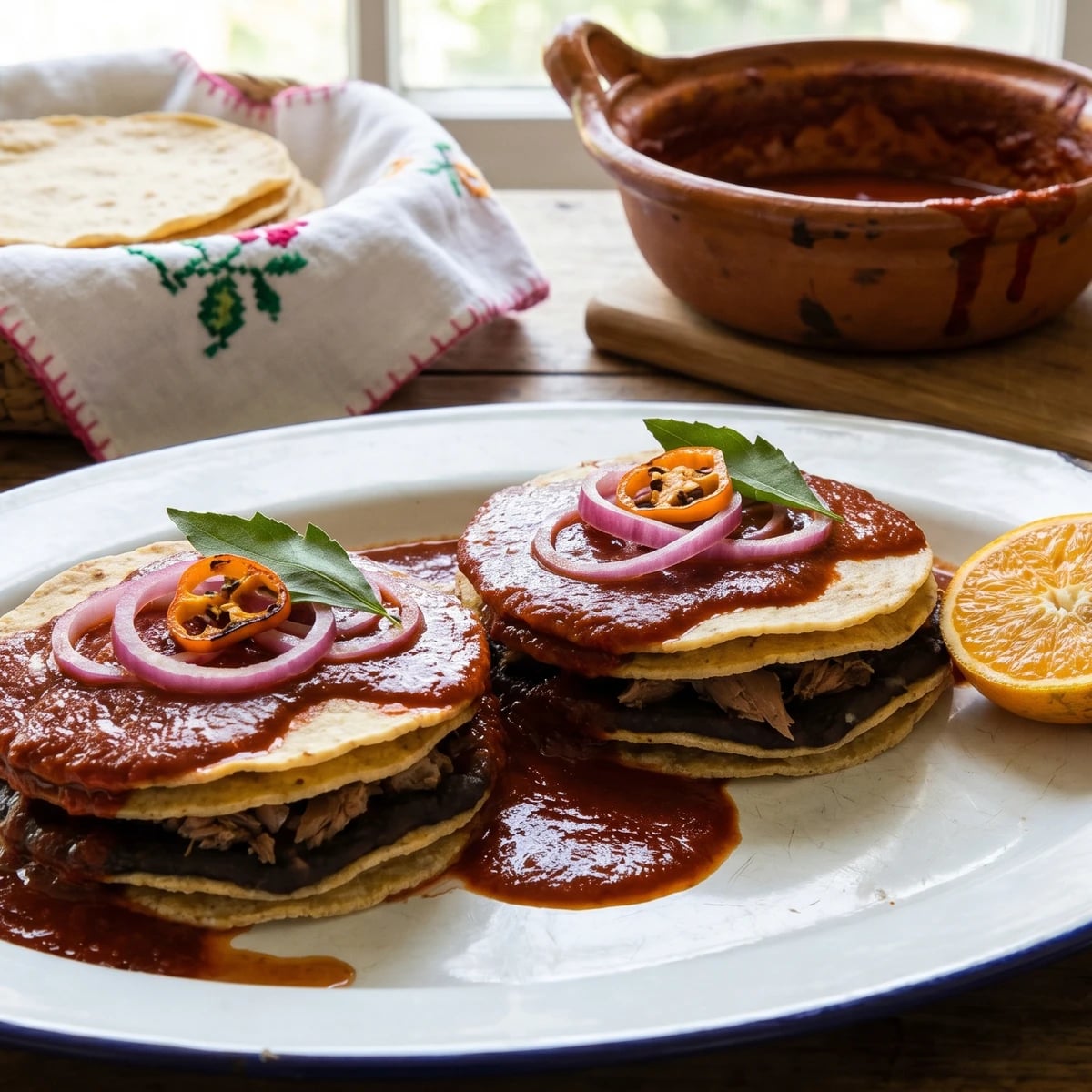
Campeche's three-layer stack of soft corn tortillas, stewed cazón, and strained black beans, bathed in charred-tomato chiltomate and finished with epazote. The peninsula's lasagna, declared cultural heritage by the state.

Main Dishes
Mexican
Special Occasion
Comfort Food
Dinner Party
45 min
Active Time
1 hr 15 min cook2 hr total
Yield4 to 6 servings

This is from Campeche. Not Yucatán, not Quintana Roo, Campeche. The state on the Gulf side of the peninsula, the one with the walled colonial port, the one that catches the cazón. The other peninsular states have their own great dishes. This one belongs to Campeche and the campechanos will tell you so before you sit down.

Pan de cazón is built in layers, three tortillas high, frijol colado and shredded cazón between them, the whole stack bathed in chiltomate so hot and red it stains the top tortilla. People call it the lasagna of the peninsula. The comparison is useful for someone who has never seen it. It is also misleading. This dish is older than the comparison suggests. The technique is Mayan: layered tortillas, fish from the Gulf, charred tomato sauce, the habanero, the epazote. Spanish influence shows up at the edges, in the lard, in the pickled onion. The bones are pre-Hispanic.

The cazón is small dogfish. A young shark. Mild, firm, the flesh flakes into pieces the size of a thumbnail. If you cannot find cazón, fresh cod will get you close, skipjack closer. What you cannot do is substitute the chiltomate. The charred tomatoes, the habanero, the epazote, these are the dish. Skip the tatemado and you have made fish in tomato sauce. That is not pan de cazón. Cada estado, su propia cocina, and Campeche guards this one carefully.

My notebook from the trip to Campeche has a page from a señora at the Mercado Pedro Sainz de Baranda. She told me to char the tomatoes until they were ugly. Those were her words. Until they look like you ruined them. Then you have chiltomate. Saber cocinar es saber vivir.

Pan de cazón originates in the colonial port of San Francisco de Campeche and draws on a pre-Hispanic Mayan layered-tortilla technique that also appears in dishes like papadzules and brazo de reina, in which the tortilla functions as both wrapper and structural element rather than as a side. Cazón itself, the meat of young dogfish, was a staple of Gulf coast Mayan fishing communities long before the conquest, valued for its mild flavor and the ease of flaking the cooked flesh. The dish was formally declared part of the Cultural Heritage of the State of Campeche in 2014, a designation aimed at protecting it from the homogenizing pressure of national 'Mexican food' marketing and from the substitution of cazón with other fish in commercial kitchens.

The technique, the tradition, and the story behind every dish.

Discover Culinary Explorer

Ingredients

cazón (small dogfish)

Quantity

1 1/2 pounds

or substitute fresh cod or skipjack

white onion

Quantity

1 medium

half quartered, half finely chopped

garlic cloves

Quantity

4

2 whole, 2 finely chopped

fresh epazote

Quantity

2 sprigs, plus 4 more for the sauce

bay leaf

Quantity

1

kosher salt

Quantity

1 teaspoon, plus more to taste

manteca de cerdo (pork lard)

Quantity

2 tablespoons

ripe tomatoes

Quantity

2 medium (about 1 pound)

preferably saladette

fresh chile habanero

Quantity

1

whole

cooked black beans (frijoles negros)

Quantity

1 1/2 cups

with about 1 cup cooking liquid

epazote sprig for the beans

Quantity

1 small

freshly made corn tortillas

Quantity

12

small, 4 to 5 inches across

vegetable oil or additional lard

Quantity

for softening the tortillas

pickled red onion (optional)

Quantity

for serving

charred chile habanero (optional)

Quantity

for serving

sliced

fresh epazote leaves (optional)

Quantity

for garnish

Equipment Needed

  • Heavy cast iron comal or skillet for tatemar (charring)
  • High-powered blender
  • Fine-mesh sieve for the frijol colado
  • Heavy 4-quart saucepan
  • Tortilla press, if making fresh tortillas

Instructions

  1. 1

    Poach the cazón

    Place the cazón in a pot with the quartered onion, the two whole garlic cloves, two sprigs of epazote, the bay leaf, the salt, and enough cold water to cover by an inch. Bring to a gentle simmer over medium heat. Cook for 12 to 15 minutes, until the fish flakes easily. Lift the fish out with a slotted spoon and let it cool on a plate. Reserve a cup of the poaching liquid. Cold water draws the flavor out of the fish into the broth without making the flesh rubbery. A rolling boil makes cazón tough and chalky.

    Cazón has a faint ammonia smell when very fresh. That is normal. Soak the fish in salted water for 20 minutes before poaching and the smell calms down. Old cazón smells aggressively of ammonia and cannot be saved. Buy from a fishmonger who knows the difference.
  2. 2

    Flake and stew the fish

    Once the cazón is cool enough to handle, flake it with your fingers, pulling out any small bones or skin. In a heavy skillet, melt one tablespoon of lard over medium heat. Add the chopped onion and chopped garlic. Cook until the onion turns translucent, about four minutes. Add the flaked cazón and stir gently. Add a few tablespoons of the reserved poaching liquid, just enough to keep the mixture moist. Taste for salt. The fish should taste seasoned but not aggressive. Set aside.

  3. 3

    Char the tomatoes and habanero for chiltomate

    Heat a dry comal or heavy skillet over high. Place the whole tomatoes and the whole habanero directly on the hot surface. Turn them with tongs every couple of minutes until the skins blister and blacken in spots and the flesh begins to collapse, about eight to ten minutes total. The habanero will char faster, pull it off when the skin is mottled black. This is the Yucatecan tatemado technique. It is not optional. Raw tomatoes give you tomato sauce. Charred tomatoes give you chiltomate.

  4. 4

    Build the chiltomate sauce

    Transfer the charred tomatoes to a blender, skins and all. The charred skin is part of the flavor. Reserve the habanero on the side. Blend the tomatoes until smooth. In the same skillet, melt the remaining tablespoon of lard over medium heat. Pour in the tomato puree. It will sputter. Cook for eight to ten minutes, stirring often, until the sauce darkens to a deep brick red and the fat starts to separate at the edges. Add the four sprigs of epazote and the whole charred habanero (do not break it). Simmer five more minutes. Season with salt. Fish out the habanero and the epazote stems before assembling. The habanero perfumes the sauce, it does not pulverize into it. Crush it only if the table wants real heat.

    Chiltomate is the foundational sauce of Campeche and the Yucatán peninsula. Make a double batch. It keeps refrigerated for a week and freezes well, and you will reach for it more than you expect.
  5. 5

    Make the frijol colado

    Warm the cooked black beans with their liquid and the small sprig of epazote in a saucepan over medium heat. Once hot, transfer to a blender and puree until completely smooth. Pass the puree through a fine-mesh sieve back into the saucepan, pressing on the solids. This is what colado means: strained. The result should be the consistency of pancake batter, smooth enough to pour and coat a tortilla but thick enough to hold its place. If it is too thick, loosen with a splash of warm water. If it is too thin, reduce over low heat until it bodies up. Taste for salt. Keep warm.

  6. 6

    Soften the tortillas

    Heat a thin film of oil or lard in a small skillet over medium heat. Pass each tortilla quickly through the hot fat, just three or four seconds per side, until soft and pliable. Do not let them crisp. They should bend, not snap. Drain on paper towels. This light fry seals the tortilla so it holds up to the bean puree and the sauce without falling apart in the layering.

  7. 7

    Assemble the pan de cazón

    Pan de cazón is built like a Mayan lasagna, one serving at a time, on the plate it will be eaten from. For each portion: place one softened tortilla on a warm plate. Spread two tablespoons of frijol colado across it. Top with a generous spoonful of the cazón mixture. Place a second tortilla on top, press lightly. Repeat: bean puree, cazón. Finish with a third tortilla. The stack should be three tortillas high with two layers of bean and fish between them. This is how they serve it in Campeche. Two stacks per plate for a generous portion.

    Some cooks in the port of Campeche build a single tall stack of five or six tortillas for a single eater. Some build the assembly cazuela-style for a family. Both are correct. The home version, two stacks per plate, is what my notes from the Mercado Pedro Sainz de Baranda describe.
  8. 8

    Bathe in chiltomate and serve

    Ladle the hot chiltomate generously over each stack, enough that it pools around the base and stains the top tortilla deep red. Top with a few rings of pickled red onion, a couple of slices of the charred habanero for the brave, and a few leaves of fresh epazote. Serve immediately. The dish is meant to be eaten the moment it is plated, while the sauce is hot and the tortillas have just started to drink it in. Recetas probadas y garantizadas.

Chef Tips

  • The tortillas must be small and fresh. Five inches across is the size in Campeche. If you can only find large tortillas, cut them down with a bowl and a knife. Day-old supermarket tortillas will not soften correctly and the dish will fight you at every layer. If your only option is a stiff package, buy nixtamal masa and press them yourself. It is one more hour of work and it is the difference between a good pan de cazón and a great one.
  • Cazón is not always easy to find outside Mexico. Fresh cod, hake, or skipjack tuna are honest substitutions and the campechano fishmongers I have talked to do not object to cod as a stand-in. What they object to is canned tuna. Do not do that. The texture is wrong and the flavor is wrong.
  • The habanero in the chiltomate is for perfume, not for heat. Leave it whole, let it steep, fish it out. If your guests want real heat, char a second one and slice it on top. Mexican cooks have always known how to scale chile to the table, not to the recipe.

Advance Preparation

  • The frijol colado and the chiltomate can both be made one day ahead and refrigerated separately. Reheat each gently before assembly. The flavors deepen overnight and the colado tightens slightly, so you may need a splash of water to loosen it.
  • The cazón can be poached and flaked up to four hours ahead, refrigerated covered. Reheat in its own moisture in a covered skillet just before serving.
  • Do not assemble the dish in advance. Pan de cazón is plated to order. Hold all three components warm and build the stacks just before they go to the table.

Frequently Asked Questions

Nutrition Information

1 serving (about 360g)

Calories
475 calories
Total Fat
16 g
Saturated Fat
3 g
Trans Fat
0 g
Unsaturated Fat
12 g
Cholesterol
65 mg
Sodium
380 mg
Total Carbohydrates
45 g
Dietary Fiber
8 g
Sugars
4 g
Protein
38 g

Note: Chef personas and recipes are created with AI assistance. Cook with care: follow safe food-handling practices, check doneness with a thermometer when needed, and adapt for allergies and your kitchen.

Where cooking meets culture.

Culinary guides, cultural storytelling, and the editorial depth that makes cooking meaningful.

Discover Culinary Explorer

More from Yucatecan Main Dishes

Browse the full collection