Chef Lupita
Acúmara Tatemada al Comal
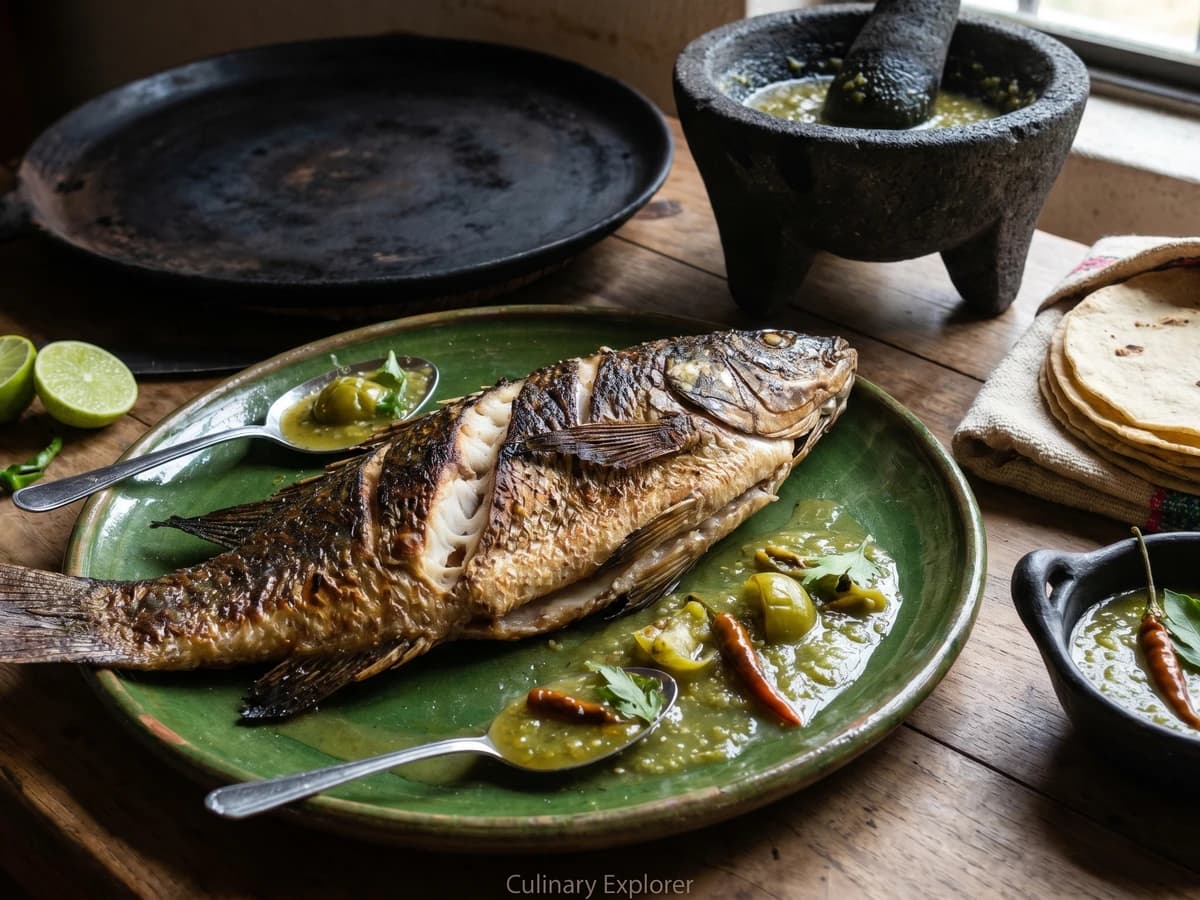
Michoacán's Lake Pátzcuaro acúmara, a whole kurucha from the lago tatemada on a comal de leña and served with chile perón atápakua, corn tortillas, and P'urhépecha discipline.
A cooking platform built around craft, culture, and the stories behind what we eat.
Created by
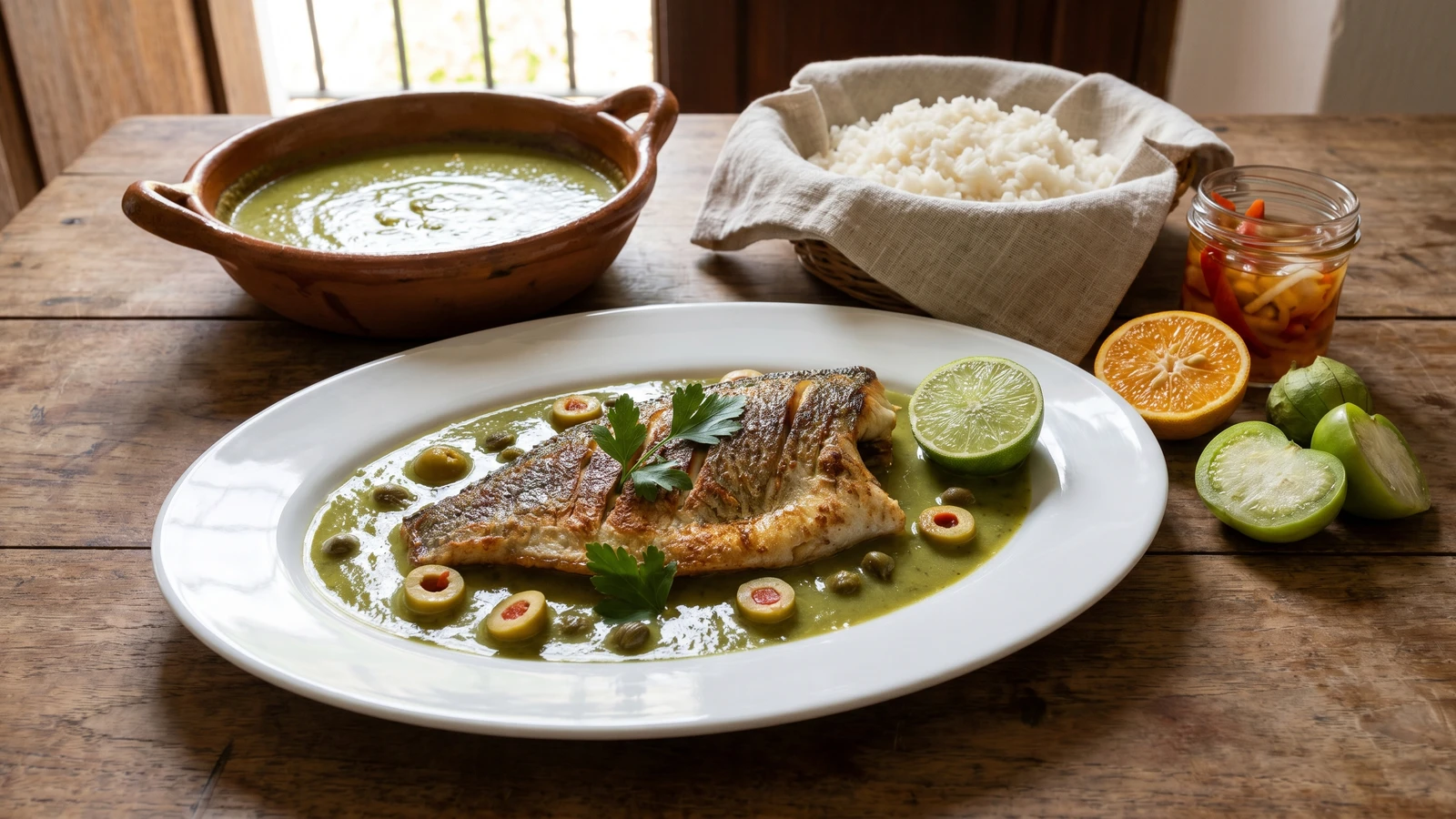
Campeche's Gulf pámpano simmered in a vivid green sauce of tomatillo, cilantro, parsley, and chile serrano, finished with capers and pimiento-stuffed olives. A coastal dish that wears its Spanish bones openly.
This is from Campeche. Not Yucatán, not Veracruz, Campeche. The smallest of the three peninsular states and the one whose cooking gets the least attention even though it carries some of the deepest Spanish-Caribbean influence in Mexico. The port of San Francisco de Campeche was a Spanish stronghold for three centuries, and the kitchen still tells you so.
Pámpano is a Gulf fish. Sweet, firm, oily enough to stand up to a sauce but delicate enough to break if you push it. The cocineras of Campeche pair it with a salsa verde that is not the salsa verde you know from central Mexico. There is parsley in it. There are capers and pimiento-stuffed olives in the finish. There is butter alongside the olive oil. These are Spanish hands working with a Mexican fish, and the result is a dish that belongs to neither tradition alone. Cada estado, su propia cocina, and Campeche's cocina speaks with a Mediterranean accent.
The technique is restrained on purpose. You blanch the tomatillos rather than roasting them, because Campeche wants the sauce clean and bright, not smoky. You build a small sofrito with butter and Spanish olive oil. You cook out the flour to give the sauce body. The fish goes in only at the end and barely finishes in the sauce. None of these steps are decorative. Skip the sofrito and the sauce tastes raw. Skip the searing and the skin goes flabby. Skip the white rice and you have missed the point.
My mother never made this dish. Jalisco is landlocked at the kitchen table and her notebook had no pámpano in it. I learned this one in the Mercado Principal in San Francisco de Campeche from a woman named Doña Consuelo who fried the onion in butter in front of me and watched my face when I asked her why butter and not lard. She said, with no patience for the question: porque así se hace, m'ija. La cocina no es decoración, es trabajo.
Campeche's cocina criolla emerged from three centuries as a fortified Spanish port, the principal point of entry for Iberian foodways into the Yucatán Peninsula before the 19th century, and the city's encerramiento behind fortified walls preserved Spanish techniques longer than in many other colonial centers. The use of capers, pimiento-stuffed green olives, parsley, and a butter-and-olive-oil sofrito in pámpano en salsa verde traces directly to Andalusian and Levantine cooking, transplanted to the Gulf and married to local fish and tomatillo. Pámpano (Trachinotus carolinus) was historically so abundant in the Gulf of Campeche that it appeared in 18th-century convent recipe manuscripts of the region; today it is increasingly scarce, and Campechano cooks now often substitute mero or robalo while keeping the name and the method intact.
Quantity
4 fillets (about 6 ounces each)
Quantity
1 tablespoon
Quantity
1 teaspoon, plus more to taste
Quantity
1/2 teaspoon
Quantity
1 pound
husked and rinsed
Quantity
1 cup, packed
Quantity
1/2 cup, packed
Quantity
2 to 3
stemmed
Quantity
3
peeled
Quantity
1/2 small
Quantity
1/4 cup
finely diced
Quantity
3 tablespoons
Quantity
2 tablespoons
Quantity
1
Quantity
1/2 cup
Quantity
2 tablespoons
drained
Quantity
12
halved
Quantity
1 tablespoon
Quantity
for serving
Quantity
for serving
Quantity
for serving
| Ingredient | Quantity |
|---|---|
| pámpano fillets, skin on | 4 fillets (about 6 ounces each) |
| fresh lime juice | 1 tablespoon |
| kosher salt | 1 teaspoon, plus more to taste |
| freshly ground black pepper | 1/2 teaspoon |
| fresh tomatilloshusked and rinsed | 1 pound |
| fresh cilantro leaves and tender stems | 1 cup, packed |
| flat-leaf parsley leaves | 1/2 cup, packed |
| fresh chile serranostemmed | 2 to 3 |
| garlic clovespeeled | 3 |
| white onion (for blender) | 1/2 small |
| white onion (for sofrito)finely diced | 1/4 cup |
| Spanish olive oil | 3 tablespoons |
| unsalted butter | 2 tablespoons |
| bay leaf | 1 |
| fish stock or water | 1/2 cup |
| capersdrained | 2 tablespoons |
| green olives stuffed with pimientohalved | 12 |
| all-purpose flour | 1 tablespoon |
| pickled chile xcatic (optional) | for serving |
| steamed white rice | for serving |
| lime halves | for serving |
Pat the pámpano fillets dry with a clean cloth. Rub each one with the lime juice and season with salt and black pepper on both sides. Let them sit on a plate at room temperature for 15 minutes while you build the sauce. Pámpano is a delicate Gulf fish and the lime sharpens its flavor without cooking it. This is not ceviche. The lime is a seasoning, not a cure.
Bring a small pot of water to a gentle simmer. Drop in the husked tomatillos and cook for 5 to 7 minutes, until they turn from bright green to a duller olive shade and the flesh softens but does not burst. Drain them. Some cocineras in Campeche roast the tomatillos on the comal instead, for a smokier sauce. Blanched is the cleaner, more Spanish version and that is what you want here.
Transfer the drained tomatillos to a blender. Add the cilantro, parsley, chile serrano, garlic, and the half white onion. Blend on high until completely smooth and bright green. Do not strain. The texture from the herbs is part of what makes this salsa Campechana and not a generic salsa verde. Taste it. It should taste alive: tart from the tomatillo, herbaceous from the parsley, sharp from the chile.
Heat 2 tablespoons of the olive oil and 1 tablespoon of the butter in a wide skillet or cazuela over medium heat. Add the diced white onion and the bay leaf. Cook for 4 to 5 minutes, stirring, until the onion turns translucent and soft but takes no color. This sofrito is the Spanish bones of the dish. Campeche was a Spanish port and the cooking shows it. The butter and olive oil together are the giveaway.
Sprinkle the flour over the softened onion and stir for one full minute. The flour must lose its raw smell or the sauce will taste pasty. Pour in the blended green sauce, then the fish stock. Add the capers and the halved olives. Bring to a gentle simmer and cook for 8 to 10 minutes, stirring often. The sauce will tighten and darken slightly from its raw electric green to a deeper sage. That color change tells you the herbs and tomatillos have cooked together. Taste for salt. Pull out the bay leaf.
In a second skillet, heat the remaining tablespoon of olive oil and the remaining tablespoon of butter over medium-high heat. When the butter foams and just begins to brown, lay the fillets skin side down. Sear for 2 to 3 minutes, until the skin is crisp and golden. Flip and cook for another minute. The fillets will not be cooked through and that is correct. They finish in the sauce.
Slide the seared fillets into the simmering green sauce, skin side up so the crust stays out of the liquid. Spoon a little sauce around the edges of each fillet but not over the top. Lower the heat, cover loosely, and cook for 4 to 5 more minutes, until the fish flakes when pressed with the back of a spoon. Do not overcook. Pámpano turns dry and chalky the moment you push it past done.
Lift each fillet onto a warm plate and spoon a generous amount of the green sauce around it, scattering the olives and capers across each plate. Serve with steamed white rice on the side. Always with white rice. Not with tortillas, not with bread. In Campeche this dish goes with rice and a lime half and a small dish of pickled chile xcatic for anyone who wants heat. Recetas probadas y garantizadas. Así se hace y punto.
1 serving (about 270g)
Culinary guides, cultural storytelling, and the editorial depth that makes cooking meaningful.
Discover Culinary ExplorerChef Lupita
Michoacán's Lake Pátzcuaro acúmara, a whole kurucha from the lago tatemada on a comal de leña and served with chile perón atápakua, corn tortillas, and P'urhépecha discipline.

Chef Lupita
Puebla's weekday adobo of pork shoulder braised in a thick guajillo and ancho sauce sharpened with vinegar, cumin, and clove. The deep red of a market spice stall, the dish a poblana cooks without thinking.

Chef Lupita
Loreto's pit-roasted clams, planted hinge-up in beach sand and tatemadas under a fast fire of dried romerillo brush, the resinous Baja desert shrub that gives this dish its smoke.

Chef Lupita
Oaxaca's eighth mole, the silky, almond-and-cinnamon almendrado, served over poached chicken. Mild, sweet, restrained, and a quiet rebuttal to anyone who thinks Mexican food has to be hot to be Mexican.