Chef Makoa
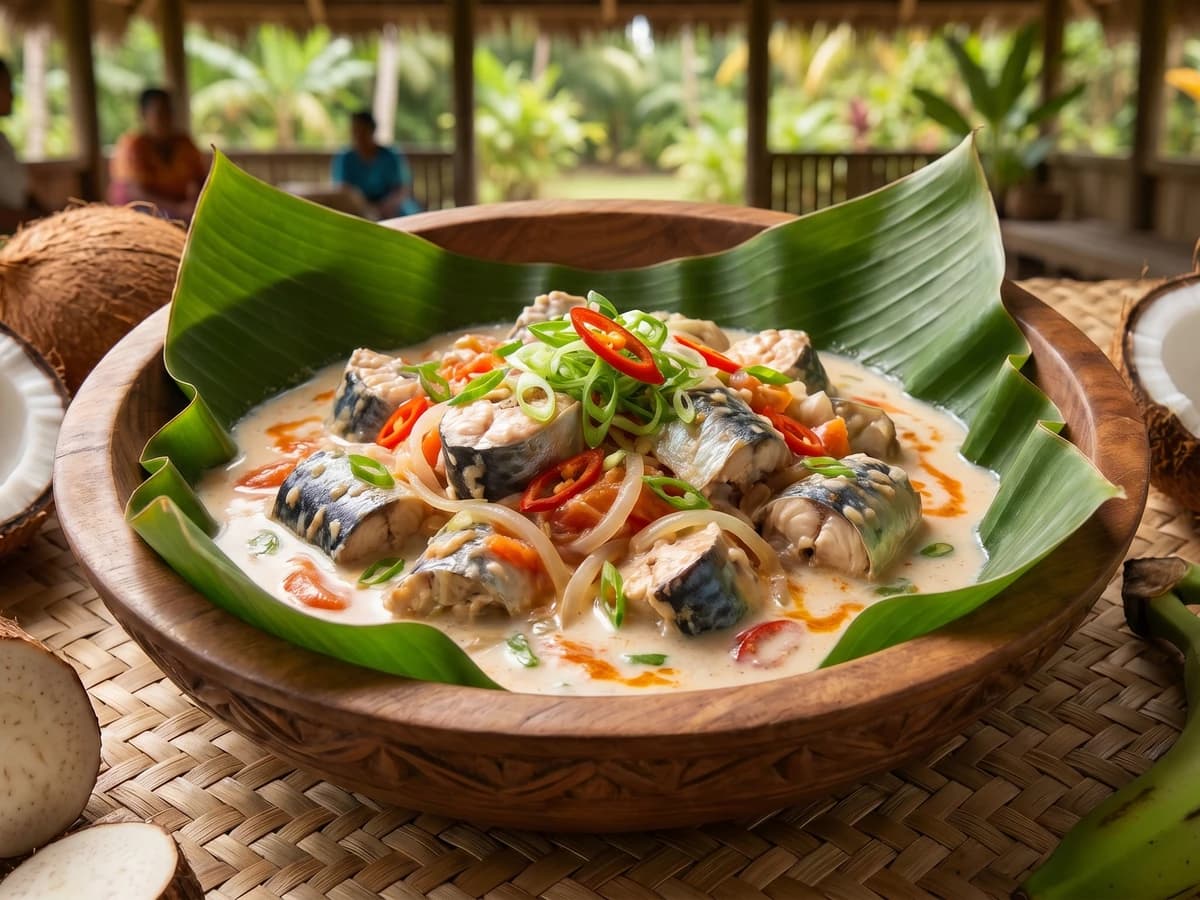
Faiʻai Eleni (Sāmoan Mackerel in Coconut Cream)
Sāmoa's faiʻai eleni turns tinned mackerel, onion, and coconut cream into a quick, generous supper, the pantry fish that feeds the whole ʻaiga beside talo, ʻulu, green banana, or rice.
A cooking platform built around craft, culture, and the stories behind what we eat.
Created by
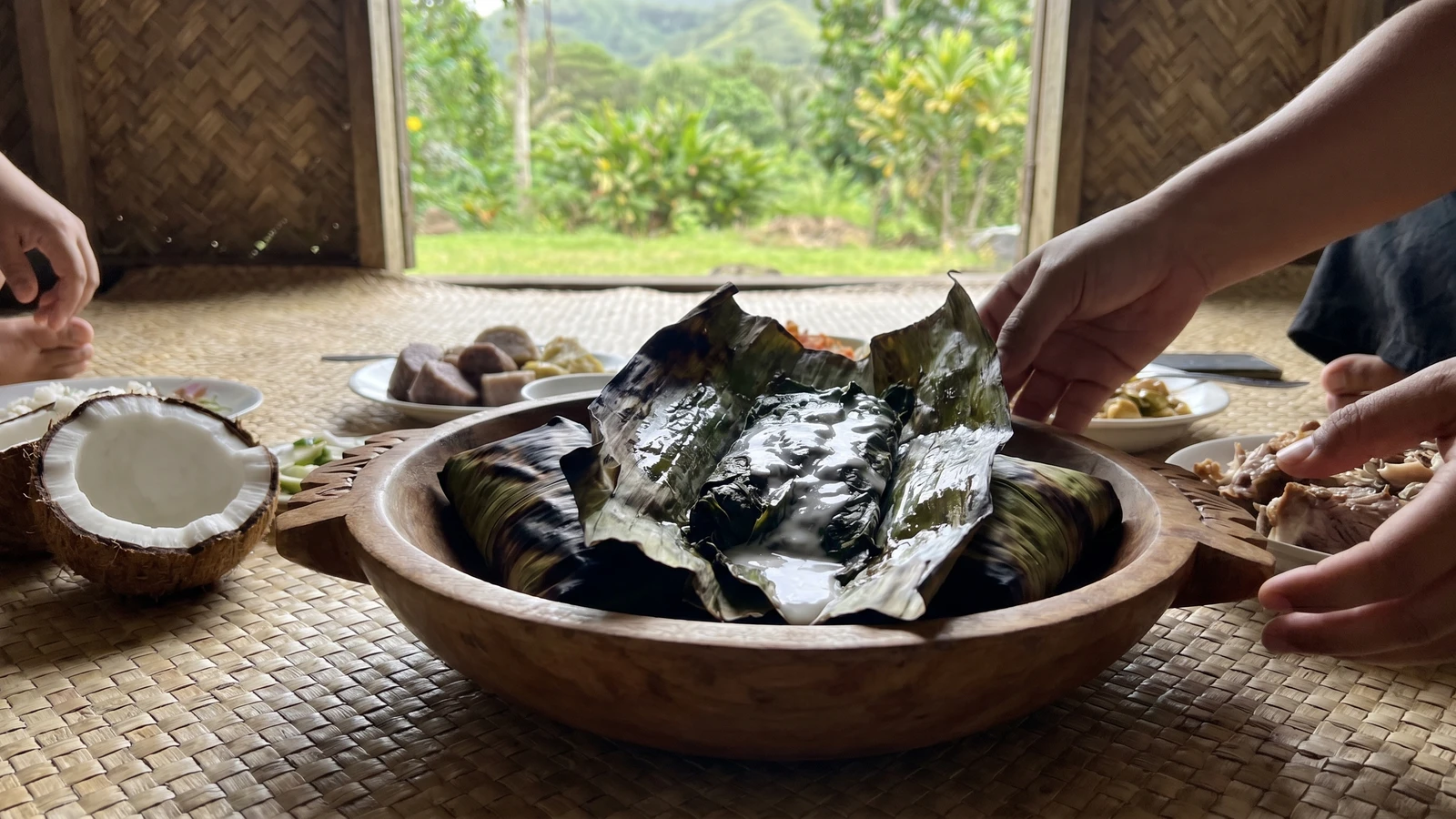
Sāmoa’s Sunday toʻonaʻi parcel: young taro leaves folded around fresh coconut cream and baked until the leaf turns dark, silky, and rich enough to feed the whole aiga.
This is Sāmoa’s dish, and I come to it with my hands open. In my home water of Hawaiʻi we pound kalo and call him Hāloa, elder brother. In Sāmoa, the cousins wrap that same elder kinship in the leaf, lūʻau leaf folded around peʻepeʻe, fresh coconut cream, and set it into the umu, the above-ground hot-stone oven.
Sunday toʻonaʻi, the meal after church, is where palusami sits in its own strength. The whole aiga, the family, eats from one spread. The leaf turns dark and silky, the cream cooks down rich and quiet, and from almost nothing, a leaf, a coconut, a fire, the table gets fed.
This same gesture travels the Triangle by its own names. Tonga has lū, the Cook Islands have rukau, Hawaiʻi has laulau and lūʻau, and each hand does it its own way. One ocean, one canoe, one root, but never one nameless plate.
So squeeze the coconut cream fresh if you can. Build the leaves deep. Cook them until they give all the way. And for the deeper ceremony of Sāmoa, the old rules of the umu and the feast, go sit with a Sāmoan matai or auntie who carries it. They should tell their own story.
Palusami belongs to Sāmoa’s living Sunday foodway, especially the toʻonaʻi, the after-church family meal where dishes from the umu feed the whole aiga. Taro was one of the canoe crops carried by Polynesian voyagers across the Pacific, and the leaf-and-coconut parcel appears across the Triangle as Sāmoan palusami, Tongan lū, Cook Islands rukau, and Hawaiian laulau. Its modern forms, including canned coconut cream and palusami fai pisupo with tinned corned beef, show the food still living in today’s kitchens beside the older fresh-squeezed way.
Quantity
30 to 36
thick stems and ribs removed
Quantity
2 1/2 cups
squeezed from grated mature coconut, or 2 cans thick coconut cream
Quantity
1 small
finely diced
Quantity
1 1/4 teaspoons
plus more to taste
Quantity
1/4 teaspoon
Quantity
6 large
softened, or use parchment and foil
| Ingredient | Quantity |
|---|---|
| young taro leaves (lūʻau leaf)thick stems and ribs removed | 30 to 36 |
| fresh coconut cream (peʻepeʻe)squeezed from grated mature coconut, or 2 cans thick coconut cream | 2 1/2 cups |
| yellow onionfinely diced | 1 small |
| sea saltplus more to taste | 1 1/4 teaspoons |
| freshly ground black pepper (optional) | 1/4 teaspoon |
| banana leaves or breadfruit leavessoftened, or use parchment and foil | 6 large |
Rinse the taro leaves well and cut away the thick stems and heavy ribs so the leaves can fold without tearing. Lūʻau leaf, the taro leaf, has a bite in it when raw, so this dish must cook all the way through until the leaf gives up that scratch and turns soft.
Stir the coconut cream, onion, salt, and pepper together in a bowl. If you squeezed the peʻepeʻe, fresh coconut cream, from grated coconut, you'll see it thick and glossy on the spoon. That's the soul of this dish. A good can will carry you on a weeknight, no shame, but fresh cream has a roundness you feel right away.
Lay four to six taro leaves in your palm or in a small bowl, crossing them so there are no thin spots. Spoon in about 1/3 cup of the seasoned coconut cream. Build the leaves deep, like cupped pages, because the cream needs a strong little house to cook in.
Fold the inner taro leaves over the cream, one side over the other, then wrap each bundle in banana leaf or breadfruit leaf. If you don't have those, wrap first in parchment and then in foil. The old umu, the Sāmoan above-ground hot-stone oven, gives the better flavor, but the home oven can still teach the same patience.
Set the parcels seam-side down in a covered baking dish or Dutch oven. Bake at 350F for 1 hour 15 minutes, until the leaves are deep green-black, soft all the way through, and the coconut cream has cooked into a thick, savory custard. Don't keep opening it. Trust the leaf and the time.
Let the parcels rest 10 minutes so the cream settles back into the leaf. Open them at the table, where the dark silky leaf and white-gold coconut cream can show themselves. Serve with rice, ʻulu, talo, or whatever starch is feeding your people that day. Eat what you have.
1 serving (about 175g)
Culinary guides, cultural storytelling, and the editorial depth that makes cooking meaningful.
Discover Culinary ExplorerChef Makoa
Sāmoa's faiʻai eleni turns tinned mackerel, onion, and coconut cream into a quick, generous supper, the pantry fish that feeds the whole ʻaiga beside talo, ʻulu, green banana, or rice.
Chef Makoa
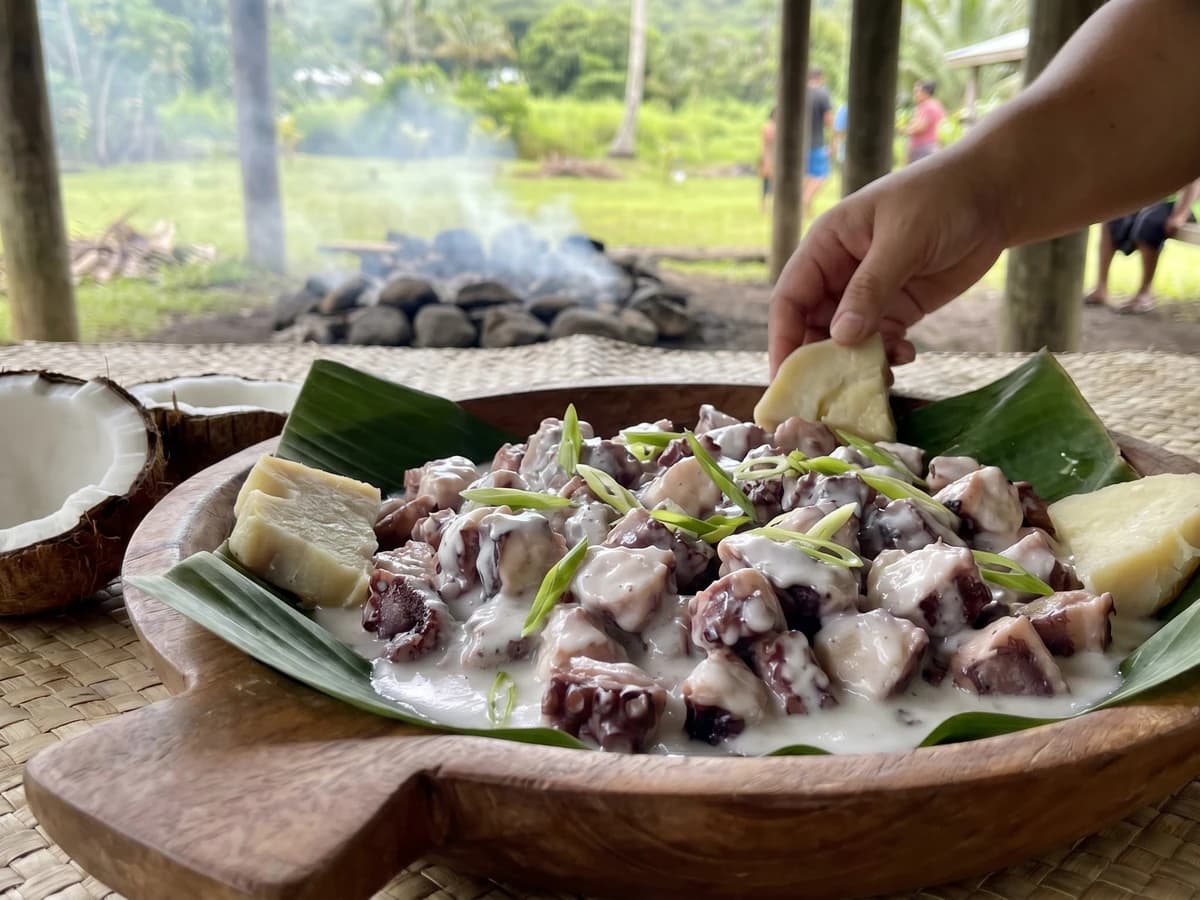
Sāmoa's faiʻai feʻe is reef octopus simmered patient in fresh coconut cream, rich and glossy enough to eat beside talo at toʻonaʻi, with the ocean feeding the whole aiga.
Chef Makoa
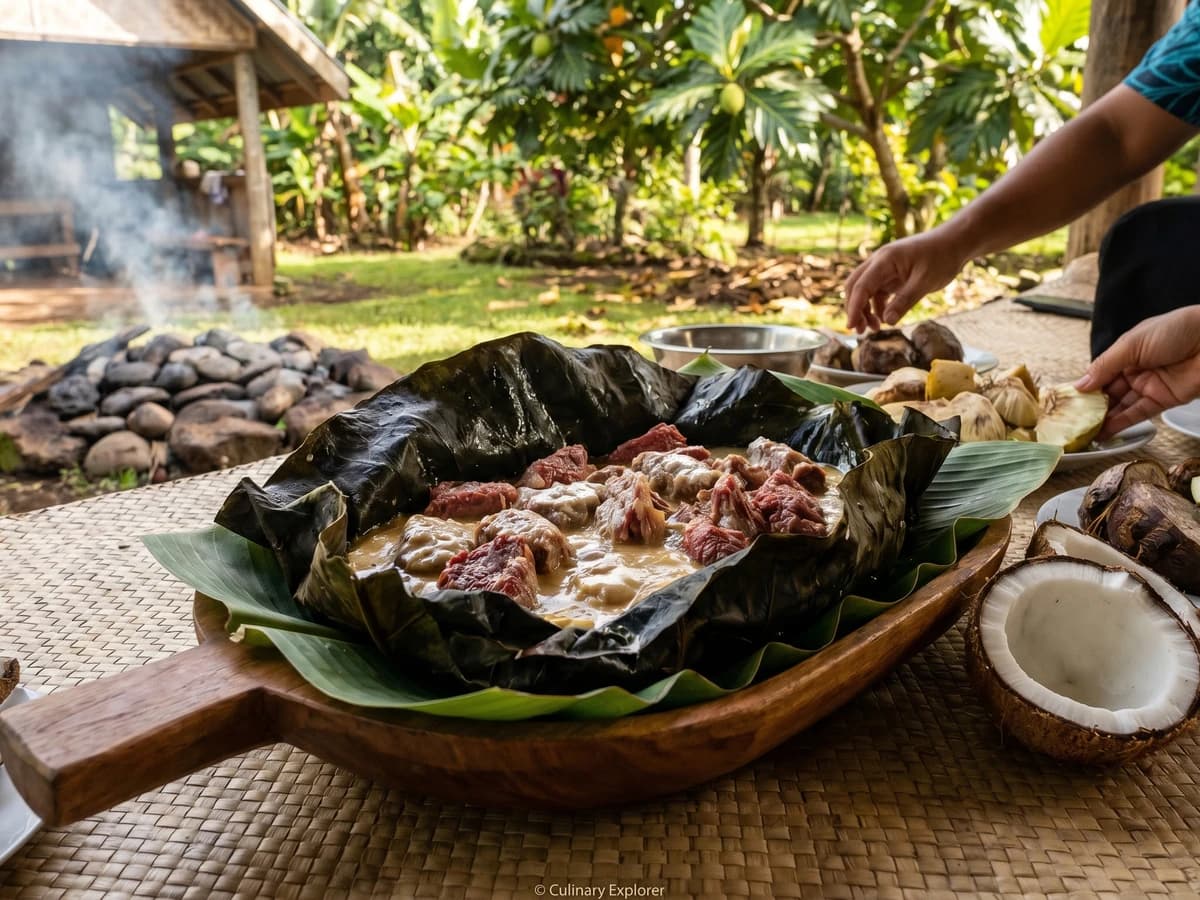
Sāmoa's taro-leaf parcel made generous with pisupo, coconut cream, and time: a toʻonaʻi kind of comfort, with Tonga's lū pulu and Hawaiʻi's laulau sitting close as cousins.
Chef Makoa
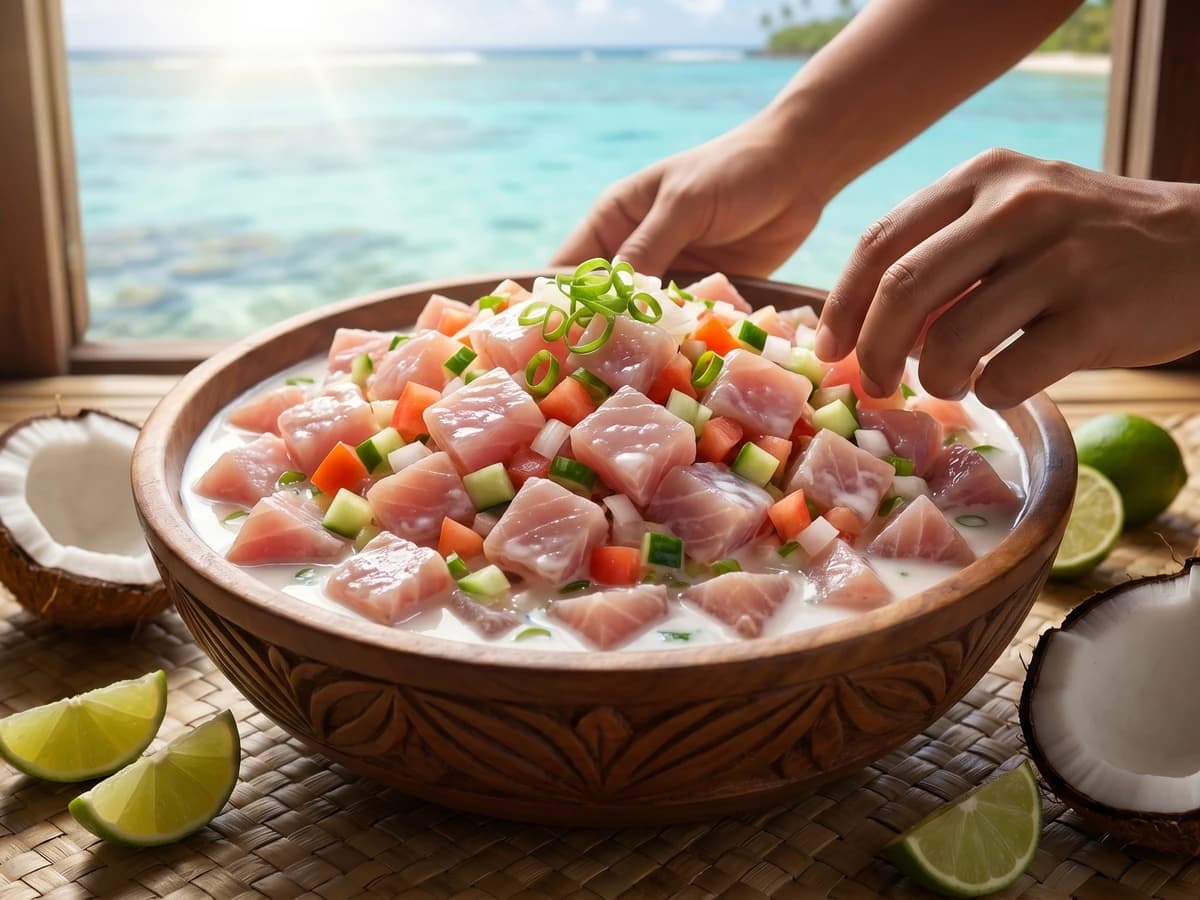
Sāmoa’s oka iʻa bathes fresh fish in citrus and peʻepeʻe, fresh coconut cream, then runs tomato, cucumber, and onion through it cold. Same fish as Tahiti’s ʻia ota, different bowl.