
Chef Makoa
Faraoa ʻIpo (Tahitian Coconut Dumplings)
Soft Tahitian ʻipo, coconut-milk dough rolled by hand and steamed until tender, born from the atoll table of the Tuamotu and carried now to Society Islands kitchens.
A cooking platform built around craft, culture, and the stories behind what we eat.
Created by
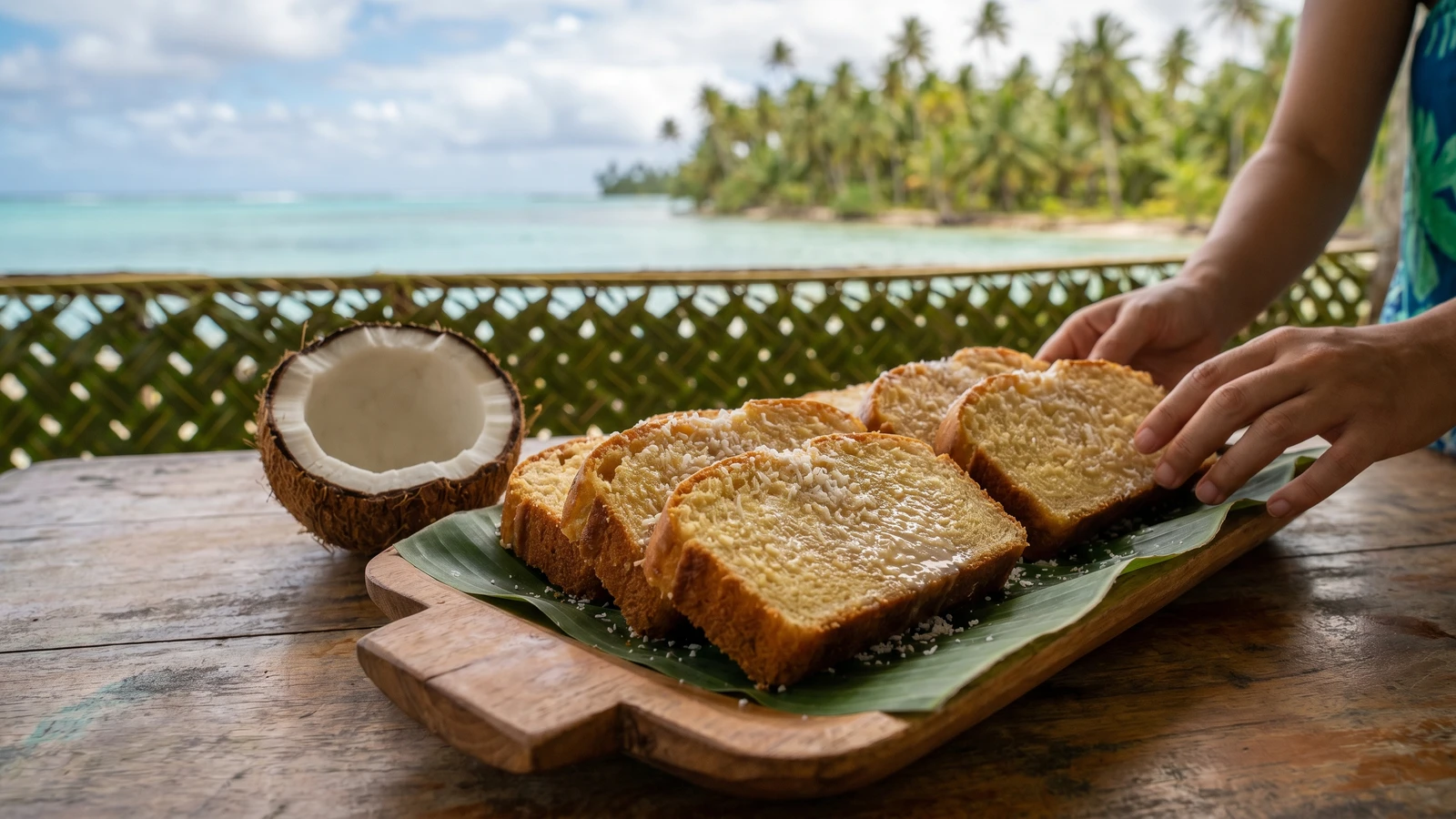
Soft Tahitian pain coco, faraoa haʻari, kneaded with coconut milk and grated coconut until the loaf bakes tender, lightly sweet, and ready for a Sunday table.
The canoe brought the coconut before the wheat ever came. In Tahiti, haʻari, the coconut, stands close to the people and the fenua, the land, feeding the kitchen from shell to cream to oil to grated flesh. Then the French loaf arrived with ships, mission tables, and colonial stores, and the Tahitian hand did what island hands always do: took what came, answered it with what was already home, and made faraoa haʻari, coconut bread.
This is Tahiti's bread, not some plain "Polynesian" loaf. Sāmoa has pani popo, soft buns baked in coconut sauce. Tonga has its own coconut breads and buns on the family table. Hawaiʻi took Portuguese sweet bread and made it part of local life. Same ocean, different bowl, or this time, different loaf. You name the hand so the cousins can stand side by side.
For this one, the why is simple. Coconut milk softens the crumb, grated coconut keeps little sweet threads through the bread, and a slow rise lets the dough loosen instead of fighting you. Don't make it precious. Make it warm, slice it thick, eat it with coffee, fruit, butter, jam, or with nothing at all. Eat what you have. The table knows the difference between care and fuss.
Faraoa means bread in reo Tahiti, and pain coco carries the French name beside the Tahitian one, a plain sign of how wheat bread entered Tahiti through European contact, mission life, and French colonial provisioning in the nineteenth century. Coconut was already an old canoe plant across the Triangle, so the introduced loaf became local when Tahitian cooks enriched it with haʻari, coconut milk and grated coconut. It sits in the post-contact family of island breads, beside Sāmoan pani popo and Hawaiian Portuguese sweet bread, not as deep food like taro or breadfruit, but as living food the islands made their own.
Quantity
3 1/2 cups
plus more for dusting
Quantity
1/2 cup
Quantity
1/3 cup
Quantity
2 1/4 teaspoons
Quantity
1 teaspoon
Quantity
1 cup
warmed until just lukewarm
Quantity
1/4 cup
lukewarm
Quantity
3 tablespoons
melted and cooled
Quantity
1
room temperature
Quantity
1 tablespoon
for brushing
Quantity
1 tablespoon
for brushing
| Ingredient | Quantity |
|---|---|
| all-purpose flourplus more for dusting | 3 1/2 cups |
| unsweetened finely grated coconut | 1/2 cup |
| sugar | 1/3 cup |
| active dry yeast | 2 1/4 teaspoons |
| fine sea salt | 1 teaspoon |
| full-fat coconut milkwarmed until just lukewarm | 1 cup |
| waterlukewarm | 1/4 cup |
| coconut oil or unsalted buttermelted and cooled | 3 tablespoons |
| large eggroom temperature | 1 |
| coconut milkfor brushing | 1 tablespoon |
| sugar (optional)for brushing | 1 tablespoon |
Stir the warm coconut milk, warm water, yeast, and one spoonful of the sugar together in a large bowl. Let it sit 5 to 10 minutes, until the top looks creamy and alive. If nothing happens, no blame the dough. Your yeast is tired, and tired yeast cannot lift a loaf.
Add the flour, grated coconut, remaining sugar, salt, melted coconut oil or butter, and egg. Mix until a soft, shaggy dough forms. It should feel a little tacky from the coconut milk, not dry and stiff. If it is sticking like paste, add flour one tablespoon at a time.
Knead by hand for 8 to 10 minutes, or with a dough hook for 5 to 6 minutes, until the dough smooths out and springs back when pressed. The grated coconut will keep the surface from looking perfectly polished, and that's fine. You want soft and elastic, not tight.
Set the dough in a lightly oiled bowl, cover it, and let it rise in a warm place for 1 1/2 to 2 hours, until doubled and puffy. When you press it with one finger, the mark should slowly fill back in. That's the dough relaxing into itself.
Grease a 9 by 5 inch loaf pan. Turn the dough onto a lightly floured surface, press it gently into a rectangle, roll it up snug, and tuck the ends under. Set it seam-side down in the pan. Keep your hands easy. You are shaping, not wrestling.
Cover the pan and let the loaf rise 35 to 50 minutes, until it domes just over the rim. Stir the tablespoon of coconut milk with the optional sugar and brush it over the top for a gentle shine and light sweetness.
Bake at 350F for 32 to 38 minutes, until the top is deep golden, the sides feel set, and the loaf sounds hollow when tapped. If you use a thermometer, the center should read about 190F. The crust should have a soft coconut sheen, not a hard shell.
Let the bread rest in the pan for 10 minutes, then turn it out and cool at least 30 minutes before slicing. Warm is good. Ripped open too early, the crumb turns gummy. Slice it thick and put it in the middle of the table, because bread like this is happier when hands keep coming back.
1 serving (about 80g)
Culinary guides, cultural storytelling, and the editorial depth that makes cooking meaningful.
Discover Culinary ExplorerChef Makoa
Soft Tahitian ʻipo, coconut-milk dough rolled by hand and steamed until tender, born from the atoll table of the Tuamotu and carried now to Society Islands kitchens.
Chef Makoa
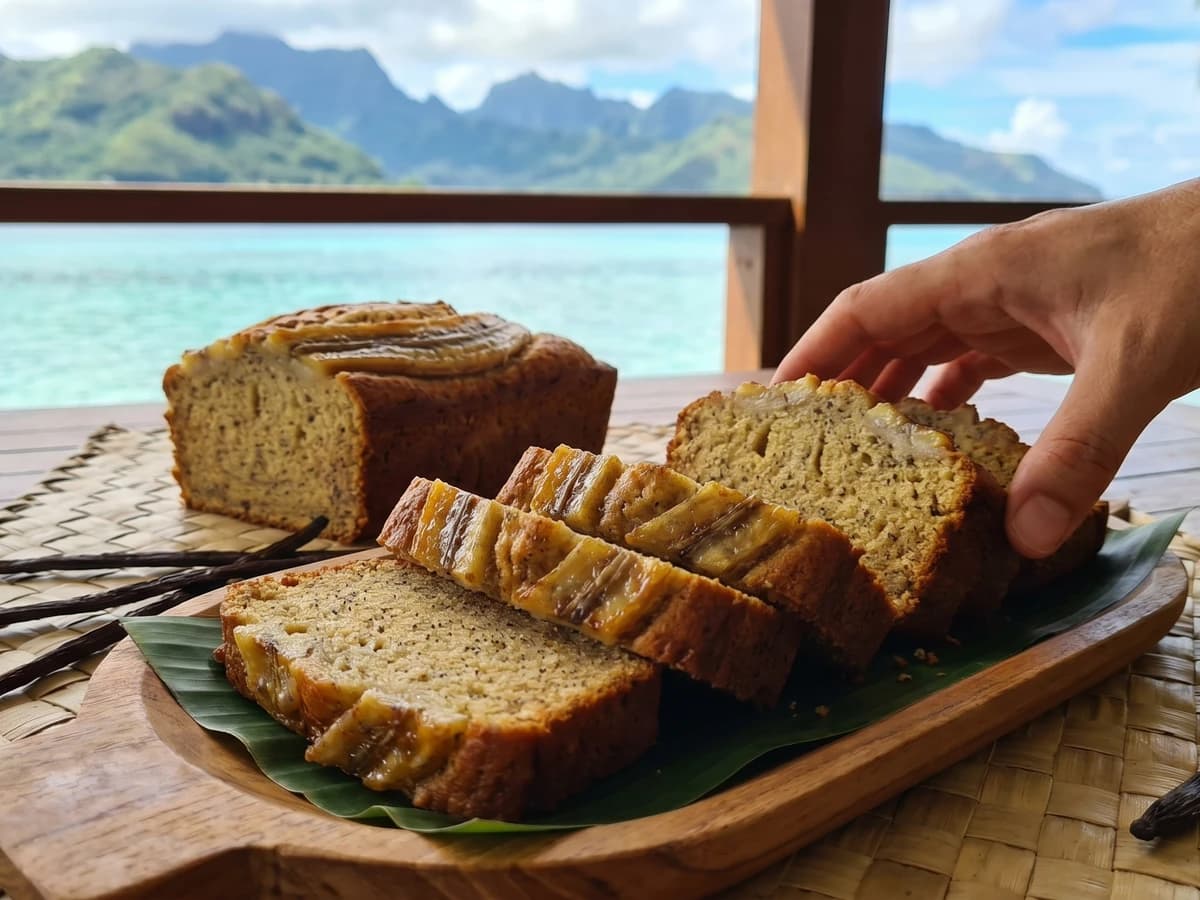
Very ripe Tahitian meiʻa folded into a soft quick-bread loaf with Tahaʻa vanilla, coconut milk, and the easy afternoon spirit of goûter, where an old canoe fruit meets today's kitchen.

Chef Juliette
Pâte à brioche ordinaire teaches enriched dough properly: wake the leaven, build strength before the last egg, then work in pliable butter by stages and let one long fermentation do its quiet work.

Chef Juliette
Ordinary brioche takes one exact measure of butter and a patient rise in the mould, becoming so light and silken that it can cradle fruit without losing its tender crumb.