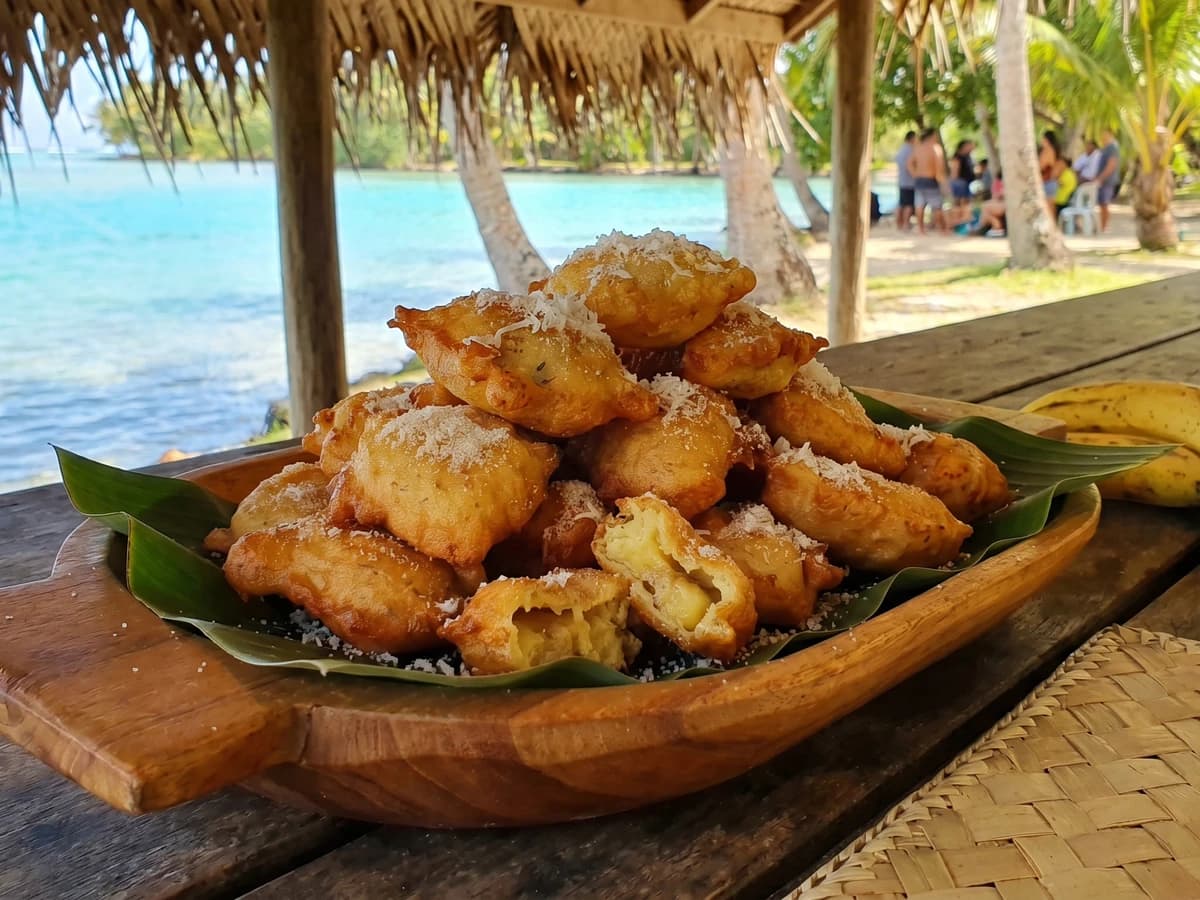
Chef Makoa
Beignets de Banane au Meiʻa (Tahitian Banana Fritters)
Tahiti's warm goûter fritter: ripe meiʻa wrapped in a light batter, fried golden, then rolled in sugar and grated coconut for a sweet afternoon bowl.
A cooking platform built around craft, culture, and the stories behind what we eat.

Created by
Tahiti's firi firi is a figure-8 coconut doughnut, soft with coconut milk, fried golden, and rolled in sugar. The French pantry met the Tahitian table, and breakfast got generous.
Acousin in Tahiti once told me breakfast can carry memory too, even when the flour came later. Firi firi belongs to Tahiti, to the Sunday morning table with coffee, children reaching before the plate lands, and that figure-8 twist sitting there like somebody tied sweetness into a knot.
This isn't deep food like taro, ʻuru, or the ahimaʻa, the Tahitian earth oven. It comes from the later table, when flour, yeast, sugar, and frying moved through the islands with mission, trade, and France. But the coconut milk pulls it back to the fenua, the land, and to the people who knew how to make new pantry goods answer to an old household rhythm.
Across the Triangle, the cousins have their own hands: Sāmoan panikeke are round and homey, Māori parāoa parai is fried bread for feeding plenty, Hawaiʻi's malasadas came through Portuguese plantation families and became local food. Firi firi stays Tahitian. Shape it like a little eight, fry it gentle, roll it in sugar while it still has a warm sheen, and put enough on the table for one more person. That's the law, yeah?
Firi firi is a Tahitian pastry from the post-contact table, shaped by French colonial pantry goods like wheat flour, yeast, and sugar, then rooted locally by coconut milk. It is often eaten for breakfast or Sunday morning coffee in French Polynesia, a different doorway from pre-contact deep foods like taro, breadfruit, and earth-oven cooking. Its cousins across the ocean are modern flour-and-fry foods, Sāmoan panikeke, Māori parāoa parai, and Hawaiʻi's malasadas, each one belonging to its own island history.
Quantity
3 1/2 cups
plus more for dusting
Quantity
2 1/4 teaspoons
1 packet
Quantity
1/3 cup
plus 1/2 cup for rolling
Quantity
1 teaspoon
Quantity
1 cup
warmed to about 100F
Quantity
2
room temperature
Quantity
2 tablespoons
melted and cooled if using butter
Quantity
1 teaspoon
Quantity
1 teaspoon
finely grated
Quantity
for frying
| Ingredient | Quantity |
|---|---|
| all-purpose flourplus more for dusting | 3 1/2 cups |
| active dry yeast1 packet | 2 1/4 teaspoons |
| granulated sugarplus 1/2 cup for rolling | 1/3 cup |
| fine sea salt | 1 teaspoon |
| full-fat coconut milkwarmed to about 100F | 1 cup |
| large eggsroom temperature | 2 |
| unsalted butter or neutral oilmelted and cooled if using butter | 2 tablespoons |
| vanilla extract | 1 teaspoon |
| lime zest or orange zest (optional)finely grated | 1 teaspoon |
| neutral oil | for frying |
Stir the warm coconut milk with a spoonful of the measured sugar and the yeast. Let it sit 5 to 10 minutes, until the top looks creamy and alive. If it stays flat, no blame the dough. Your yeast is tired, so start again before you waste the flour.
In a large bowl, whisk the flour, remaining sugar, and salt. Add the foamy coconut milk, eggs, melted butter or oil, vanilla, and zest if you're using it. Mix until a soft, tacky dough comes together, the kind that clings a little but doesn't pour.
Knead by hand for 8 to 10 minutes, or with a mixer on low for about 5 minutes, until the dough turns smooth, elastic, and a little glossy. Add flour one tablespoon at a time only if it is truly wet. Keep it soft, because a stiff dough fries heavy.
Set the dough in a lightly oiled bowl, cover it, and let it rise in a warm place until doubled, about 1 to 1 1/2 hours. It should look swollen and relaxed, and when you press it with one finger the dent should come back slow.
Turn the dough onto a lightly floured surface and divide it into 16 to 18 pieces. Roll each piece into a rope about 10 inches long, pinch the ends together, then twist once to make the firi firi figure-8 shape. Lay them on parchment and cover loosely.
Let the shaped dough rest 25 to 35 minutes, until puffy and light. If you pick one up and it feels airy instead of dense, it's ready for the oil. Rushing here gives you a tight middle.
Heat 2 inches of oil in a heavy pot to 350F. Fry 2 or 3 firi firi at a time, about 1 1/2 to 2 minutes per side, until deep golden and puffed. Keep the oil steady; too cool and they drink oil, too hot and the outside browns before the inside cooks.
Drain briefly on a rack, then roll the warm doughnuts in sugar while the surface still has that fresh-fried sheen. Eat them the same day, with coffee or tea, and don't count too hard. Food like this gets shy when you make it too precious.
1 serving (about 60g)
Culinary guides, cultural storytelling, and the editorial depth that makes cooking meaningful.
Discover Culinary ExplorerChef Makoa
Tahiti's warm goûter fritter: ripe meiʻa wrapped in a light batter, fried golden, then rolled in sugar and grated coconut for a sweet afternoon bowl.
Chef Makoa
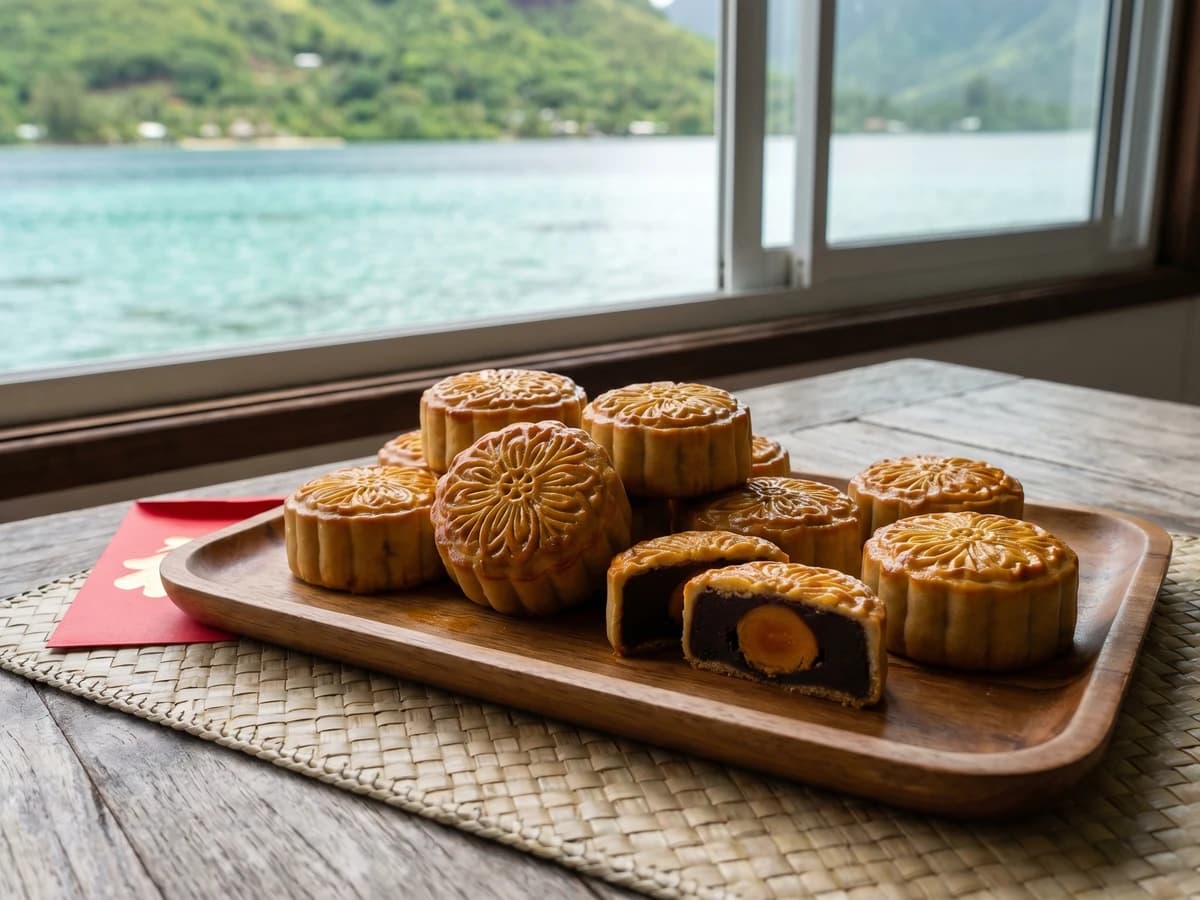
Tahiti's Chinese-Tahitian mooncake, tender pastry wrapped around sweet red-bean paste and a salted yolk, baked golden for the fenua's New Year table.

Chef Juliette
A pale short-paste shell holds silken, lightly sweet carrot purée beneath neat glazed half-discs, their butter syrup catching the light: a classical tart poised between vegetable course and sweet.
Chef Juliette
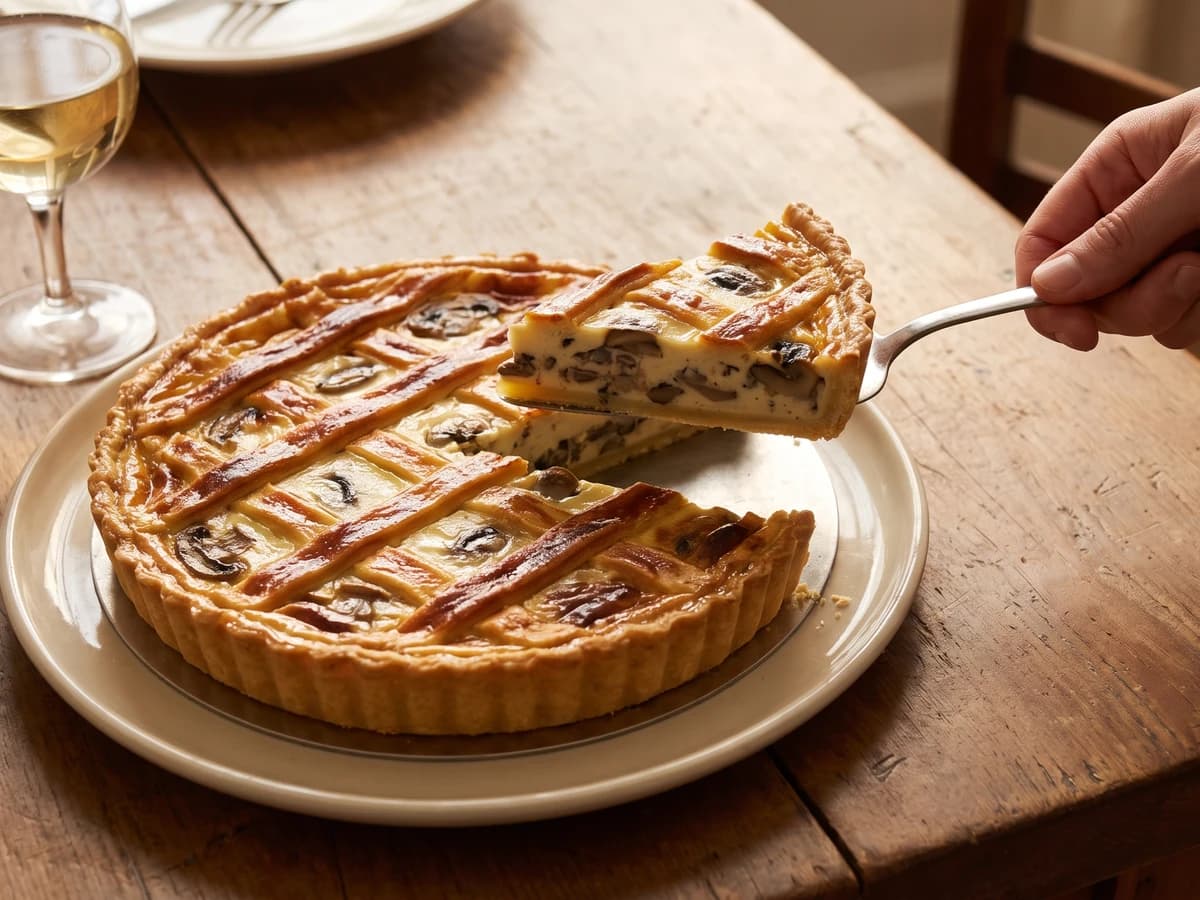
A hot mushroom flan under a butter-gold lattice, with cream reduced close around barely opened caps and a crisp short-paste base protected by one discipline: cool the filling completely.