Chef Makoa
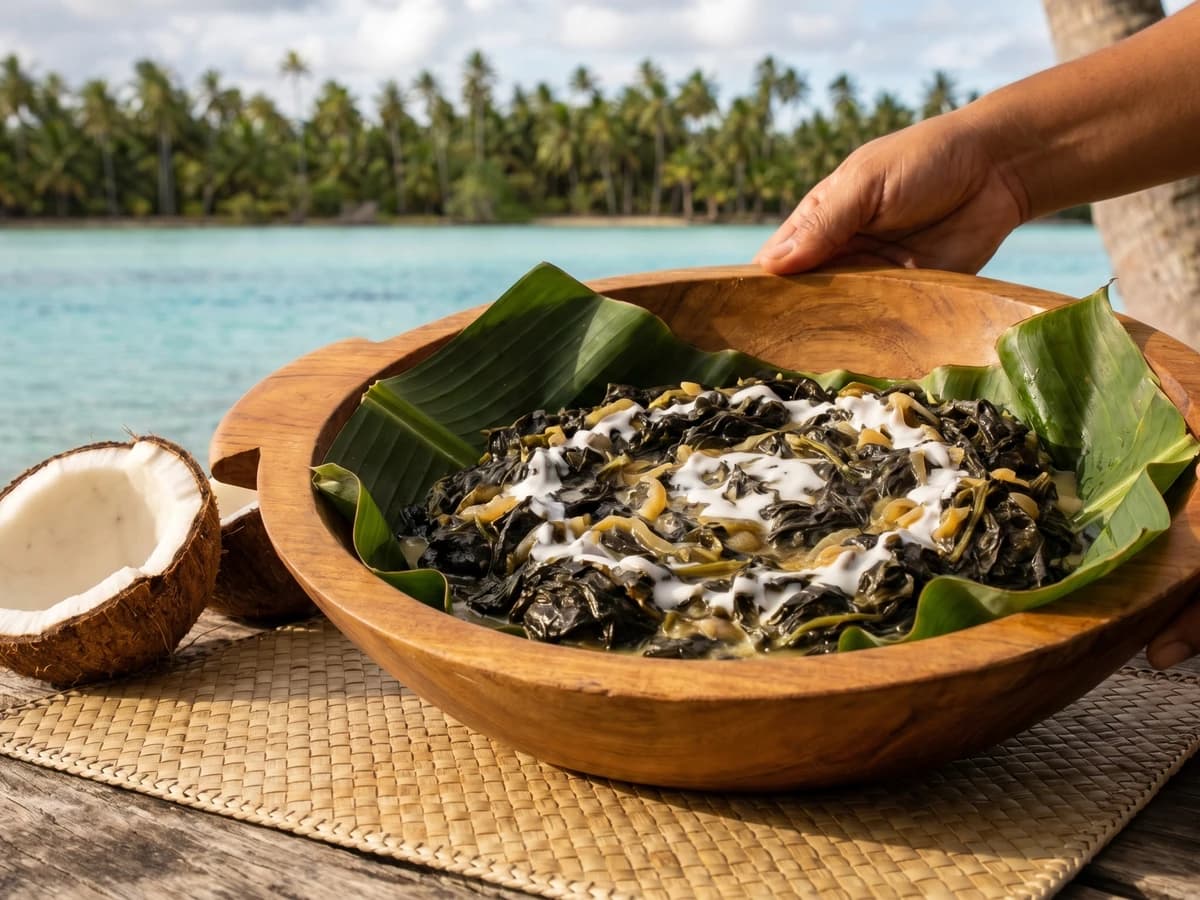
Fāfā (Tahitian Taro Leaves in Coconut Cream)
Tahiti's fāfā cooks young taro leaves down with onion and coconut cream until they turn dark, silky, and rich enough to feed the whole table.
A cooking platform built around craft, culture, and the stories behind what we eat.

Created by
Firm Tahitian ʻuru cut into thick wedges, cooked until tender, then fried crisp and salted while hot. The old canoe crop lands on the table like chips, only deeper.
The canoe carried more than people. It carried ʻuru, breadfruit, into Tahiti and the Society Islands, and the Māʻohi people, Tahiti's Indigenous people, planted it into the fenua, the land, until a tree could feed a whole yard with shade and starch. Sāmoa and Hawaiʻi have ʻulu, Tonga has mei, the Cook Islands have kuru. Same canoe crop, different hands. This plate is Tahitian: frites de ʻuru, thick breadfruit wedges fried crisp and salted hot.
I first learned this one the right way, not from a fancy counter, but from a Tahitian table where somebody put the hot wedges down and said, eat before they soften. That was the whole lesson. The outside should turn golden and crisp under your teeth, the inside should be creamy and starchy, closer to good potato than fruit, with that quiet breadfruit sweetness underneath. Deep food is not fancy. It's not precious. It's food that knows how to feed people.
The par-cook matters. You simmer the ʻuru first so the flesh relaxes all the way through, then you dry it hard before it meets the oil. If you rush straight to frying, the outside runs ahead and the center stays stubborn. No blame the ʻuru. You skipped the patience.
This is old crop in a modern shirt, a French name and a frying pot, and that's real too. Put it beside Tahitian ʻia ota, grilled fish, rice, or whatever is on the table after work. Eat what you have. One ocean, one canoe, one root, but name the hand: this plate belongs to Tahiti.
ʻUru, breadfruit, is one of the old canoe crops of the Tahitian fenua, carried and replanted by Polynesian voyagers and kept as a major starch in the Society Islands beside taro, banana, and yam. In 1769 Joseph Banks wrote about Tahitian breadfruit after HMS Endeavour reached Matavai Bay, and in 1787 Britain sent William Bligh on HMS Bounty to take Tahitian ʻuru to Caribbean plantations as cheap food for enslaved laborers. Frites de ʻuru belongs to the later table: the French word and frying oil sit on top of an older Māʻohi crop, the way modern Tahitian kitchens keep deep food beside baguette, rice, tinned meat, and grilled fish.
Quantity
1 medium (2 1/2 to 3 pounds)
Quantity
as needed
for parboiling
Quantity
1 tablespoon
for the parboil
Quantity
4 cups
enough for 2 inches in the pot
Quantity
1 to 1 1/2 teaspoons
for finishing
Quantity
1
cut into wedges
| Ingredient | Quantity |
|---|---|
| firm mature breadfruit (ʻuru) | 1 medium (2 1/2 to 3 pounds) |
| waterfor parboiling | as needed |
| sea saltfor the parboil | 1 tablespoon |
| neutral oil or refined coconut oilenough for 2 inches in the pot | 4 cups |
| fine sea saltfor finishing | 1 to 1 1/2 teaspoons |
| lime (optional)cut into wedges | 1 |
Pick a mature firm ʻuru, heavy for its size, green to yellow-green, with the skin bumps full and tight. A bead of white sap at the stem is fine. If it smells perfume-sweet and gives under your thumb, that one is ripe already; no force it into fries. Use it for a sweet mash or poʻe ʻuru instead.
Rub a little oil on the knife blade if the sap is sticky. Trim the stem end, cut the ʻuru lengthwise into quarters, and cut away the spongy core. Put the quarters in a pot, cover with water, add the tablespoon of sea salt, and simmer 12 to 18 minutes, until a knife tip enters the flesh with only a little resistance. It should be tender, not falling apart.
Drain the ʻuru and let it cool just enough to handle. Peel away the skin, then cut the flesh into thick wedges, about 1/2 to 3/4 inch wide. Spread the wedges on a towel or rack for at least 10 minutes so the surface dries. That dry surface is what fries crisp.
Pour the oil 2 inches deep into a heavy pot and heat to 350F. Do not fill the pot more than halfway. Breadfruit carries water from the parboil, so pat the wedges dry again before they go in. Water and hot oil no play.
Lower the wedges into the oil in small batches, away from your body, and fry 3 to 5 minutes, turning once or twice, until the edges are crisp and the color runs deep gold. Don't crowd the pot or the oil drops and the ʻuru drinks it. Listen for the bubbling to calm from loud to steady; that's when the surface is set.
Lift the fries with a spider or slotted spoon and drain on a rack or brown paper. Salt them while they're still hot so the salt clings. Break one open: the outside should crack lightly under your teeth, the inside creamy and starchy, with that quiet breadfruit sweetness underneath. Serve with lime if you like, beside ʻia ota, grilled fish, rice, or whatever is feeding the table.
1 serving (about 200g)
Culinary guides, cultural storytelling, and the editorial depth that makes cooking meaningful.
Discover Culinary ExplorerChef Makoa
Tahiti's fāfā cooks young taro leaves down with onion and coconut cream until they turn dark, silky, and rich enough to feed the whole table.

Chef Makoa
Tahiti's fēʻi are orange-fleshed mountain bananas, cooked until tender and served like a starch, warm with sea salt, coconut cream, and the quiet sweetness of the high valleys.

Chef Makoa
Tender slices of Tahitian ʻuru, breadfruit, baked in coconut milk until the edges go gold, with just enough cheese from the French island pantry to brown the top.

Chef Makoa
Ripe Tahitian ʻuru kept sour the old way, kneaded with coconut cream and wrapped in leaf until it sets into a tangy, glossy starch beside fish, pork, or one quiet bowl of rice.