
Chef Jeong-sun
Albaechu-mul-kimchi (Baby Cabbage Water Kimchi)
Tender baby napa cabbage in a clear pear-garlic brine, lightly fermented until the broth turns clean and bright, the summer kimchi a beginner can make without a kimjang floor.
A cooking platform built around craft, culture, and the stories behind what we eat.
Created by
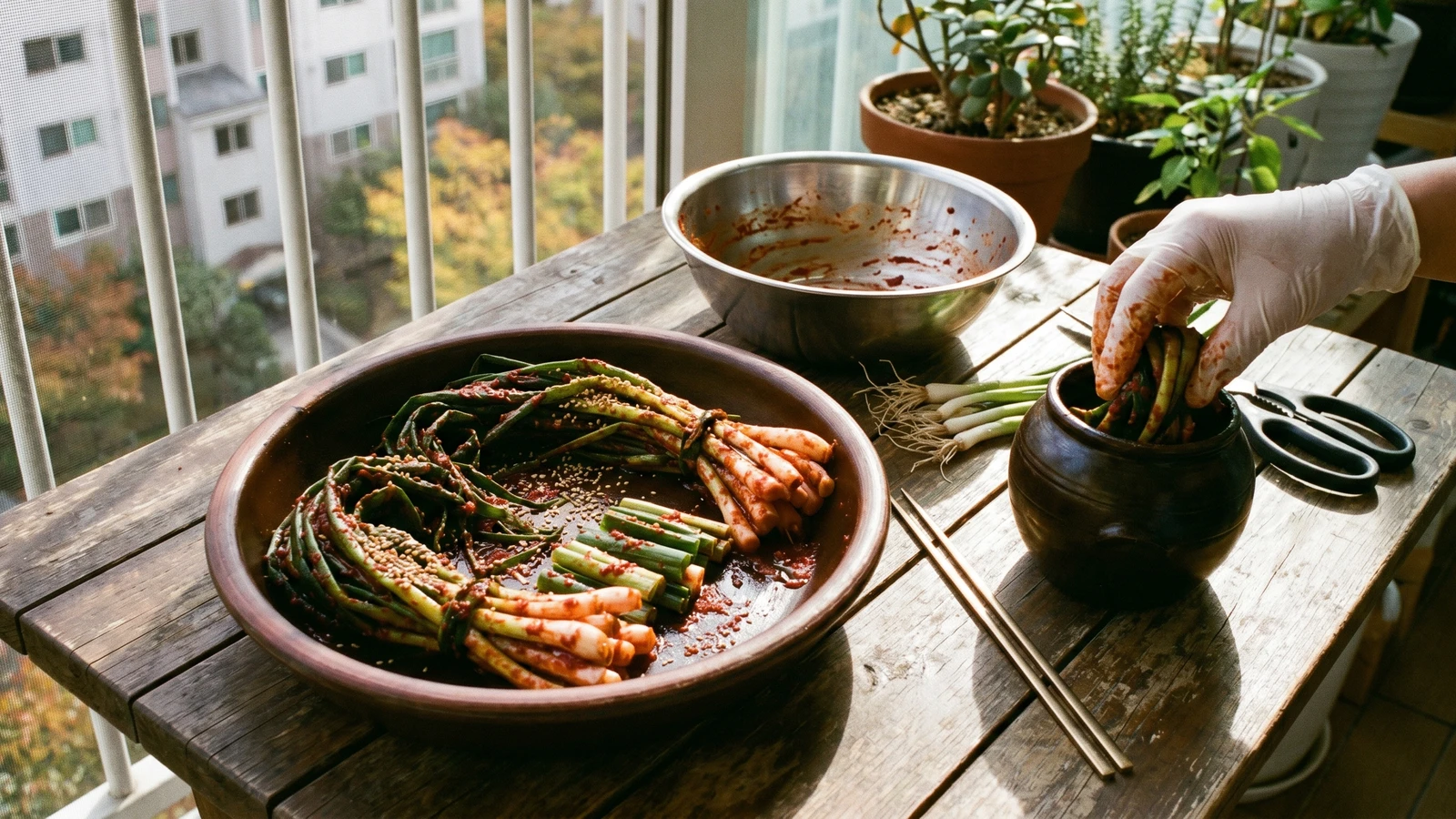
Whole scallions dressed boldly with myeolchi-aekjeot and gochugaru, then fermented until their sharpness softens into the kimchi you want beside rice, pork, or ramyeon.
Pa-kimchi belongs to the market days when the jjokpa are thin, clean, and sweet at the white end. Buy them when the bundles look lively and the bulbs are firm, not swollen and tired. Spring and early autumn give the best scallions, but if the bunch in front of you is good, cook the month you're standing in.
This kimchi lives or dies by restraint with a loud ingredient. Scallions are sharp. Anchovy fish sauce is sharp. Gochugaru has its own voice. If you bury the scallions under garlic and sugar, you get heat and salt with no scallion left. Let it taste like itself. The fish sauce does the seasoning work here, so we don't salt first the way we do for cabbage.
Master Seong-nyeo made me dress the white ends twice before touching the greens. I thought she was being severe. She was being correct. The thick end needs more paste, the leaf needs a lighter hand, and both have to ferment together. Write it down. Memory is a borrowed bowl.
Pa-kimchi is especially associated with Jeolla tables, where generous use of fermented seafood seasonings such as myeolchi-aekjeot gives kimchi a deep, savory force. Unlike baechu-kimchi, it is often made without a separate salt brine because small scallions wilt quickly under fish sauce. It is a seasonal, household kimchi rather than a court dish, valued for how its raw bite mellows after several days of fermentation.
Quantity
900g
roots trimmed, outer skins removed, washed and drained very well
Quantity
1 tablespoon
Quantity
1/2 cup
Quantity
2/3 cup
Quantity
1 cup
medium grind
Quantity
3 tablespoons
minced
Quantity
1 tablespoon
minced
Quantity
2 tablespoons maesil-cheong or 1 tablespoon sugar
Quantity
1 tablespoon
| Ingredient | Quantity |
|---|---|
| jjokpa (Korean small scallions)roots trimmed, outer skins removed, washed and drained very well | 900g |
| sweet rice flour (chapssal-garu) | 1 tablespoon |
| water | 1/2 cup |
| myeolchi-aekjeot (Korean anchovy fish sauce) | 2/3 cup |
| gochugaru (Korean chili flakes)medium grind | 1 cup |
| garlicminced | 3 tablespoons |
| gingerminced | 1 tablespoon |
| maesil-cheong (green plum syrup) or sugar | 2 tablespoons maesil-cheong or 1 tablespoon sugar |
| toasted sesame seeds (optional) | 1 tablespoon |
Trim only the root threads from the jjokpa, leaving the white bulb end whole. Peel away any tough outer skin, wash gently, and drain until the scallions are no longer wet. Water left between the leaves thins the seasoning and makes the kimchi taste flat, so give them at least 20 minutes in a colander.
Whisk the sweet rice flour and water in a small pot. Cook over medium-low heat, stirring, until it turns glossy and lightly thick, about 3 to 5 minutes. Cool it completely. This paste helps the gochugaru cling to the long scallions instead of sliding to the bottom of the jar.
Stir the cooled rice paste with the anchovy fish sauce, gochugaru, garlic, ginger, and maesil-cheong. Let it stand 10 minutes so the chili flakes bloom and soften. Taste a fingertip of the paste. It should be salty, pungent, and a little sweet, stronger than you want the finished kimchi, because the scallions will take it in as they ferment.
Put the scallions in a wide bowl or kimchi basin. Spoon the seasoning mostly over the white bulb ends first, then work it along the greens with gloved hands. Do not crush them. The white ends are thicker and sharper, so they need more attention than the leaves. Fold the long scallions into loose bundles only after they are coated.
Lay the bundles into a clean 1.5 to 2 liter jar or container, curling them gently so the white ends and greens stay together. Scrape every bit of seasoning over the top and press down to remove air pockets. Leave at least 2.5cm of headspace because kimchi rises as it ferments.
Leave the jar at cool room temperature for 12 to 24 hours, with a plate underneath in case it bubbles over. When you see small bubbles at the side and the sharp raw scallion smell begins to round off, move it to the refrigerator. If your kitchen is hot, stop at 12 hours. Heat makes pa-kimchi race.
Refrigerate for 5 to 7 days before serving if you can wait. The first day it bites back. By the end of the week, the fish sauce, chili, and scallion have settled into one clean, bold kimchi. Cut bundles into shorter lengths at the table with scissors, or serve them whole beside rice.
1 serving (about 155g)
Culinary guides, cultural storytelling, and the editorial depth that makes cooking meaningful.
Discover Culinary ExplorerChef Jeong-sun
Tender baby napa cabbage in a clear pear-garlic brine, lightly fermented until the broth turns clean and bright, the summer kimchi a beginner can make without a kimjang floor.

Chef Jeong-sun
The kimchi from before chili, salted napa cabbage packed with radish, pear, jujube, and pine nuts in a clear brine that turns quietly tart in the jar.

Chef Jeong-sun
A pale summer cucumber kimchi, split and stuffed with radish and chives, then held in a cool pear brine so the cucumber stays clean, crunchy, and plainly itself.

Chef Jeong-sun
Flat spring bomdong cabbage, lightly brined and tucked into a clear pear-radish kimchi broth, made without chili and eaten young while the leaves still taste like spring.