
Chef Margarida
Chouriço Assado na Brasa
Chouriço set ablaze with aguardente, cooked by fire until the casing splits and the paprika-rich fat pools in the dish. Tear the bread. Press it into the fat. This is how we've always done it.
A cooking platform built around craft, culture, and the stories behind what we eat.
Created by
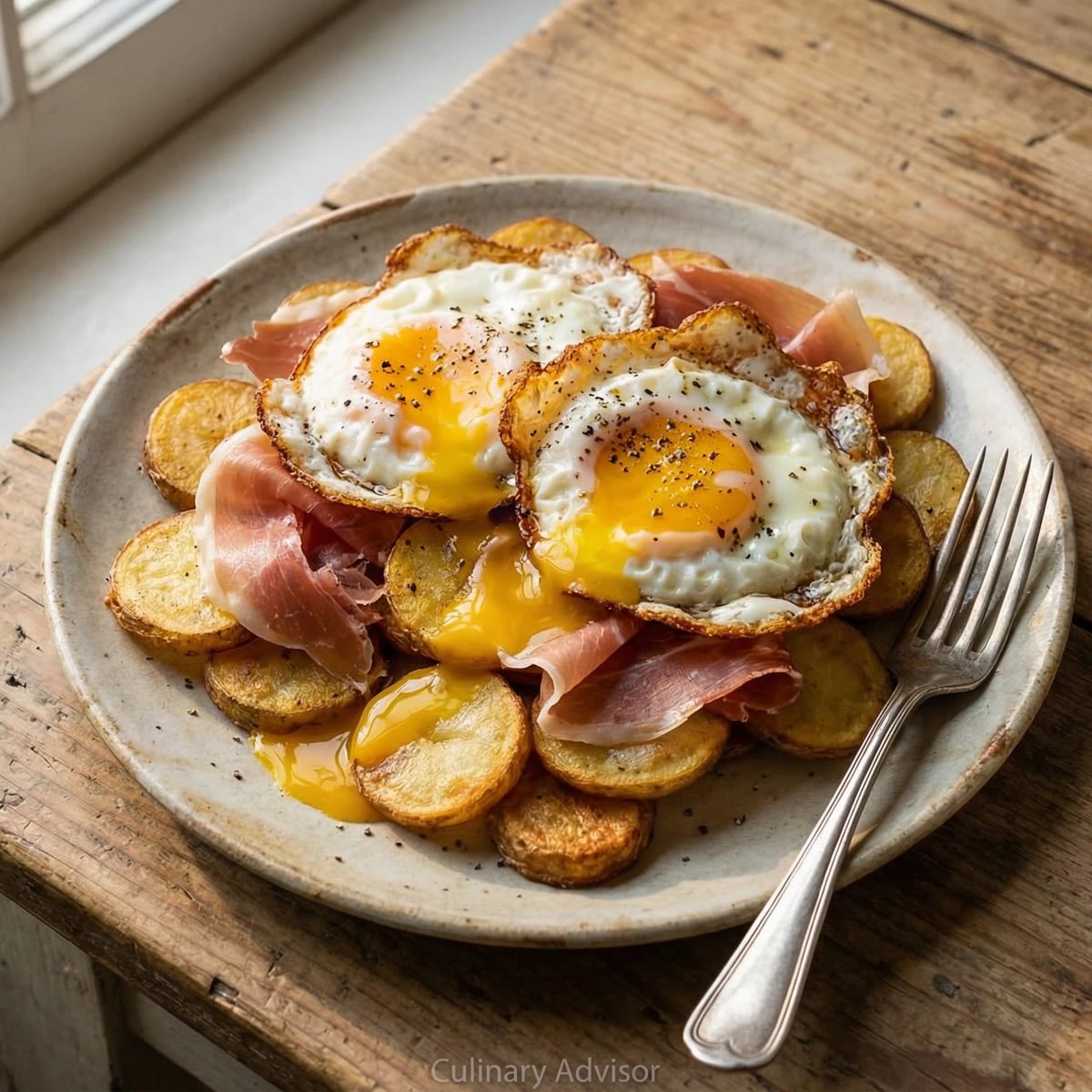
Fried eggs shattered over crispy potatoes, the runny yolks becoming a golden sauce that coats everything. This is what frugality looks like when it becomes genius.
Some dishes exist because chefs dreamed them up. Others exist because someone was hungry and opened the cupboard to find potatoes, eggs, and a bottle of good azeite. Ovos rotos is the second kind. Broken eggs. That's the whole name. That's the whole philosophy.
I learned this dish not from Avó Leonor but from my own desperation. I was twenty-two, home late from a shift, nothing in the kitchen but potatoes starting to sprout eyes and a few eggs. I fried the potatoes until they crackled, slid eggs on top, and broke the yolks with my fork. That first bite, the crispy potato dragged through golden yolk, the salt, the fat, I understood something. This is what our grandmothers did. They made nothing into everything.
At Mesa da Avó, we serve this at the end of long nights, after the wine is finished and people are too comfortable to leave. It's a dish that doesn't pretend to be more than it is. Potatoes. Eggs. Good olive oil. Maybe some presunto if you have it. The yolk is the sauce. There is no other sauce. There doesn't need to be.
This is budget cooking. This is comfort cooking. This is what you eat standing at the counter at midnight or sitting at the table on a slow Sunday morning. A cozinha é memória, and sometimes the memory is simply being hungry and making do.
Ovos rotos appears across the Iberian Peninsula, with both Portugal and Spain claiming versions. In Portugal, the dish likely emerged from rural necessity, combining the two staples that even the poorest households kept: potatoes and eggs. The addition of presunto elevates it from peasant sustenance to something worth sharing, though the dish remains proudly simple.
Quantity
500g
peeled, sliced into thin rounds or wedges
Quantity
about 1 cup
for frying
Quantity
4 large
Quantity
100g
sliced thin
Quantity
to taste
Quantity
to taste
freshly ground
Quantity
for garnish
chopped
| Ingredient | Quantity |
|---|---|
| waxy potatoespeeled, sliced into thin rounds or wedges | 500g |
| extra virgin olive oil (azeite)for frying | about 1 cup |
| eggs | 4 large |
| presunto or cured hamsliced thin | 100g |
| flaky sea salt | to taste |
| black pepperfreshly ground | to taste |
| flat-leaf parsley (optional)chopped | for garnish |
Peel the potatoes and slice them into thin rounds, about 3mm thick, or cut into small wedges. The shape matters less than the consistency. What matters is that they're thin enough to get properly crispy. Pat them completely dry with a clean towel. Any water left on the surface will splatter when they hit the oil and prevent them from crisping.
Heat the olive oil in a large heavy skillet over medium-high heat until it shimmers. Add the potatoes in a single layer, working in batches if needed. Don't crowd them. Crowded potatoes steam instead of fry, and steamed potatoes have no soul. Fry until golden and crispy on both sides, turning once, about 8 to 10 minutes total. The edges should be deeply golden, the centers tender. Remove to a plate lined with paper, season immediately with salt while they're hot.
If using presunto, lay the slices in the hot oil for just 30 seconds to 1 minute. You want them slightly crispy at the edges but still pliable. Remove and set aside. The presunto will continue to crisp as it cools.
Keep about 3 tablespoons of oil in the pan. Reduce heat to medium. Crack the eggs directly into the oil, giving each one space. The whites should sizzle and bubble immediately, the edges turning lacy and golden. Spoon hot oil over the tops of the whites to help them set, but leave the yolks runny. This takes 2 to 3 minutes. The yolks are the sauce. Protect them.
Mound the crispy potatoes on a warm plate. Lay the fried eggs on top, then drape the presunto around them. Season with black pepper. Now the important part: take your fork and break the yolks. Let the golden liquid run down into the potatoes, coating them, becoming the sauce. Scatter parsley if you like, though Avó Leonor never did. Eat immediately, dragging each forkful of potato through the yolk.
1 serving (about 390g)
Culinary guides, cultural storytelling, and the editorial depth that makes cooking meaningful.
Discover Culinary Explorer
Chef Margarida
Chouriço set ablaze with aguardente, cooked by fire until the casing splits and the paprika-rich fat pools in the dish. Tear the bread. Press it into the fat. This is how we've always done it.

Chef Margarida
Spring peas braised slowly with chouriço and bacon, eggs nestled on top to poach in the aromatic sauce. One pan, no fuss, pure comfort. This is how Portuguese grandmothers have been feeding families for generations.

Chef Margarida
The working-class breakfast that became comfort food, thick with smoky chouriço and golden potato, baked until the eggs set proud and golden. Pack it for the field or slice it at the Sunday table.

Chef Margarida
Blood sausage and pineapple from the Azores, where volcanic soil grows the sweetest fruit and tradition pairs it with the richest morcela. Two bites that belong together.