
Chef Margarida
Chouriço Assado na Brasa
Chouriço set ablaze with aguardente, cooked by fire until the casing splits and the paprika-rich fat pools in the dish. Tear the bread. Press it into the fat. This is how we've always done it.
A cooking platform built around craft, culture, and the stories behind what we eat.
Created by
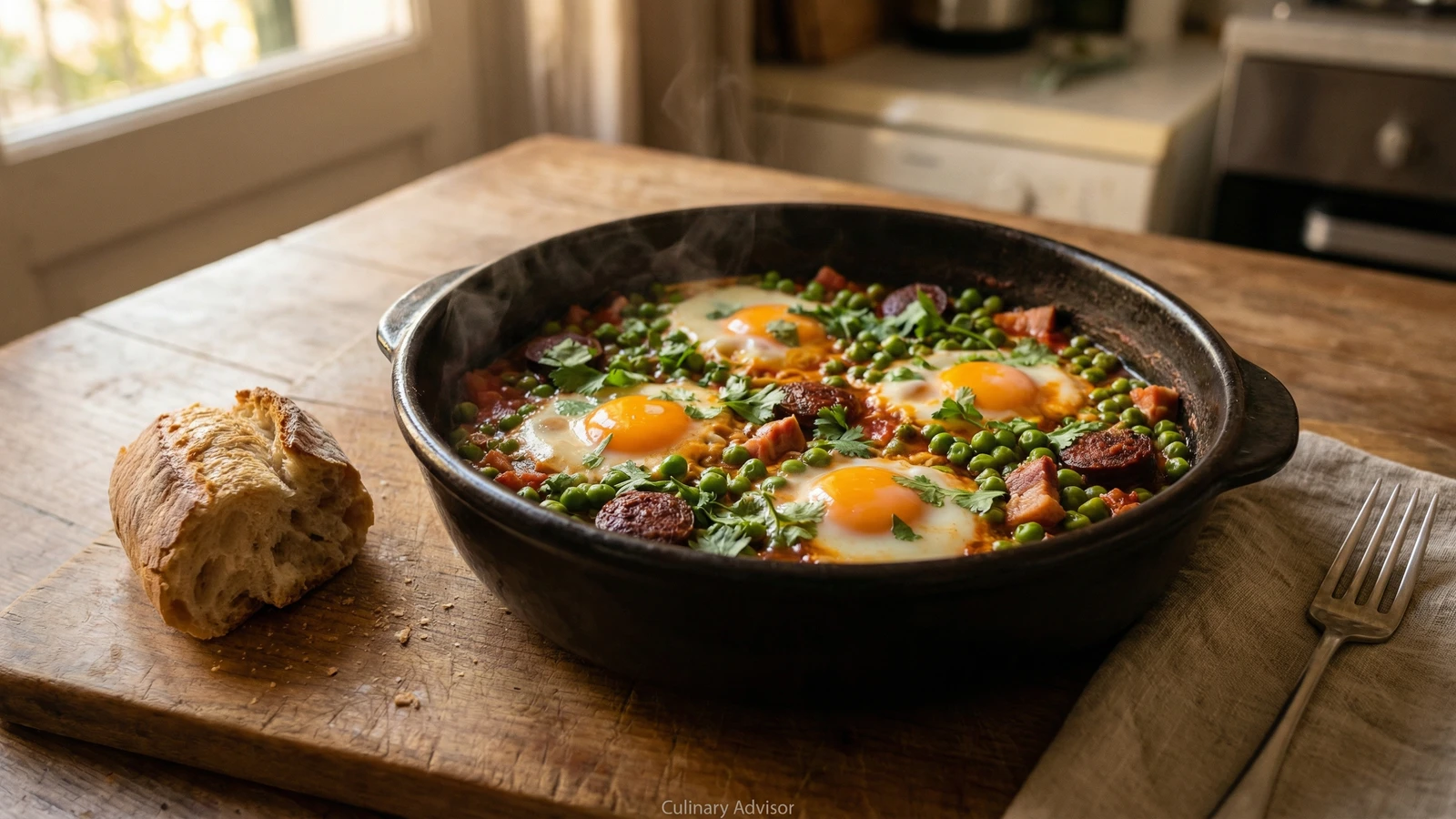
Spring peas braised slowly with chouriço and bacon, eggs nestled on top to poach in the aromatic sauce. One pan, no fuss, pure comfort. This is how Portuguese grandmothers have been feeding families for generations.
There's a moment in spring when fresh peas arrive at the market and suddenly this is the only dish that makes sense. Avó Leonor would buy them still in the pod, and I'd sit at her kitchen table shelling them into a ceramic bowl while she built the refogado. The smell of onion softening in azeite, the sizzle of chouriço releasing its smoky fat. Before I knew what I was learning, I was learning everything.
Ervilhas com ovos escalfados is peasant genius. One pan. A handful of ingredients. Eggs poached directly in the stew so their yolks break and enrich the sauce when you cut into them. This is the kind of cooking that doesn't need a recipe because it lives in your hands once you've made it a few times. But someone has to teach you the first time.
The chouriço matters. Real Portuguese chouriço, smoked and seasoned with garlic and wine, not the Spanish chorizo you find everywhere now. The pork fat and the paprika oil become the base of your sauce. The peas cook in this, absorbing everything. The eggs go in last, covered gently until the whites set but the yolks stay liquid.
At Mesa da Avó, I serve this for brunch sometimes, and people are always surprised that something so simple can taste so complete. But that's Portuguese cooking. We don't complicate things that are already perfect. We just pay attention.
Ervilhas com ovos is a quintessential example of Portuguese one-pot cooking, where eggs served as the affordable protein that stretched a meal to feed a family. The dish gained popularity in rural Portugal where fresh peas marked the arrival of spring after long winters of preserved foods. The technique of poaching eggs directly in a vegetable stew appears across Portuguese regional cooking, from the tomato-based ovos com tomate to this verdant springtime version.
Quantity
500g
Quantity
150g
sliced into rounds
Quantity
100g
diced
Quantity
1 large
finely chopped
Quantity
3 cloves
minced
Quantity
2
peeled and chopped
Quantity
1/4 cup
Quantity
1
Quantity
1 cup
Quantity
4-6 large
Quantity
1 large bunch
roughly chopped
Quantity
1 teaspoon
Quantity
to taste
Quantity
to taste
freshly ground
Quantity
for serving
| Ingredient | Quantity |
|---|---|
| fresh or frozen peas | 500g |
| chouriçosliced into rounds | 150g |
| bacon or toucinhodiced | 100g |
| onionfinely chopped | 1 large |
| garlicminced | 3 cloves |
| ripe tomatoespeeled and chopped | 2 |
| extra virgin olive oil (azeite) | 1/4 cup |
| bay leaf | 1 |
| water or light chicken broth | 1 cup |
| eggs | 4-6 large |
| fresh cilantro (coentros)roughly chopped | 1 large bunch |
| sweet paprika (colorau) | 1 teaspoon |
| sea salt | to taste |
| black pepperfreshly ground | to taste |
| crusty bread | for serving |
In a wide, deep skillet or shallow braising pan, warm the azeite over medium heat. Add the diced bacon and cook until it begins to render its fat and turn golden at the edges, about 4 minutes. Add the chouriço rounds and let them sizzle until they release their paprika-tinted oil into the pan, another 2 minutes. The kitchen should start smelling like your grandmother's house on a Sunday.
Add the chopped onion to the pan and reduce the heat to medium-low. Cook slowly, stirring occasionally, until the onion is soft and translucent, about 8 minutes. It should melt into the pork fat, not brown. Add the garlic and cook for another minute until fragrant. Stir in the paprika, letting it bloom in the fat for 30 seconds. This is your foundation. Não tenhas pressa.
Add the chopped tomatoes and bay leaf, stirring to combine. Let the tomatoes break down and meld with the refogado for about 5 minutes. Pour in the water or broth. Add the peas and stir gently. Season with salt and pepper, remembering the chouriço and bacon are already salty. Bring to a gentle simmer, then cover and cook until the peas are just tender, about 10 minutes for frozen or 15 for fresh.
Taste the braising liquid and adjust the seasoning. There should be enough liquid to come about halfway up the peas. If it's too dry, add a splash more water. Using the back of a spoon, make small wells in the peas, spacing them evenly around the pan. These are the nests where your eggs will poach.
Crack an egg into each well, being careful not to break the yolks. Season the eggs lightly with salt. Cover the pan and let the eggs poach gently over medium-low heat until the whites are set but the yolks remain runny, about 5 to 7 minutes. Don't lift the lid to check every minute. Trust the process. You'll know they're ready when the whites look opaque.
Remove the lid and scatter the coentros generously over the top. Bring the pan directly to the table while everything is still bubbling gently. Serve immediately with plenty of crusty bread for sopping up the sauce. This is a dish meant to be eaten from the pan, family-style, with everyone reaching in. A cozinha é memória.
1 serving (about 375g)
Culinary guides, cultural storytelling, and the editorial depth that makes cooking meaningful.
Discover Culinary ExplorerChef Margarida
Chouriço set ablaze with aguardente, cooked by fire until the casing splits and the paprika-rich fat pools in the dish. Tear the bread. Press it into the fat. This is how we've always done it.

Chef Margarida
The working-class breakfast that became comfort food, thick with smoky chouriço and golden potato, baked until the eggs set proud and golden. Pack it for the field or slice it at the Sunday table.

Chef Margarida
Blood sausage and pineapple from the Azores, where volcanic soil grows the sweetest fruit and tradition pairs it with the richest morcela. Two bites that belong together.

Chef Margarida
Yesterday's bacalhau becomes this morning's breakfast, shredded cod folded into soft eggs with slow-cooked onion. Waste nothing. This is how grandmothers think.