
Chef Margarida
Chouriço Assado na Brasa
Chouriço set ablaze with aguardente, cooked by fire until the casing splits and the paprika-rich fat pools in the dish. Tear the bread. Press it into the fat. This is how we've always done it.
A cooking platform built around craft, culture, and the stories behind what we eat.
Created by
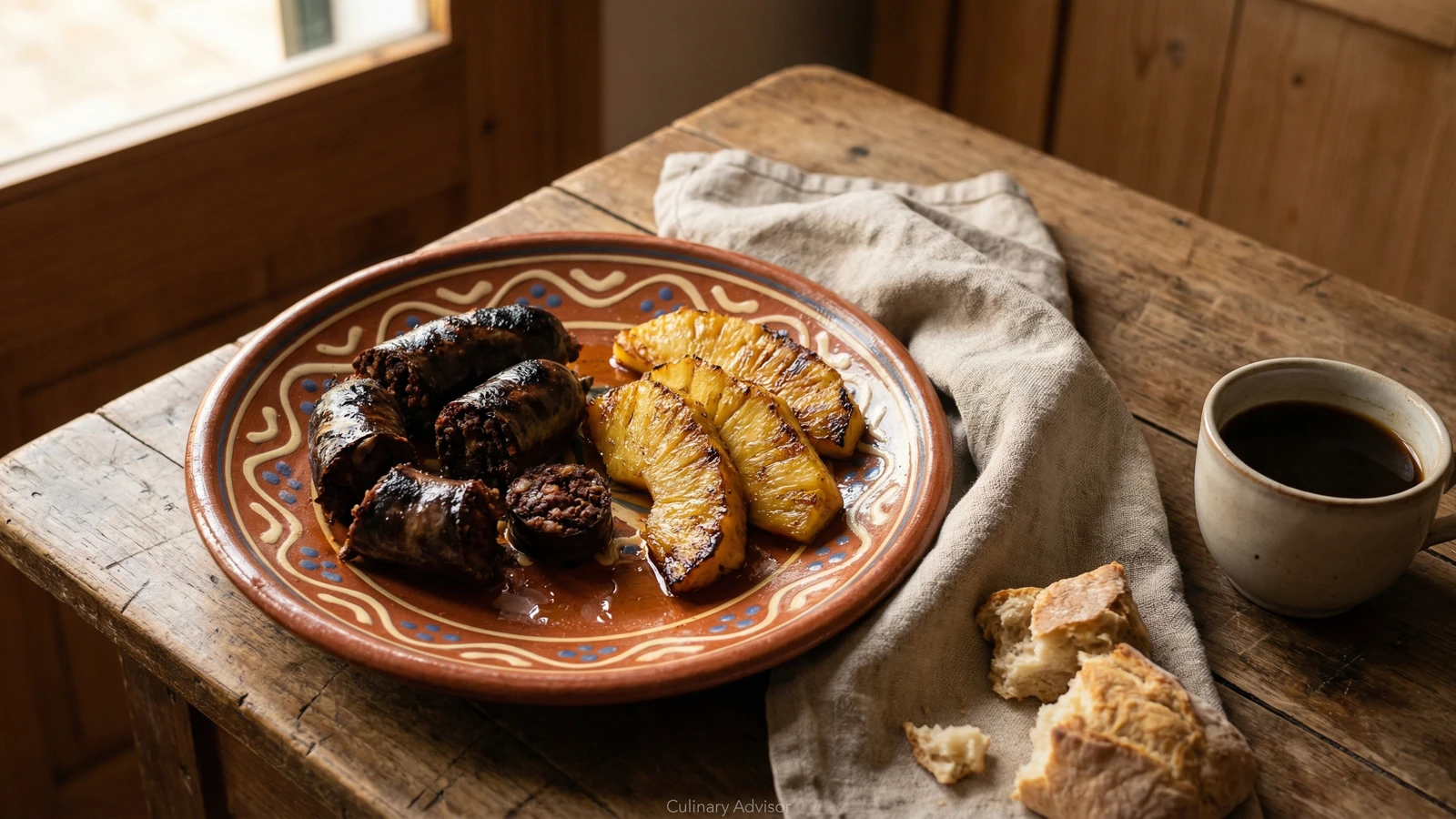
Blood sausage and pineapple from the Azores, where volcanic soil grows the sweetest fruit and tradition pairs it with the richest morcela. Two bites that belong together.
The first time I tasted this combination, I was in São Miguel, sitting in a small tasca near Ponta Delgada. The cook brought out a plate of charred morcela alongside wedges of grilled pineapple, and I thought she'd made a mistake. Blood sausage with fruit? For breakfast?
One bite and I understood everything. The sweet acidity of that Azorean pineapple, grown in the island's famous greenhouses, cuts through the richness of the morcela like nothing else can. The char on both gives you that smoky depth. The spices in the sausage meet the tropical brightness of the fruit, and suddenly you're tasting something that shouldn't work but absolutely does.
This is island cooking. This is what happens when you have volcanic soil that grows impossibly sweet pineapples and a charcuterie tradition brought by Portuguese settlers centuries ago. The grandmothers of the Azores figured out this pairing long before anyone called it "sweet and savory." They just called it breakfast.
When I serve this at Mesa da Avó, people always hesitate. Then they taste it. Then they ask for more. A cozinha é memória, and this dish holds the memory of islands most mainlanders forget exist.
The Azores have cultivated pineapples in glass greenhouses since the 1850s, making São Miguel the only place in Europe with commercial pineapple production. Morcela came to the islands with Portuguese settlers, and the pairing with local ananás evolved as an Azorean breakfast tradition. The combination showcases how island isolation bred culinary innovation.
Quantity
4 links (about 400g)
Quantity
1/2
peeled and cored
Quantity
2 tablespoons
Quantity
freshly ground, to taste
Quantity
for the pineapple
| Ingredient | Quantity |
|---|---|
| morcela (Portuguese blood sausage) | 4 links (about 400g) |
| pineapple (ananás)peeled and cored | 1/2 |
| extra virgin olive oil (azeite) | 2 tablespoons |
| black pepper | freshly ground, to taste |
| flaky sea salt | for the pineapple |
Cut the pineapple into slices about 1 cm thick, then cut each slice into half-moons or wedges. You want pieces substantial enough to hold up on the grill but thin enough to caramelize. Set aside at room temperature. Cold fruit doesn't caramelize as well.
With a sharp knife, make three or four shallow diagonal cuts across each morcela link. Not too deep, just enough to let the heat penetrate evenly and the fat render. This also keeps them from bursting on the grill. Brush lightly with olive oil.
Heat a grill pan or outdoor grill to medium-high. Place the morcela on the hot grates and cook for 4 to 5 minutes per side, turning once. You want the skin deeply charred in spots, almost blistered, while the inside stays moist. Listen for the sizzle. That's the fat rendering, crisping the casing from inside. When they're firm to the touch but still give slightly, they're ready.
While the morcela rests for a minute, brush the pineapple wedges with olive oil and place them on the hot grill. Cook for 2 minutes per side until you see golden char marks and the edges begin to caramelize. The sugars should bubble and brown. Season with just a whisper of flaky salt.
Arrange the morcela and grilled pineapple together on a warm plate. Finish with a crack of black pepper over the sausages. Eat while hot, alternating bites of rich, spiced morcela with sweet-tart pineapple. The contrast is the whole point. This is how the Azoreans do breakfast.
1 serving (about 170g)
Culinary guides, cultural storytelling, and the editorial depth that makes cooking meaningful.
Discover Culinary ExplorerChef Margarida
Chouriço set ablaze with aguardente, cooked by fire until the casing splits and the paprika-rich fat pools in the dish. Tear the bread. Press it into the fat. This is how we've always done it.

Chef Margarida
Spring peas braised slowly with chouriço and bacon, eggs nestled on top to poach in the aromatic sauce. One pan, no fuss, pure comfort. This is how Portuguese grandmothers have been feeding families for generations.

Chef Margarida
The working-class breakfast that became comfort food, thick with smoky chouriço and golden potato, baked until the eggs set proud and golden. Pack it for the field or slice it at the Sunday table.

Chef Margarida
Yesterday's bacalhau becomes this morning's breakfast, shredded cod folded into soft eggs with slow-cooked onion. Waste nothing. This is how grandmothers think.