
Chef Margarida
Chouriço Assado na Brasa
Chouriço set ablaze with aguardente, cooked by fire until the casing splits and the paprika-rich fat pools in the dish. Tear the bread. Press it into the fat. This is how we've always done it.
A cooking platform built around craft, culture, and the stories behind what we eat.
Created by
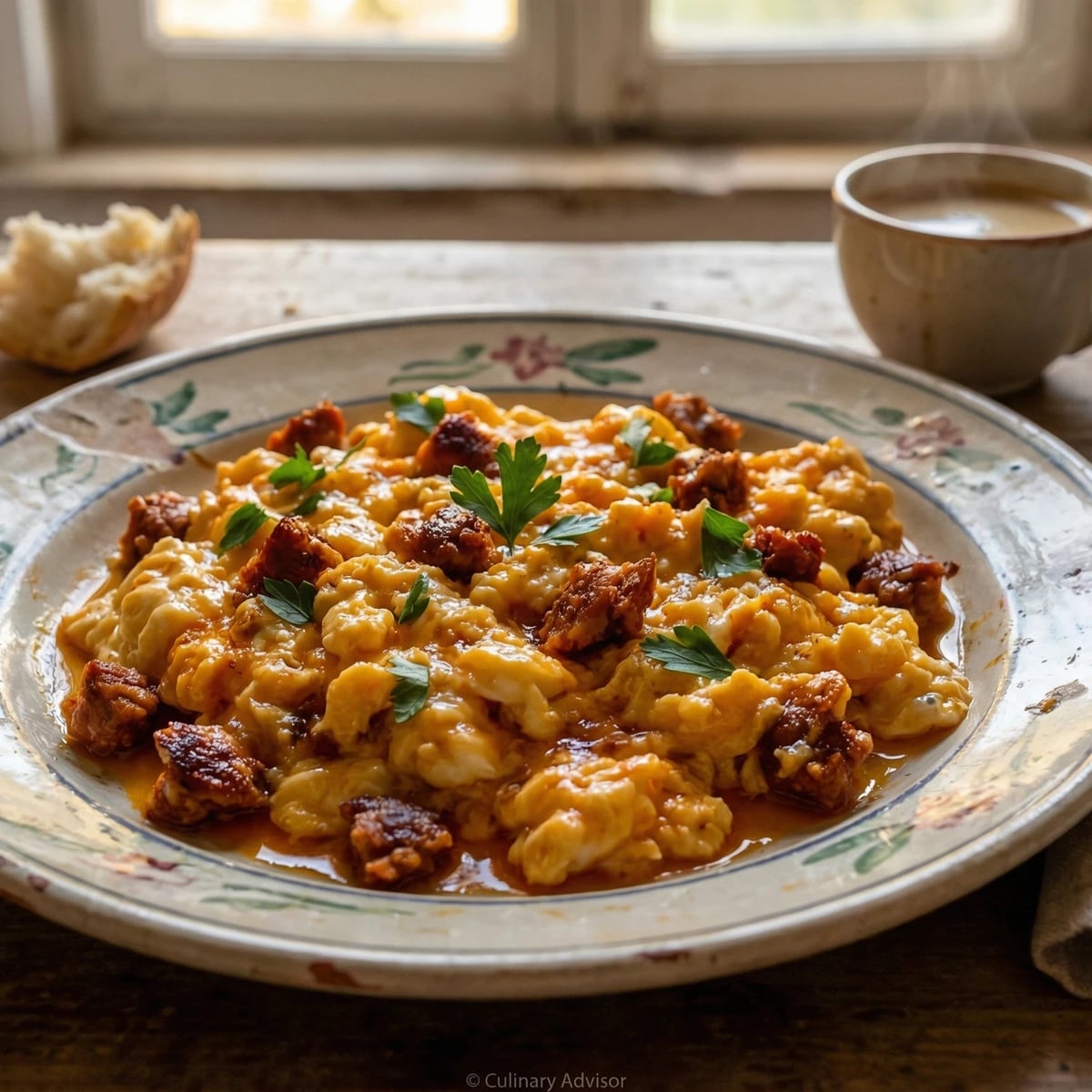
Creamy scrambled eggs stained golden with rendered chouriço fat, the kind of breakfast that makes you understand why the Portuguese take their mornings slowly. Bread for soaking is mandatory.
This is breakfast the way it should be. No rush. No complication. Just eggs, good chouriço, and the patience to cook them properly.
I learned this standing at Avó Leonor's stove on cold winter mornings in Alentejo. She'd crumble the chouriço into the pan before I was fully awake, and by the time the kitchen filled with that smoky, paprika smell, I was ready to eat. She never measured anything. A handful of sausage, a few eggs, a knob of butter. The proportions were in her hands.
The secret is in the fat. You render the chouriço slowly until its smoky oils perfume everything. Then you cook the eggs in that fat, low and slow, folding them gently until they form soft curds stained orange from the paprika. Stop before they look done. They'll finish on the plate.
At Mesa da Avó, I serve this for our brunch pop-ups. People expect something complicated, and I give them eggs and sausage. Then they taste it and understand. This is what happens when you respect simple ingredients. This is what happens when you don't rush. A cozinha é memória, and this dish tastes like every morning I spent in my grandmother's kitchen.
Ovos mexidos com chouriço evolved from the tradition of cooking eggs in rendered pork fat, a practice dating back centuries in rural Portugal where nothing from the pig was wasted. The dish gained popularity as a petisco in Lisbon tascas before becoming a weekend brunch staple. Today it bridges the old and new: peasant cooking technique, modern brunch ritual.
Quantity
100g
casing removed and crumbled
Quantity
4 large
Quantity
1 tablespoon
Quantity
1 tablespoon
Quantity
1 small clove
minced
Quantity
to taste
Quantity
to taste
freshly ground
Quantity
for serving
Quantity
for serving
| Ingredient | Quantity |
|---|---|
| chouriço (Portuguese smoked paprika sausage)casing removed and crumbled | 100g |
| eggs | 4 large |
| extra virgin olive oil (azeite) | 1 tablespoon |
| butter | 1 tablespoon |
| garlic (optional)minced | 1 small clove |
| flaky sea salt | to taste |
| black pepperfreshly ground | to taste |
| flat-leaf parsley or coentros (optional) | for serving |
| crusty bread (pão) | for serving |
Place a nonstick or well-seasoned pan over medium-low heat. Add the olive oil and crumbled chouriço. Let it cook slowly, stirring occasionally, until the fat renders out and the edges turn golden and slightly crispy, about 5 to 6 minutes. The kitchen will smell of smoke and paprika. That's how you know you're doing it right. If using garlic, add it in the final minute.
Reduce the heat to low. Add the butter to the pan and let it melt into the rendered chouriço fat. Swirl it around. You're building the cooking medium for your eggs: part smoky paprika fat, part butter. This is not the place for shortcuts.
Crack the eggs directly into the pan. Don't beat them first. Let them hit the warm fat and start to set on the bottom, then use a wooden spoon or spatula to gently push the curds from the edges toward the center. Keep the heat low. Move slowly. Fold the eggs through the chouriço, letting them form soft, creamy curds stained orange from the paprika fat. Stop when they still look slightly wet. They'll finish cooking from the residual heat.
Remove from heat immediately. The eggs will continue to set. Season with a little flaky salt and black pepper. Be careful with the salt; the chouriço brings its own. Transfer to warm plates, scatter with parsley or coentros if you like, and serve with crusty bread for soaking up every last bit of that smoky, golden fat. This doesn't wait. Eat it now.
1 serving (about 165g)
Culinary guides, cultural storytelling, and the editorial depth that makes cooking meaningful.
Discover Culinary Explorer
Chef Margarida
Chouriço set ablaze with aguardente, cooked by fire until the casing splits and the paprika-rich fat pools in the dish. Tear the bread. Press it into the fat. This is how we've always done it.

Chef Margarida
Spring peas braised slowly with chouriço and bacon, eggs nestled on top to poach in the aromatic sauce. One pan, no fuss, pure comfort. This is how Portuguese grandmothers have been feeding families for generations.

Chef Margarida
The working-class breakfast that became comfort food, thick with smoky chouriço and golden potato, baked until the eggs set proud and golden. Pack it for the field or slice it at the Sunday table.

Chef Margarida
Blood sausage and pineapple from the Azores, where volcanic soil grows the sweetest fruit and tradition pairs it with the richest morcela. Two bites that belong together.