
Chef Margarida
Chouriço Assado na Brasa
Chouriço set ablaze with aguardente, cooked by fire until the casing splits and the paprika-rich fat pools in the dish. Tear the bread. Press it into the fat. This is how we've always done it.
A cooking platform built around craft, culture, and the stories behind what we eat.
Created by
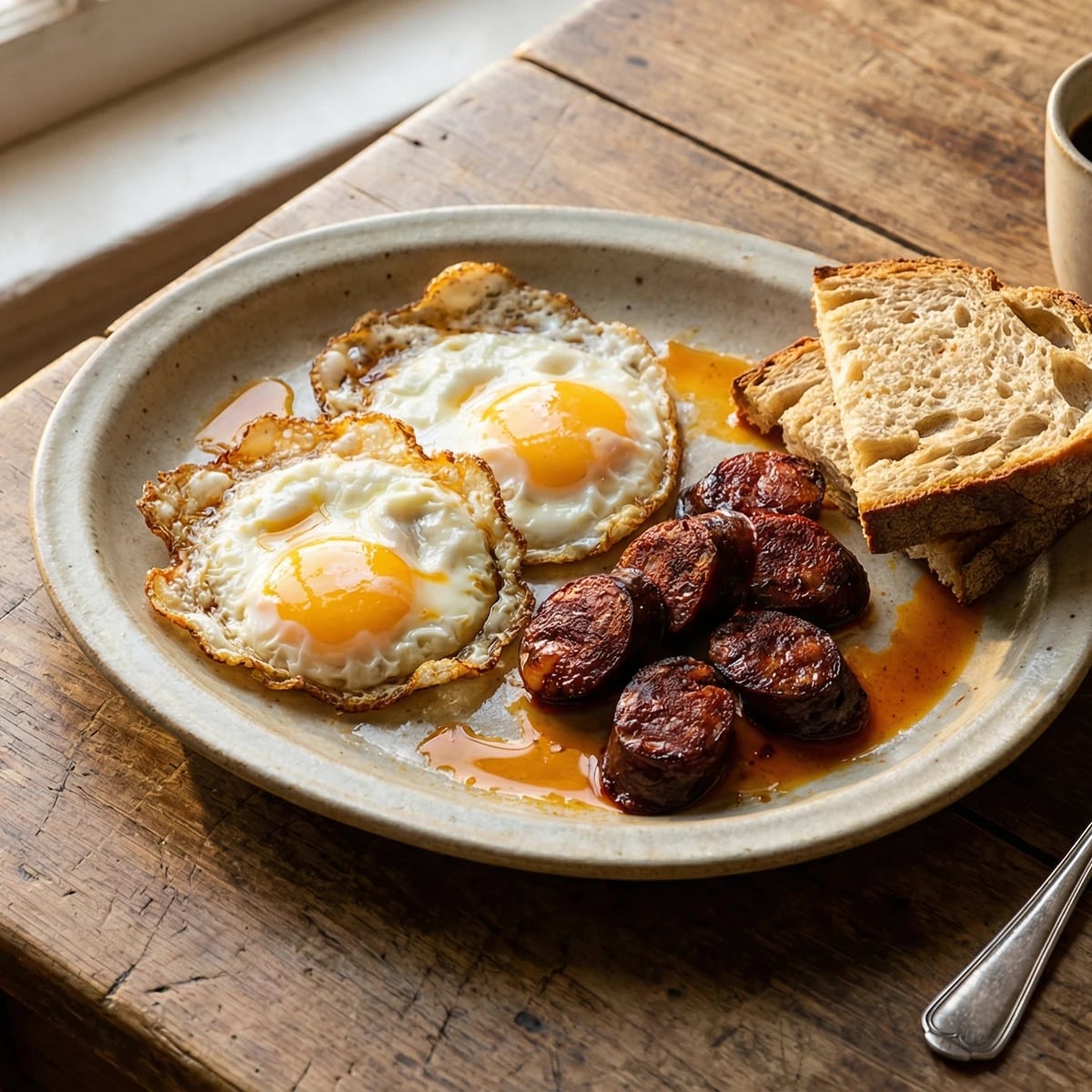
The Portuguese breakfast that needs no introduction. Eggs fried until the edges crisp, chouriço split and roasted until the paprika fat renders into something sacred. Bread on the side because the yolk demands it.
This is how my grandmother started every morning worth remembering. The sound of chouriço hitting a hot pan. The smell of paprika and smoke drifting through the house. By the time I made it to the kitchen, still rubbing sleep from my eyes, the eggs were already sliding onto plates.
Ovos estrelados. Starred eggs. Named for how they look when fried properly: golden yolks like little suns, whites spread out in points like a star. The technique is simple but unforgiving. Too much heat and you get rubber. Too little patience and you get raw whites. The perfect ovo estrelado has crispy lace edges, set whites, and a yolk that trembles when you touch it with your bread.
The chouriço is the other half of this equation. Not Spanish chorizo. Portuguese chouriço. There's a difference, and it matters. Ours is smoke-cured and firm, deeply flavored with paprika and garlic. You score it, you roast it, you let that fat render out. That fat is the whole point. It pools on the plate, mixes with the runny yolk, soaks into the bread. This is breakfast the way it was meant to be eaten.
At Mesa da Avó, I sometimes serve this for late morning gatherings. People expect something complicated. They get eggs and sausage. And then they understand. A cozinha é memória. The simplest dishes carry the deepest meaning.
Ovos estrelados appear in Portuguese culinary records dating to the 17th century, when eggs became affordable enough for common tables. The pairing with chouriço reflects Portugal's ancient tradition of smoke-curing pork, a preservation method that predates refrigeration by centuries. This breakfast was traditionally eaten by farmers and laborers who needed sustenance for a day of physical work.
Quantity
1 (about 150g)
traditional Portuguese smoked sausage
Quantity
4 large
Quantity
3 tablespoons
Quantity
to taste
Quantity
to taste
freshly ground
Quantity
for serving
| Ingredient | Quantity |
|---|---|
| chouriço de carnetraditional Portuguese smoked sausage | 1 (about 150g) |
| eggs | 4 large |
| extra virgin olive oil (azeite) | 3 tablespoons |
| flaky sea salt | to taste |
| black pepperfreshly ground | to taste |
| crusty bread (pão) | for serving |
Score the chouriço with deep diagonal cuts along its length, spacing them about 2 centimeters apart. Don't cut all the way through. You want it to open like a book when it hits the heat, exposing more surface to crisp and releasing that gorgeous paprika-red fat.
Heat a dry cast iron skillet or heavy pan over medium heat. Place the scored chouriço cut-side down in the dry pan. Let it cook undisturbed for 4 to 5 minutes until the fat begins to render and the exposed meat turns deep crimson with charred edges. Flip and cook another 3 to 4 minutes. The kitchen will smell like smoke and paprika and every good morning you've ever had. Transfer to a plate and keep warm.
Add the olive oil to the same pan with the rendered chouriço fat. Heat over medium until the oil shimmers but doesn't smoke. Crack the eggs directly into the pan, giving each one space. Fry until the whites are set and the edges turn lacy and golden, but the yolks remain completely runny. This takes about 3 minutes. Tilt the pan and spoon the hot oil over the whites to help them set without flipping.
Slide the eggs onto warm plates. Slice the chouriço at an angle and arrange alongside the eggs. Season the eggs with flaky salt and pepper. Serve with thick slices of crusty bread for soaking up the yolk and the rendered fat. This is not optional. The bread is half the meal.
1 serving (about 190g)
Culinary guides, cultural storytelling, and the editorial depth that makes cooking meaningful.
Discover Culinary Explorer
Chef Margarida
Chouriço set ablaze with aguardente, cooked by fire until the casing splits and the paprika-rich fat pools in the dish. Tear the bread. Press it into the fat. This is how we've always done it.

Chef Margarida
Spring peas braised slowly with chouriço and bacon, eggs nestled on top to poach in the aromatic sauce. One pan, no fuss, pure comfort. This is how Portuguese grandmothers have been feeding families for generations.

Chef Margarida
The working-class breakfast that became comfort food, thick with smoky chouriço and golden potato, baked until the eggs set proud and golden. Pack it for the field or slice it at the Sunday table.

Chef Margarida
Blood sausage and pineapple from the Azores, where volcanic soil grows the sweetest fruit and tradition pairs it with the richest morcela. Two bites that belong together.