
Chef Freja
Andelår med Rødkål
Slow-roasted duck legs with crisp, deeply golden skin, served with braised red cabbage and caramelized potatoes. The weeknight Danish duck that proves the best part of the bird is the one that takes its time.
A cooking platform built around craft, culture, and the stories behind what we eat.

Created by Chef Freja
Thick cod fillets baked in butter, hvidvin, and lemon until the flesh flakes at the touch of a fork, finished with a handful of fresh dill and served alongside nye kartofler that drink up the pan juices.
There are evenings in Denmark when the right thing to cook is the simplest thing you know. Torsk, cod, is that kind of fish. It doesn't ask for much. A hot oven, good butter, a glass of hvidvin poured around it, and the patience to leave it alone while it bakes.
Ovnbagt torsk is a dish that shows up on Danish tables all year, but it belongs most honestly to the colder months, when cod is firm and fat from the North Sea and the kitchen is the warmest room in the house. It's the kind of cooking my grandmother would have called mormormad, grandmother food, not because it's old-fashioned but because it's the food that teaches you what matters: good ingredients treated simply, nothing wasted, everything on the plate for a reason.
I want you to pay attention to two things. First, the wine goes around the fish, not over it. The wine's job is to create a thin, fragrant sauce in the bottom of the dish while the butter does the basting from above. Second, the dill goes on last, when the fish is still hot enough to release the herb's oils but not so hot that it wilts into nothing. Fresh dill, always. Dried dill has no place here. You'll know when it's right because the whole kitchen will smell like the Danish coast, and the fish will flake when you press it gently with the back of a spoon. That's the moment. Don't wait past it.
Torsk has been the backbone of the Danish kitchen since the medieval herring trade began to decline and cod stepped forward as the everyday fish of the North Sea and the Baltic. By the 18th century, baked and boiled cod preparations appear in nearly every Danish household cookbook, and the tradition of nytaarstorsk, boiled cod served on New Year's Eve, cemented the fish as a symbol of both thrift and celebration. The oven-baked version with hvidvin and butter is a 20th-century refinement that came as Danish home ovens became reliable, replacing the older stovetop methods with a gentler, more forgiving technique that suits the fish's delicate texture.
Quantity
4, about 180g each
skin on, pin-boned
Quantity
40g
cut into thin slices
Quantity
150ml
Quantity
1 large
half juiced, half sliced into thin rounds
Quantity
large bunch
fronds picked, stems reserved
Quantity
2
sliced into thin rings
Quantity
to taste
Quantity
freshly ground, to taste
Quantity
to serve
Quantity
1 tablespoon
| Ingredient | Quantity |
|---|---|
| cod filletsskin on, pin-boned | 4, about 180g each |
| unsalted buttercut into thin slices | 40g |
| dry white wine (hvidvin) | 150ml |
| lemonhalf juiced, half sliced into thin rounds | 1 large |
| fresh dillfronds picked, stems reserved | large bunch |
| shallotssliced into thin rings | 2 |
| fine sea salt | to taste |
| white pepper | freshly ground, to taste |
| nye kartofler (new potatoes) | to serve |
| neutral oil | 1 tablespoon |
Take the cod fillets out of the fridge twenty minutes before you cook them. Cold fish straight from the fridge cooks unevenly: the outside overcooks while the center stays raw. Pat each fillet dry with kitchen paper and season both sides with fine sea salt and freshly ground white pepper. White pepper, not black. Black pepper is too sharp and too visible on the pale flesh. White pepper does its work quietly.
Heat the oven to 200C. Rub a baking dish lightly with the neutral oil. Scatter the shallot rings and the reserved dill stems across the bottom. The shallots will soften in the wine and give the pan juices a gentle sweetness. The dill stems carry more flavor than you'd think, and they perfume the liquid from below while the fronds finish the dish from above. Lay the lemon slices over the shallots in a single layer. Place the cod fillets on top, skin-side down.
Pour the hvidvin around the fish, not over it. The wine should pool in the bottom of the dish, not wash over the surface of the fillets. Squeeze the lemon juice over the top of each fillet. Lay the thin slices of butter across the fish, distributing them evenly so every fillet has a few. The butter melts slowly in the oven and bastes the surface as it goes, keeping the flesh moist and giving it a golden, glossy finish that cream sauces try to imitate but never quite match.
Place the dish in the middle of the oven and bake for sixteen to twenty minutes. The time depends on the thickness of your fillets. What you're watching for is the flesh turning from translucent to opaque white, and the surface going glossy with melted butter. Press the thickest part of a fillet gently with your finger. If it gives slightly and then springs back, it's done. If it feels firm all the way through, you've gone too far. Better to pull it a minute early. Cod carries on cooking in the hot dish after you take it out.
Take the dish from the oven and scatter the fresh dill fronds generously over the fish while it's still hot. The heat lifts the oils from the dill and fills the kitchen with the scent that belongs on every Danish fish dish. Spoon the pan juices, now a thin, fragrant sauce of wine, butter, lemon, and shallot, over each fillet as you plate it. Serve with nye kartofler, warm and split open so they can soak up the juices. That's the whole meal. Tak for mad.
1 serving (about 220g)
Culinary guides, cultural storytelling, and the editorial depth that makes cooking meaningful.
Discover Culinary ExplorerChef Freja
Slow-roasted duck legs with crisp, deeply golden skin, served with braised red cabbage and caramelized potatoes. The weeknight Danish duck that proves the best part of the bird is the one that takes its time.

Chef Freja
The whole roasted duck of juleaften, stuffed with tart apples and dark prunes, slow-roasted for four patient hours until the skin crackles like something earned and the meat underneath gives way without resistance.
Chef Freja
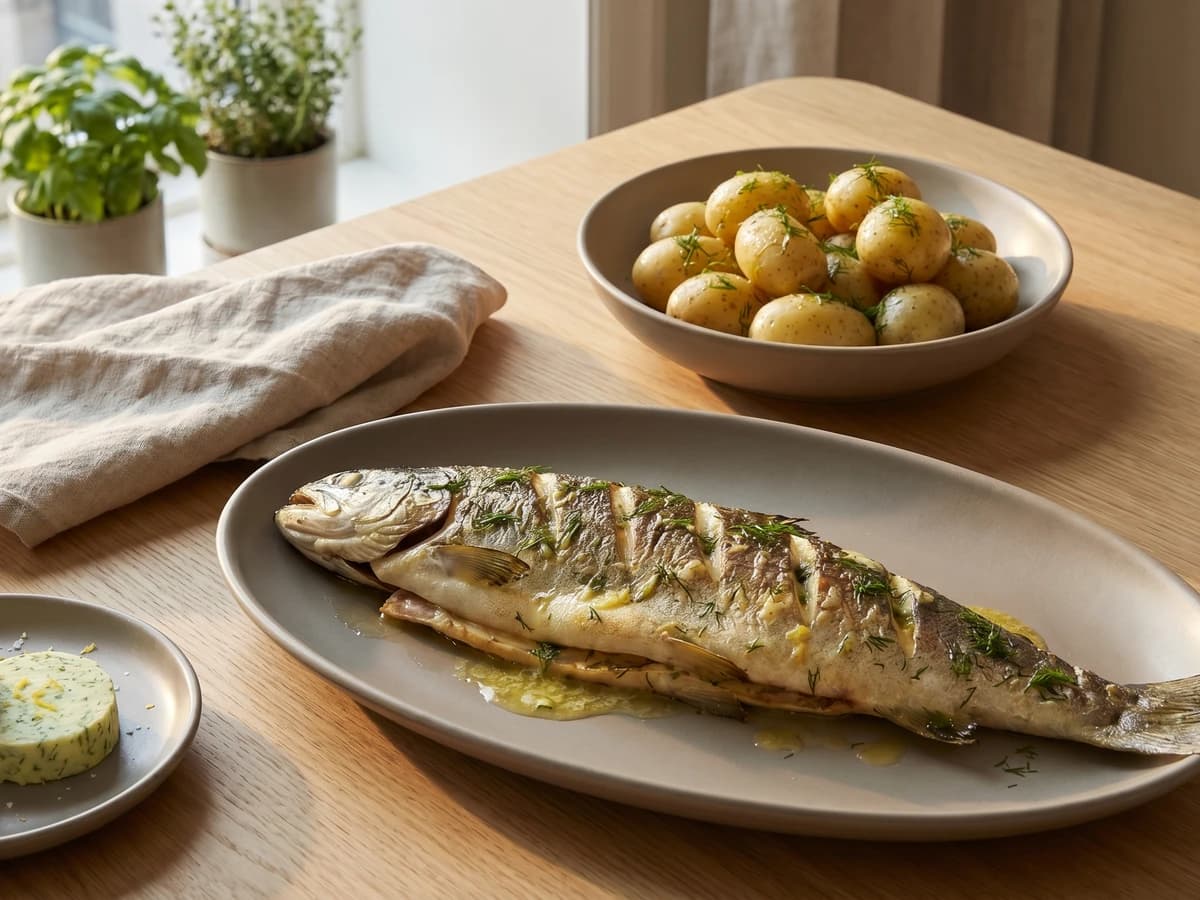
Whole sea trout baked with butter, lemon, and armfuls of dill, served beside the first nye kartofler of the season and a melting slab of dildsmor. The Danish summer table at its most generous.
Chef Freja
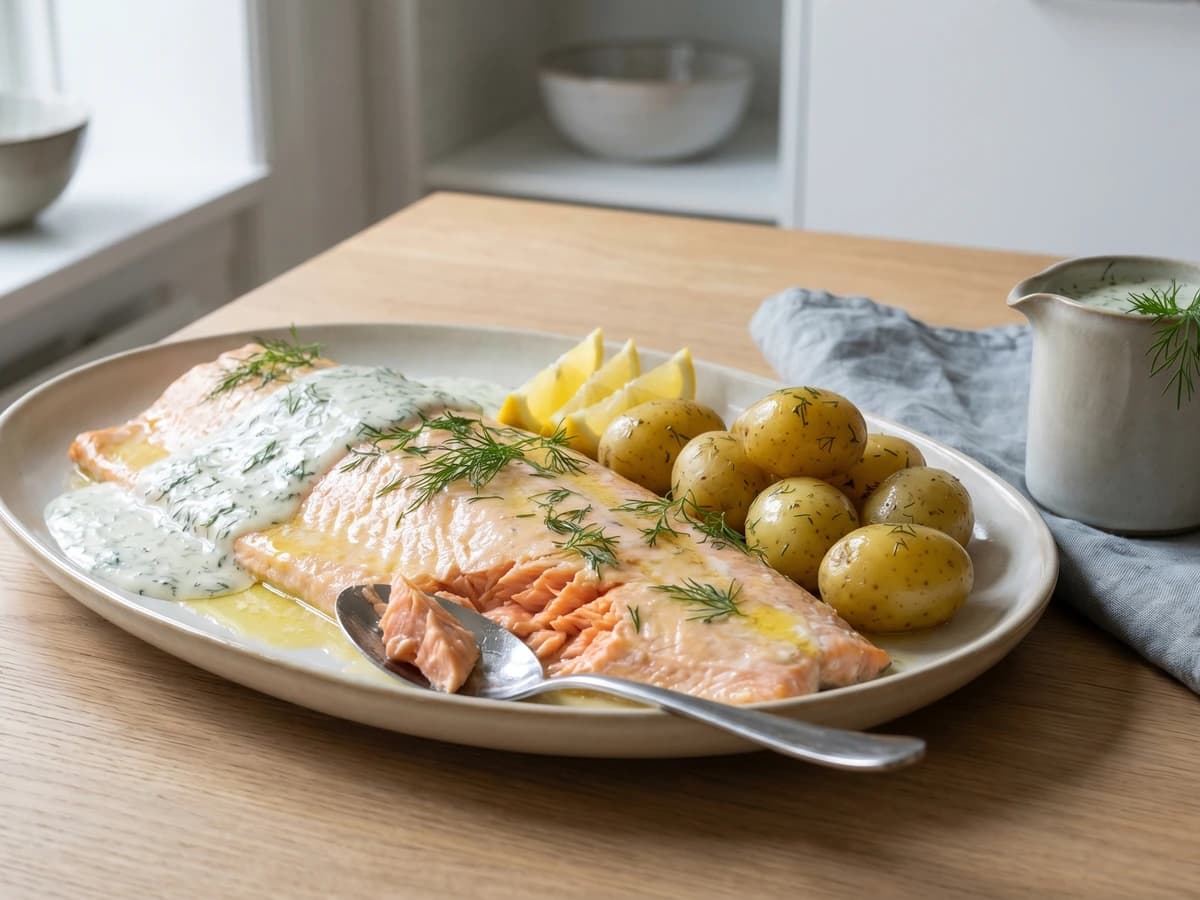
A side of salmon baked gently in butter and white wine, served warm with a bright dill cream sauce and the season's first nye kartofler. Late spring on a Danish table, cooked with love.